Mathematical reasoning Subtraction Worksheets for Ages 3-7
6 filtered results
-
From - To
Discover our engaging "Mathematical Reasoning Subtraction Worksheets for Ages 3-7" designed to build strong foundational math skills. These colorful, child-friendly sheets guide young learners through essential subtraction concepts while boosting their critical thinking and problem-solving abilities. Ideal for preschool and early elementary, our activities make subtraction fun and intuitive. From basic subtraction with visual aids to more challenging problems, each worksheet is crafted to nurture your child’s love for math. Perfect for classroom enhancement or at-home practice, these resources ensure your little one will master subtraction with confidence and ease. Visit Kids Academy to elevate your child's math journey!
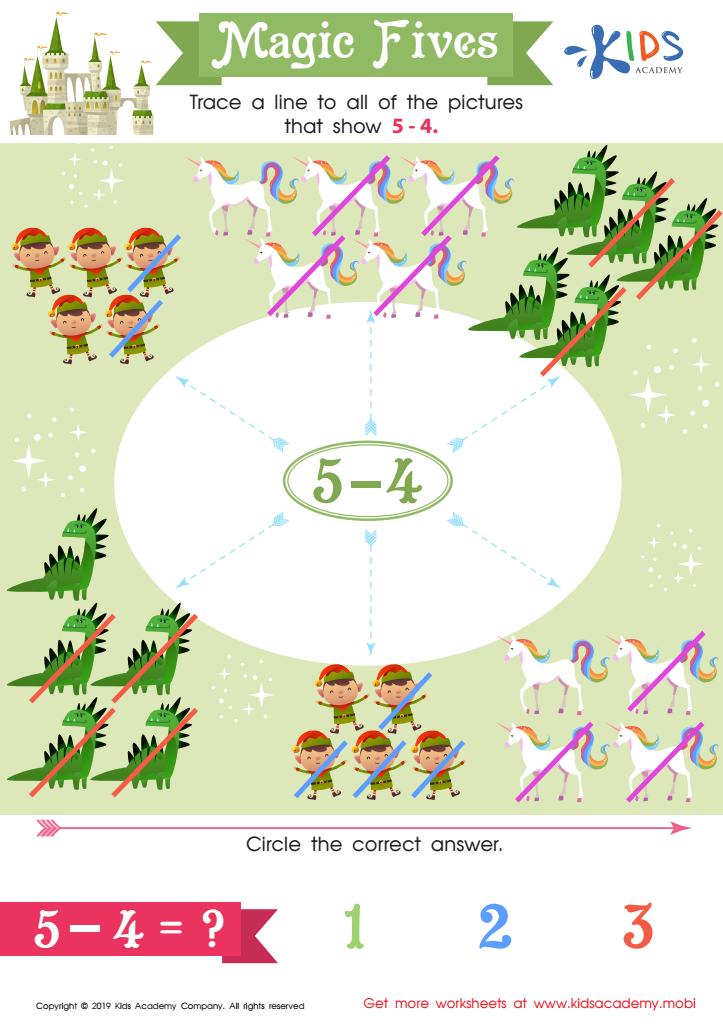
Magic Fives Worksheet
 Assign to My Students
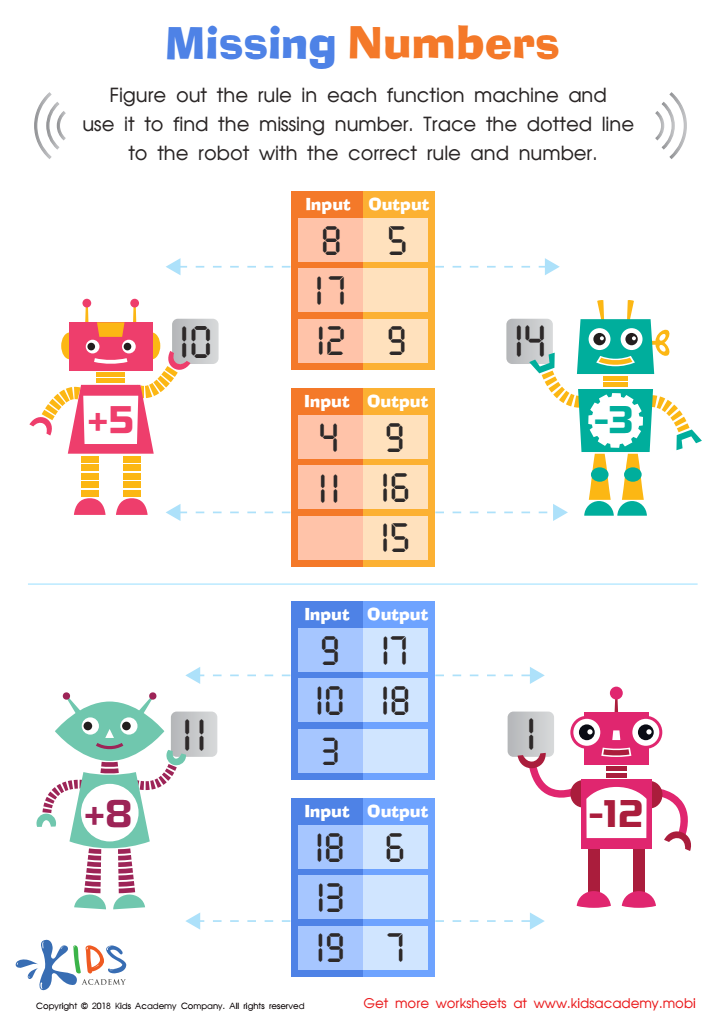
Missing Numbers Worksheet
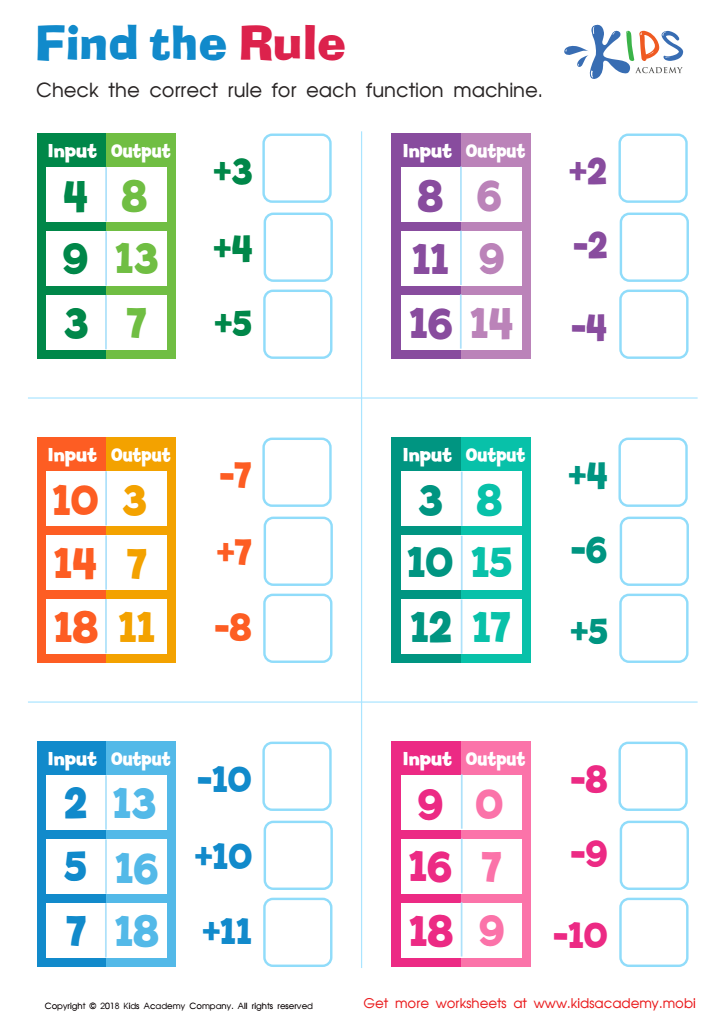
Find the Rule Worksheet
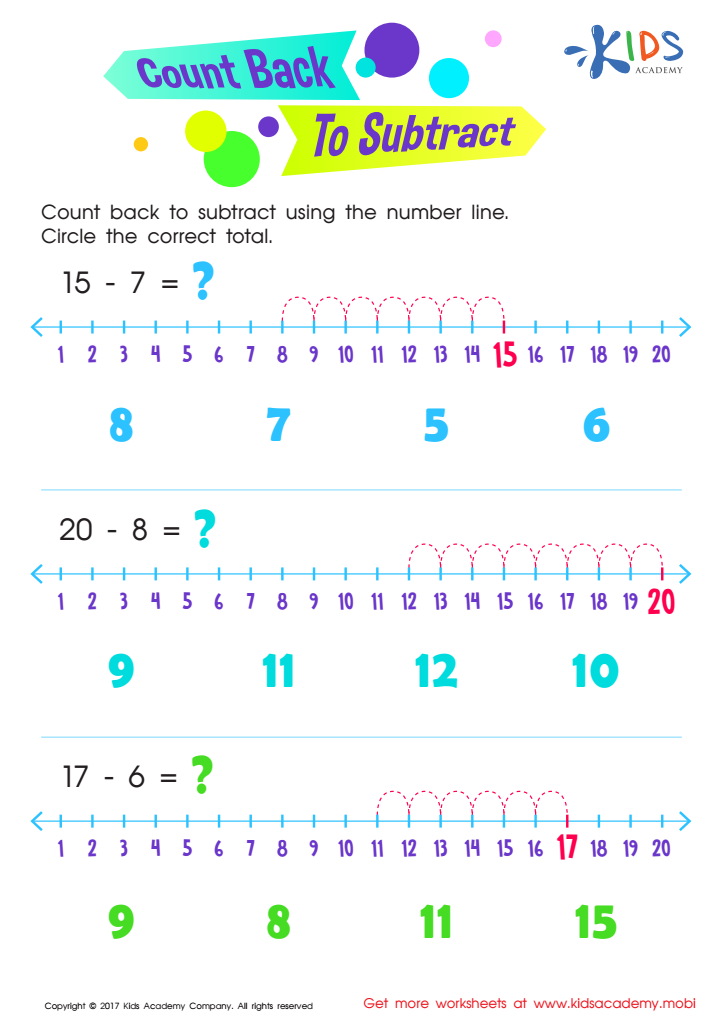
Count Back to Subtract Substraction Worksheet
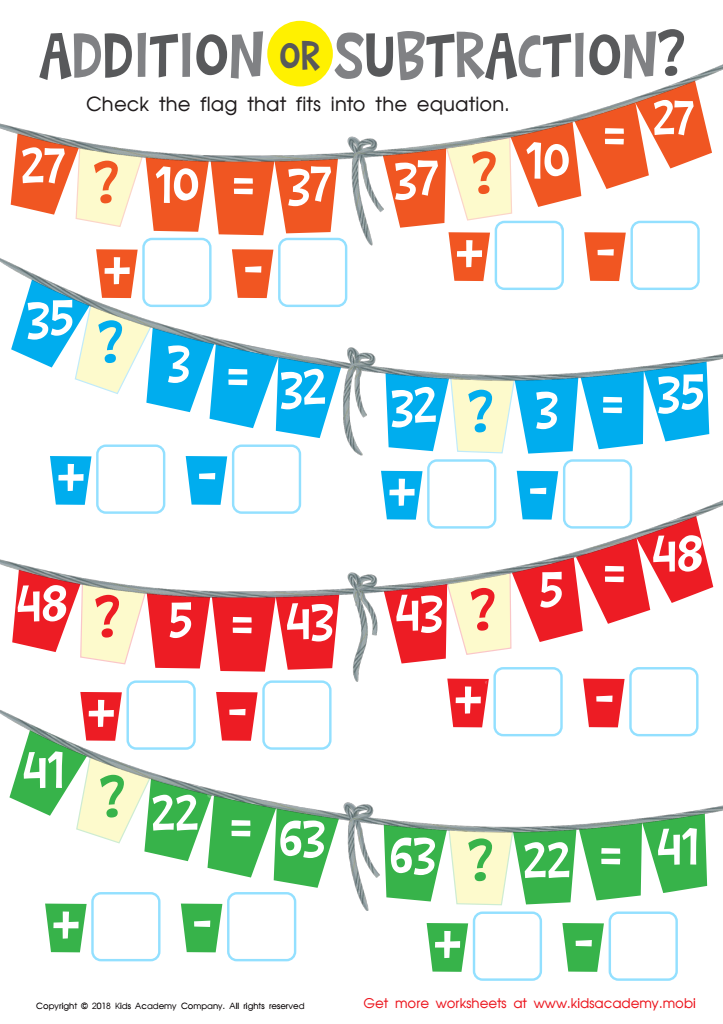
Addition or Subtraction? Worksheet
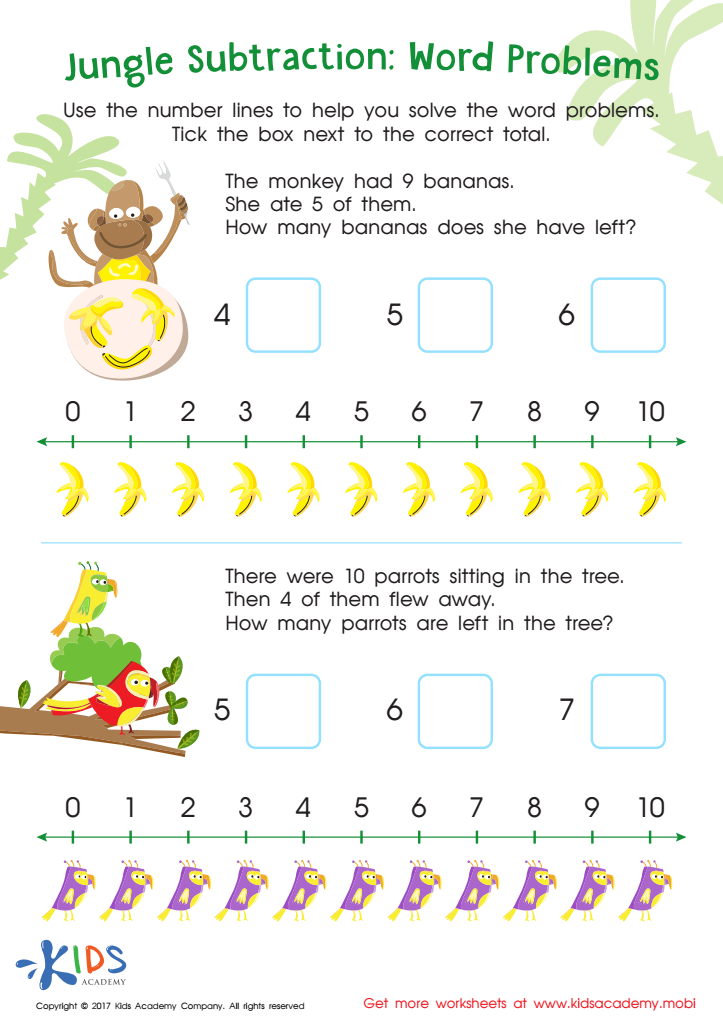
Jungle Subtraction Word Problems Substraction Worksheet








Parents and teachers should care about mathematical reasoning and subtraction for ages 3-7 because these foundational skills are crucial for children’s overall cognitive development and future academic success. During this critical developmental window, young minds are highly receptive to learning basic numerical concepts, and understanding subtraction forms an essential part of their mathematical toolkit.
Subtraction, the process of taking one quantity away from another, helps children develop their problem-solving abilities and logical thinking. It teaches them how to manage quantities, understand the concept of 'less than,' and begin to grasp the relationship between numbers. Through subtraction exercises, kids learn to follow steps methodically, develop attention to detail, and enhance their memory because they need to recall and manipulate numbers accurately.
Moreover, effective early mathematical reasoning involving subtraction sets the stage for more complex arithmetic operations they will encounter later, such as multiplication and division. It also extends beyond math, aiding in developing critical thinking and analytical skills applicable in other subjects and everyday situations.
By fostering these skills early on, teachers and parents can ensure children are well-prepared for higher grades. They build confidence and curiosity about math, transforming what might seem like simple numerical exercises into a strong foundation for a lifetime of learning and problem-solving.








