Phonics recognition Reading Worksheets for Ages 3-7
5 filtered results
-
From - To
Introduce your child to the exciting world of reading with our Phonics Recognition Reading Worksheets for ages 3-7. Designed for early learners, these engaging worksheets focus on building fundamental phonics skills through interactive activities. Children will learn to identify letter sounds, blend phonemes, and recognize sight words, setting the stage for fluent reading. With vibrant illustrations and fun exercises, each worksheet supports the development of essential literacy skills in a playful manner. Perfect for parents and educators, our worksheets make learning to read an enjoyable experience for young learners. Unlock your child's reading potential today!
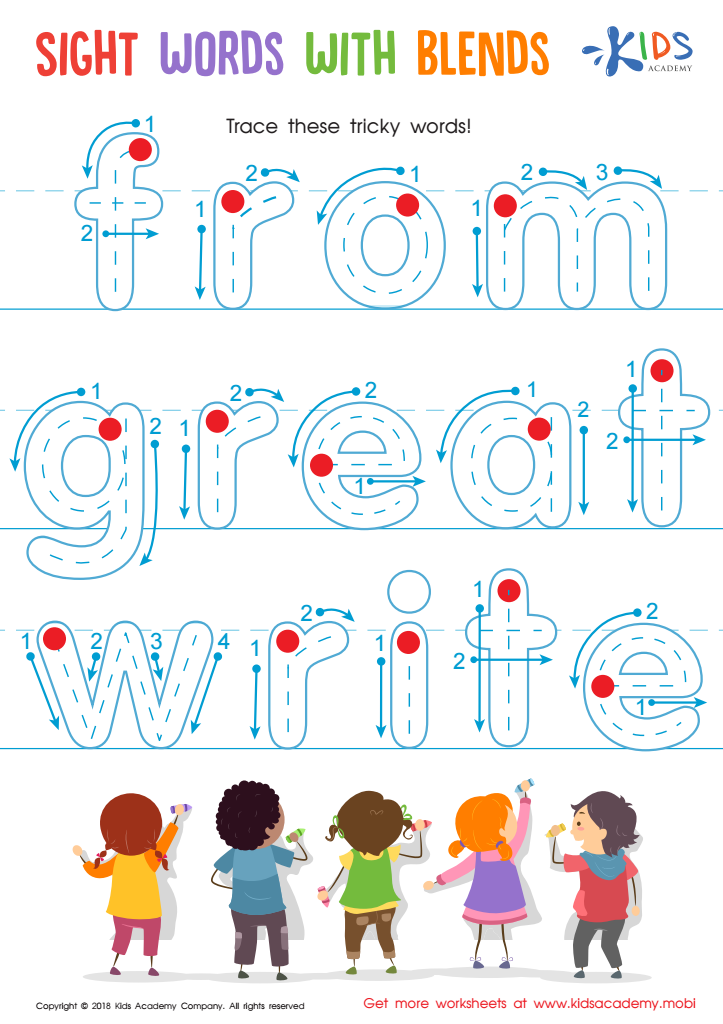
Sight Words with Blends Worksheet
 Assign to My Students
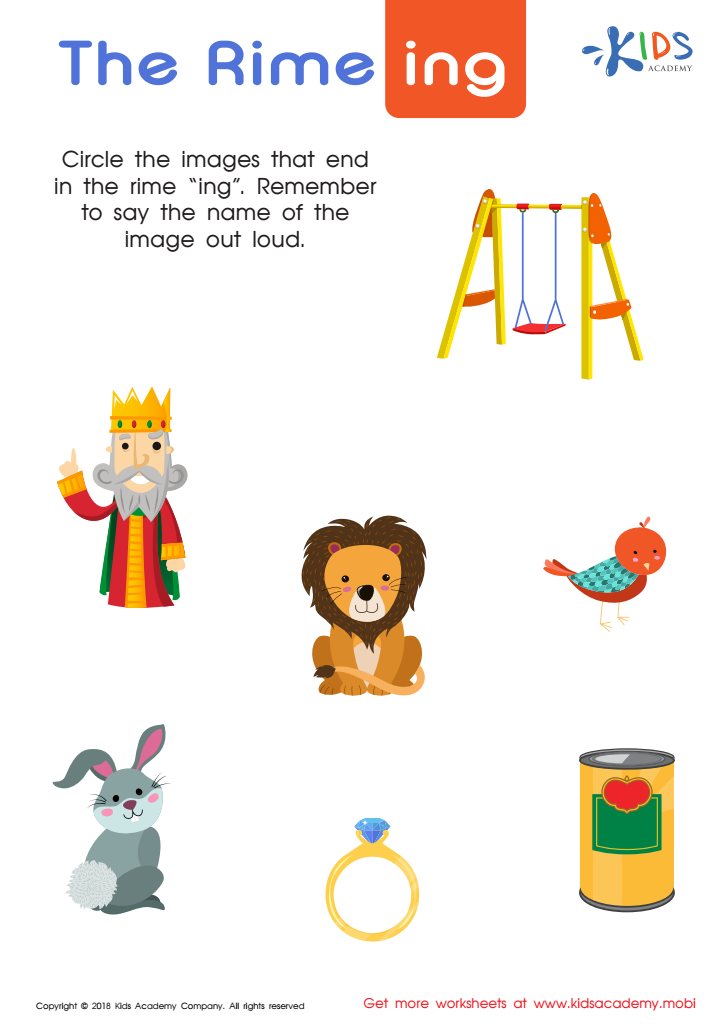
The Rime "ing" Worksheet
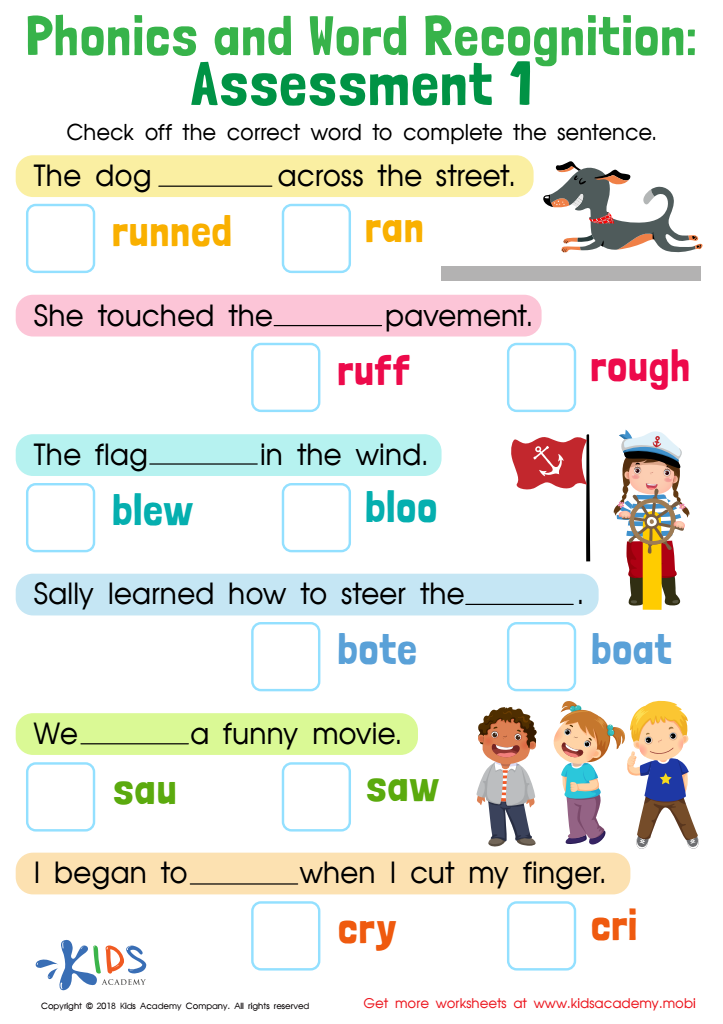
Phonics and Word Recognition: Assessment 1 Worksheet
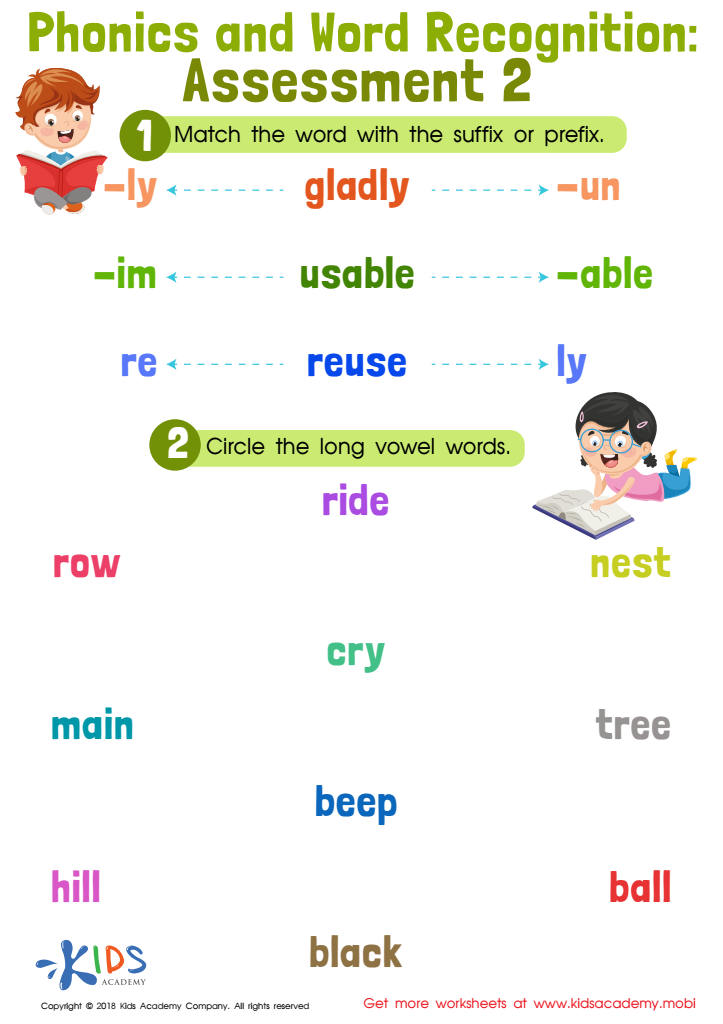
Phonics and Word Recognition: Assessment 2
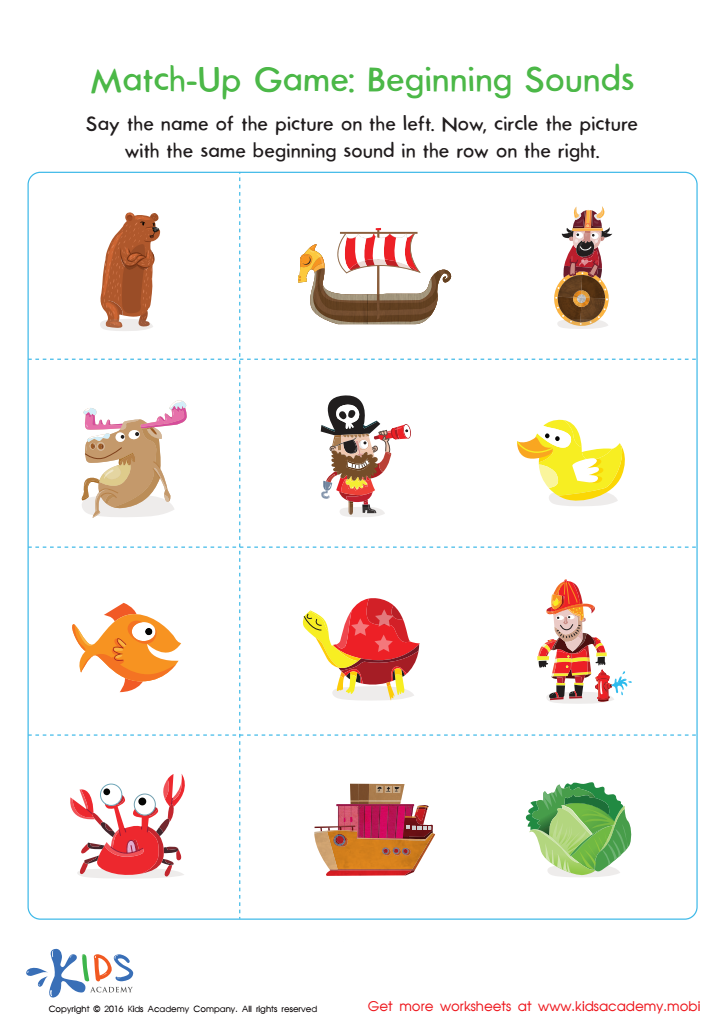
Match–Up Game: Beginning Sounds Worksheet


.jpg)





Phonics recognition is crucial for early reading development in children aged 3-7 because it forms the foundation of their literacy skills. Phonics is the method of teaching reading by correlating sounds with letters or groups of letters. It helps children understand how words are constructed, significantly improving their reading fluency and comprehension.
Parents and teachers should prioritize phonics recognition because early literacy skills are strong predictors of later academic success. By learning phonics, children become skilled at decoding new words, which builds their confidence and encourages a love for reading. This fundamental skill aids them in accessing and understanding a wide range of texts, an indispensable part of lifelong learning.
Furthermore, phonics-based reading instruction also supports spelling skills and contributes to better pronunciation and language development. By recognizing patterns and familiar letter-sound relationships, children can spell more accurately, enhancing their overall written and verbal communication skills.
Additionally, early exposure to phonics helps close educational disparities by providing children, irrespective of their background, with a universally effective strategy for reading. Therefore, dedicating effort towards phonics recognition not only equips children with essential literacy skills but also promotes equitable learning opportunities, fostering educational and personal growth.








