Understanding sequencing Reading Worksheets for Ages 3-7
3 filtered results
-
From - To
Unlock the power of sequencing with our engaging understanding sequencing reading worksheets designed for ages 3-7! These playful and interactive worksheets help young learners grasp the concept of order and progression in stories. With colorful illustrations and relatable scenarios, children will enjoy piecing together story events, enhancing their reading comprehension and critical thinking skills. Our resources provide a foundation for early literacy by promoting logical thinking and narrative skills. Explore various activities tailored to capture children's attention while they learn the importance of sequencing in reading. Perfect for home or classroom use, these worksheets make learning fun and effective!
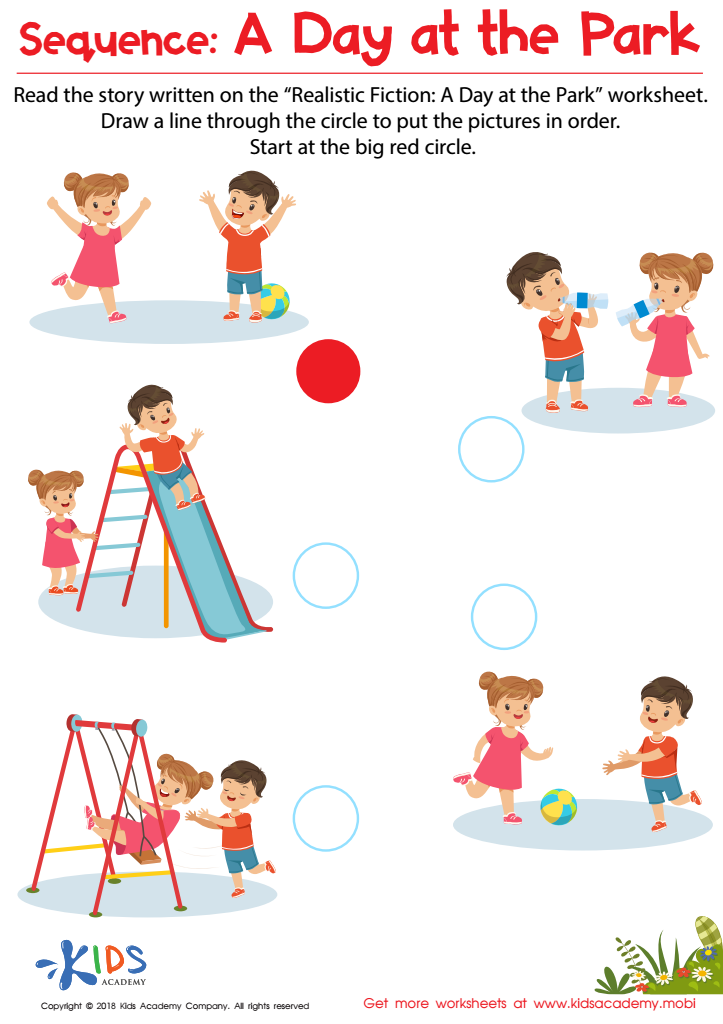
Sequence: A Day at the Park Worksheet
 Assign to My Students
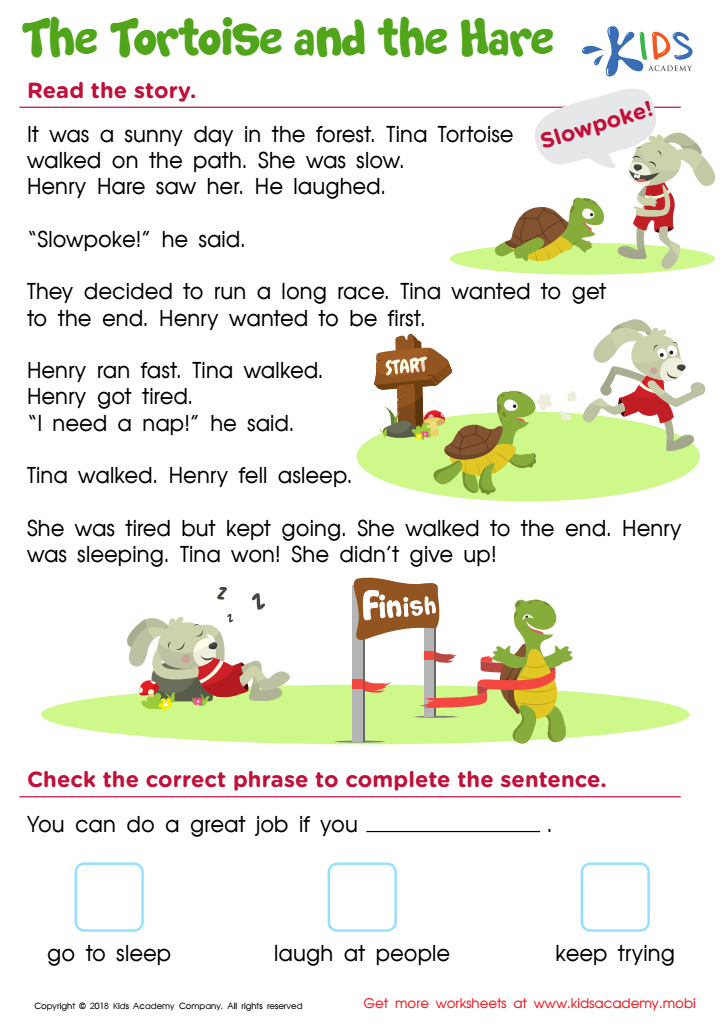
The Tortoise and the Hare Worksheet







Understanding sequencing in reading is crucial for children aged 3 to 7, as it forms the foundation for effective comprehension and critical thinking skills. During this developmental stage, kids learn to recognize the order of events in stories, which not only enhances their reading abilities but also strengthens their language skills. When children grasp sequencing, they can retell stories accurately, make predictions, and draw connections between events, fostering deeper engagement with the text.
For parents and teachers, prioritizing sequencing involves nurturing a child's cognitive development. Activities such as discussing story progression, sorting pictures from a story in order, or identifying sequential events in everyday life can significantly bolster a child's understanding of narrative structure. This makes learning more interactive and relatable.
Furthermore, children strong in sequencing are often better problem solvers, as they learn to analyze events logically. Encouraging these skills helps prepare children for more complex literacy as they advance in school. Ultimately, by emphasizing sequencing in early reading, parents and teachers play a vital role in laying the groundwork for academic success, boosting a child's confidence, and instilling a love for reading that lasts a lifetime.








