Enhancing observational skills Science Worksheets for Ages 3-7
7 filtered results
-
From - To
Explore our collection of engaging "Enhancing Observational Skills Science Worksheets" designed specifically for children ages 3-7. These worksheets encourage young learners to develop keen observation abilities through fun, interactive activities tailored to their developmental stage. By focusing on the natural world around them, children will engage in hands-on learning experiences that foster curiosity and critical thinking. Each worksheet promotes exploration and discovery, making it easier for educators and parents to teach essential science concepts. Perfect for at-home learning or classroom activities, our worksheets provide an enjoyable way for kids to sharpen their observational skills while igniting their passion for science!
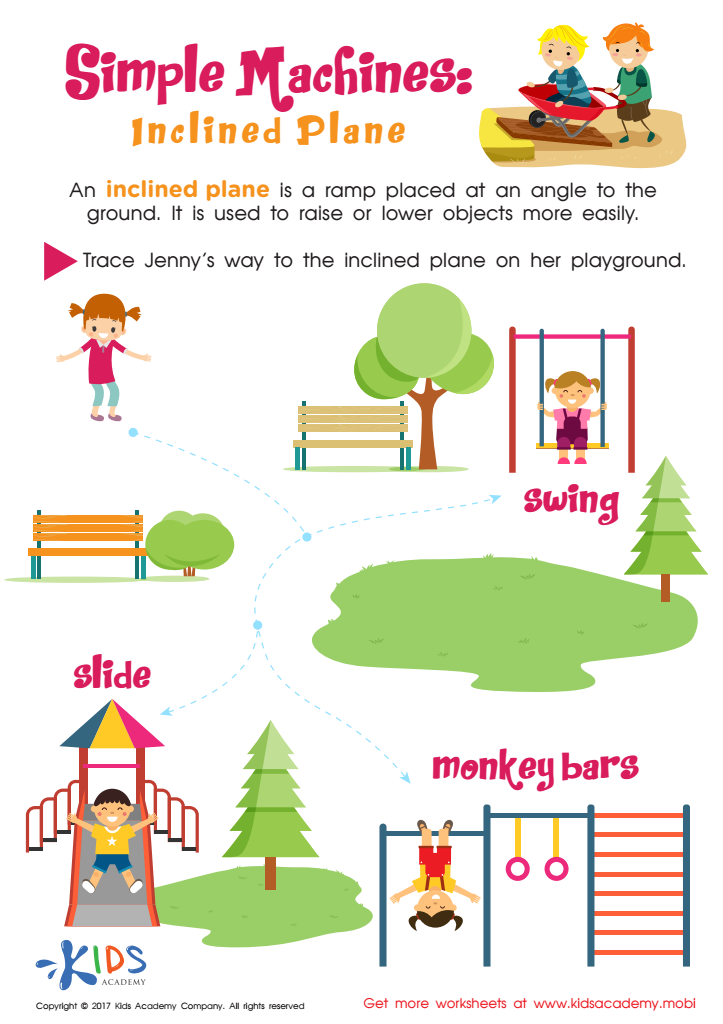
Simple Machines Inclined Plane Worksheet
 Assign to My Students
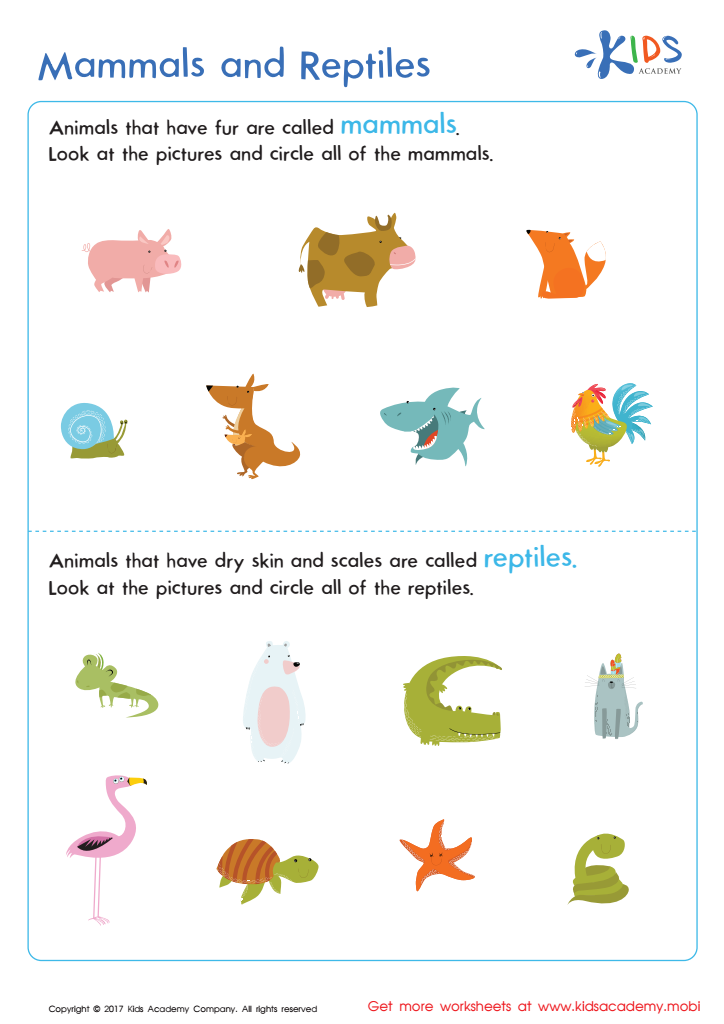
Mammals and Reptiles Worksheet
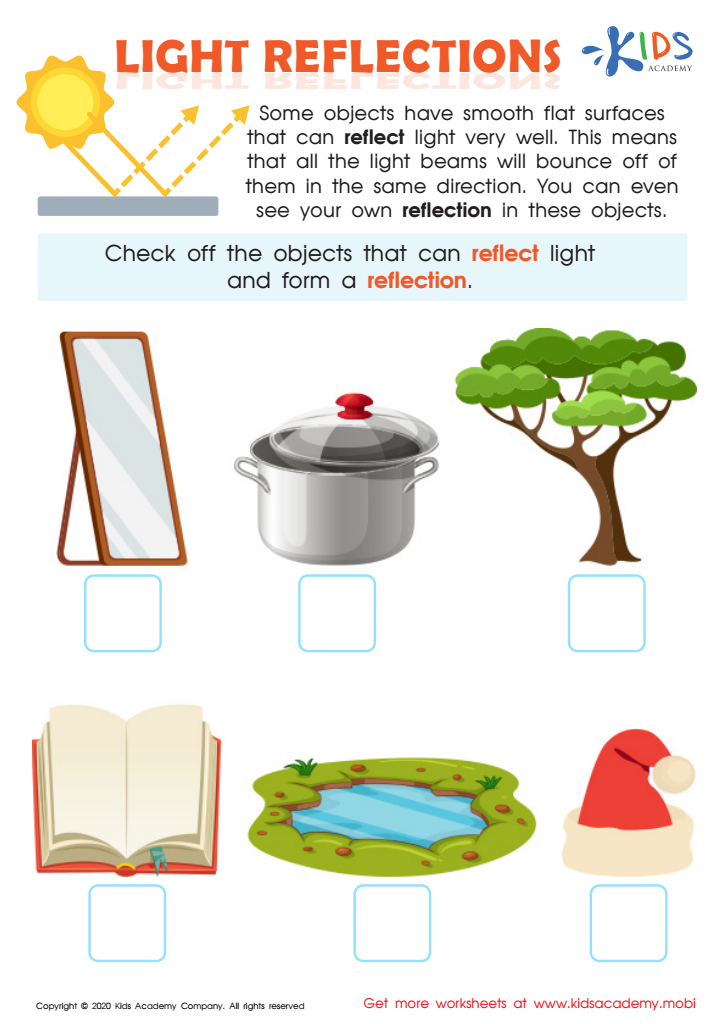
Light Reflections Worksheet
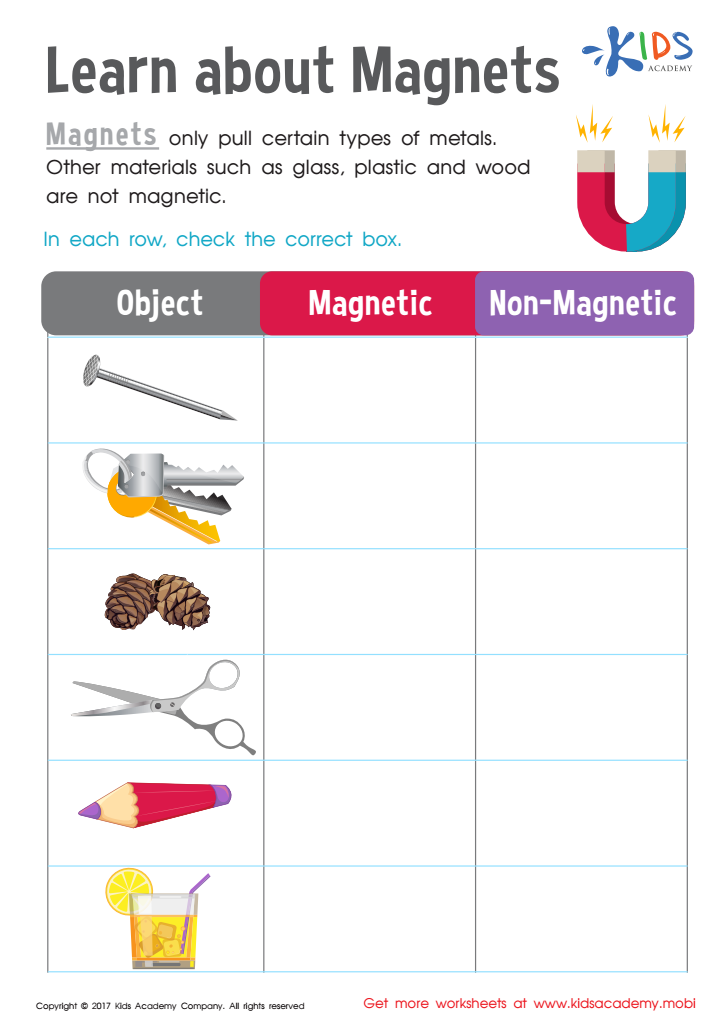
Magnetic Or Not Worksheet
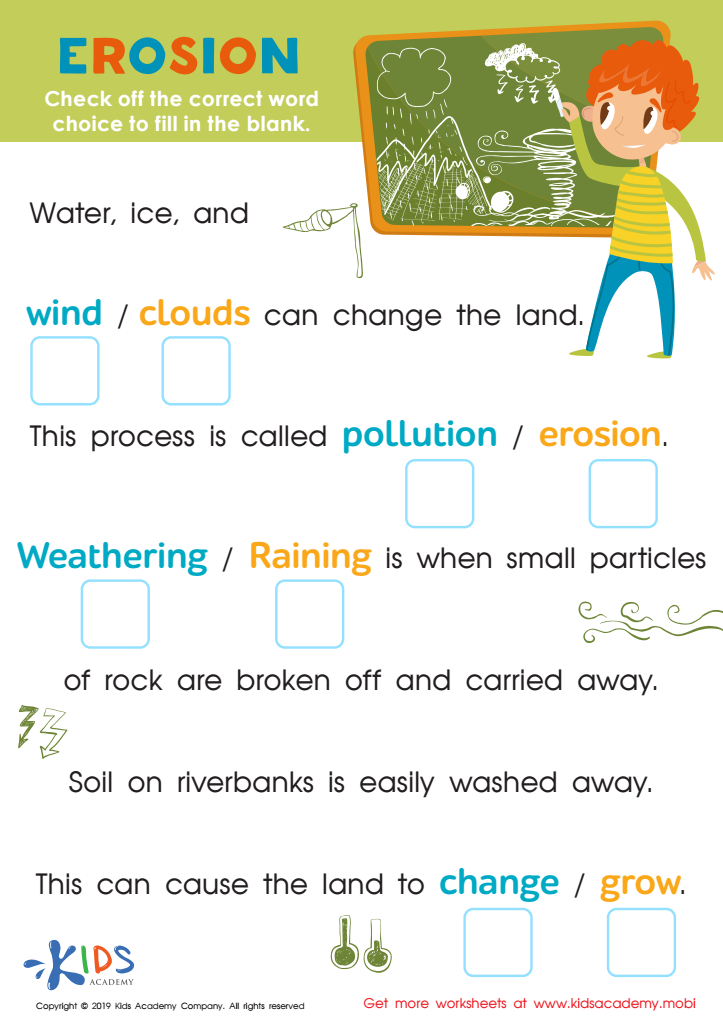
Erosion Worksheet
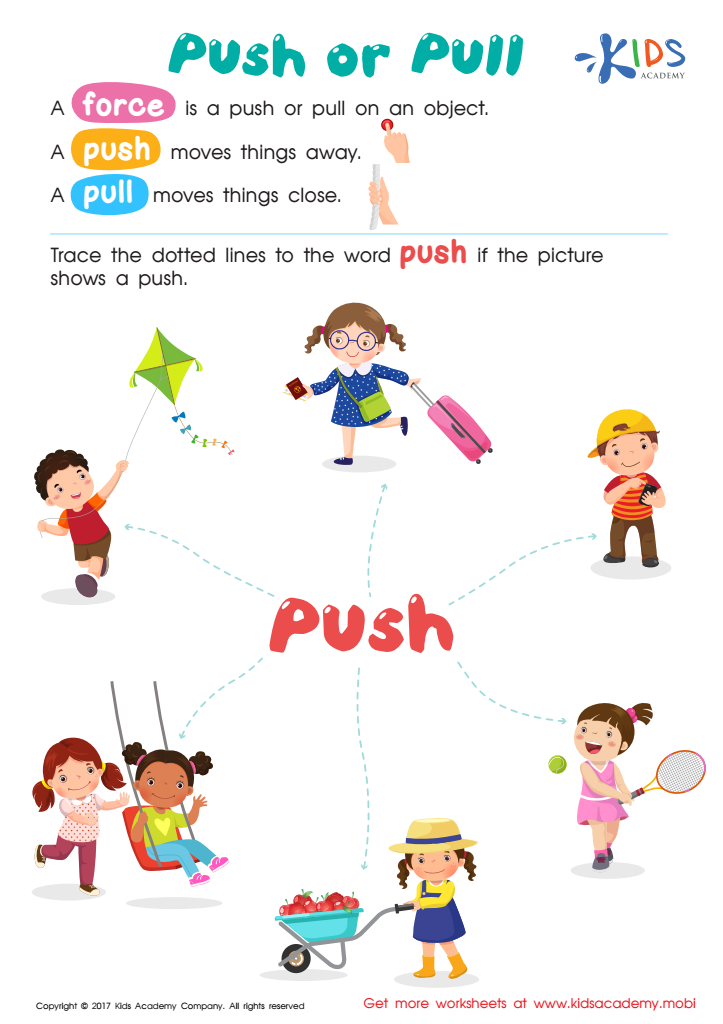
Push or Pull Worksheet
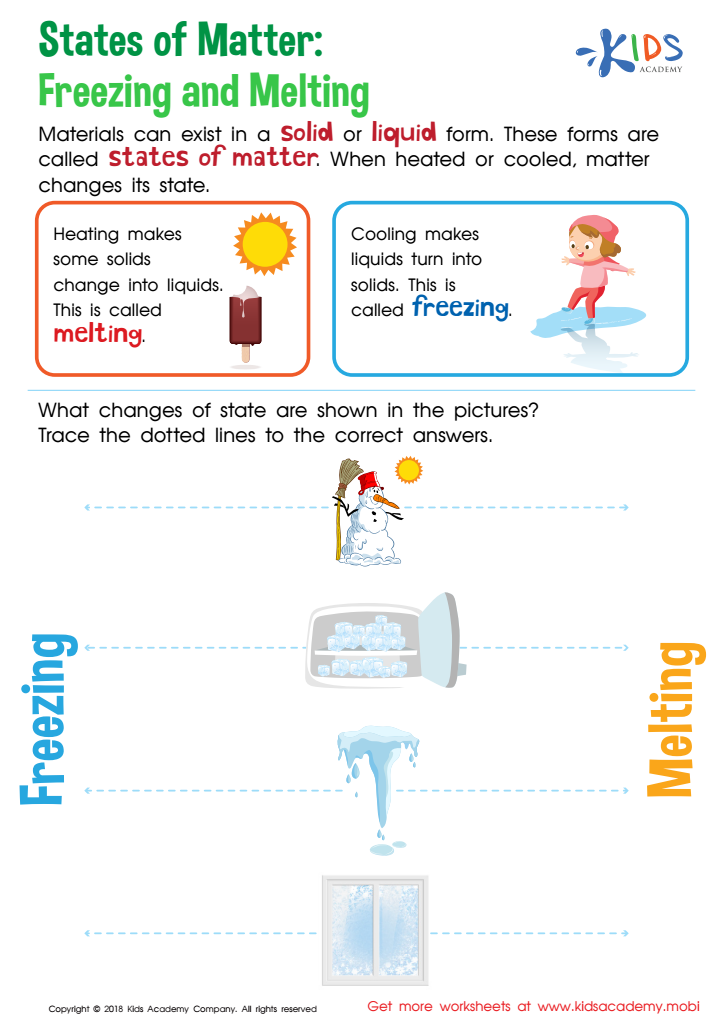
States of Matter: Freezing and Melting Worksheet








Enhancing observational skills in young children, particularly those aged 3-7, is crucial for their overall development, and parents or teachers should prioritize this skill. During these formative years, children are naturally curious and eager to explore their environment. By fostering strong observational skills, educators and parents can empower children to recognize patterns, make connections, and ask questions about the world around them.
Developing these skills not only bolsters a child’s scientific thinking but also lays the foundation for critical thinking and problem-solving aptitude. Engaging in activities that enhance observation—like nature walks, science experiments, and hands-on explorations—encourages children to capture details, differentiate between similarities and differences, and articulate their findings. Such experiences can ignite a lifelong passion for learning.
Additionally, strong observational skills improve language development. As children describe what they see and experience, they expand their vocabulary and comprehension. This, in turn, supports their social and emotional growth, as they learn to express thoughts and feelings based on observations.
In summary, enhancing observational skills in early learners not only nurtures their innate curiosity but also equips them with essential tools for learning and understanding their world, making it a fundamental focus for parents and educators alike.







