Logical thinking development Science Worksheets for Ages 3-7
3 filtered results
-
From - To
Foster early cognitive skills with our logical thinking development science worksheets designed for ages 3-7. Each engaging and educational worksheet is expertly crafted to ignite curiosity and enhance problem-solving abilities in young minds. With colorful illustrations and age-appropriate science concepts, children will enjoy exploring patterns, sequencing, classification, and more. These hands-on activities promote critical thinking and lay a strong foundation for future learning, making them perfect for both classroom and at-home use. Visit kidscademy.mobi to download and start nurturing your child's thinking skills today!
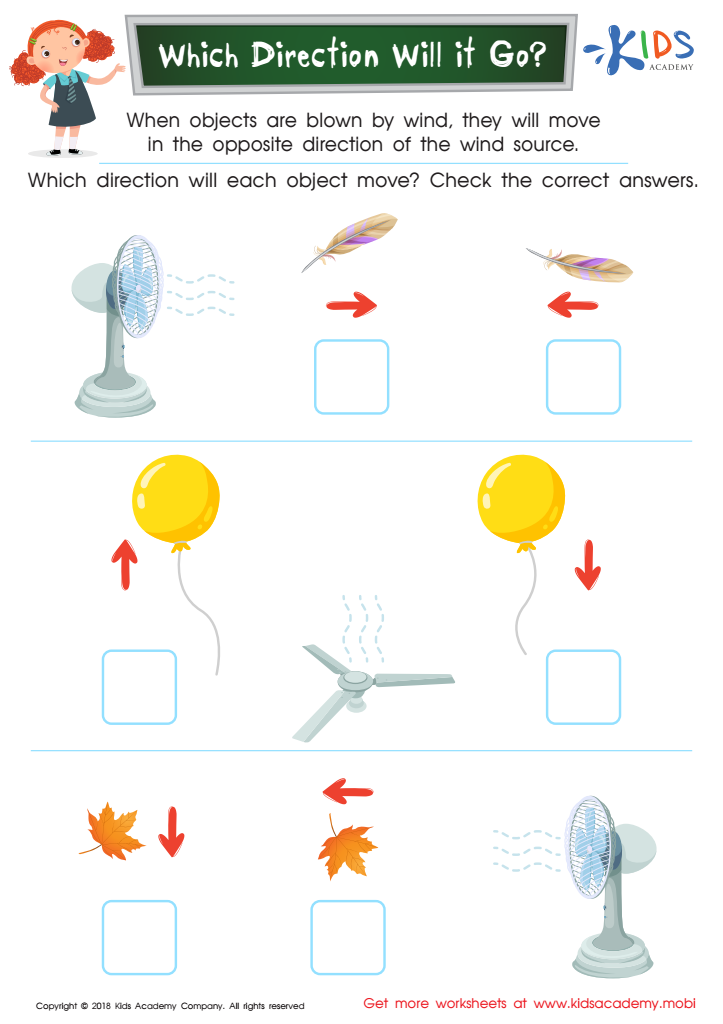
Which Direction Will it Go? Worksheet
 Assign to My Students
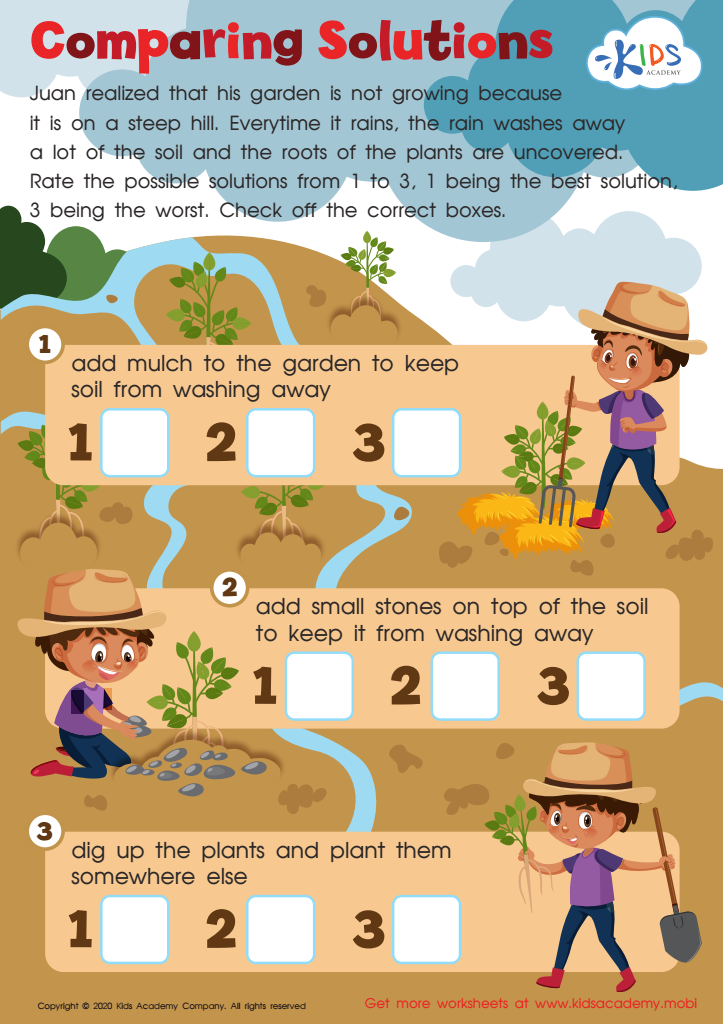
Comparing Solutions Worksheet
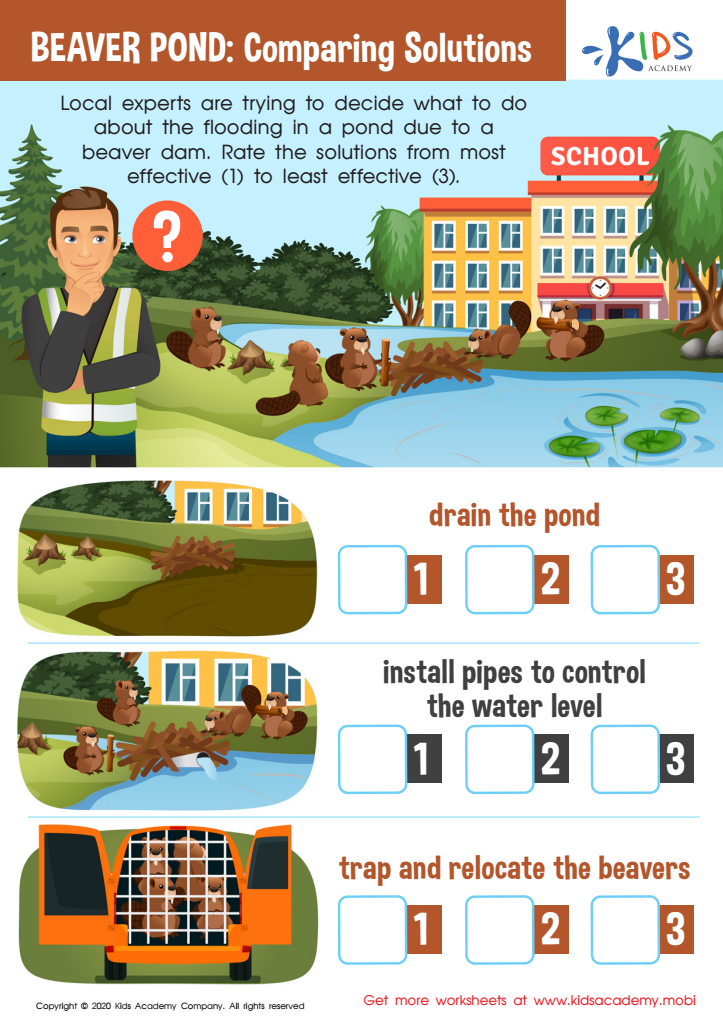
Beaver Pond: Comparing Solutions Worksheet







Logical thinking development in early childhood, specifically for ages 3-7, is crucial for several reasons. First, it fosters strong problem-solving skills. When children learn to think logically, they become adept at identifying patterns, predicting outcomes, and systematically working through challenges, which are essential skills for both academic success and day-to-day decision-making.
Secondly, cultivating logical thinking at an early age builds a strong foundation for future learning in subjects like mathematics, science, and even reading comprehension. These disciplines fundamentally rely on the ability to analyze, compare, and sequence information, which are core components of logical reasoning.
Moreover, engaging in logical thinking exercises develops critical thinking ability. Children learn not just to receive information passively, but to question, hypothesize, and draw reasoned conclusions. This actively nurtures an inquisitive mindset and supports lifelong learning.
Finally, encouraging logical thinking enhances children's confidence and independence. When children master logical tasks—such as solving simple puzzles or discerning cause and effect—they feel a sense of accomplishment. This reinforces a positive self-concept and motivates them to tackle progressively challenging tasks.
For these reasons, parents and teachers should emphasize logical thinking development during early childhood as it is foundational for academic achievement and overall intellectual growth.







