Science comprehension Science Worksheets for Ages 3-7
3 filtered results
-
From - To
Explore our engaging science comprehension worksheets tailored for ages 3-7! Designed to spark curiosity and foster a love for learning, these resources introduce young learners to essential scientific concepts through fun activities. Our worksheets feature vibrant illustrations and age-appropriate challenges that encourage critical thinking, observation skills, and vocabulary development related to basic science topics. Perfect for home or classroom use, they promote interactive learning and make science accessible to early learners. Download and print our worksheets today to embark on an exciting journey of discovery with your little scientists, nurturing their understanding of the world around them!
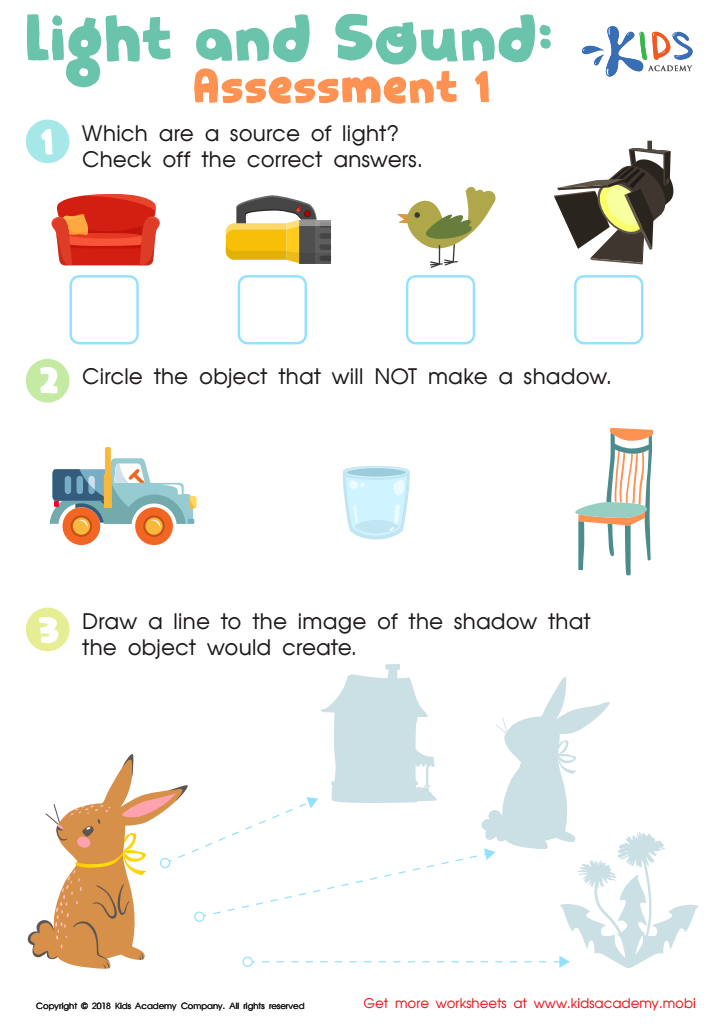
Light and Sound: Assessment 1 Worksheet
 Assign to My Students
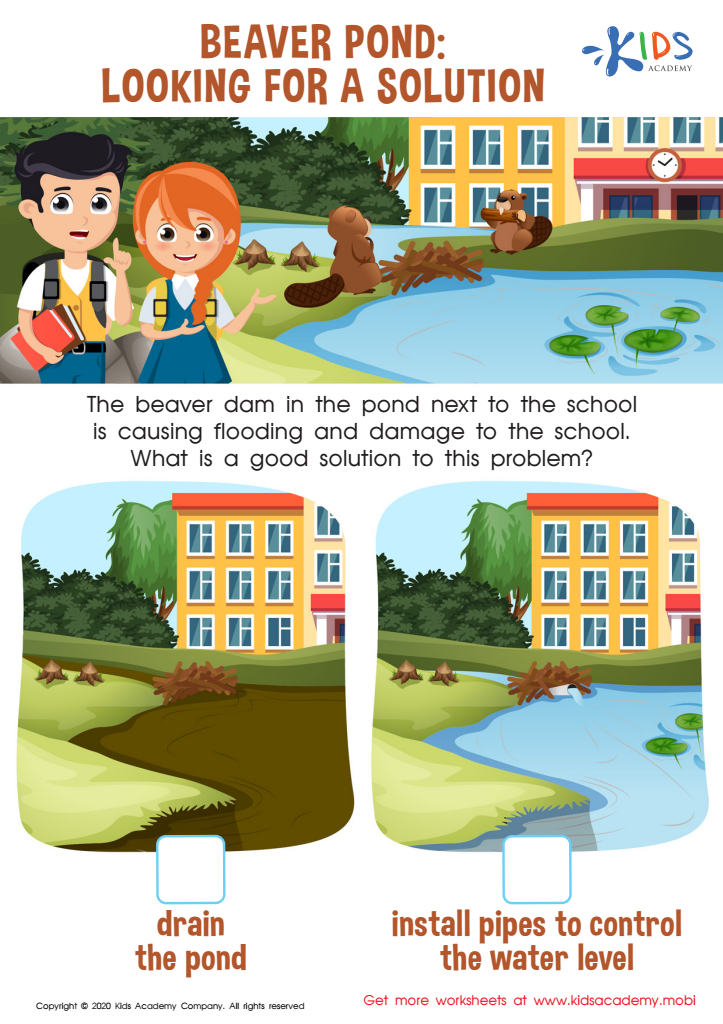
Beaver Pond: Looking for a Solution Worksheet
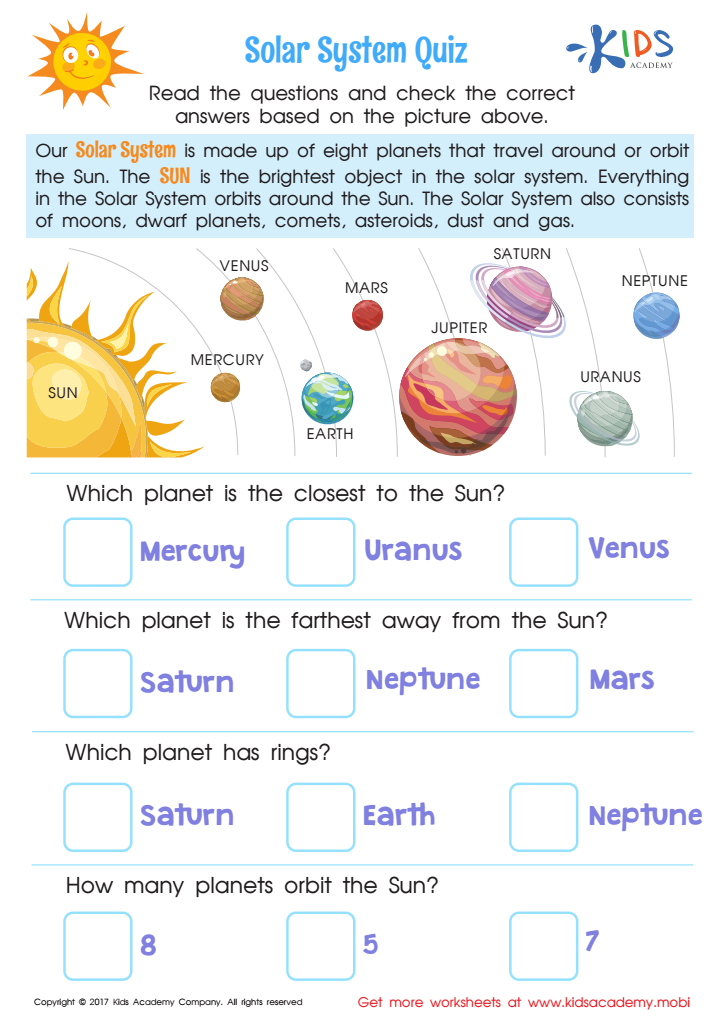
Solar System Quiz Printable



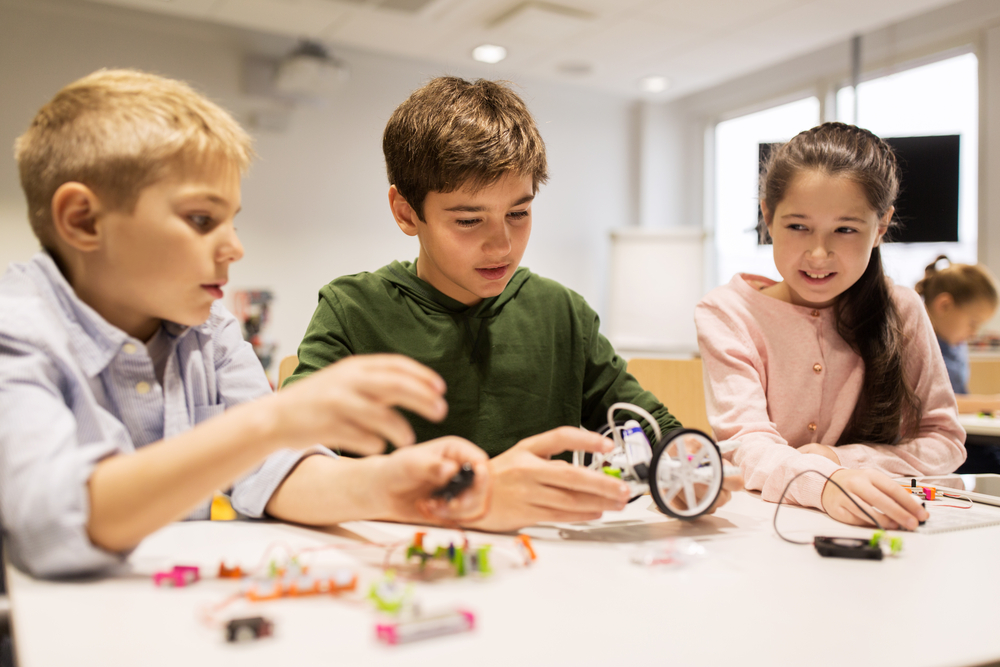




Science comprehension for children aged 3-7 is crucial for their overall development and learning. At this early stage, children possess an innate curiosity about the world around them. Engaging them in science fosters critical thinking, inquiry skills, and a love for learning. By exploring scientific concepts, young learners develop the ability to ask questions, make observations, and draw conclusions, laying the groundwork for effective problem-solving skills in the future.
Furthermore, science comprehension encourages children to understand the natural world and its processes, which can lead to better environmental stewardship as they grow. Early exposure to science promotes literacy and language skills, as children learn vocabulary and communicate their thoughts about their observations and experiences.
Parents and teachers play a vital role in nurturing this interest by providing hands-on experiences and encouraging exploration. This involvement not only enhances children's understanding but also builds a stronger parent-child or teacher-student bond. In an increasingly technology-driven world, equipping children with a solid foundation in science can spark future interest in STEM fields (Science, Technology, Engineering, and Mathematics), promoting innovation and preparing them for the challenges of tomorrow. Therefore, science comprehension should be a priority in early education.







