Understanding directions Science Worksheets for Ages 3-7
4 filtered results
-
From - To
Foster a love for learning with our "Understanding Directions Science Worksheets for Ages 3-7". Tailored for young minds, these engaging printables enhance spatial awareness and comprehension skills through fun activities. Perfect for preschoolers and early elementary students, each worksheet encourages children to follow directions and develop critical thinking. Explore diverse exercises including left, right, up, and down instructions, designed to make complex concepts simple and enjoyable. These well-crafted resources support early childhood education, helping kids grasp essential skills in an interactive and playful way. Start navigating the learning journey with our expertly designed direction-following worksheets!
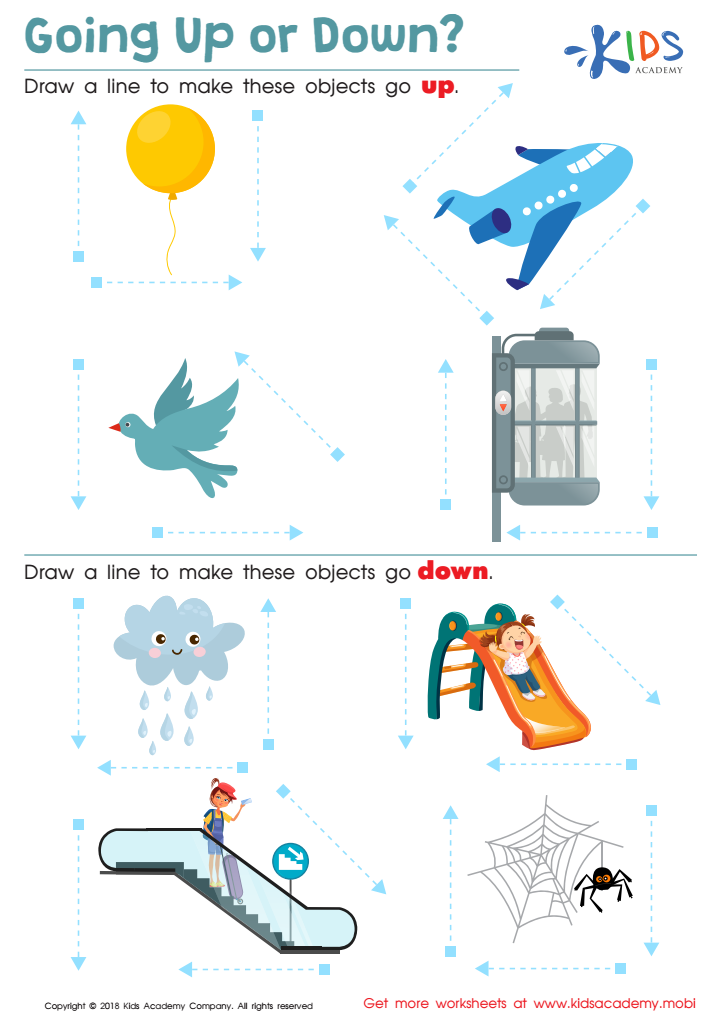
Going up or Down? Worksheet
 Assign to My Students
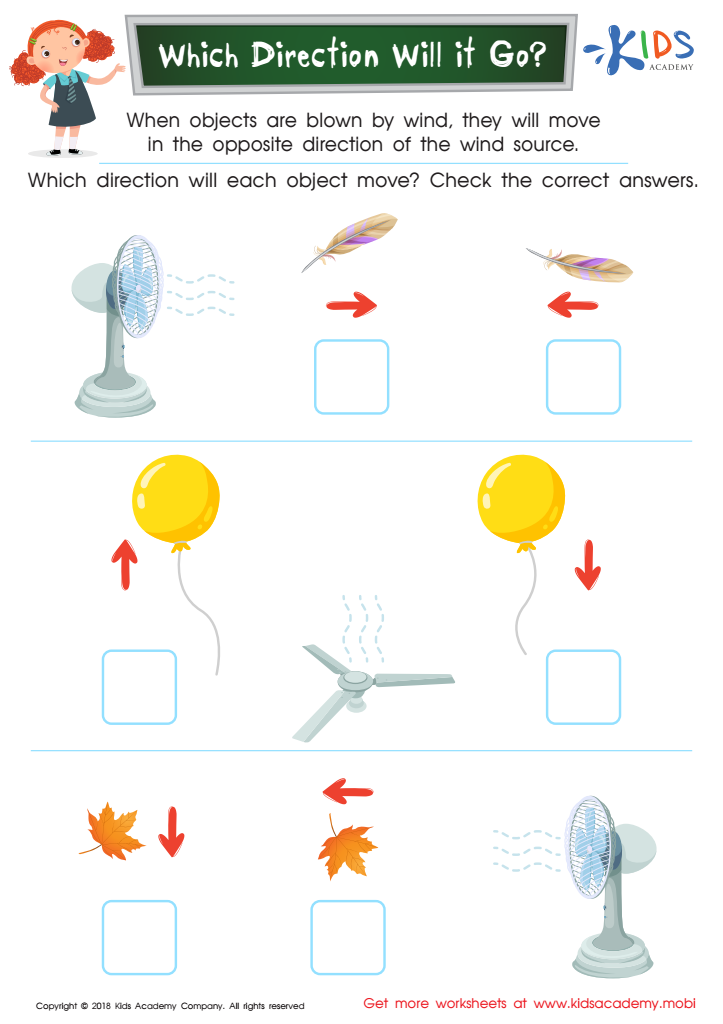
Which Direction Will it Go? Worksheet
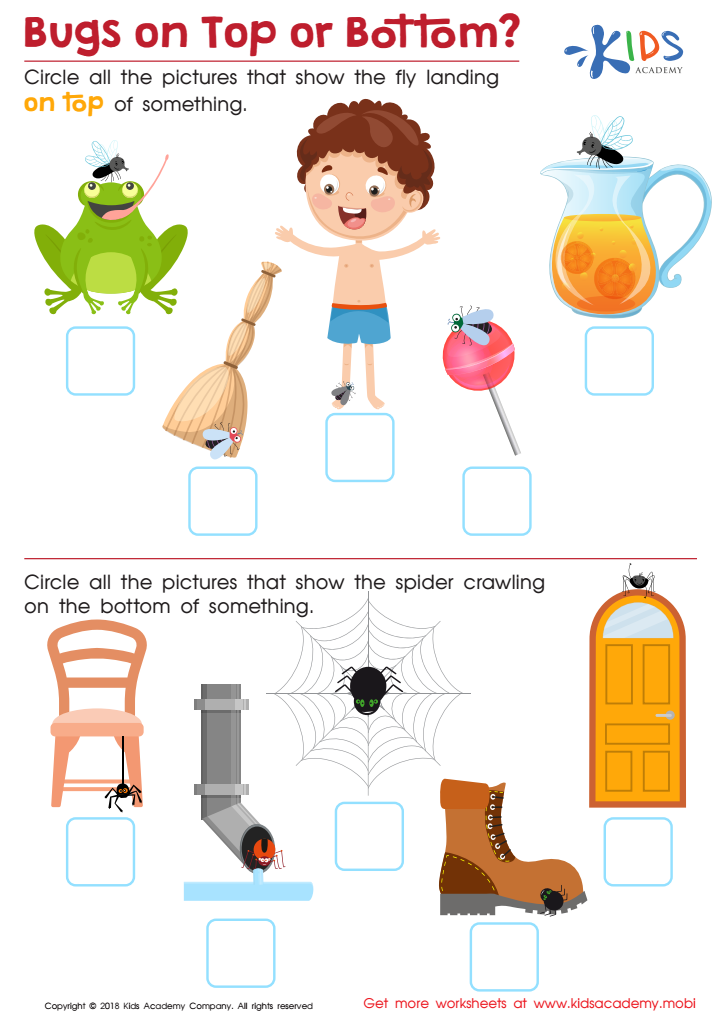
Bugs on Top or Bottom? Worksheet
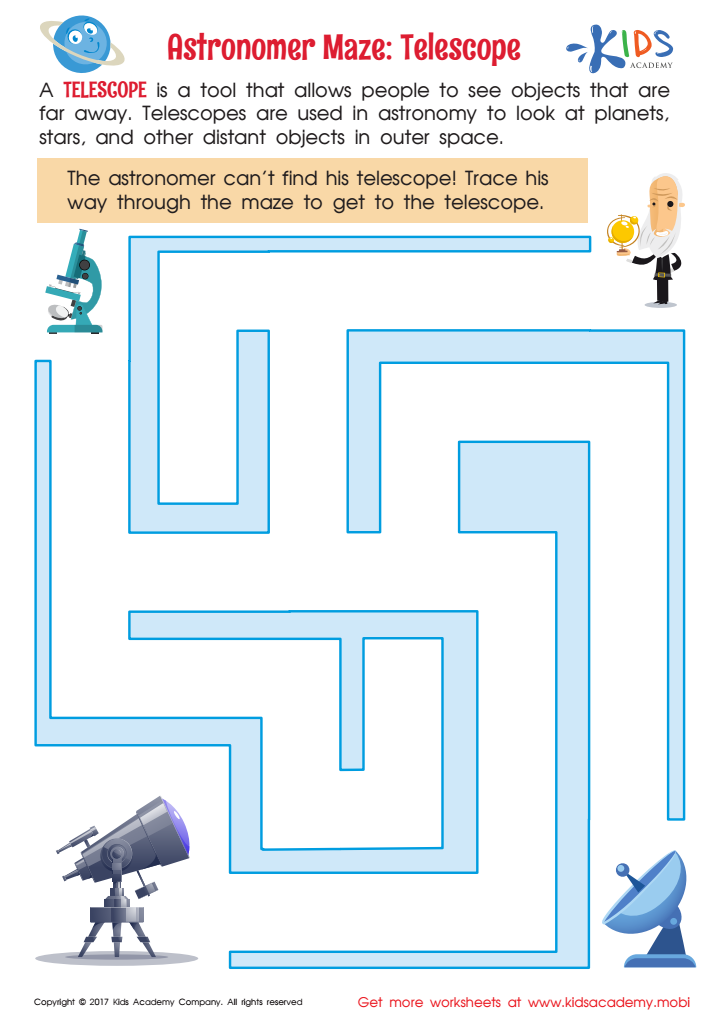
Astronomer Maze: Telescope Worksheet







Understanding directions is an essential skill for young children aged 3-7 as it lays the groundwork for more complex learning experiences, especially in science. First and foremost, comprehension of directions enhances a child's ability to follow instructions effectively, ensuring safety during hands-on experiments and activities. This age group is naturally curious and eager to explore the world around them. When children understand directions, they can engage in scientific discoveries with greater precision and confidence, fostering a sense of accomplishment and curiosity.
Moreover, mastering directions aids in cognitive development by promoting attention to detail, sequencing abilities, and critical thinking skills. For example, following steps in a science project can teach children cause-and-effect relationships, problem-solving, and logical reasoning. These skills are foundational not just for science, but for reading, mathematics, and everyday life tasks.
Developing the ability to understand and execute directions also empowers social development. It encourages teamwork, as children need to communicate and collaborate effectively with peers during group activities. This collective interaction bolsters their ability to articulate thoughts, listen to others, and work towards a common goal.
In essence, comprehension of directions is a crucial educational pillar that equips young children with the skills necessary for a lifetime of effective learning and interpersonal interactions.







