Understanding pollination Science Worksheets for Ages 3-7
3 filtered results
-
From - To
Discover the fascinating world of pollination with our "Understanding Pollination Science Worksheets" designed for children ages 3-7! These engaging worksheets align with early learning standards, offering fun activities that teach young learners about the essential role of pollinators in nature. Through colorful illustrations and interactive exercises, kids will explore concepts such as flower structure, the life cycle of plants, and the importance of bees, butterflies, and other pollinators. Perfect for home or classroom use, these worksheets encourage curiosity, critical thinking, and a love for science. Foster your child's understanding of nature with worksheets that inspire learning through play!
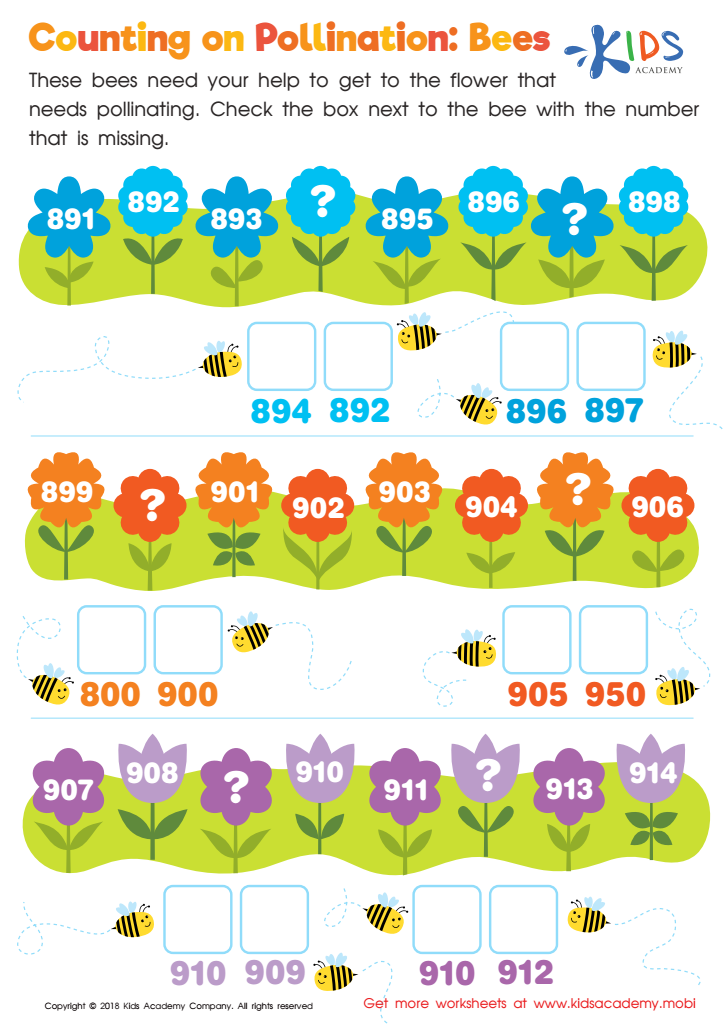
Counting on Pollination: Bees Worksheet
 Assign to My Students
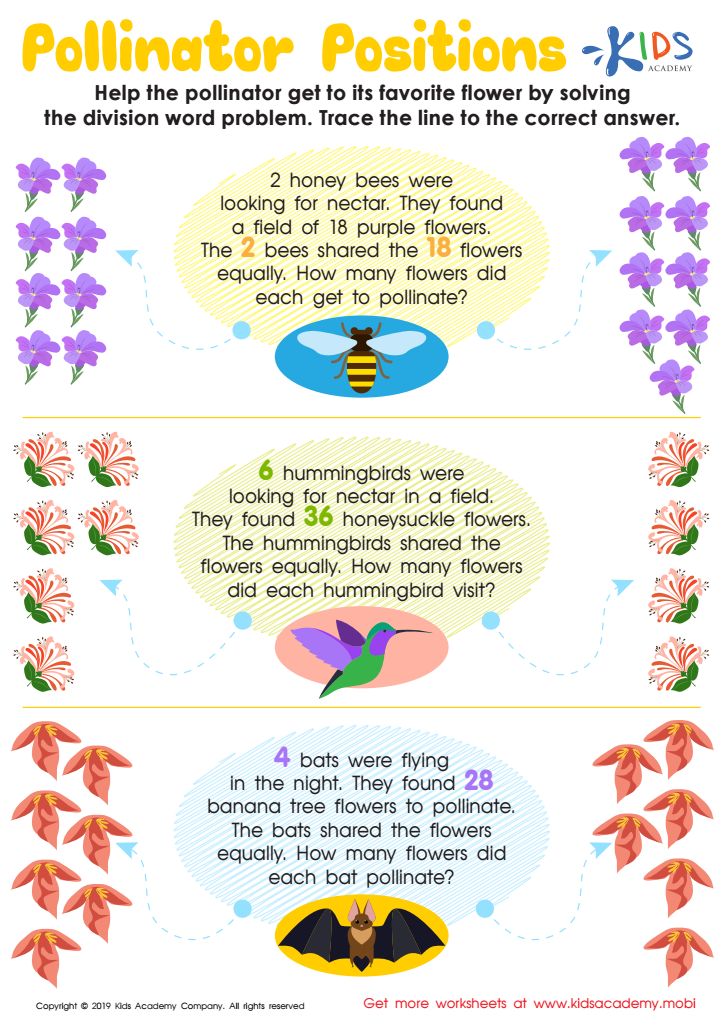
Pollinator Positions Worksheet
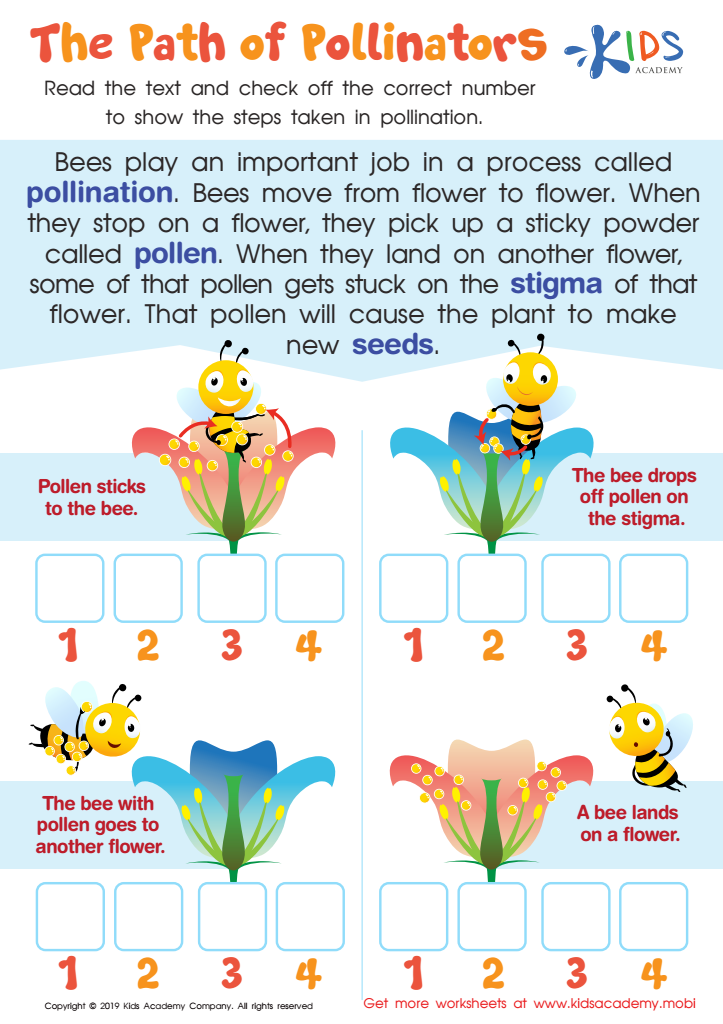
The Path of Pollinators Worksheet







Understanding pollination science is crucial for children aged 3-7, as it lays the foundation for their appreciation of nature and promotes environmental awareness. At this young age, children are naturally curious and eager to learn about the world around them. Introducing them to the basics of pollination—how bees, butterflies, and other pollinators help plants reproduce—encourages engagement with science in a fun and accessible way.
Additionally, learning about pollination fosters respect for nature and underscores the importance of bees and other pollinators in our ecosystem, food production, and biodiversity. These concepts can seamlessly integrate into exciting hands-on activities like gardening, where children can observe pollination in action. Such explorations not only make learning enjoyable but also cultivate critical thinking, observation skills, and a sense of responsibility toward the environment.
Moreover, as future stewards of the Earth, it's vital that young children understand the interconnectedness of all living beings. By emphasizing pollination in their early education, educators and parents empower children to become informed individuals who can contribute positively to their communities and advocate for nature's preservation as they grow. In essence, fostering early scientific curiosity through engaging topics like pollination can inspire lifelong learning and eco-friendly habits.







