Weather Vocabulary Science Worksheets for Ages 3-7
3 filtered results
-
From - To
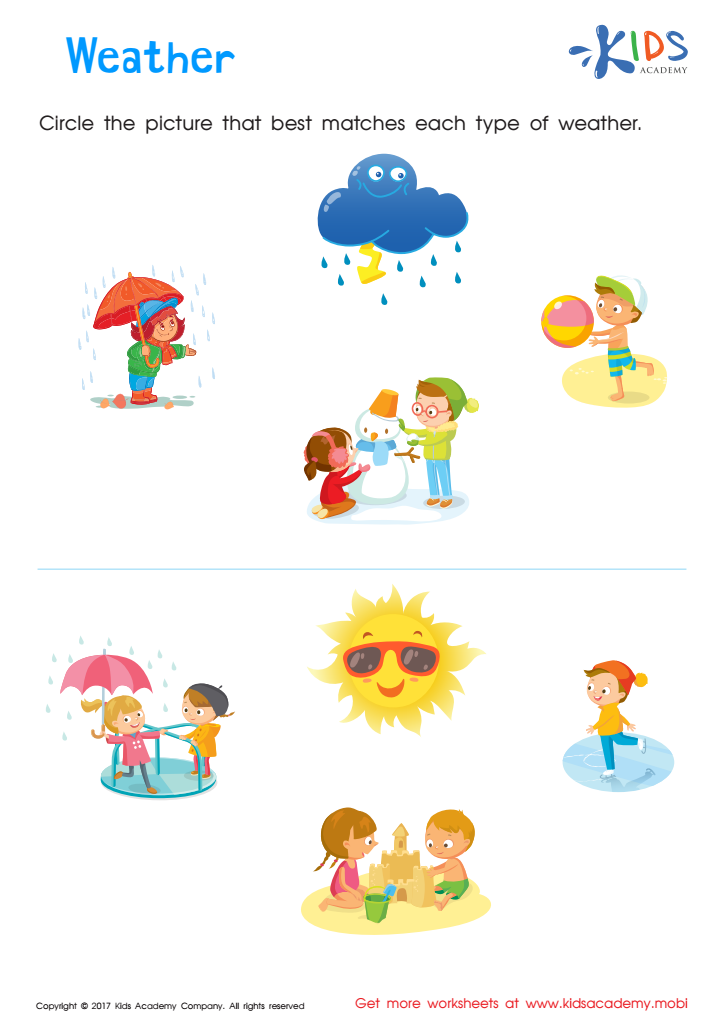
Introduce your little ones to the exciting world of weather with our engaging Science Worksheets for Ages 3-7! Perfect for early learners, these colorful worksheets help children learn key weather vocabulary while fostering curiosity and observation skills. From sunny skies to rainy days, kids will explore different weather conditions through fun activities like matching, tracing, and coloring. Designed by educational experts, these printable worksheets complement preschool and early elementary science curriculums, providing a dynamic way to enhance vocabulary and understanding of the natural world. Give your child a head start on their scientific journey with our weather vocabulary worksheets!
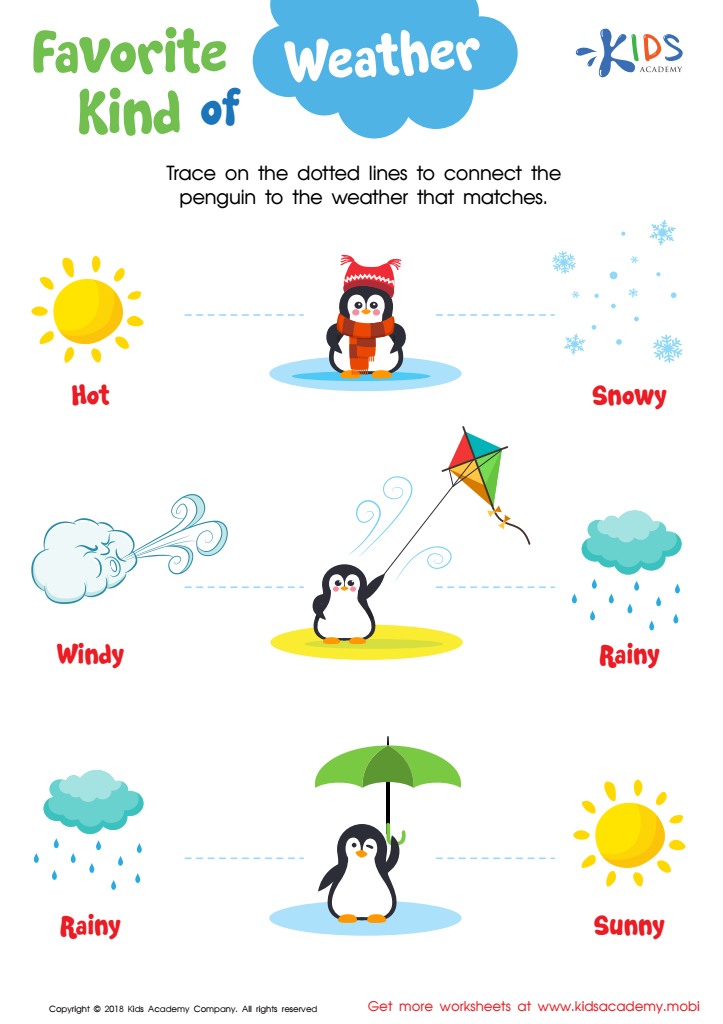
Favorite Kind of Weather Worksheet
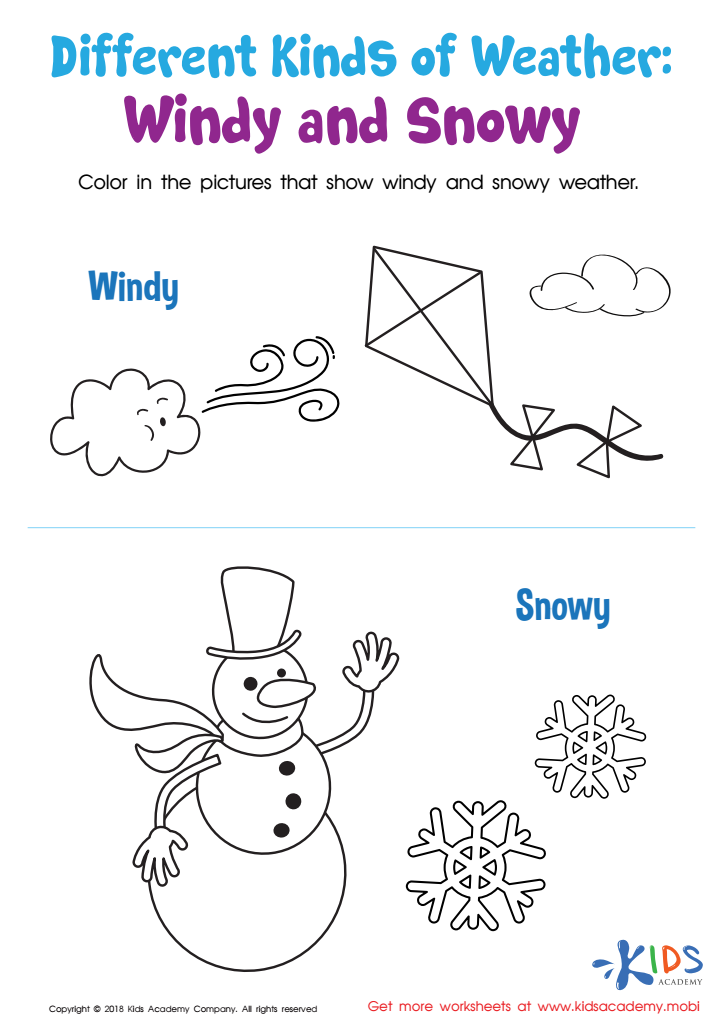
Different Kinds of Weather: Windy and Snowy Worksheet
 Assign to My Students



.jpg)




Introducing weather vocabulary science to children aged 3-7 is foundational for several reasons, making it significant for parents and teachers to prioritize this aspect of early education. Firstly, understanding basic weather concepts helps children make sense of the world around them. They begin to comprehend everyday phenomena like rain, sunshine, snow, and wind, fostering curiosity and enhancing observational skills.
Furthermore, weather vocabulary lays the groundwork for scientific thinking and inquiry. Early exposure to terms such as "forecast," "temperature," and "storm" not only enriches their language but also stimulates cognitive development by encouraging kids to ask questions and make predictions.
Secondly, discussing weather safety becomes more effective when children are familiar with the terms. Knowing the difference between a drizzle and a storm, or understanding what a weather alert means, can help youngsters respond appropriately to different weather conditions, which is crucial for their safety.
Lastly, integrating weather vocabulary into daily routines can be a fun and engaging way for parents and teachers to connect with children. Simple activities like creating weather charts, reading weather-related stories, or even going outside to experience different conditions can enrich learning and make complex concepts more tangible.
Overall, fostering a strong foundation in weather vocabulary sets the stage for lifelong learning in science while supporting language development, cognitive growth, safety awareness, and engaging family and classroom interactions.







