Understanding life cycles Life Science Worksheets for Ages 3-7
3 filtered results
-
From - To
Explore the fascinating world of life cycles with our engaging Life Science Worksheets designed for children aged 3-7! These worksheets offer young learners a fun and interactive way to understand how living organisms grow, change, and reproduce. From the metamorphosis of butterflies to the growth of plants, our colorful and age-appropriate activities promote essential science skills while sparking curiosity about nature. Featuring a variety of exercises, such as cutting, pasting, and drawing, these resources are perfect for classroom use or home learning. Encourage your little ones to discover the wonders of life through hands-on learning experiences that will inspire a lifelong appreciation for science!
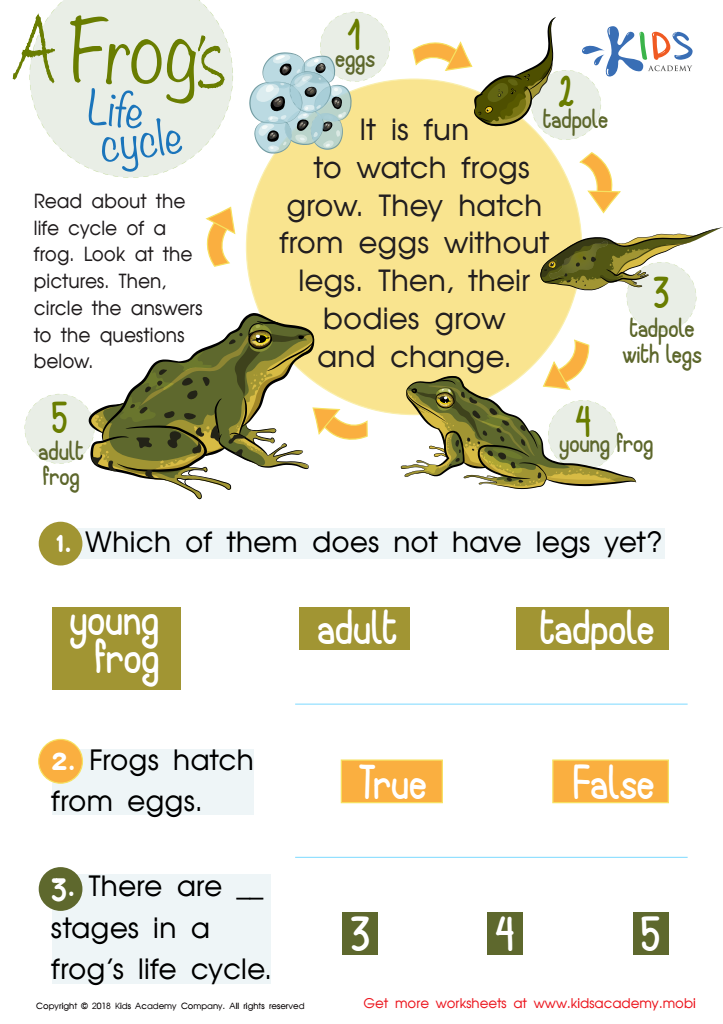
A Frog’s Life Cycle Worksheet
 Assign to My Students
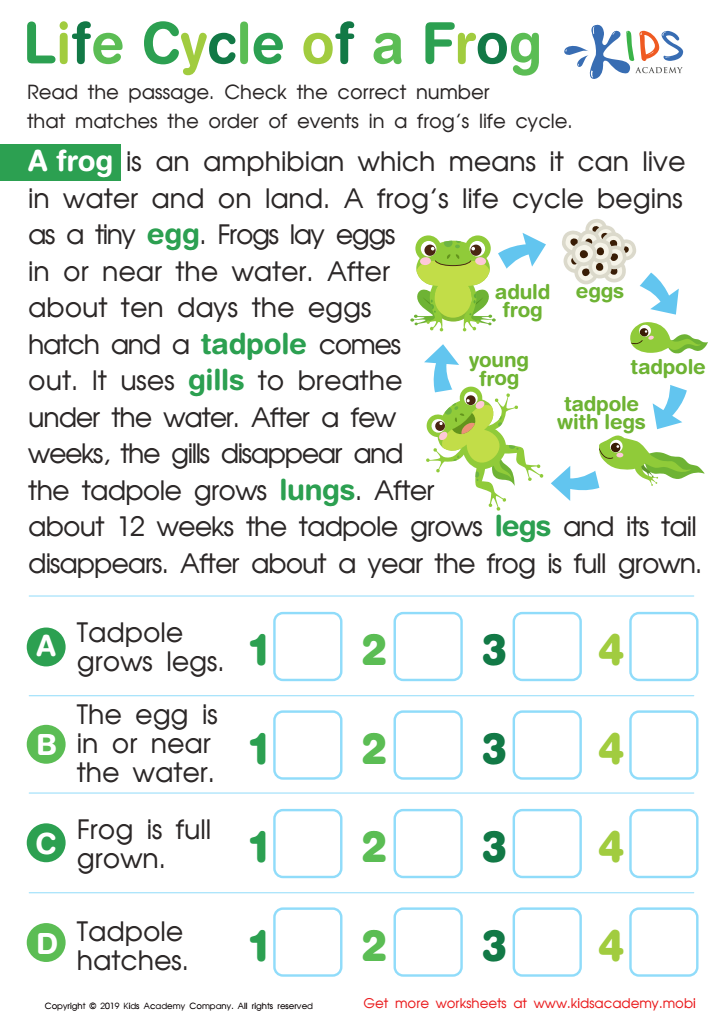
Life Cycle of a Frog Worksheet
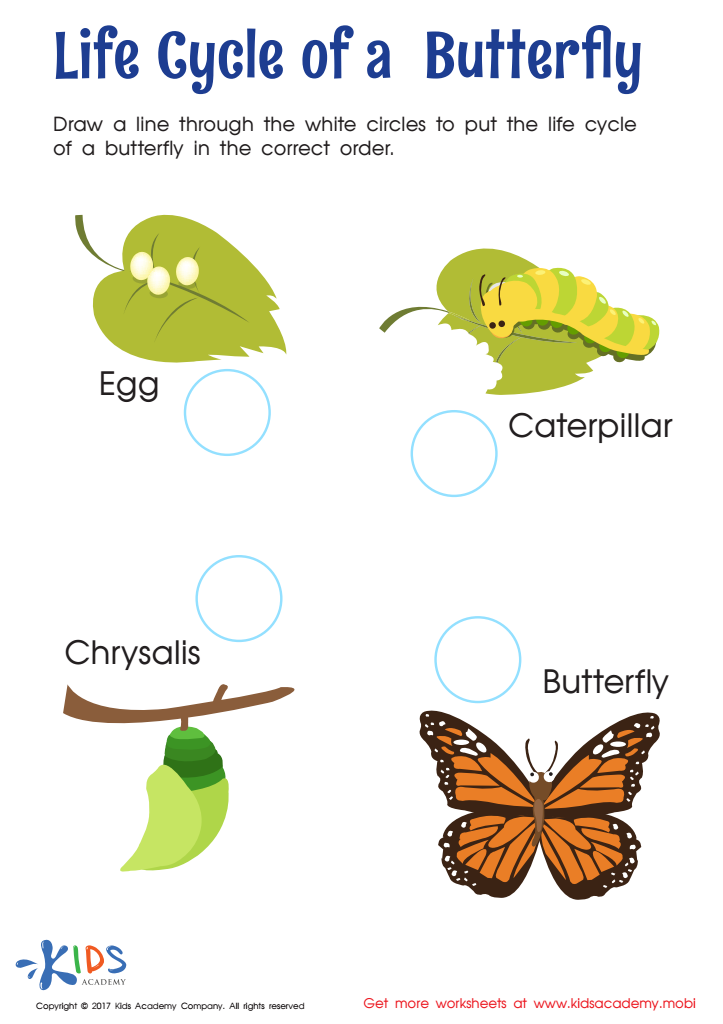
Life Cycle of Butterfly Worksheet




Understanding life cycles is essential for young children as it fosters appreciation for nature and teaches foundational concepts in life science. For parents and teachers, introducing life cycles to children ages 3-7 promotes curiosity and encourages exploration. At this tender age, children are naturally inquisitive, and learning about life cycles allows them to observe changes in living organisms, which fosters respect and empathy towards all forms of life.
This knowledge helps children grasp important scientific concepts such as growth, changes, and the interdependence of organisms, which encourages critical thinking and boosts cognitive development. Activities like observing caterpillars turn into butterflies or planting seeds can inspire a love for nature and nurture a sense of responsibility.
Moreover, discussing life cycles integrates literacy and numeracy skills; children can engage in storytelling, sequencing events, and even counting stages in the life cycle. Lastly, caring for living things cultivates emotional intelligence, teaching children about nurturing and the ecological responsibilities we all share. For these reasons, inspiring curiosity about life cycles provides children with a holistic educational experience that lays the groundwork for scientific literacy and environmental stewardship in the future.








