Map reading skills Our Planet and Environment Worksheets for Ages 3-7
1 filtered results
-
From - To
Unlock your child's adventurous spirit with our Map Reading Skills: Our Planet and Environment Worksheets for Ages 3-7. Specially designed for early learners, these engaging printables introduce young explorers to map reading basics, geographical features, and environmental awareness. Through fun activities and colorful visuals, children will learn to navigate simple maps, identify landmarks, and understand their surroundings. These worksheets not only build important science skills but also foster a love for our planet. Start your child's journey in understanding the world around them today with easy-to-follow, educational fun! Perfect for curious minds in preschool to early elementary.
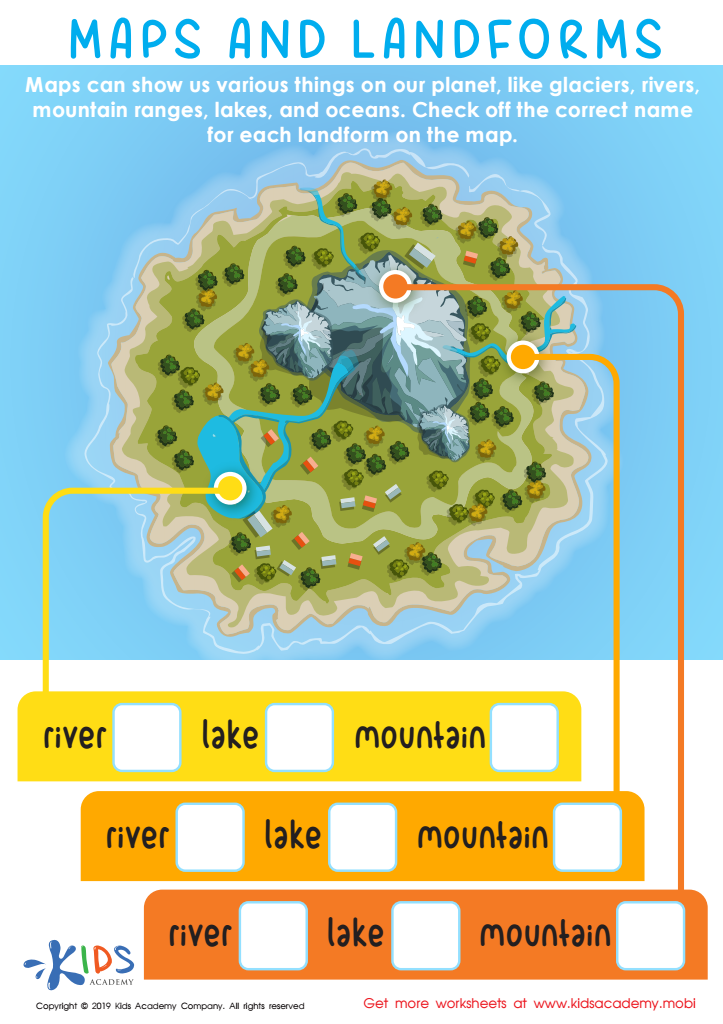
Maps and Landforms Worksheet
 Assign to My Students




Map reading skills are foundational for young children, even at ages 3-7, fostering not just geographical understanding but also broader cognitive and developmental benefits. Early exposure to maps helps children grasp spatial relationships, crucial for problem-solving and analytical thinking later in life. Recognizing symbols, understanding scale, and interpreting legends are all practices that enhance visual literacy and attention to detail, key skills that translate across various academic domains.
Moreover, an early appreciation for maps nurtures curiosity about our planet and environment. By exploring maps, children learn about different countries, landscapes, and the essence of various cultures, fostering empathy and a broader worldview. This global awareness is increasingly important in our interconnected world, encouraging future generations to become responsible global citizens.
Understanding environmental maps, such as ones depicting ecosystems, weather patterns, or conservation areas, promotes awareness of ecological issues from a young age. Early environmental education instills values of sustainability and respect for nature, forming the foundation for environmentally responsible behaviour.
In essence, map reading not only bolsters academic skills but also instills crucial environmental consciousness and global awareness. By investing in these skills early, parents and teachers set the stage for holistic cognitive development and responsible, informed future citizens.







