Filters

8 filtered results

Clear all filters
Favorites
With answer key
Interactive

8 filtered results

Difficulty Level

Grade


Discover our engaging Cognitive Development Worksheets focused on Plants and Animals, designed specifically for children aged 3-7. These interactive resources foster critical thinking and observation skills through colorful illustrations and hands-on activities. As young learners explore the fascinating world of flora and fauna, they enhance their cognitive abilities, such as categorization, problem-solving, and memory retention. Our worksheets promote greater awareness of the environment, encouraging curious minds to recognize and appreciate the diversity of life around them. Perfect for home or classroom use, these worksheets provide a fun, educational experience that sets the foundation for a lifelong love of learning.

Check out this FREE Trial Lesson on Plants and Animals for age 3-7!

What Do Animals Need?

Favorites
With answer key
Interactive
  • 3-7
  • Cognitive Development
  • Plants and Animals
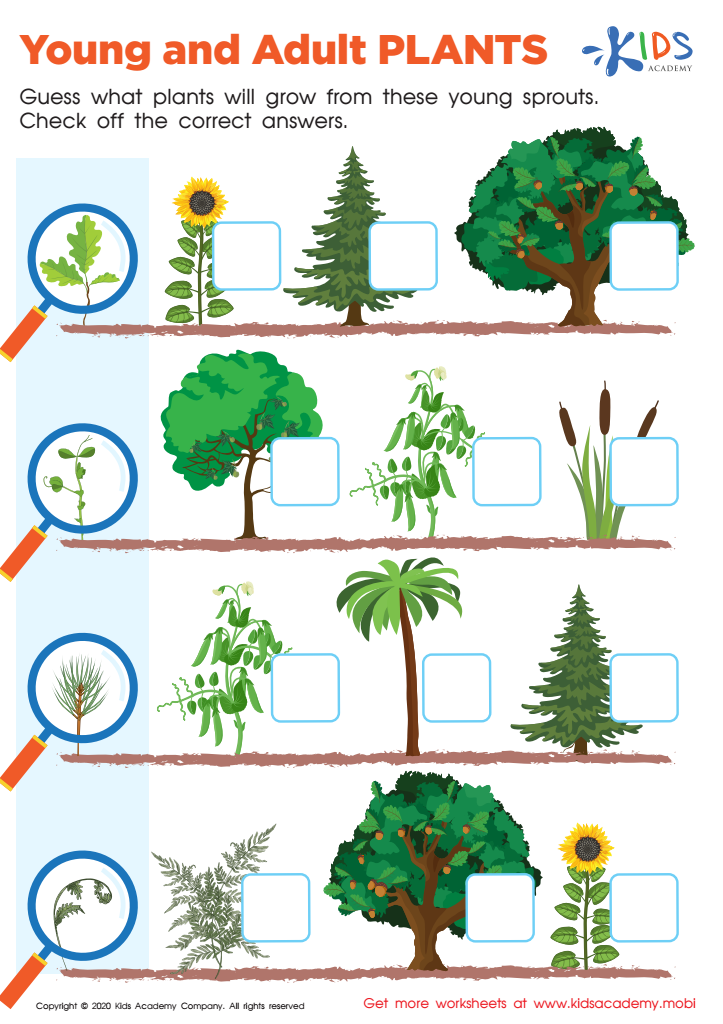
Young and Adult Plants Worksheet

Young and Adult Plants Worksheet

Examine the sprouts, then compare the leaves of the nearby trees. Check the box next to the tree that looks similar to the sprout to complete the worksheet. Problem-solving and analysis skills will be put to the test! 80 words.
Young and Adult Plants Worksheet
Worksheet
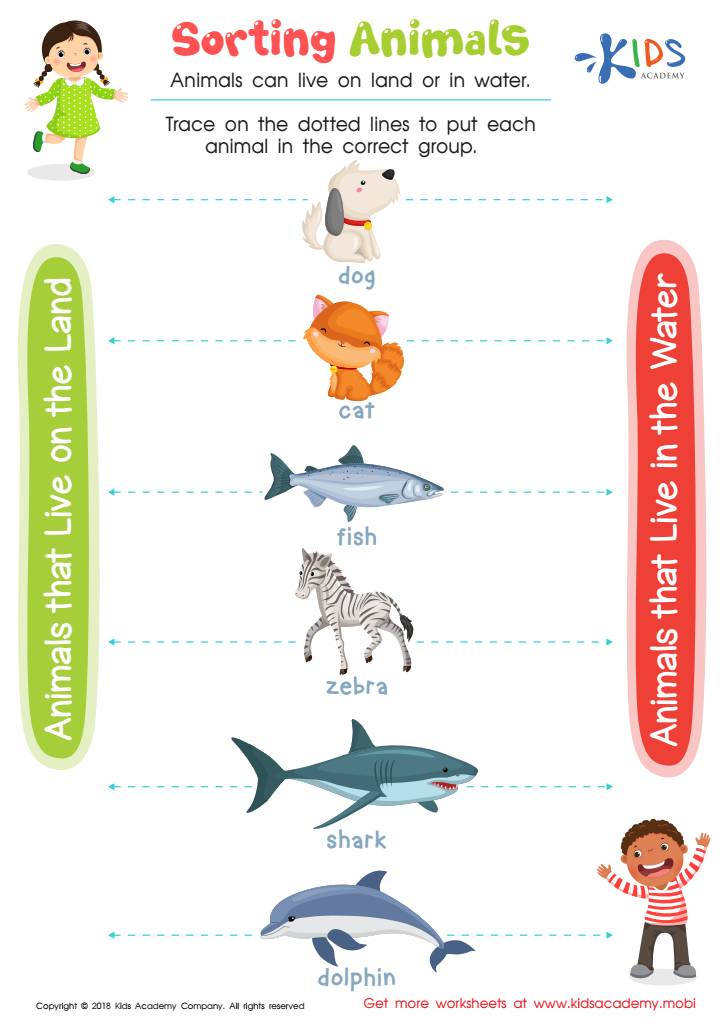
Sorting Animals Worksheet

Sorting Animals Worksheet

Your kids will love this free, interactive worksheet! With image clues, they can read and trace the animal names, and then sort them into groups of land or water animals. It's an enjoyable way to boost their critical thinking, fine motor and prior knowledge skills.
Sorting Animals Worksheet
Worksheet
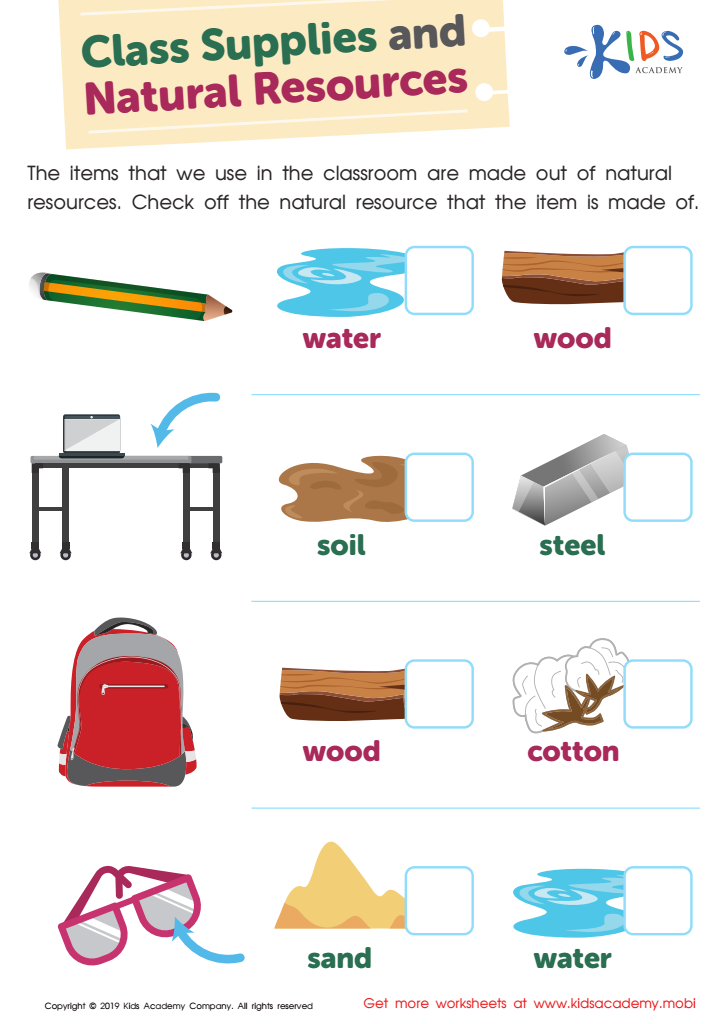
Class Supplies and Natural Resources Worksheet

Class Supplies and Natural Resources Worksheet

Look around the classroom with your students. Can they identify objects and name their natural resources? E.g. wood, cotton, steel. Ask your child to find an object made from wood. Then, look at this worksheet together. Ask your students to identify each object and check off the natural resource it's made from.
Class Supplies and Natural Resources Worksheet
Worksheet
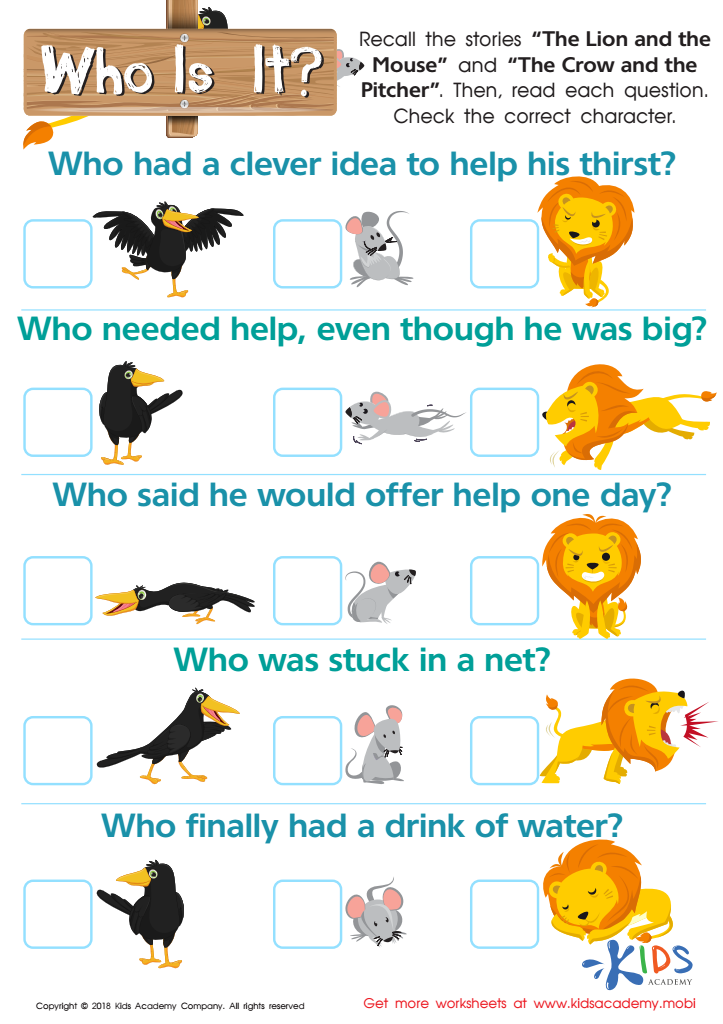
Who Is It? Worksheet

Who Is It? Worksheet

This worksheet helps students recall details from The Crow and the Pitcher and The Lion and the Mouse stories. Students will answer questions about the characters' actions. Use it to assess their understanding of both stories, as this is a key comprehension skill.
Who Is It? Worksheet
Worksheet
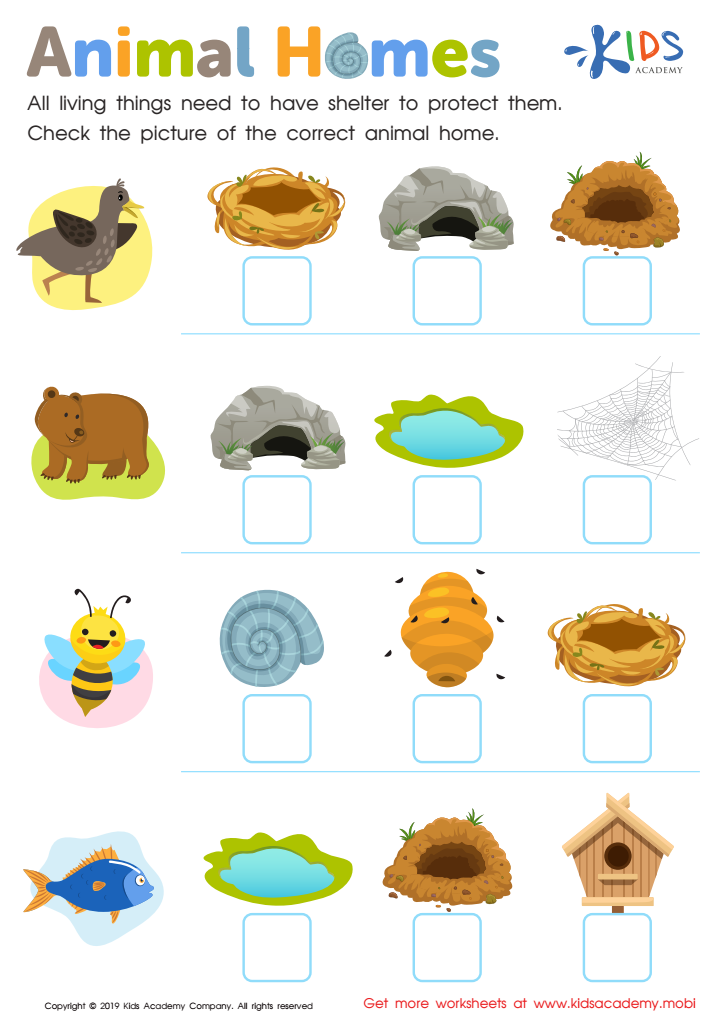
Animal Homes Worksheet

Animal Homes Worksheet

Students have homes where they can do things they love, sleep and stay safe from bad weather. Check the worksheet for animals and their shelters. Ask your kids to identify each and match the animal home to the picture. (80 words)
Animal Homes Worksheet
Worksheet
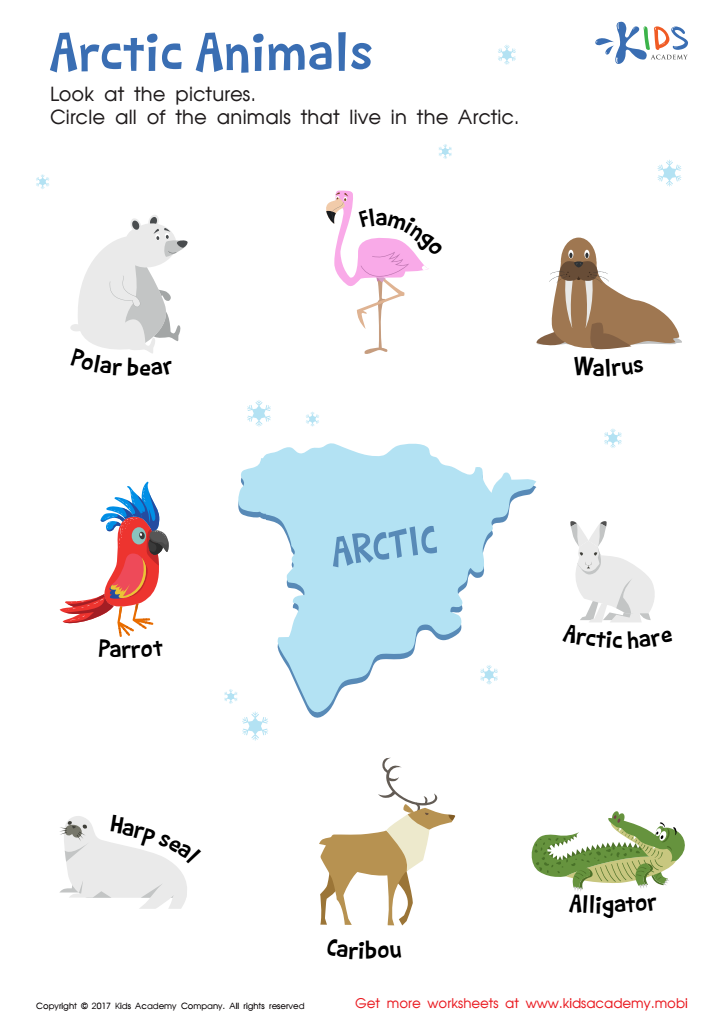
Arctic Animals Worksheet

Arctic Animals Worksheet

Kids love animals and this worksheet is a great way to teach them where they live. It reinforces classification skills and introduces new animals, like the Arctic hare. Use it to discuss the Arctic climate and how these animals live, then ask your child where other animals live to keep the conversation going.
Arctic Animals Worksheet
Worksheet
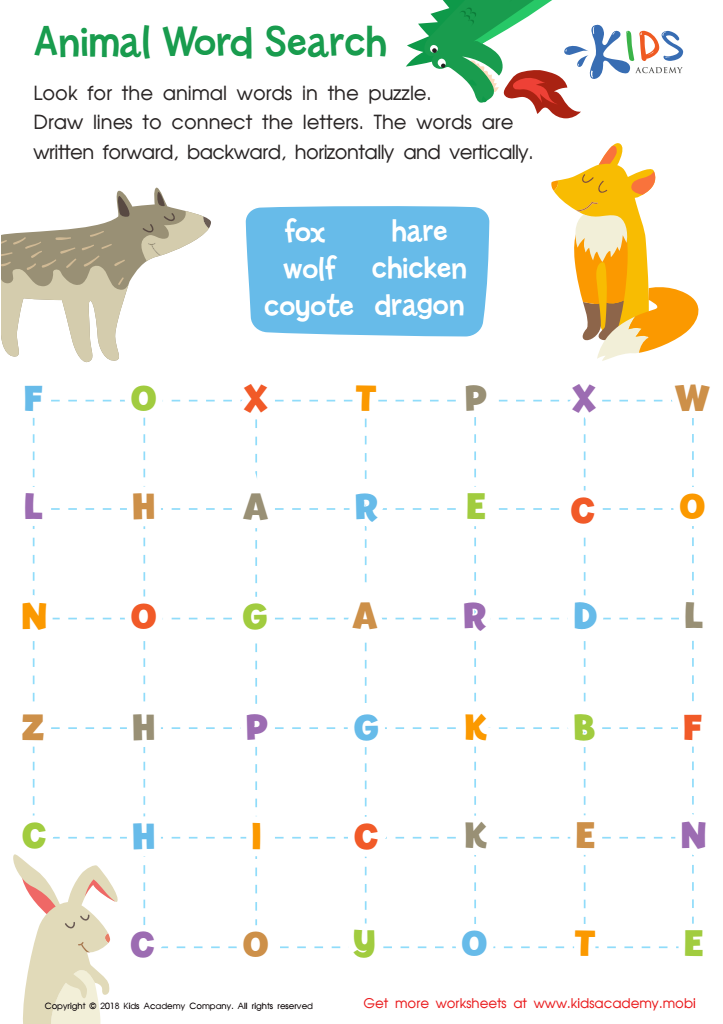
Animal Word Search Worksheet

Animal Word Search Worksheet

Students can have fun and strengthen spelling and vocabulary skills with this word search worksheet. Search for animal words and circle the letters in the puzzle. Words can be found forwards, backwards, horizontally or vertically, providing a great challenge to foster critical thinking skills. An enriching activity for all ages!
Animal Word Search Worksheet
Worksheet
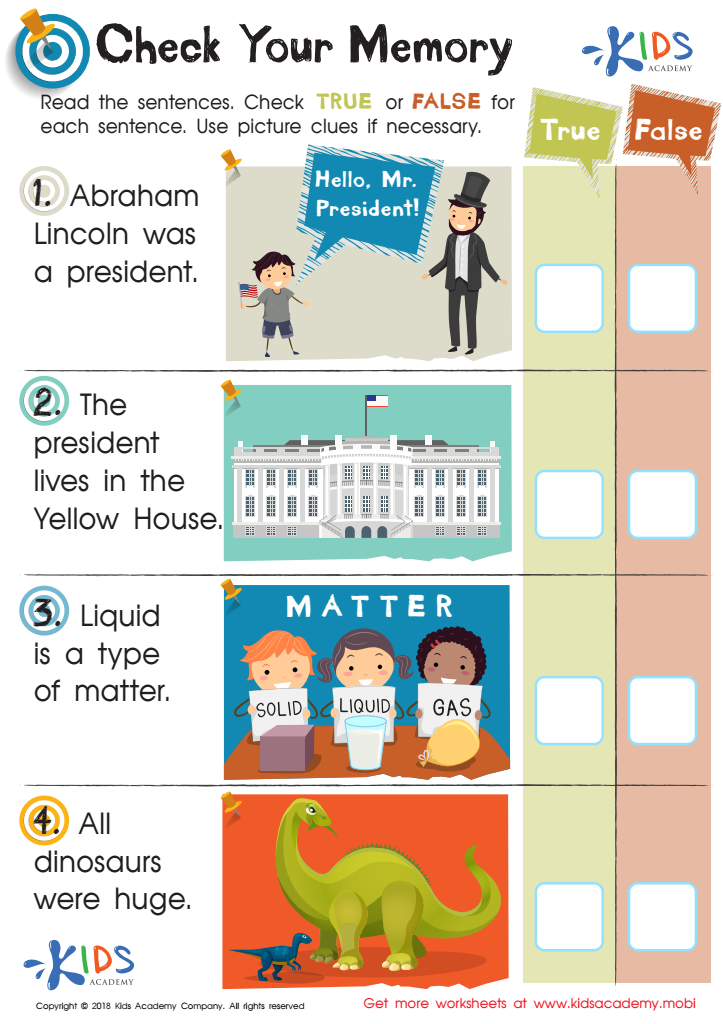
Check Memory Worksheet

Check Memory Worksheet

Assisting your kids with their homework and using worksheets is a great way for them to learn. The vibrant visuals in this printout can help stimulate the mind and motivate your child. Have them read the sentences and then point to the associated images. Afterwards, ask them to state True or False for each sentence. If they are still uncertain, offer them the picture clues to assist further.
Check Memory Worksheet
Worksheet


Parents and teachers should prioritize cognitive development related to plants and animals for ages 3-7 because it lays the foundation for critical thinking, curiosity, and a love for the natural world. During these early years, children are naturally curious and eager to explore their environment. Engaging with plants and animals helps enhance their observational skills, which is essential for cognitive growth.

Learning about the life cycles of plants and animals fosters understanding of biological concepts, while also promoting empathy and responsibility through the care of living things. Activities like gardening or visiting farms immeasurably enrich a child's experience, allowing them to connect firsthand with their ecosystem. These experiences can ignite imagination and creativity, facilitating the development of problem-solving skills.

Additionally, sensory engagement in nature promotes language development and academic readiness by expanding vocabulary and comprehension. The emotional bond formed with nature can foster a mindset of stewardship, encouraging children to treat the environment with respect.

Incorporating discussions and hands-on activities related to plants and animals not only nurtures cognitive skills but also inspires lifelong learning habits, making it imperative for parents and teachers to emphasize this aspect of early childhood education. Ultimately, investing in this area of development enriches children’s overall learning journey.