
Observational skills Space Worksheets for Ages 3-7
3 filtered results
Difficulty Level
Grade
Age
-
From - To
Subject
Activity
Standards
Enhance your child's observational skills with our engaging Space Worksheets designed for ages 3-7! These interactive resources encourage young learners to explore celestial objects and their characteristics, fostering curiosity and critical thinking. Each worksheet is packed with vibrant illustrations and easy-to-follow activities, perfect for homeschool or classroom settings. Children will love identifying planets, tracing patterns, and completing fun exercises that boost their attention to detail and scientific understanding. Our Space Worksheets not only make learning fun but also inspire a lifelong interest in the universe. Download your activity sheets today and launch your child's educational journey into the wonders of space!
Favorites
With answer key
Interactive
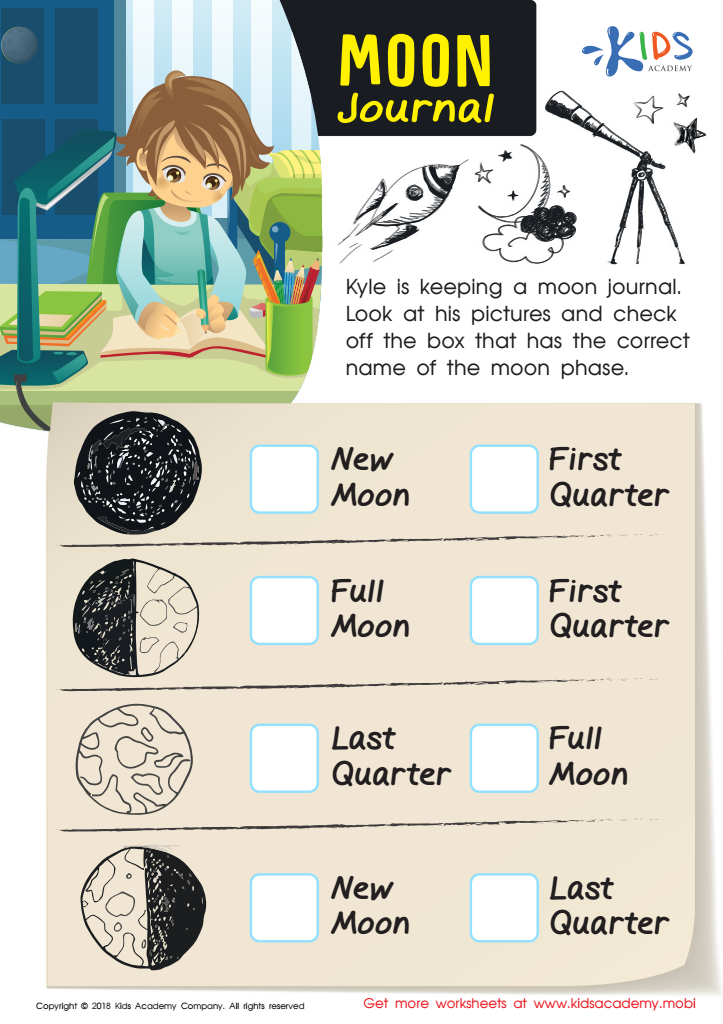
Moon Journal Worksheet
Observe the moon and its 8 phases with your child by downloading this free PDF worksheet from Kids Academy! Review the moon phases with them then help them label Kyle's moon journal. Select the right moon phase for each picture to complete the page!
 Assign to My Students
Moon Journal Worksheet
Worksheet
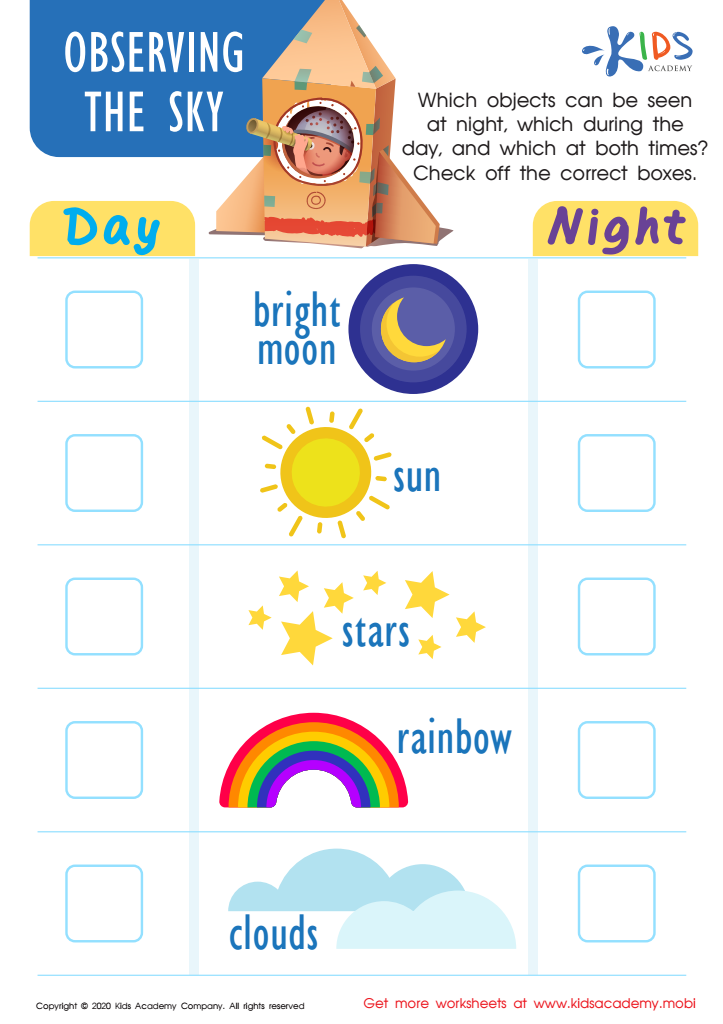
Observing the Sky Worksheet
Look up to the sky and observe day and night objects! See a rainbow or some clouds by day and stars and the moon at night. Help your little learner review this science concept with Kids Academy's fun and colorful worksheet. Have them sort and check off the objects seen by day or night, going down the column in the center.
Observing the Sky Worksheet
Worksheet
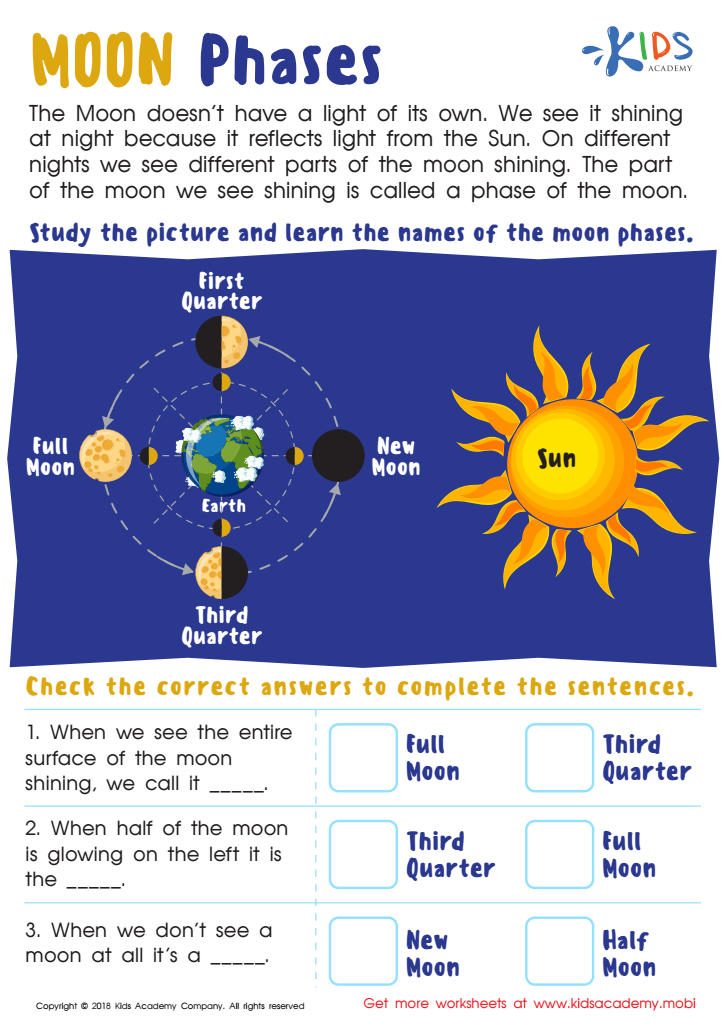
Moon Phases Worksheet
Gaze up at the night sky and the moon's appearance may change from night to night. Encourage your child to learn more about the sun, the moon, and space with this science worksheet. Have them read the text then study the picture. Finally, read the sentences and check the answers to identify the moon's phases.
Moon Phases Worksheet
Worksheet
Join Kids Academy for Free
Who is primarily going to use this learning content?








Observational skills are crucial for children's development, especially for those ages 3-7, as they serve as foundational tools for learning and understanding their environment. During these formative years, children are naturally curious and eager to explore the world around them. By nurturing their observational skills, parents and teachers can significantly enhance this exploratory spirit.
Firstly, these skills help young learners develop critical thinking and analytical abilities. Observing their surroundings encourages children to ask questions, make connections, and draw conclusions, fostering cognitive development. Furthermore, strong observational skills contribute to enhanced language acquisition; as children observe, they learn to describe what they see, thus expanding their vocabulary and communication capabilities.
Moreover, enhancing observational skills within an educational space promotes social-emotional growth. Children learn to recognize and interpret non-verbal cues, leading to better interactions with peers and adults. This fosters empathy and improves teamwork abilities.
Finally, cultivating observational skills can instill a love for learning by empowering children to engage actively with their environment. By prioritizing these skills, parents and educators can set the stage for lifelong learning, equipping children with the tools they need to navigate the complexities of the world around them.







