
Problem-Solving Skills Weather Worksheets for Ages 3-7
3 filtered results
Difficulty Level
Grade
Age
-
From - To
Subject
Activity
Standards
Introduce your little learners to the wonders of weather while developing essential problem-solving skills with our engaging "Problem-Solving Skills Weather Worksheets for Ages 3-7." These fun and educational worksheets blend science and critical thinking to foster curiosity and analytical abilities. Children will explore various weather concepts through interactive activities like matching, sorting, and weather predictions. Perfectly designed for young minds, these worksheets provide a strong foundation for both academic growth and practical life skills. Watch your preschoolers and early graders learn, think, and thrive with every intriguing challenge they conquer! Ideal for home or classroom use.
Favorites
With answer key
Interactive
 Assign to My Students
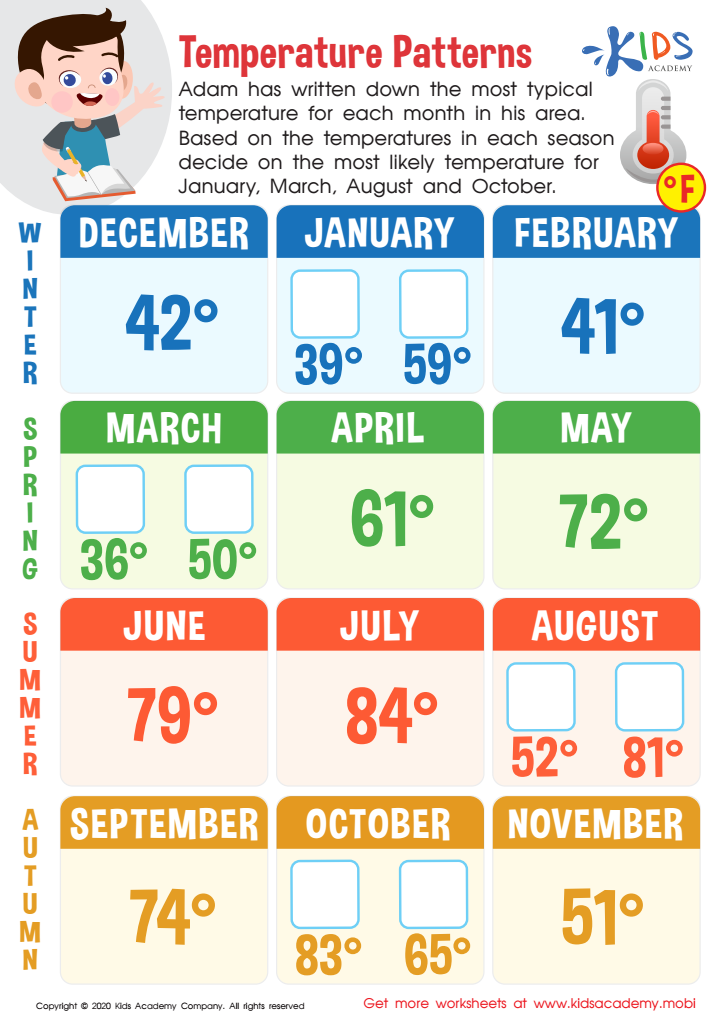
Temperature Patterns Worksheet
Adam has recorded temperatures in his area. Help your child use the data to predict temperatures for one month in each season. Check the box next to the correct temperature for each row in this worksheet. In America, temperatures vary by climate and season - colder in winter, hotter in summer.
Temperature Patterns Worksheet
Worksheet
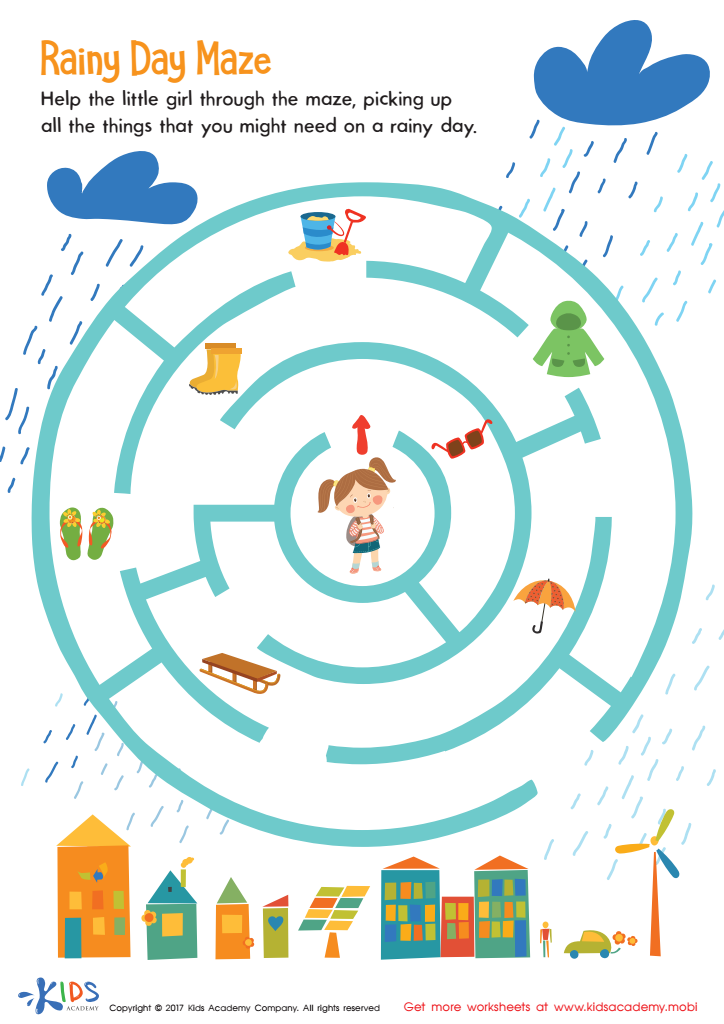
Rainy Day Maze Worksheet
Help your child use critical and problem solving skills to choose the right items! With this fun rainy day worksheet, they'll have a blast helping the character in the maze while learning about weather. Let’s get started!
Rainy Day Maze Worksheet
Worksheet
Join Kids Academy for Free
Who is primarily going to use this learning content?







%20(1).jpg)
Problem-solving skills in young children, ages 3-7, are crucial as they lay the foundation for critical thinking, independence, and resilience. Parents and teachers should care about fostering these skills to equip children with the ability to navigate everyday challenges and novel situations effectively.
At this early age, children are curious and extremely capable of learning. Problem-solving tasks, whether as simple as figuring out how to build a block tower or deciding how to share toys, nurture cognitive development. It encourages them to think creatively and explore multiple solutions. This is key for brain development as it stimulates neural pathways associated with rational thinking and decision-making.
Moreover, proficient problem-solving skills enhance social interactions. Children learn to negotiate, cooperate, and understand different perspectives when they tackle problems together with peers. This is vital for their emotional intelligence and helps build healthy relationships.
Instilling problem-solving skills early on also contributes to resilience. Children become more confident in their ability to face and overcome challenges, reducing anxiety and promoting a growth mindset. These skills not only support academic achievements but also prepare them for life's diverse set of circumstances, making them adaptable and resourceful individuals.
By prioritizing the development of problem-solving skills, parents and teachers invest in the child's holistic growth, setting a strong stage for lifelong learning and personal success.







