Shape Recognition Community Worksheets for Ages 3-7
4 filtered results
-
From - To
Welcome to our "Shape Recognition Community Worksheets" designed for children aged 3-7! These engaging worksheets help young learners identify and understand various shapes in their community. From circles to squares, kids will explore familiar objects and surroundings, making shape recognition fun and interactive. Each worksheet features vibrant illustrations and simple activities that promote learning through play. Ideal for both homeschooling and classroom settings, our resources support early childhood development and essential math skills. Download and print our worksheets to inspire creativity and enhance shape recognition in your child's everyday experiences! Join us in fostering a love of learning through community discovery!
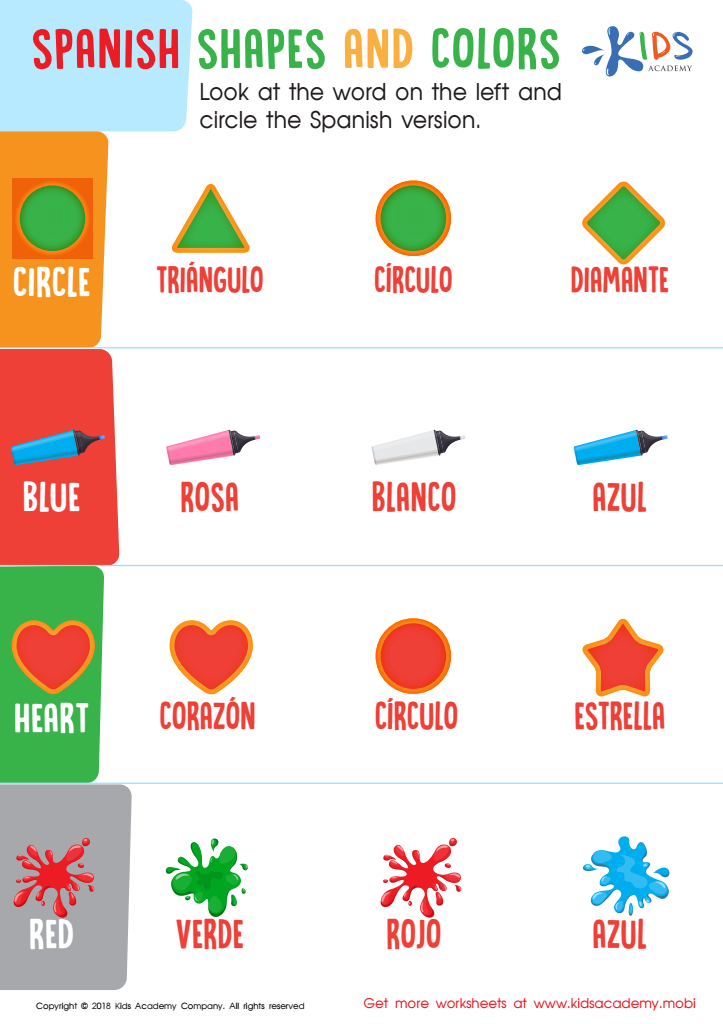
Spanish Shapes and Colors Worksheet
 Assign to My Students
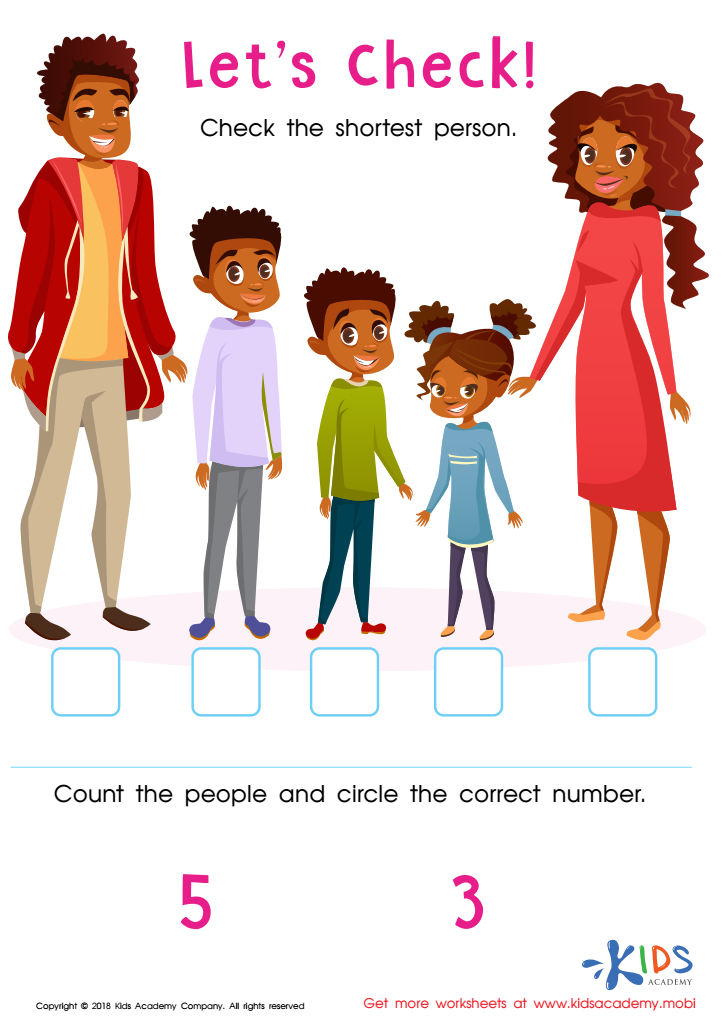
Let's Check! Assessment Worksheet
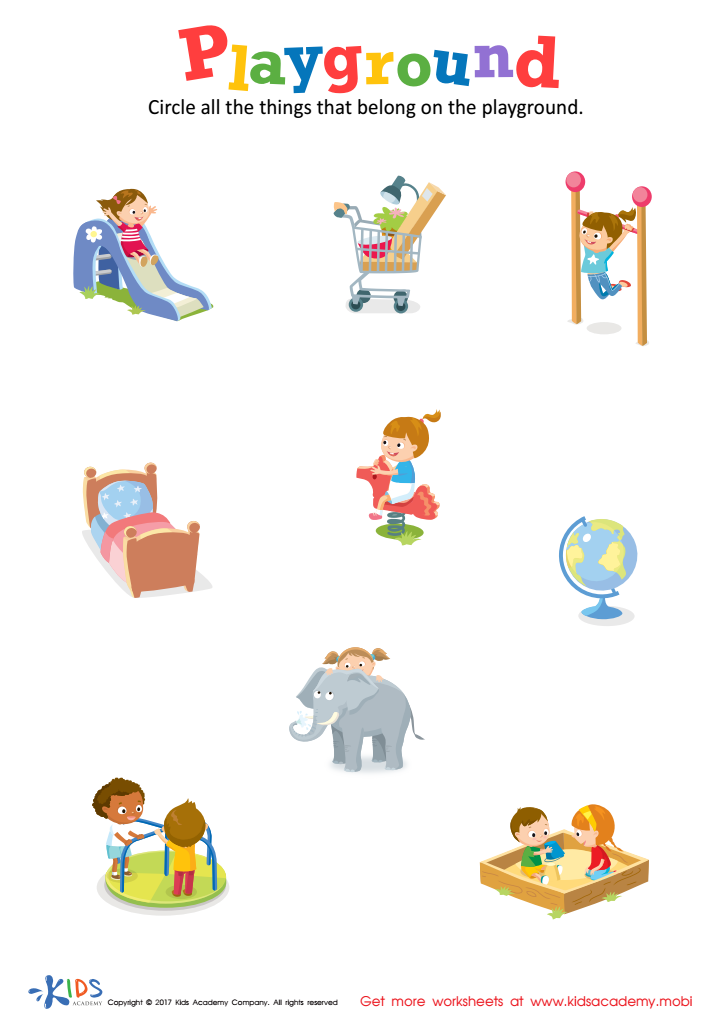
Playground Worksheet
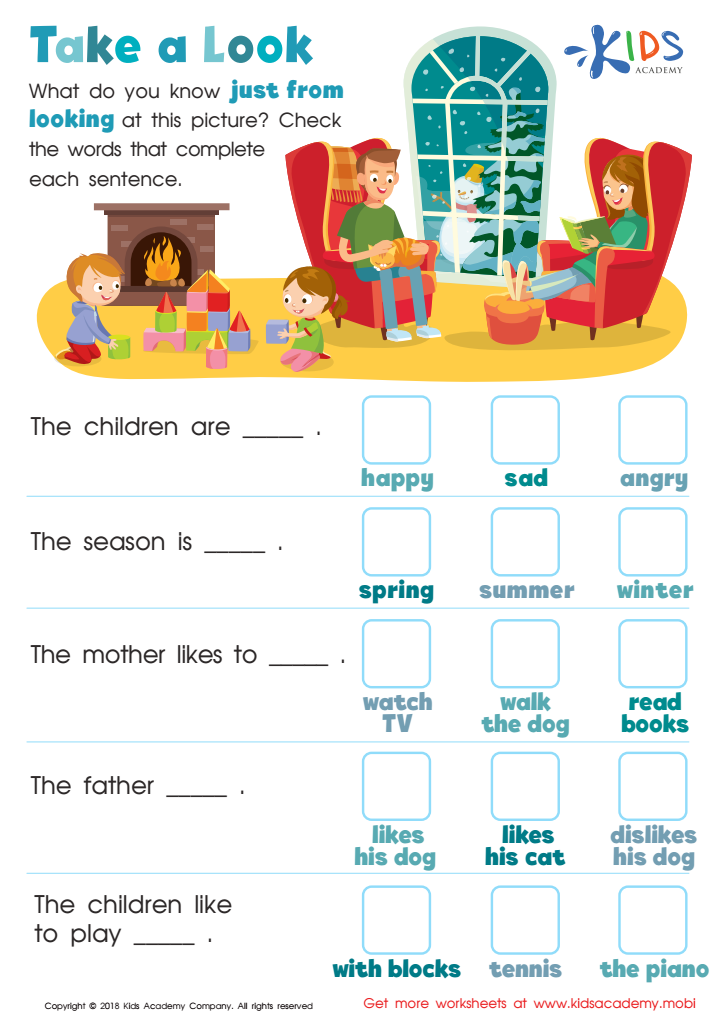
Take a Look - Part 1 Worksheet






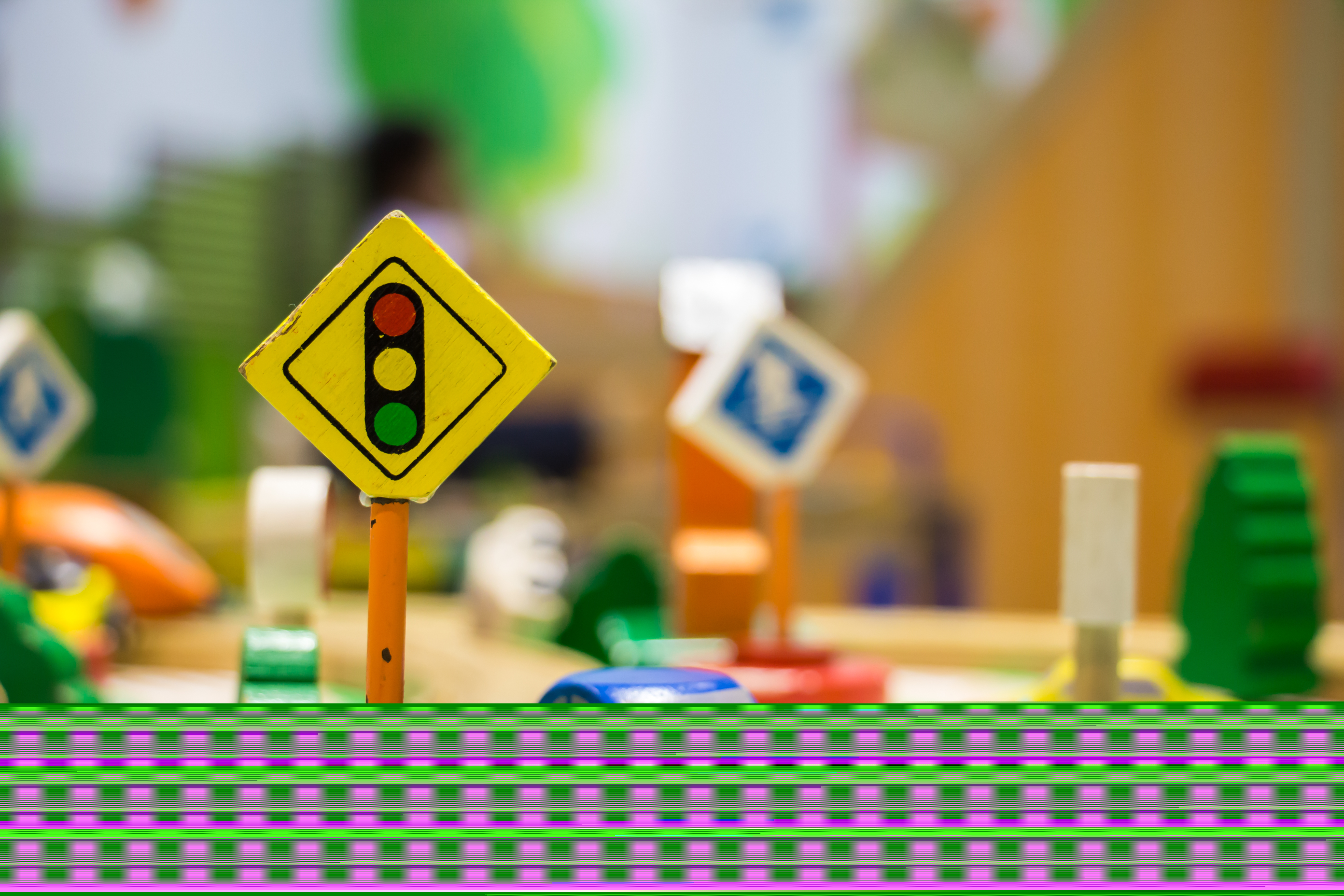

Shape recognition is a fundamental skill that plays a crucial role in early childhood development. For parents and teachers working with children aged 3 to 7, fostering an understanding of shapes lays the groundwork for more complex learning in mathematics, science, and critical thinking. Engaging in a Shape Recognition Community brings together resources, tools, and shared strategies to enhance this learning process.
Firstly, recognizing shapes helps children develop spatial awareness and geometric understanding, essential for problem-solving. Additionally, shape recognition activities can promote fine motor skills and improve hand-eye coordination, as children manipulate shapes through drawing, cutting, or building with blocks.
Social interaction within a community allows parents and teachers to exchange ideas and best practices. It encourages collaborative learning, where children can learn from each other while making discoveries and forming friendships. Access to a diversity of activities and materials can cater to varied learning styles, ensuring every child has the opportunity to excel.
In summary, a Shape Recognition Community empowers parents and teachers to create engaging, structured learning experiences that support cognitive development, foster social skills, and promote a strong foundation for future academic success. Supporting children in shape recognition now means they are better prepared for lifelong learning opportunities ahead.