Adjective identification Writing Worksheets for Ages 3-7
3 filtered results
-
From - To
Enhance your child's writing skills with our "Adjective Identification Writing Worksheets" designed for ages 3-7! These engaging worksheets help young learners identify and understand adjectives in a fun and interactive way. By recognizing and using descriptive words, children enrich their vocabulary and improve their writing abilities. Each worksheet includes colorful illustrations and simple instructions that encourage creativity and critical thinking. Our printable resources are perfect for classroom settings or at-home learning, ensuring an enjoyable educational experience. Start your child's journey towards better writing today by exploring our thoughtfully crafted worksheets tailored specifically for early learners! Explore now!
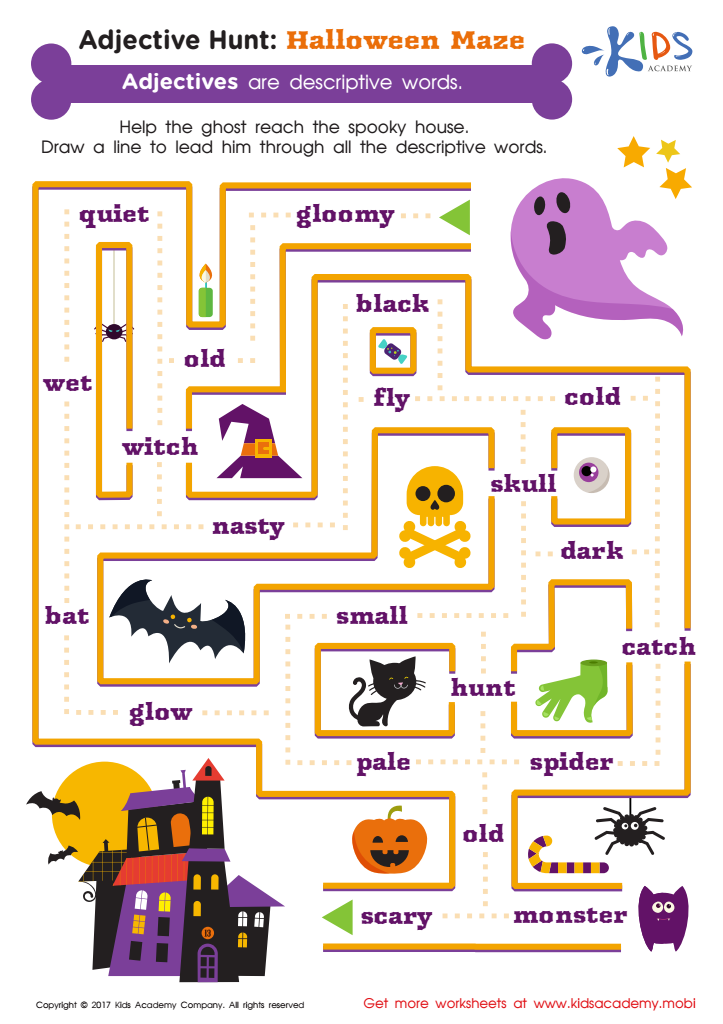
Adjective Hunt Printable
 Assign to My Students
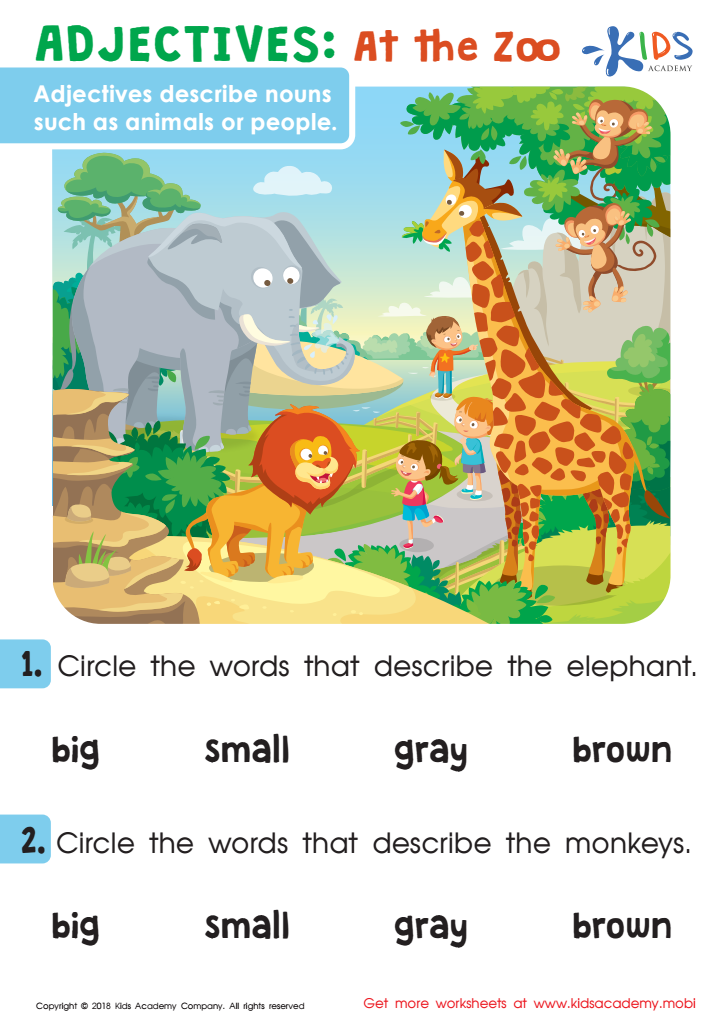
Adjectives: At The Zoo Worksheet
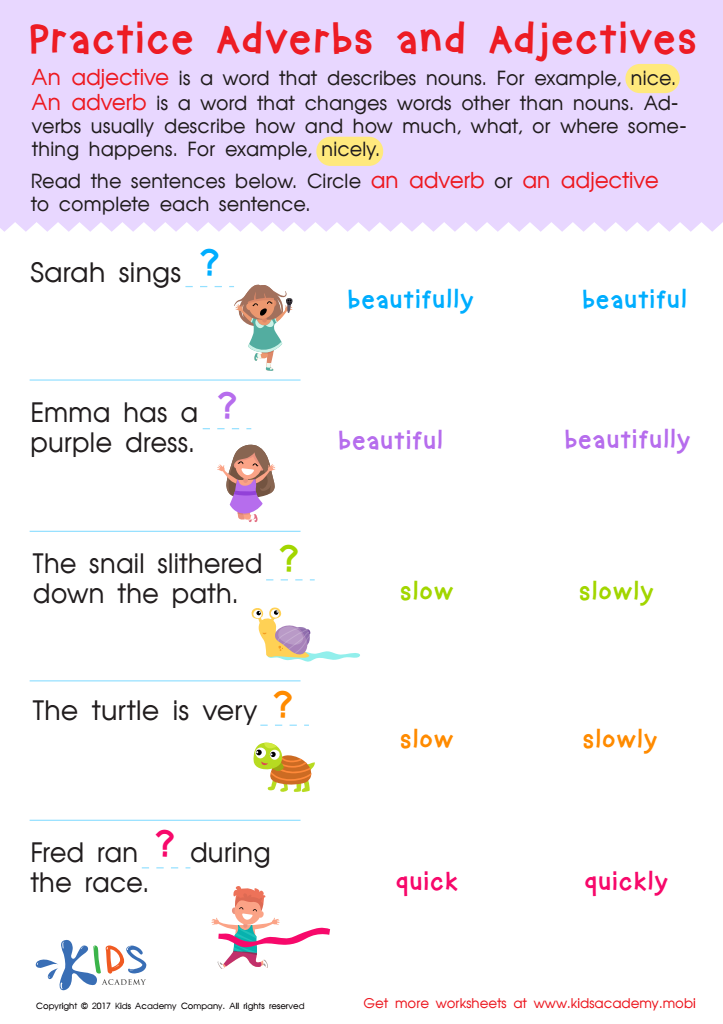
Adverbs and Adjectives Worksheet








Adjective identification is a crucial language skill for children aged 3-7, and both parents and teachers should actively promote it in their early education strategies. First, adjectives enrich children's descriptive language, enabling them to express ideas more clearly and vividly. By identifying and using adjectives, children learn to articulate their thoughts and feelings, leading to improved communication skills. This foundational competence lays the groundwork for more advanced literacy skills as they progress in school.
Additionally, understanding adjectives fosters critical thinking. When children learn to categorize and distinguish between different qualities of nouns, they develop observation and reasoning skills vital for problem-solving. Engaging with adjectives encourages creativity, as children often describe characters, settings, or their own experiences through rich, imaginative language.
Moreover, recognizing and using adjectives helps build vocabulary. As children encounter various descriptive words, their language repertoire expands, enhancing their reading and writing fluency. This vocabulary boost is especially beneficial for early writing development, helping children construct more complex sentences and narratives.
Incorporating adjective identification into daily activities—like storytelling or describing objects—makes learning interactive and enjoyable. Therefore, parents and teachers should prioritize this skill to support children’s overall development in literacy and communication.








