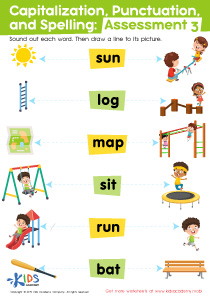
Grammar improvement Writing Worksheets for Ages 3-7
5 filtered results
-
From - To
Enhance your child's writing skills with our engaging Grammar Improvement Writing Worksheets designed specifically for ages 3-7. These versatile resources focus on foundational grammar concepts, making it fun for young learners to develop their language abilities. Packed with activities that promote sentence structure, punctuation, and word usage, our worksheets cater to diverse learning styles. Easy to use at home or in the classroom, they encourage creativity and boost confidence in writing. Watch as your child improves their language skills while enjoying interactive practice. Start nurturing a love for grammar today with our printable worksheets tailored for young minds!
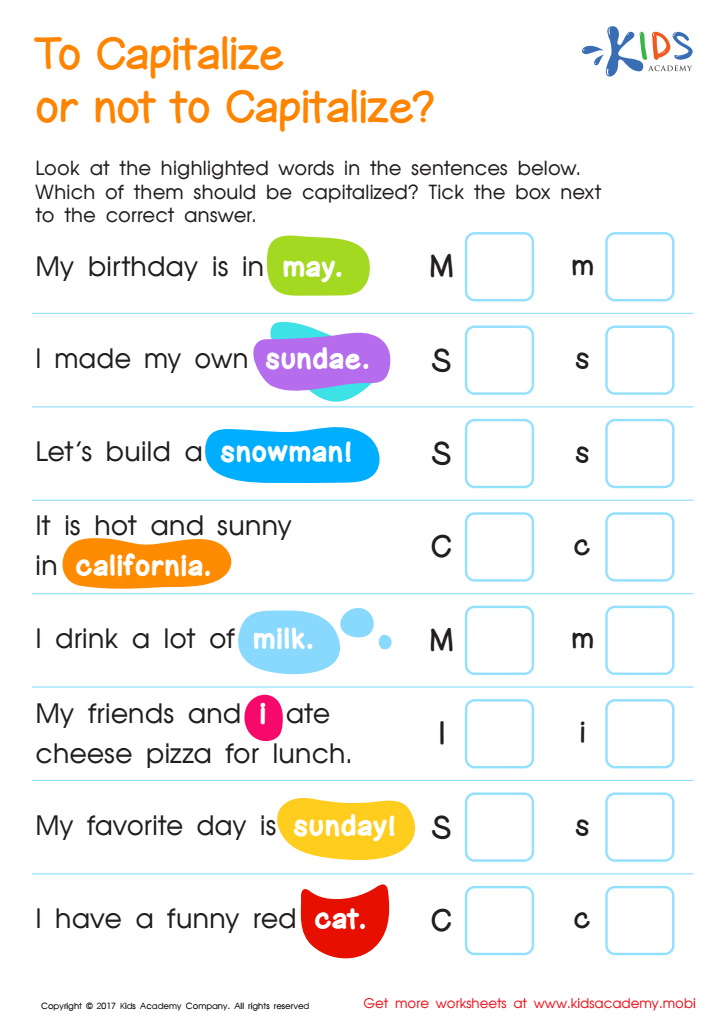
Capitalization: To Capitalize or Not? Printable
 Assign to My Students
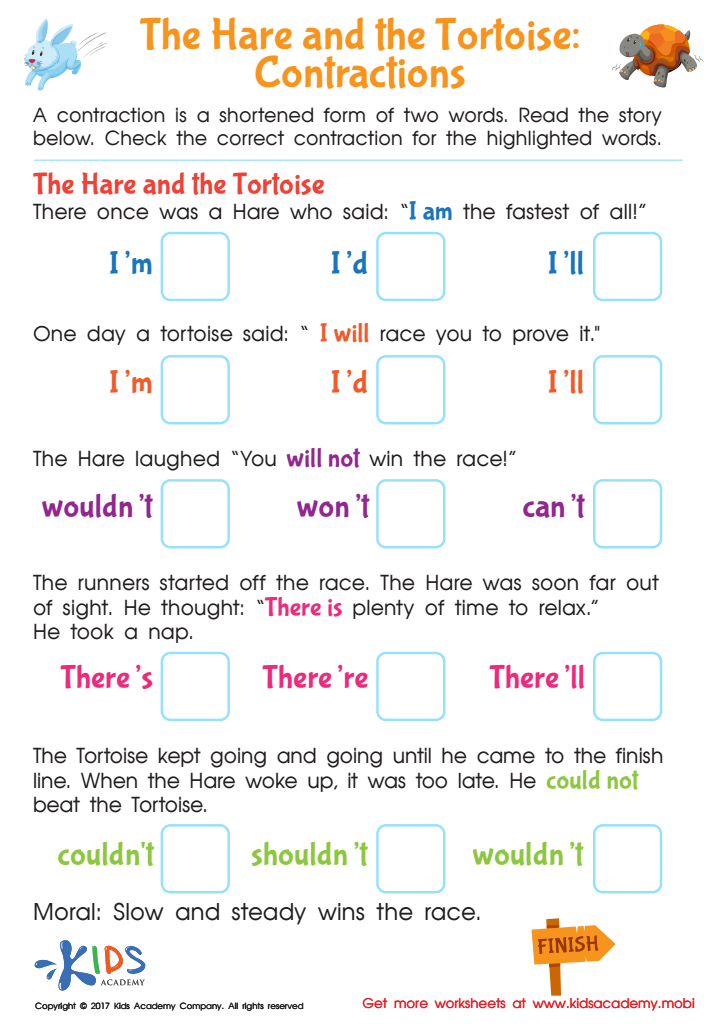
Contractions Worksheet
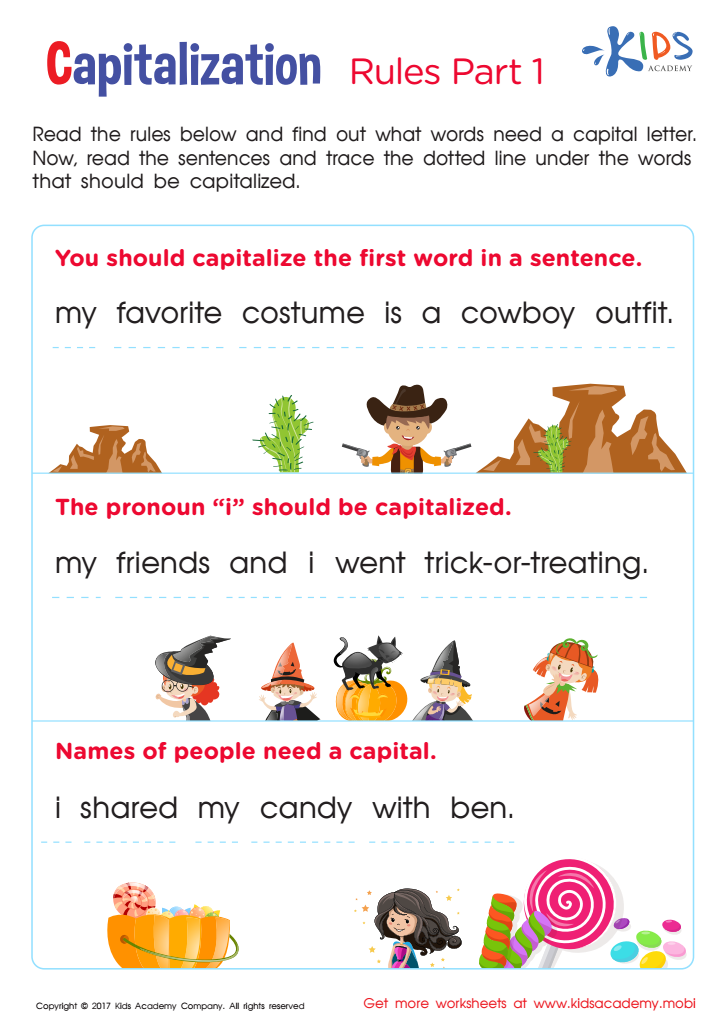
Capitalization Rules: Part 1 Worksheet
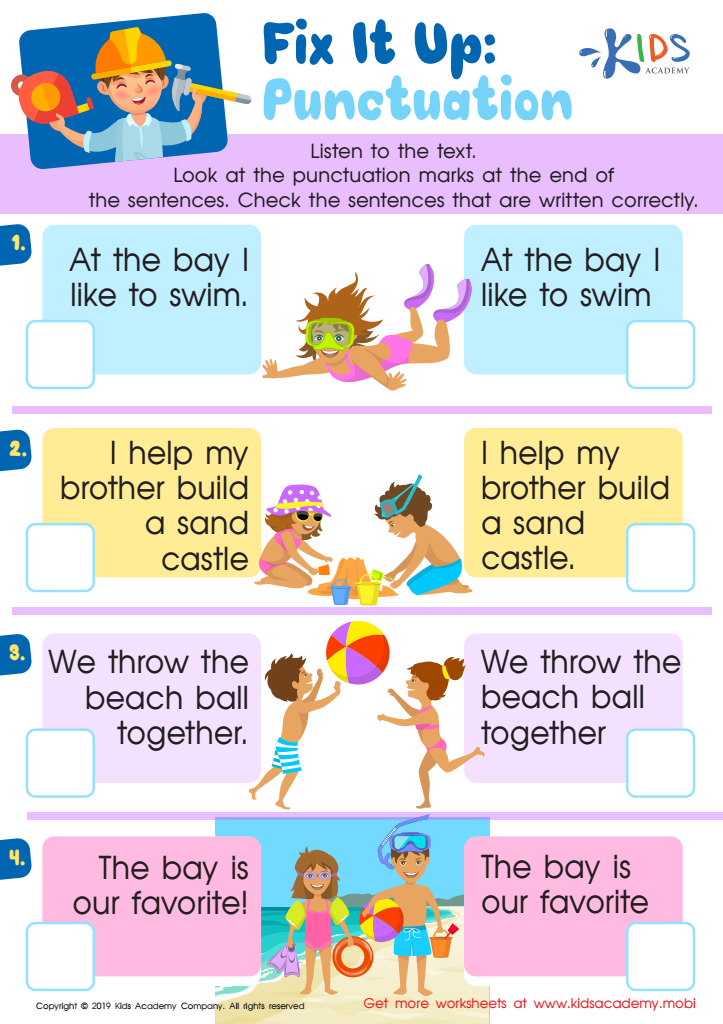
Fix Punctuation Worksheet
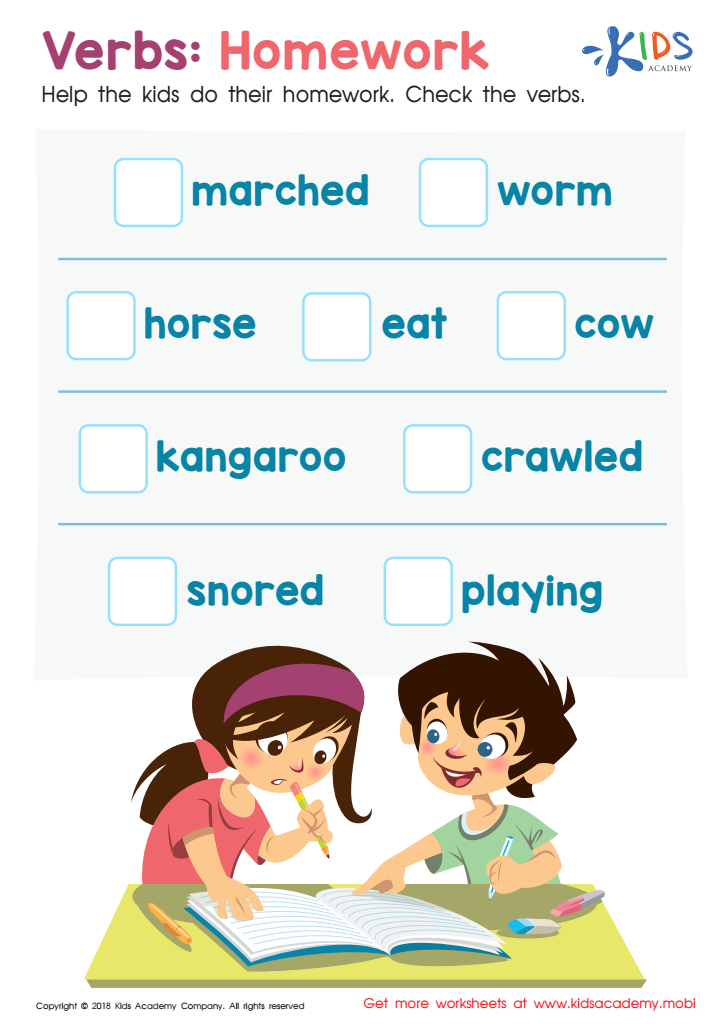
Verbs Homework Worksheet








Grammar improvement in writing for ages 3-7 is crucial for several reasons. First, it lays the foundation for effective communication. During these formative years, children are developing essential language skills, and understanding grammar helps them express their thoughts clearly and precisely. When parents and teachers emphasize grammar, they equip children with the tools to construct sentences correctly, enhancing their reading and writing skills as they progress through school.
Additionally, strong grammar skills foster confidence in young writers. Children who feel secure in their ability to write correctly are more likely to engage in creative expression, narrate stories, and share ideas, which promotes cognitive and social development. This confidence also encourages a positive attitude towards learning and literacy.
Moreover, focusing on grammar helps children differentiate between written and spoken language, which is essential as they engage with different forms of communication later in life. It supports the development of critical thinking and comprehension skills, vital for academic success.
In summary, encouraging grammar improvement in young children not only enhances their writing abilities but also supports their overall language development, instills confidence, and prepares them for future learning challenges. Thus, parents and teachers play a pivotal role in this integral aspect of early education.