Animal identification Numbers Worksheets for Ages 3-8
4 filtered results
-
From - To
Discover our engaging Animal Identification Numbers Worksheets designed for children ages 3-8! These interactive worksheets help young learners explore numbers while connecting with their favorite animals. Each activity encourages counting, recognition, and matching skills, fostering a fun and educational experience. Your child will enjoy identifying various animals and associating them with their corresponding numbers, enhancing both their math and animal knowledge. Perfect for at-home learning or classroom activities, our worksheets cater to diverse learning styles, promoting independent exploration and critical thinking. Give your child the confidence they need in early numeracy with our captivating animal-themed worksheets today!
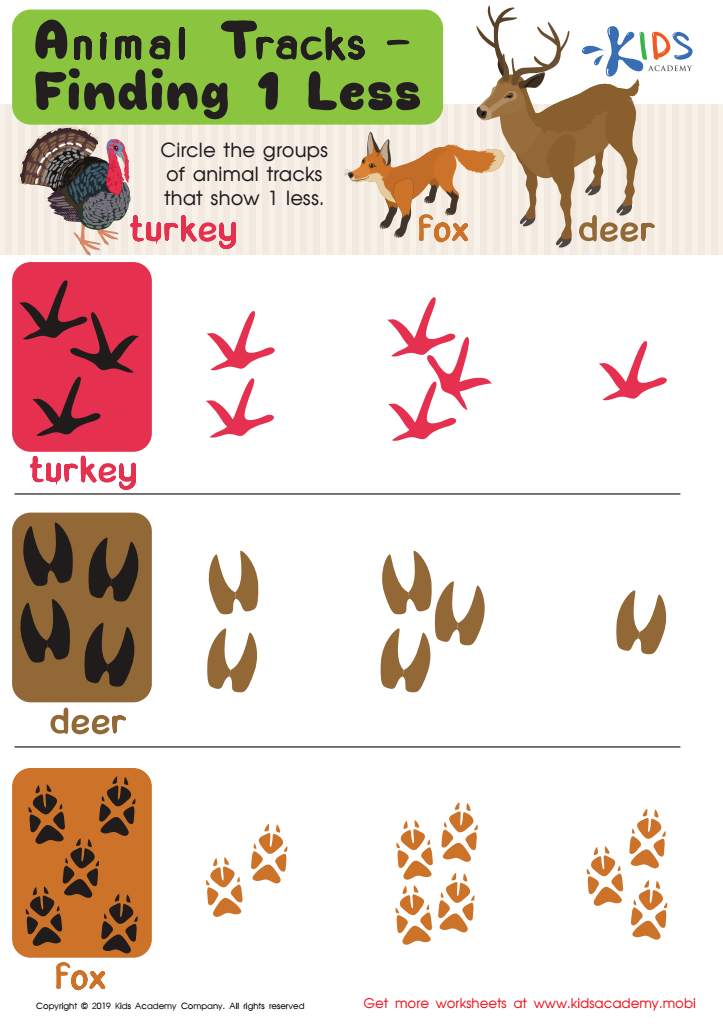
Animal Tracks: Find 1 Less Worksheet
 Assign to My Students
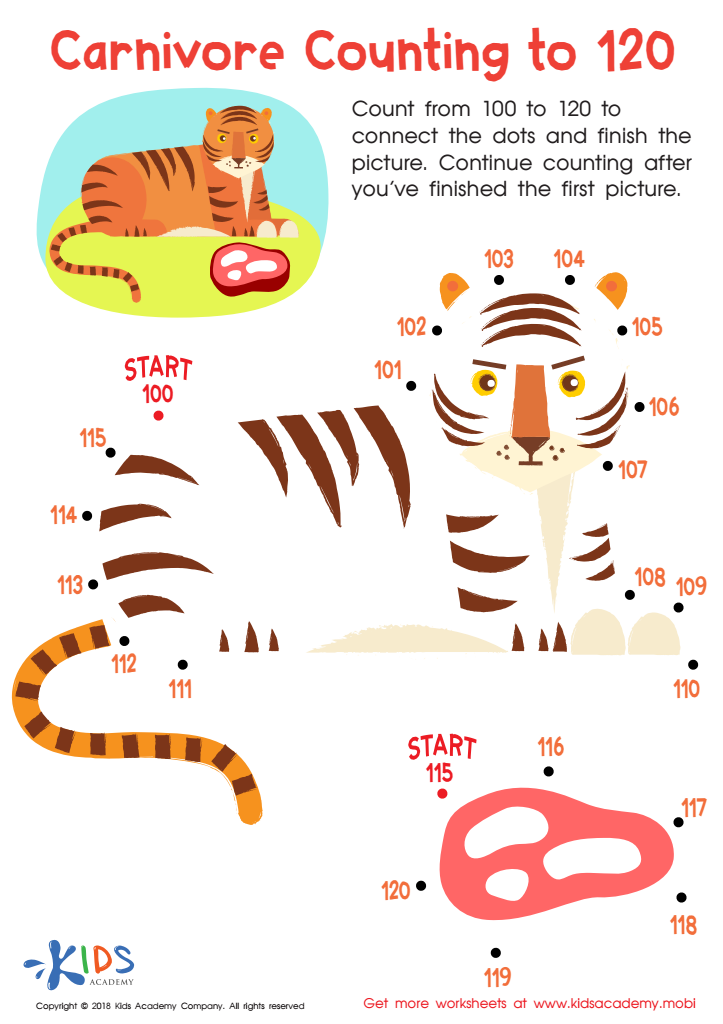
Carnivore Counting to 120 Worksheet
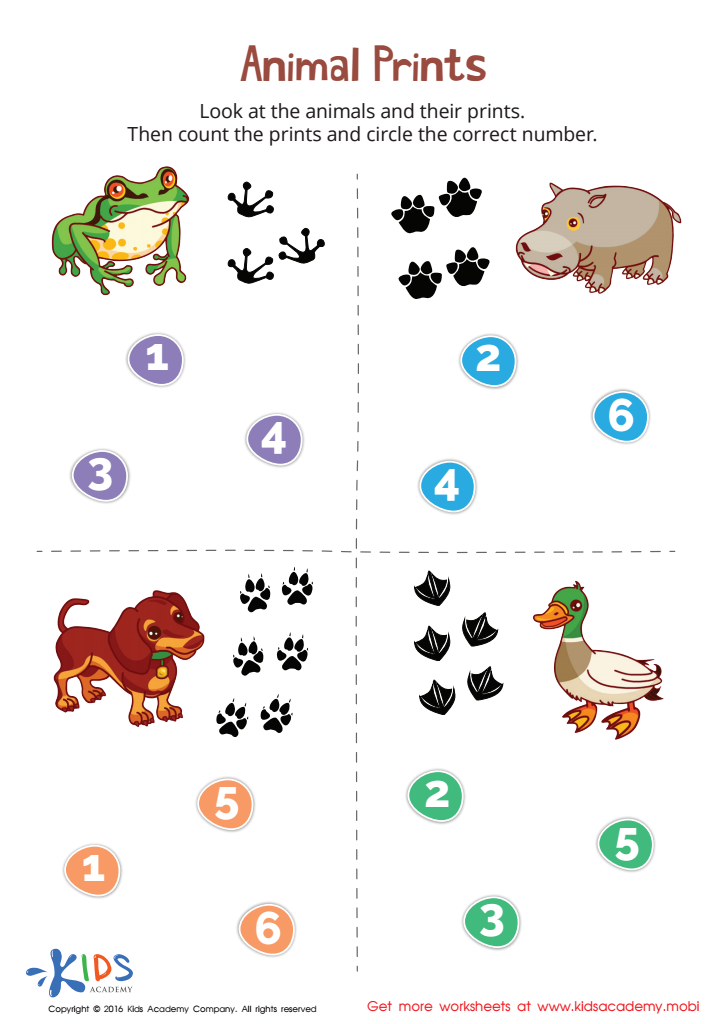
Animal Prints Match-Up Worksheet
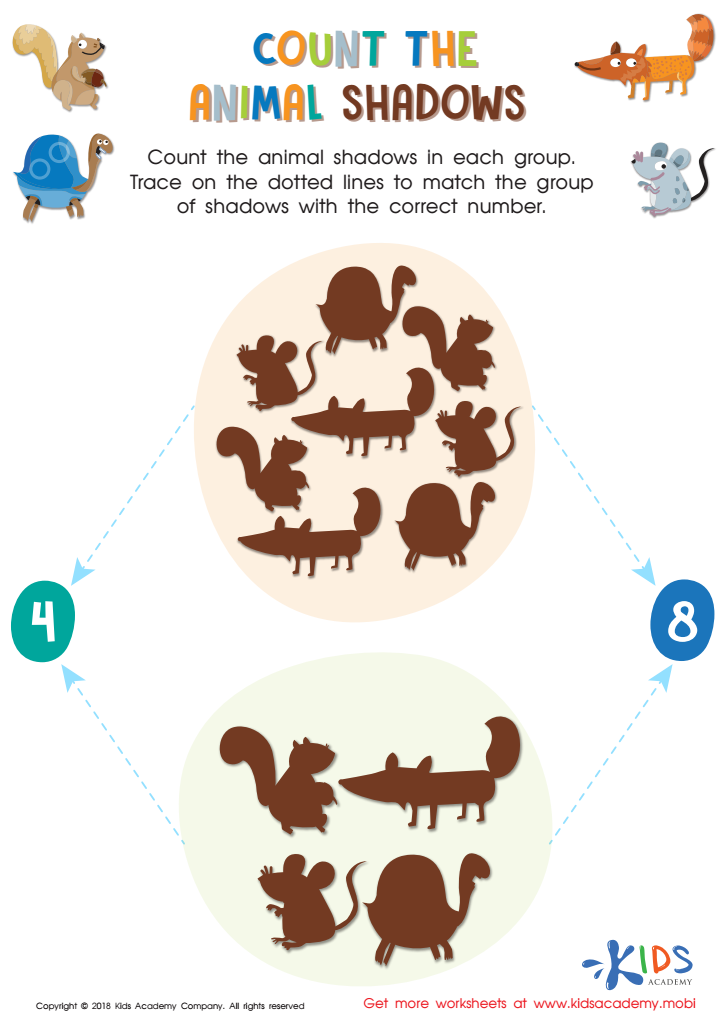
Count the Animal Shadows Worksheet








Animal Identification Numbers (AINs) are vital for ensuring the safety and wellbeing of our young students in understanding animal-based environments. For parents and teachers, caring about AINs offers several benefits when engaging children aged 3-8 in animal-related activities.
Firstly, AINs promote accountability. By identifying individual animals, educators can track pets or farm animals and ensure they are healthy and well-cared for. This teaches children responsibility and empathy toward living beings as they learn to understand the importance of animal care.
Secondly, AINs provide valuable information, fostering curiosity in young minds. Kids can explore the link between the identifier and the animal's history, nutrition, and health status, creating engaging learning opportunities that combine science and storytelling.
Moreover, teaching children about AINs can help them recognize the importance of following regulations, such as vaccination and tagging. This instills values of respect for community safety and animal welfare.
Lastly, awareness of AINs can lead to meaningful conversations about conservation and animal rights as children develop critical thinking about the roles animals play in our lives.
In summary, AINs are fundamental educational tools that help nurture informed, compassionate, and responsible individuals from a young age.








