Understanding tens Numbers Worksheets for Ages 3-8
4 filtered results
-
From - To
Discover our "Understanding Tens Numbers Worksheets," designed for children ages 3-8. These engaging worksheets introduce young learners to the concept of tens, helping to build a strong foundation in mathematics. Ideal for preschool and early elementary students, our activities incorporate fun visuals and exercises to make learning about number groups exciting. Kids will develop essential counting skills, enhance their number recognition, and begin to understand the relationship between single and double-digit numbers. Perfect for classroom use or at-home practice, this resource will support your child’s early math journey with celebrated strategies and playful learning experiences. Start exploring today!
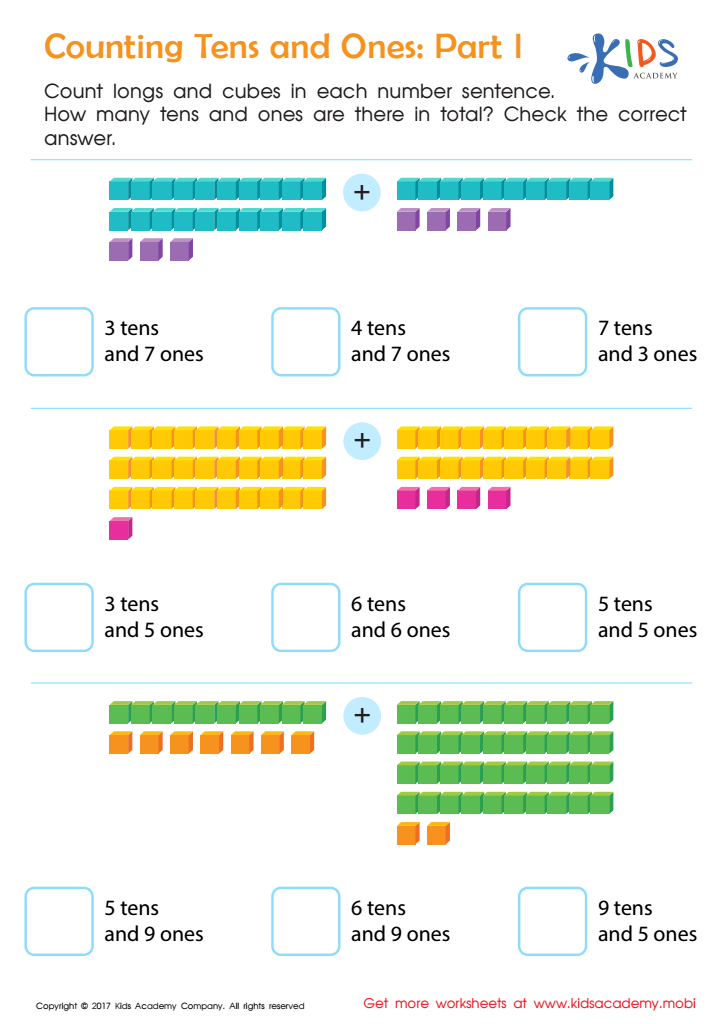
Counting Tens and Ones: Part 1 Worksheet
 Assign to My Students
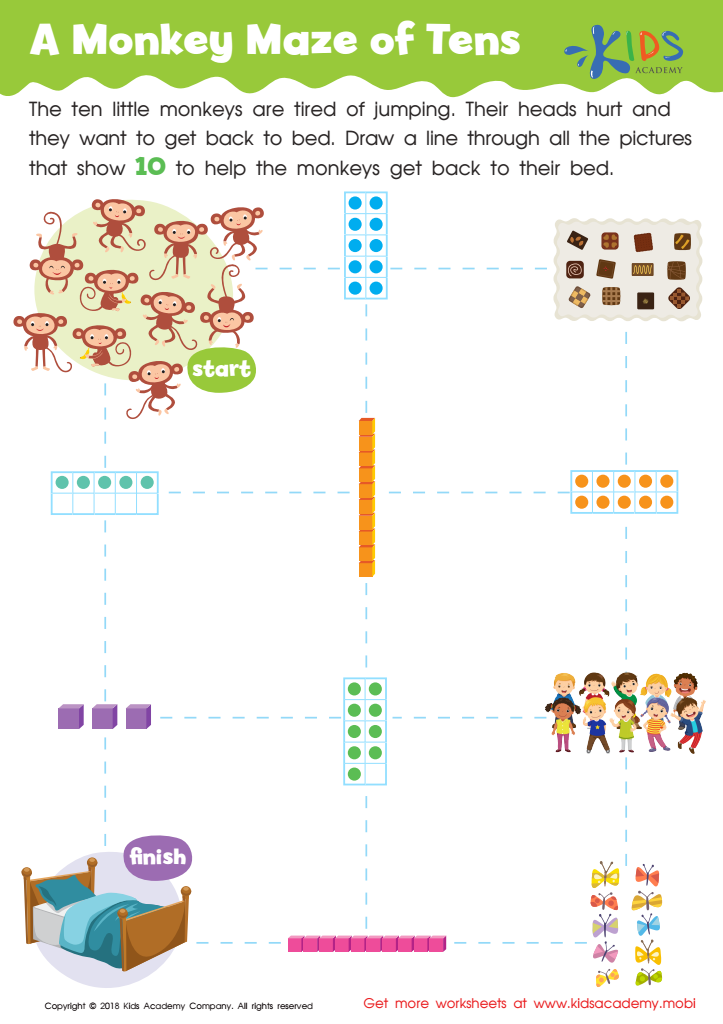
A Monkey Maze of Tens Worksheet
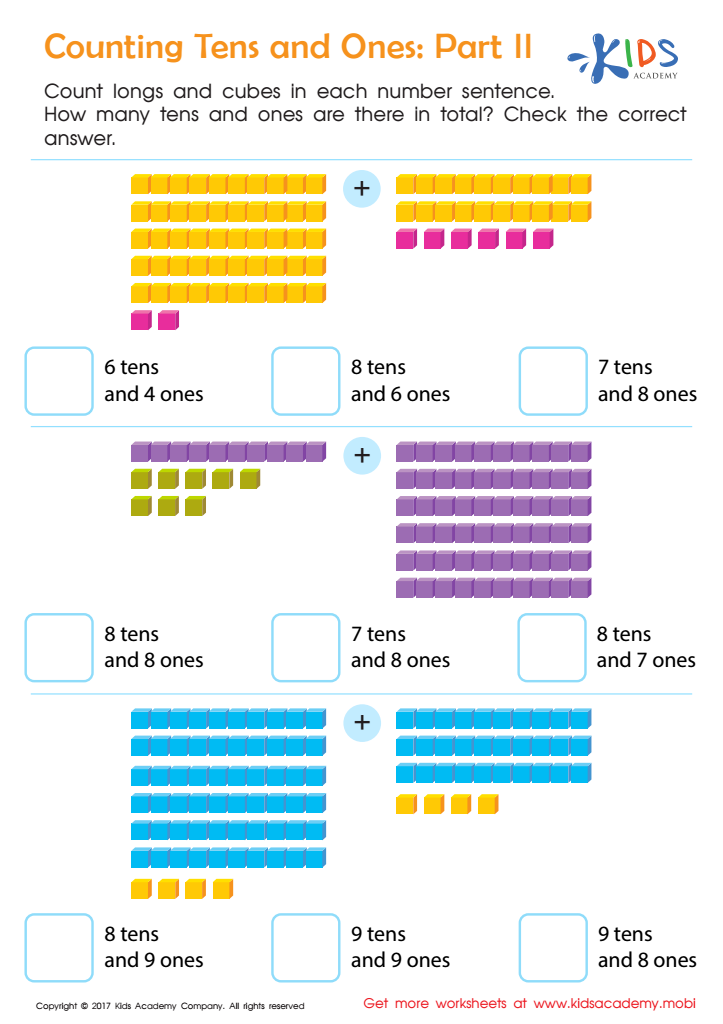
Counting Tens and Ones: Part 2 Worksheet
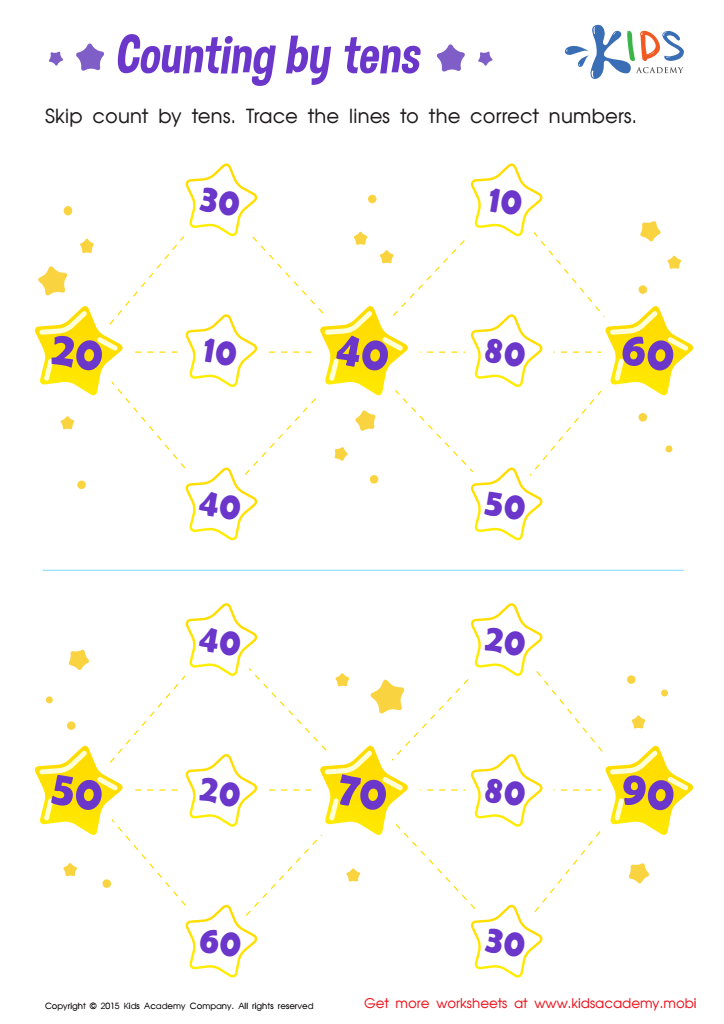
Learn Dozens: Counting by Tens Printable








Understanding tens and numbers is crucial for children aged 3-8 as it forms the foundation for future mathematical learning. At this early age, children begin to grasp the concepts of counting, addition, and subtraction, and recognizing the importance of the number ten aids in building their number sense. The base-10 system is central to mathematics; helping children understand that ten ones make a ten lays the groundwork for more advanced concepts like place value and mental arithmetic.
Moreover, early exposure to tens enhances children's ability to group and organize numbers, making calculations easier as they progress in their education. By engaging with tens early on, children develop critical thinking and problem-solving skills, essential not only in math but across all subjects. Recognition of patterns in tens leads to improved ability to tackle mathematical problems later on.
Fostering an understanding of tens also supports cognitive development, sharpening memory and concentration as children play with number games and manipulatives. Ultimately, when parents and teachers focus on teaching this foundational concept, they empower children to feel confident in their mathematical abilities, setting them up for academic success and a positive attitude towards learning in general.








