
Animal identification Math Worksheets for Ages 3-8
33 filtered results
Difficulty Level
Grade
Age
-
From - To
Subject
Activity
Standards
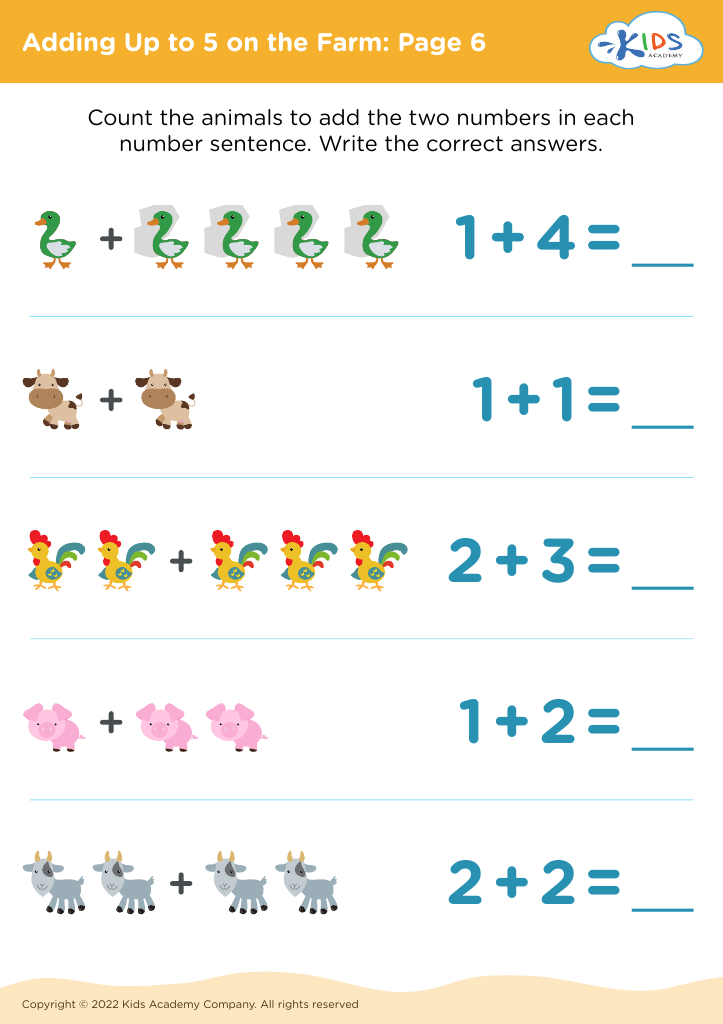
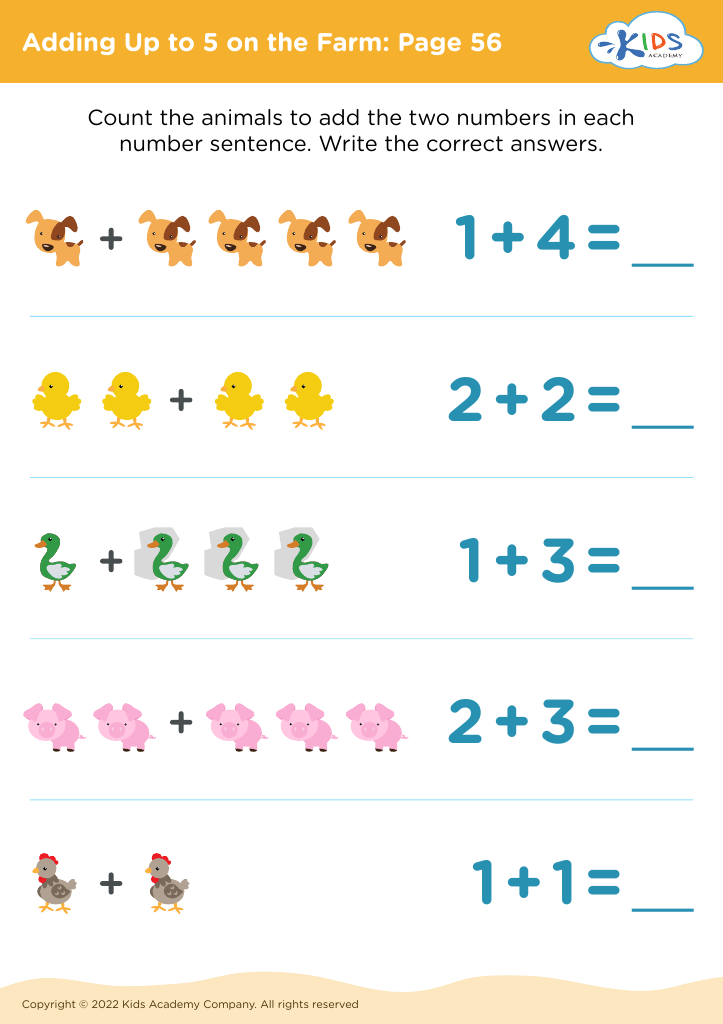
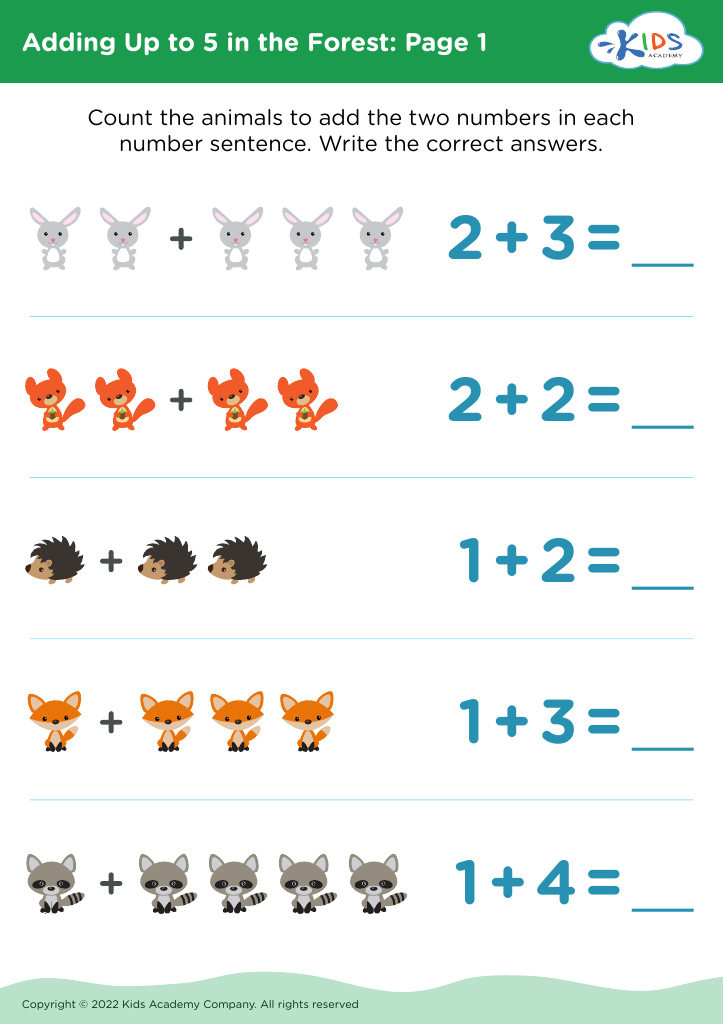
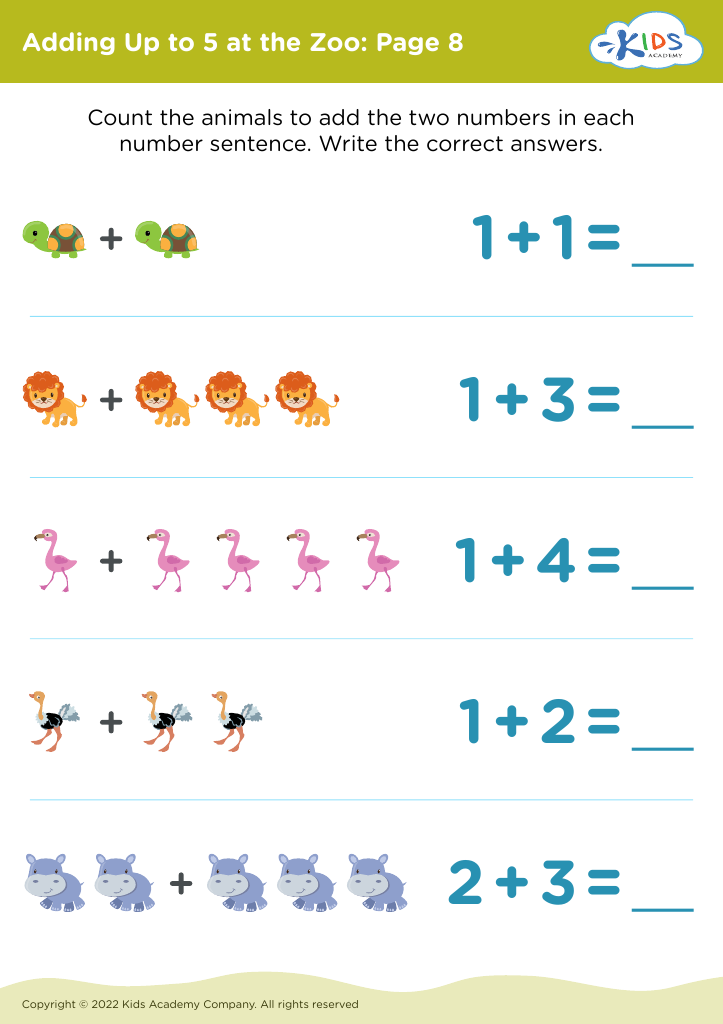
Discover our engaging Animal Identification Math Worksheets designed for children ages 3-8! These fun and interactive worksheets combine basic math concepts with delightful animal illustrations, helping young learners build essential skills while exploring the animal kingdom. Perfect for preschool and early elementary education, our resources support activities that foster counting, number recognition, and problem-solving abilities. Each worksheet encourages inquiry and creativity, keeping children entertained while they learn. Ideal for parents and teachers looking to enhance their child's educational experience, our animal-themed worksheets make math enjoyable and accessible. Start your young learner's math journey today with our engaging resources!
Favorites
With answer key
Interactive
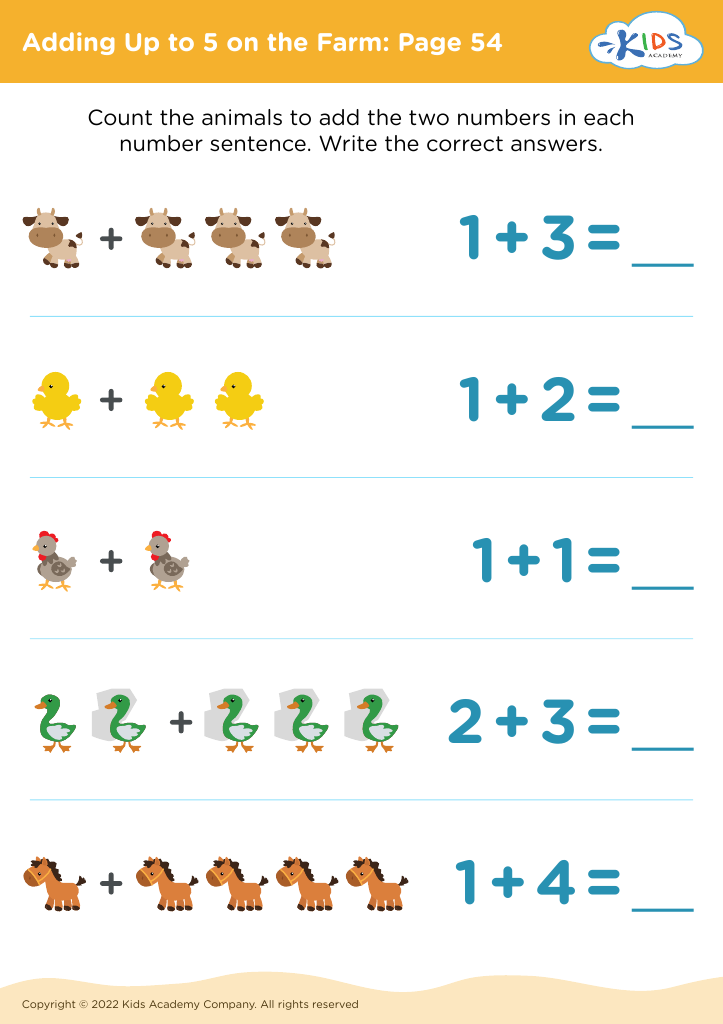
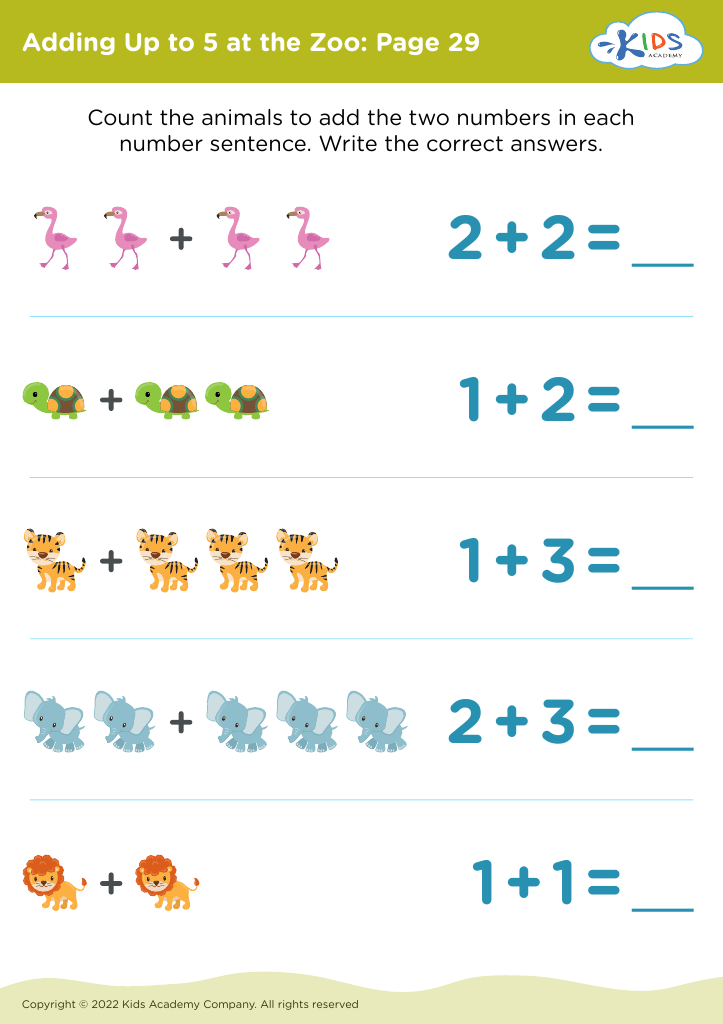
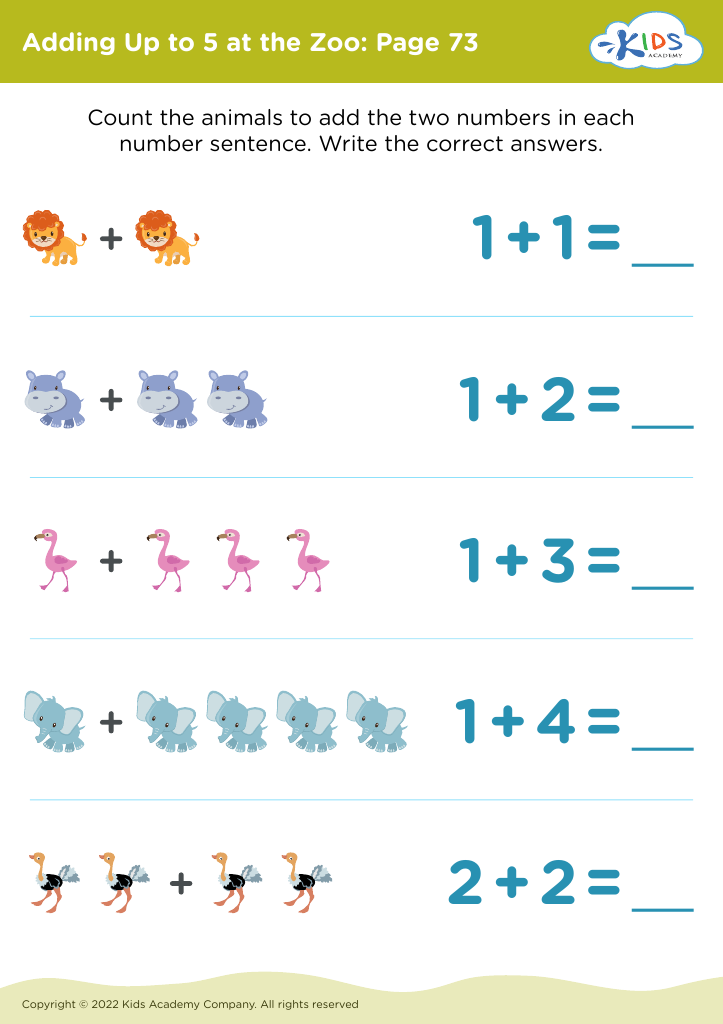
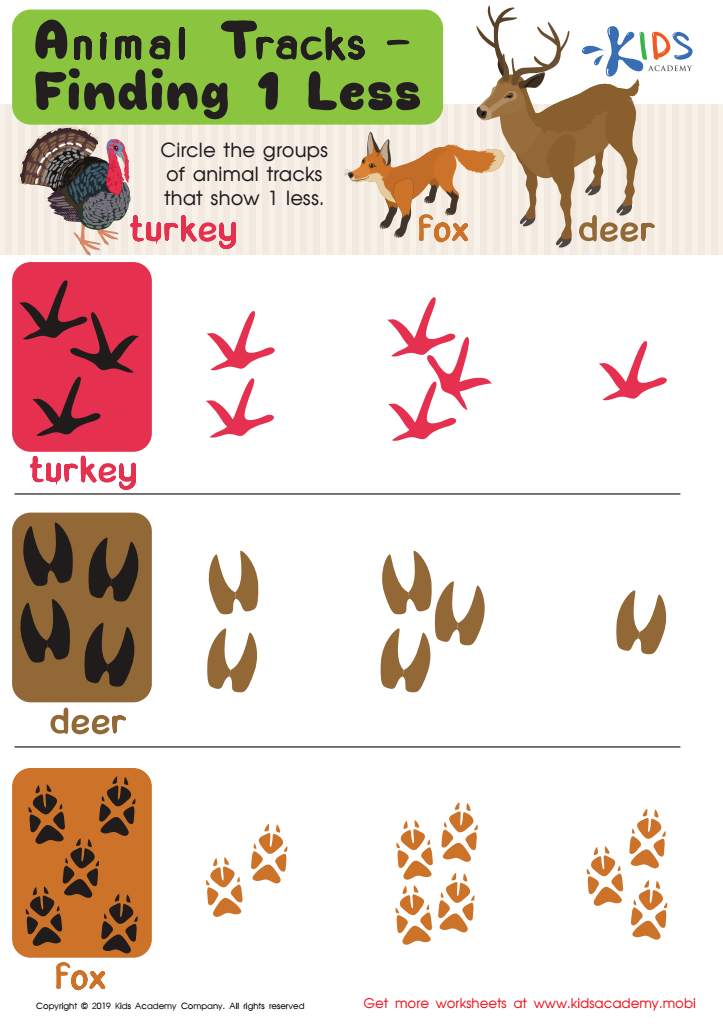
Animal Tracks: Find 1 Less Worksheet
Animals are all around us - wild and domestic. Ask your kids to name their favourites, then use this animal tracks worksheet to explore more. Help them circle the groups with 1 less animal track. It's a great way to learn about the creatures we share our world with!
 Assign to My Students
Animal Tracks: Find 1 Less Worksheet
Worksheet
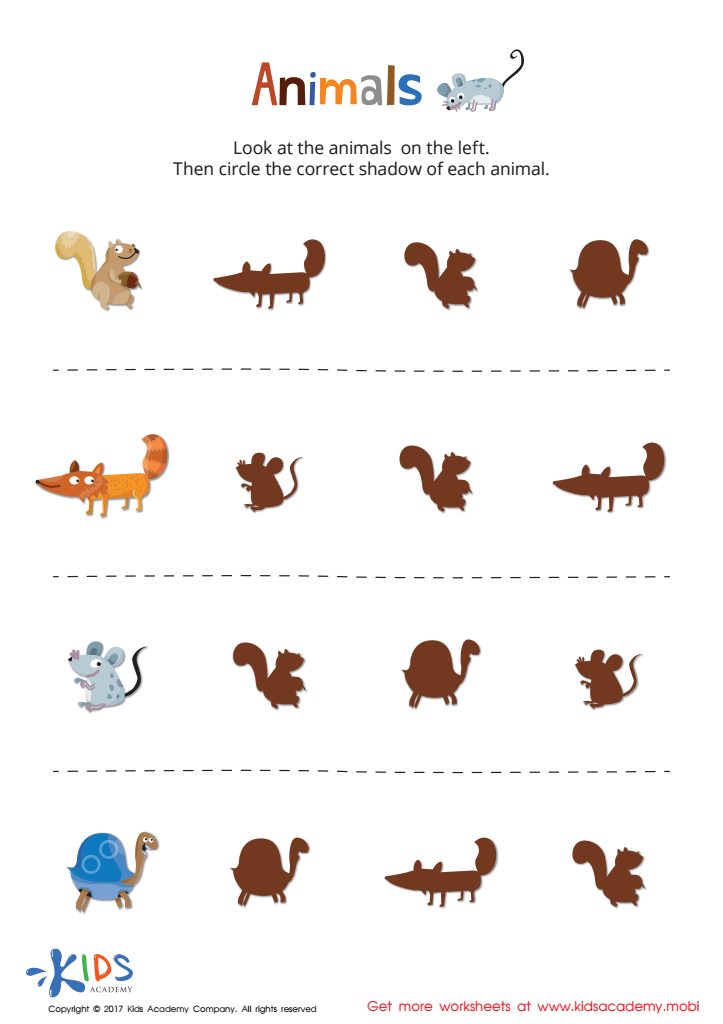
Animal Shadows Sorting Worksheet
This fun worksheet helps your child sharpen many skills. It features animals to match shapes and practice relative directions. Your child will sort animal features, practice spatial recognition, and recognize right/left. Plus, you can use it to start conversations about the animals. And try it also with fruits and veggies to boost sorting skills.
Animal Shadows Sorting Worksheet
Worksheet
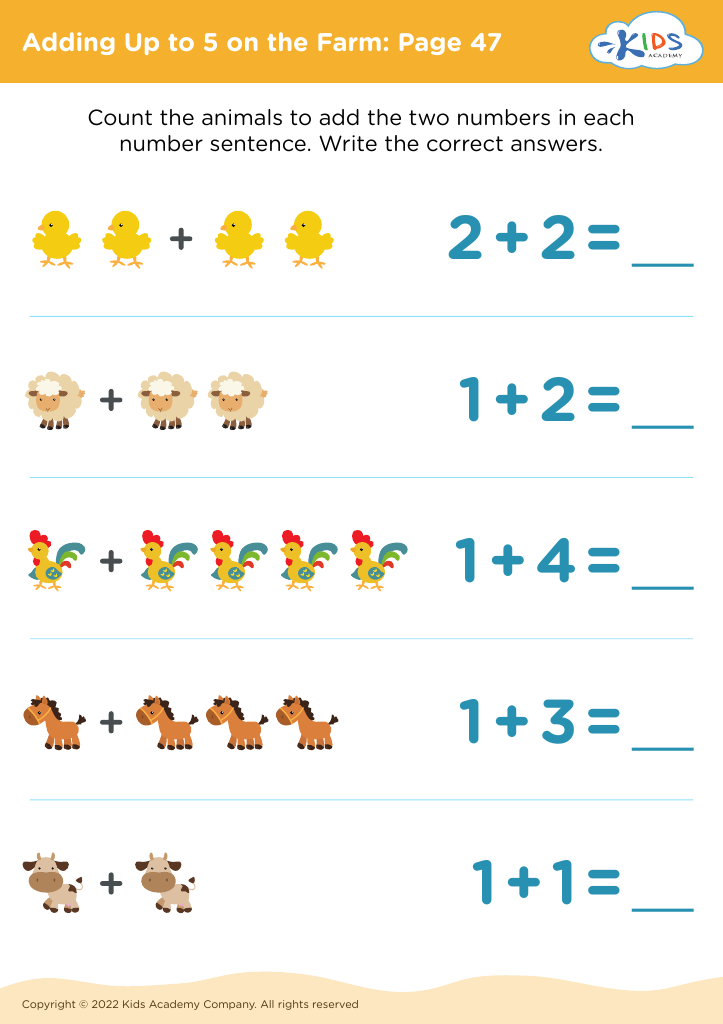
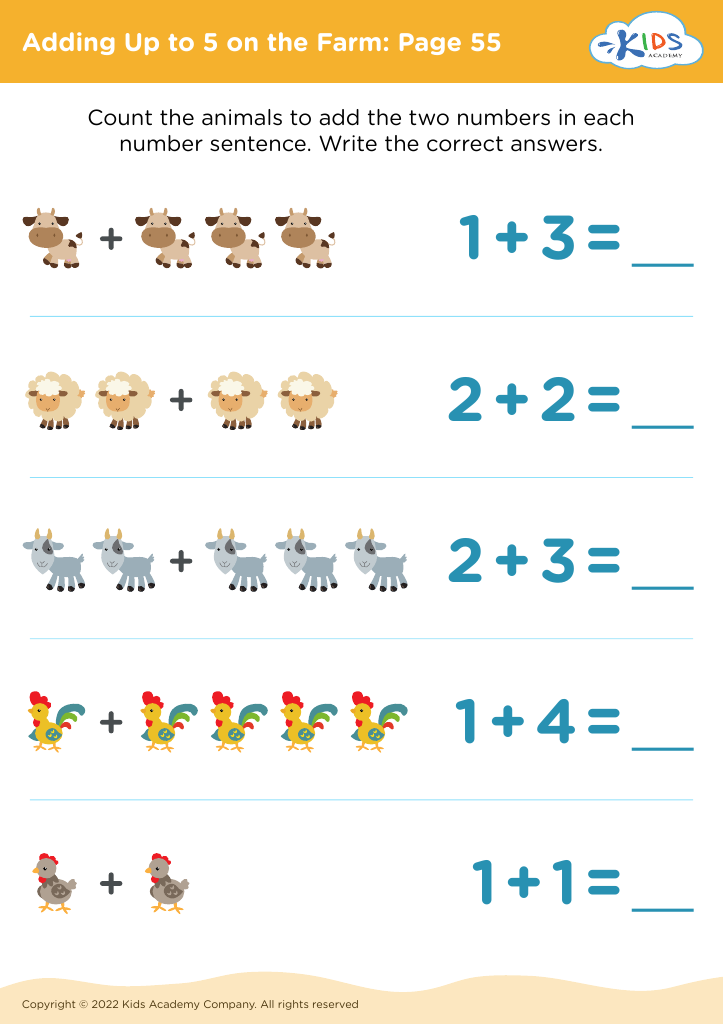
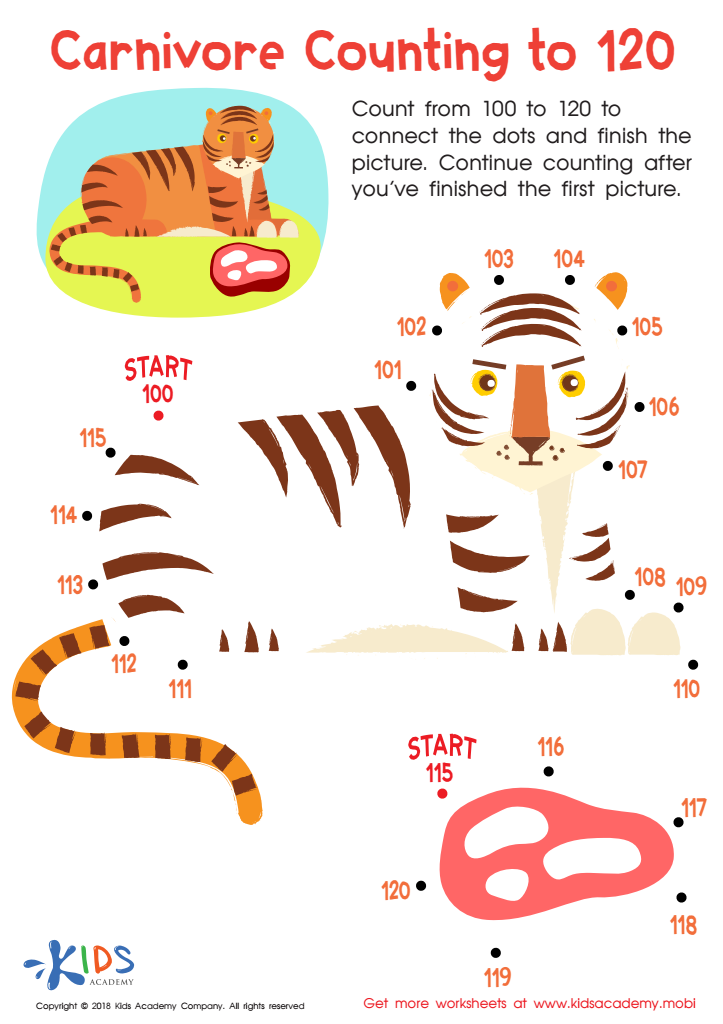
Carnivore Counting to 120 Worksheet
Ask your child to name some popular carnivores. Can they tell you what the animal in the worksheet is? A Tiger? Get them to count from 100 to 120 to connect the dots. After they finish the first picture, keep counting to help them practice!
Carnivore Counting to 120 Worksheet
Worksheet
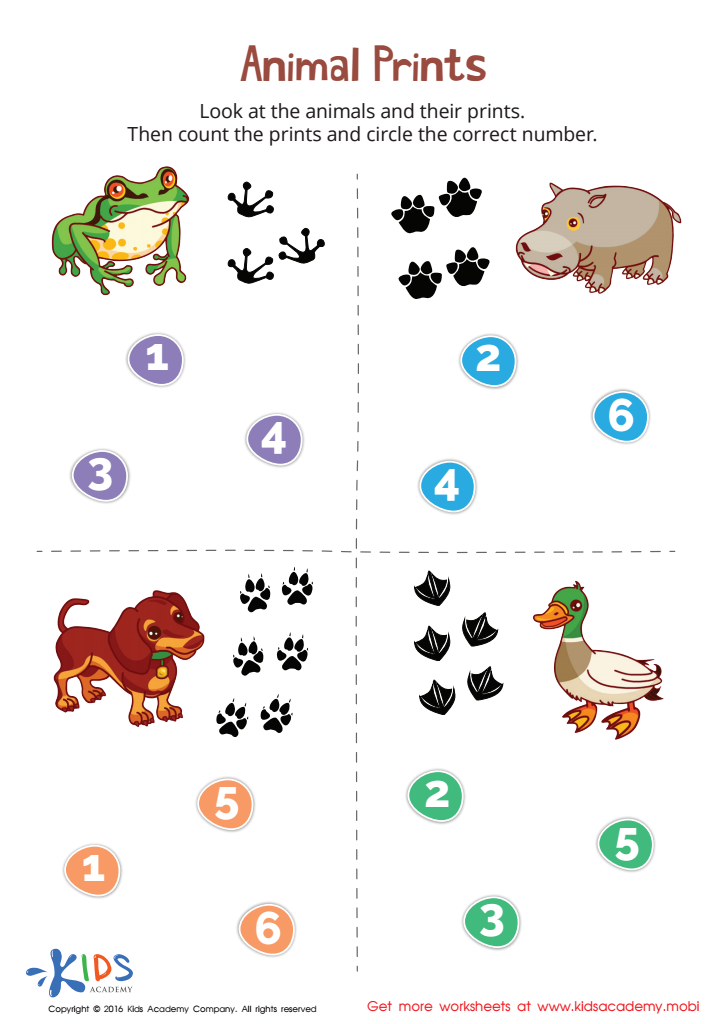
Animal Prints Match-Up Worksheet
Help your little learner build early math skills with this fun animal paw prints worksheet. With it, they'll count, recognize numbers, and learn about the animals that make the paw prints. Talk to them about the prints and ask them to count. They'll love exploring and learning about the different animals, all while sharpening essential math skills!
Animal Prints Match-Up Worksheet
Worksheet
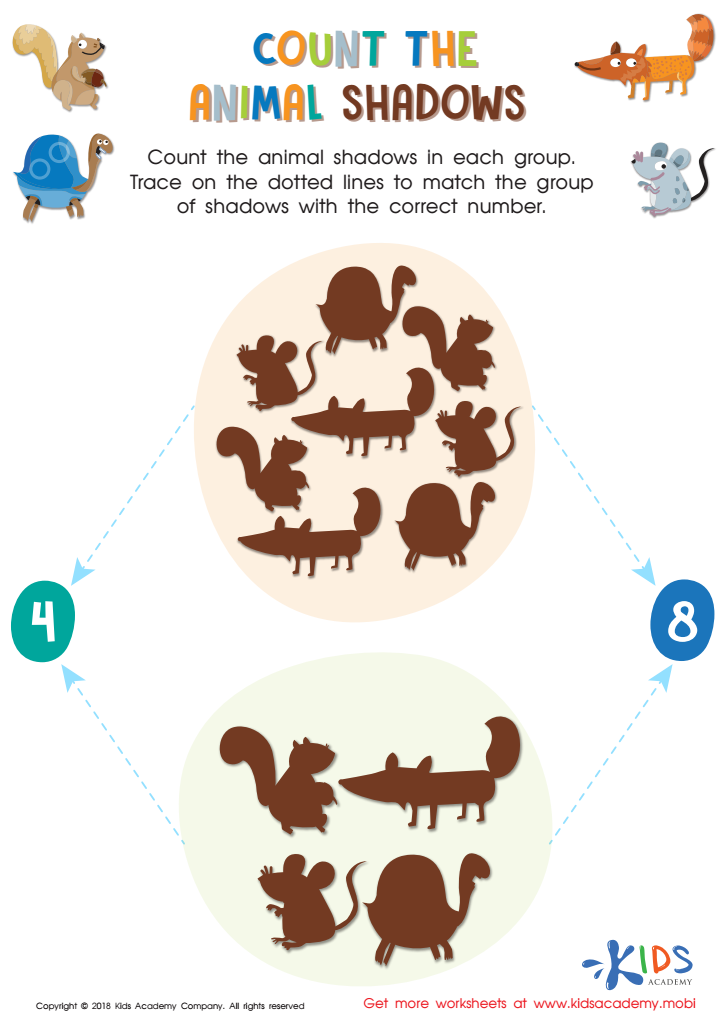
Count the Animal Shadows Worksheet
Our shadows accompany us wherever we go. Even your kids have seen theirs! Did they know that animals have shadows too? Count the animal shadows in each group with this worksheet. Ask your child to identify the animals pictured, then help them trace the dotted lines to match with the right number.
Count the Animal Shadows Worksheet
Worksheet
Join Kids Academy for Free
Who is primarily going to use this learning content?








Animal Identification Math is an engaging educational tool that combines learning with the fascinating world of animals, captivating children aged 3-8. Parents and teachers should care about this approach for several reasons. First, it encourages early numeracy skills by incorporating familiar and enticing animal imagery, making abstract concepts like counting, addition, and subtraction tangible and relatable.
Moreover, Animal Identification Math fosters cognitive development as children learn to categorize and identify animals based on various attributes, such as size, color, and habitat. This nurtures critical thinking and enhances observational skills. Additionally, it promotes language development; as children discuss and describe animals, they grow their vocabulary and comprehension.
Incorporating animals also ignites curiosity and nurtures a sense of stewardship towards nature. Children who learn about animals often develop an understanding of biodiversity and empathy towards living things. Lastly, using animals as a theme helps create a positive learning environment. Fun activities related to animal identification can boost motivation and make learning enjoyable, keeping young learners engaged.
Overall, Animal Identification Math not only equips children with essential mathematical skills but also enriches their emotional and social understanding of the world around them. Investing in such interdisciplinary learning benefits children's holistic development.








