Matching skills Matching Worksheets for Ages 3-8
6 filtered results
-
From - To
Welcome to our "Matching Skills Worksheets" page, designed specifically for children ages 3-8. These engaging worksheets enhance your child's cognitive development by promoting essential matching skills through fun activities. Kids will enjoy pairing shapes, colors, animals, and more, while building their memory, attention span, and problem-solving abilities. Our carefully crafted resources are perfect for use at home or in the classroom, making learning enjoyable and effective. With delightful illustrations and user-friendly layouts, these worksheets are ideal for early learners. Start exploring the world of matching skills today and watch your child’s confidence and abilities soar!
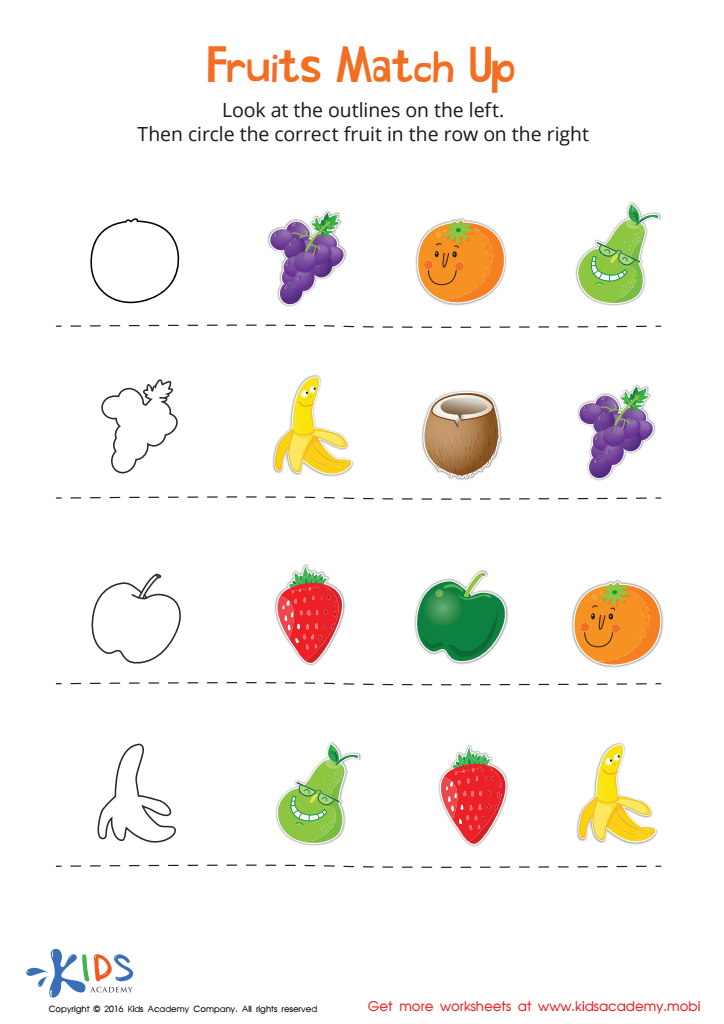
Fruits Match Up Worksheet
 Assign to My Students
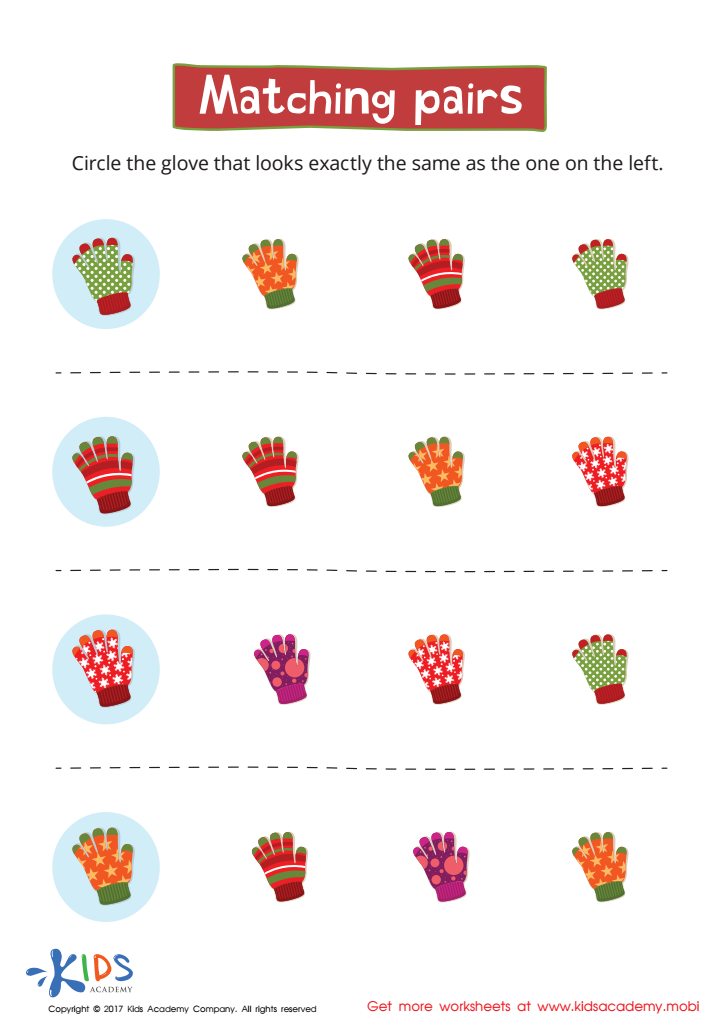
Matching: Matching Pairs Worksheet
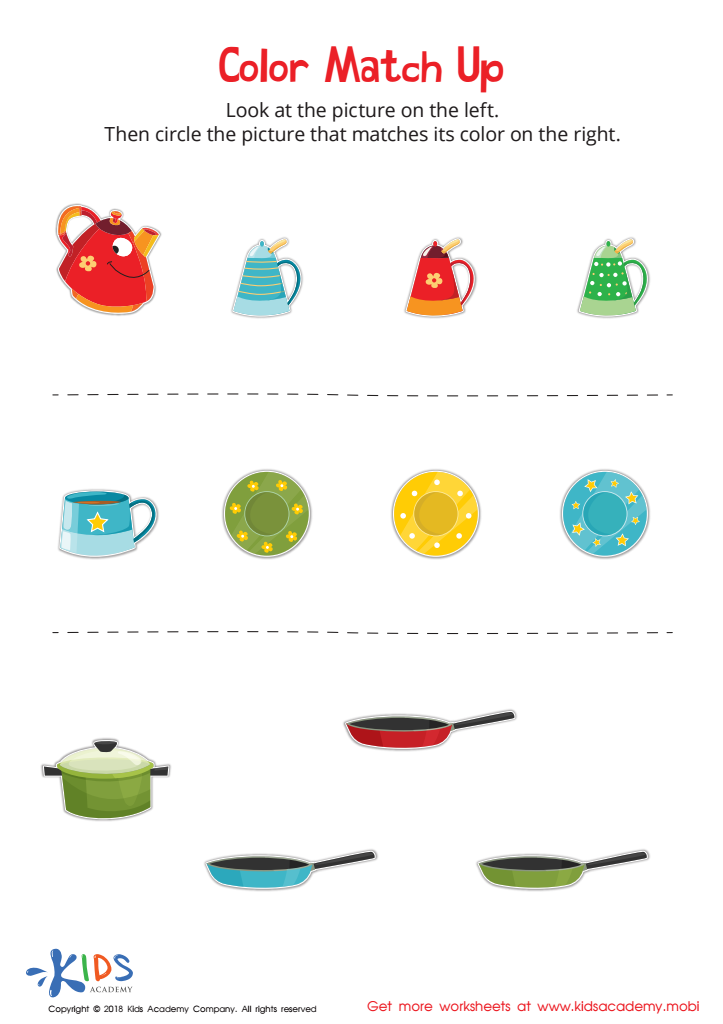
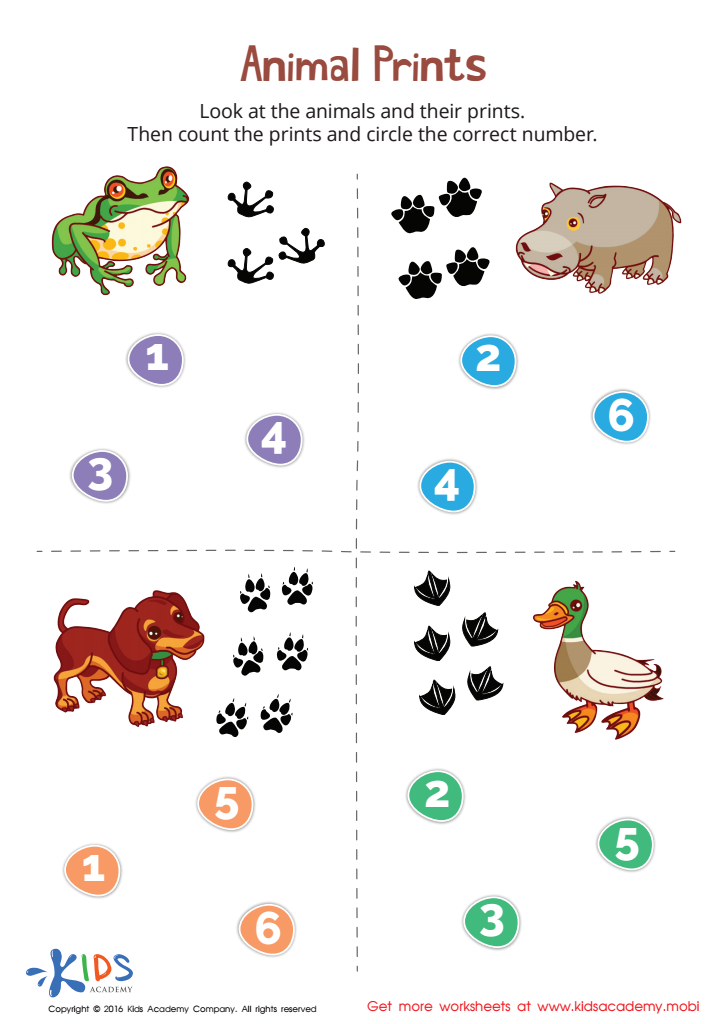
Animal Prints Match-Up Worksheet
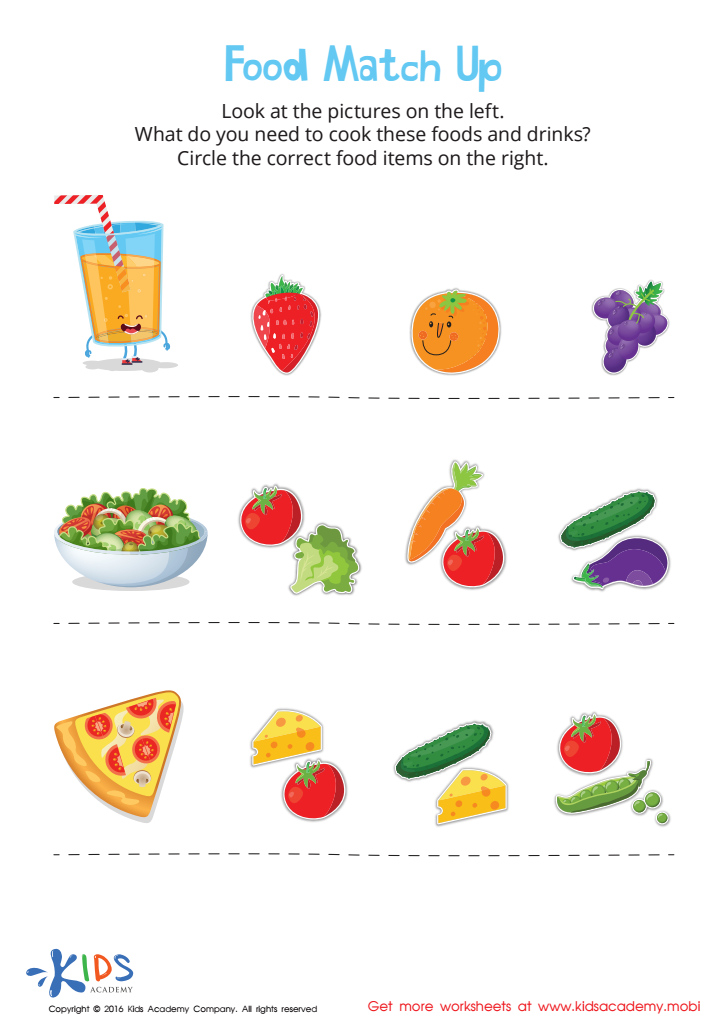
Food Match Up Worksheet
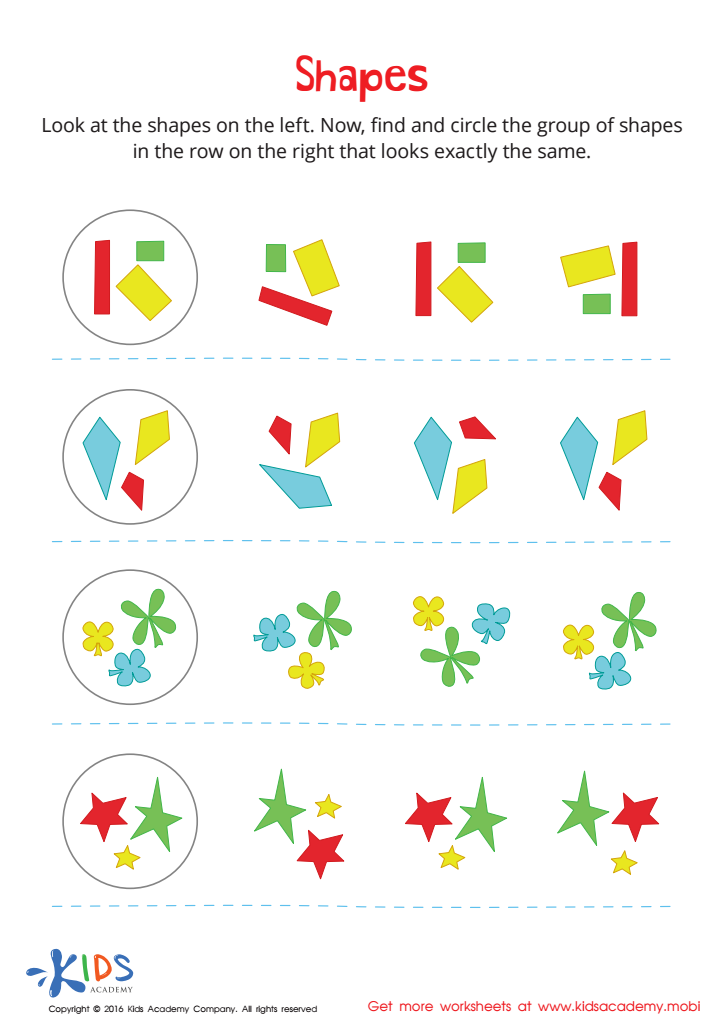
Shapes Worksheet







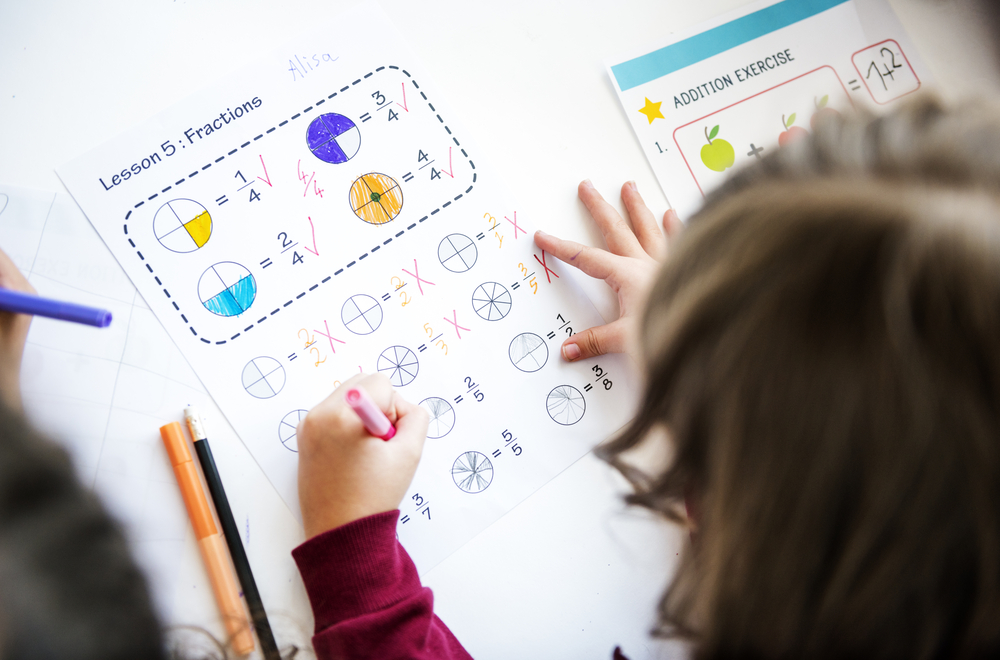
Matching skills are fundamental for children aged 3-8, as they play a crucial role in cognitive and social development. These skills involve recognizing similarities and differences between objects, concepts, and even emotions, forming a foundation for critical thinking and problem-solving. For parents and teachers, fostering matching skills can enhance a child’s ability to categorize information, facilitating more effective learning in subjects like math and science, where grouping and pattern recognition are essential.
Additionally, matching activities, such as puzzles or card games, boost fine motor skills and hand-eye coordination, making them valuable for overall physical development. Socially, these activities encourage cooperation and communication among peers, laying groundwork for positive interactions and teamwork.
Moreover, mastering matching is a precursor to more complex skills such as reading and writing, where recognizing letter shapes and sounds or decoding words relies on similar processes of association. Thus, early intervention through playful and engaging matching tasks not only aids individual growth but also sets the stage for academic success in later years.
By prioritizing matching skills, parents and teachers ensure that children are equipped with essential tools for learning, exploration, and building meaningful connections with the world around them.








