Problem-Solving Skills Subtraction Worksheets for Ages 3-8
19 filtered results
-
From - To
Looking to boost your child's math confidence? Our Problem-Solving Skills Subtraction Worksheets for ages 3-8 transform learning into a fun adventure! Designed to enhance problem-solving abilities, these engaging worksheets feature colorful graphics, interactive activities, and age-appropriate challenges. Expertly crafted to improve focus and critical thinking, they help young learners master subtraction concepts through play-based exercises. Each worksheet encourages hands-on learning, making complex problems easier for children to understand and solve. Ideal for both classroom and home use, our worksheets are the perfect resource to support early math education in a playful yet educational manner. Download now and watch your child thrive!
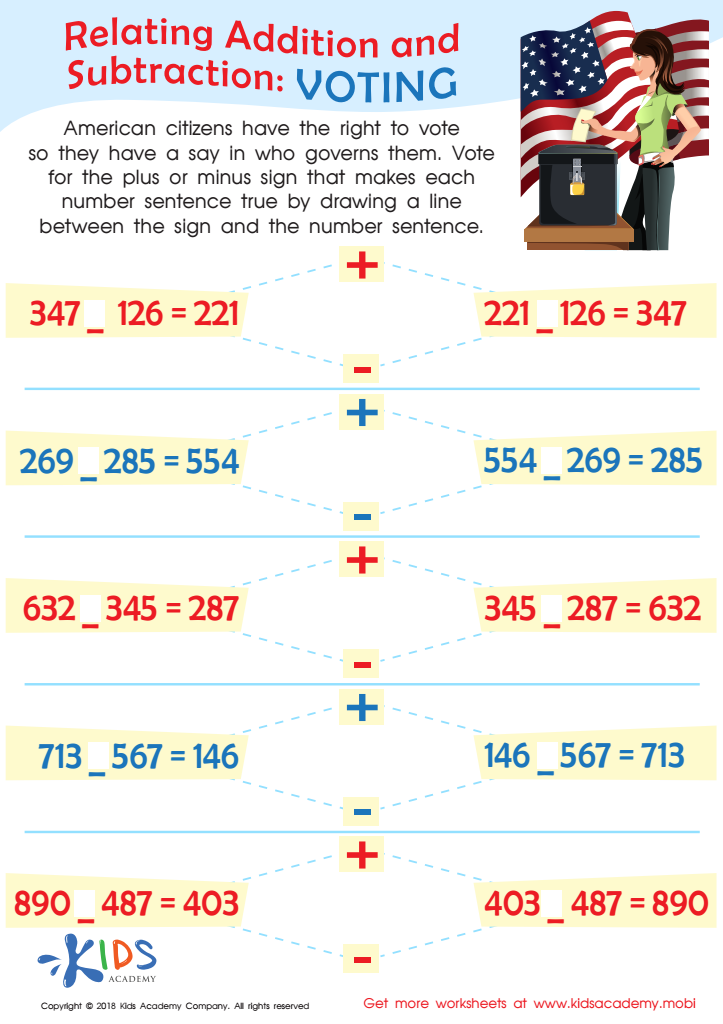
Voting Worksheet
 Assign to My Students
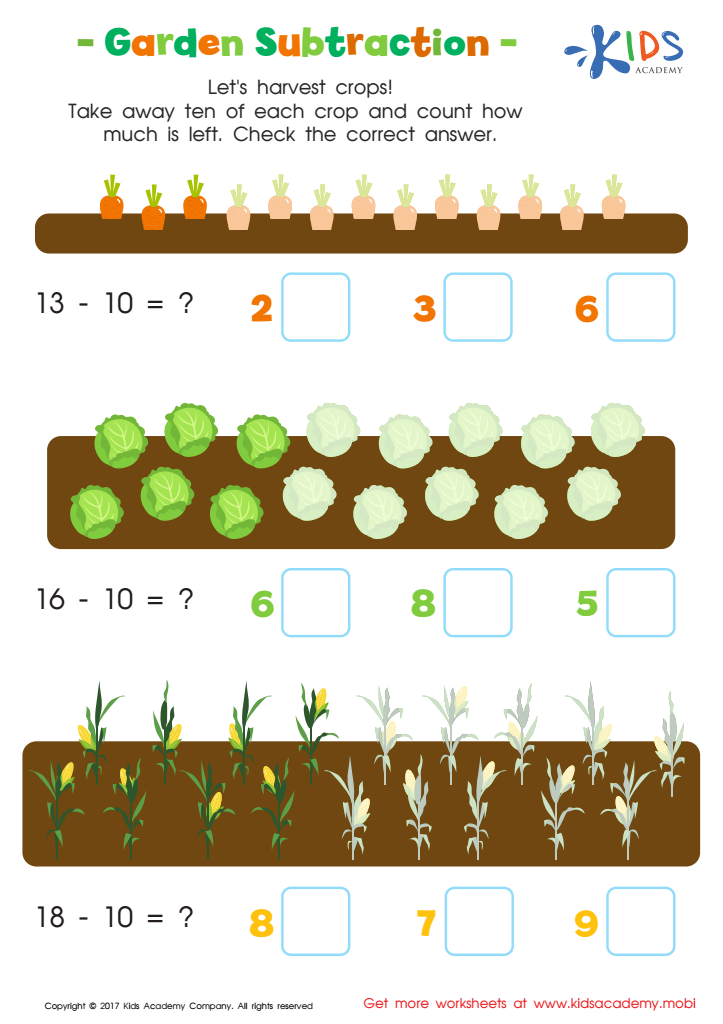
Garden Subtraction Worksheet
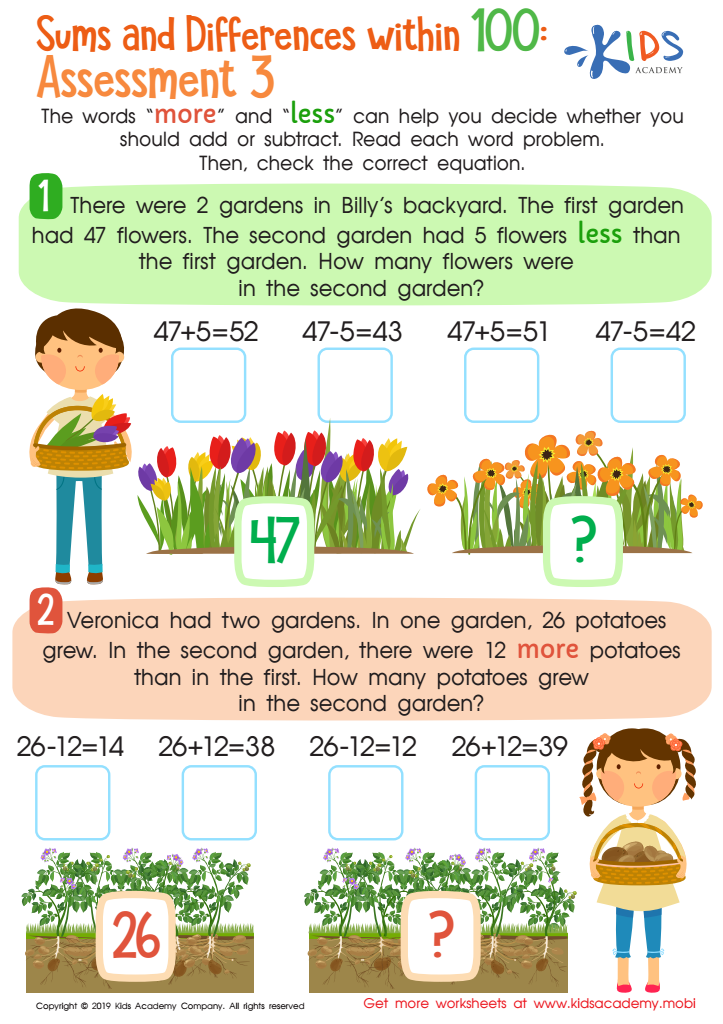
Sums and Differences Within 1 - Assessment 1 Worksheet
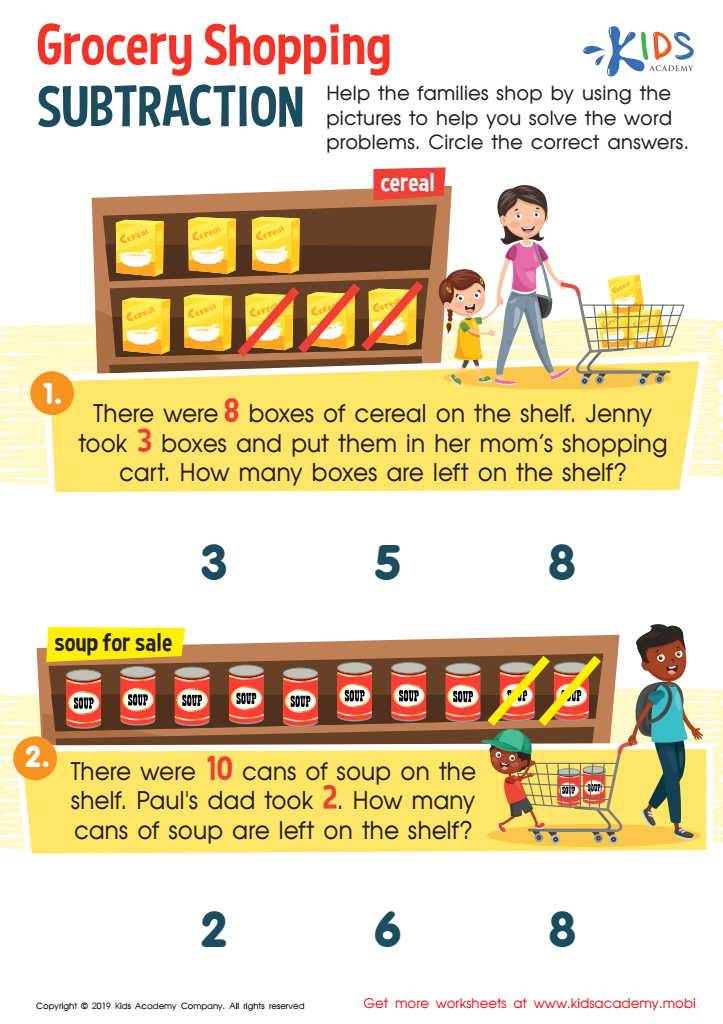
Grocery Shopping Subtraction Worksheet
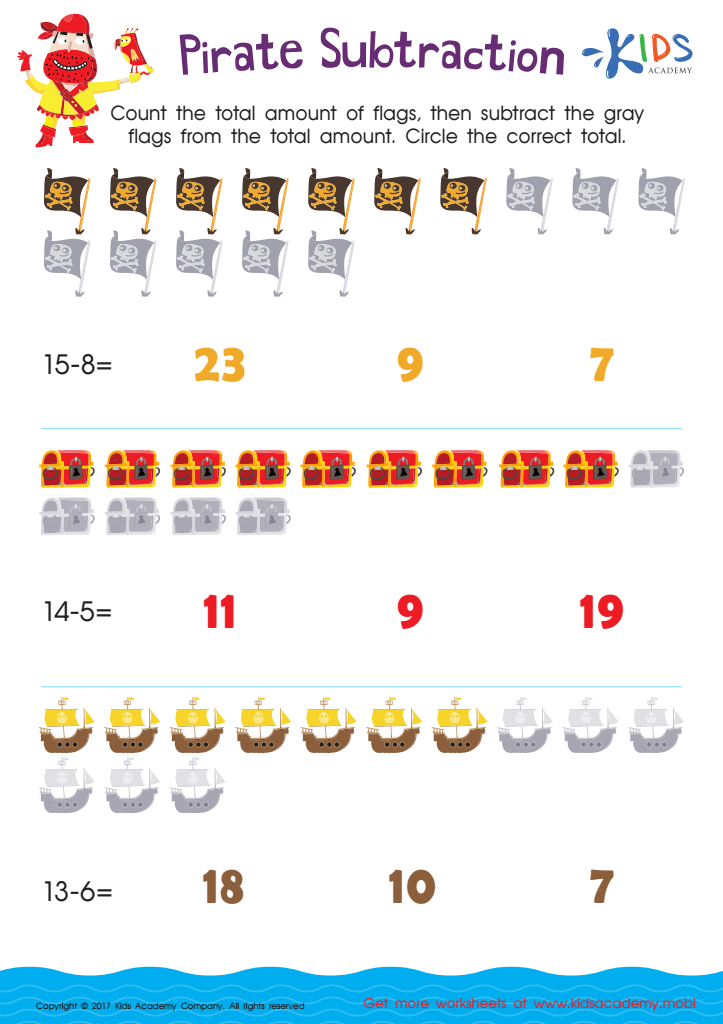
Pirate Subtraction Substraction Worksheet
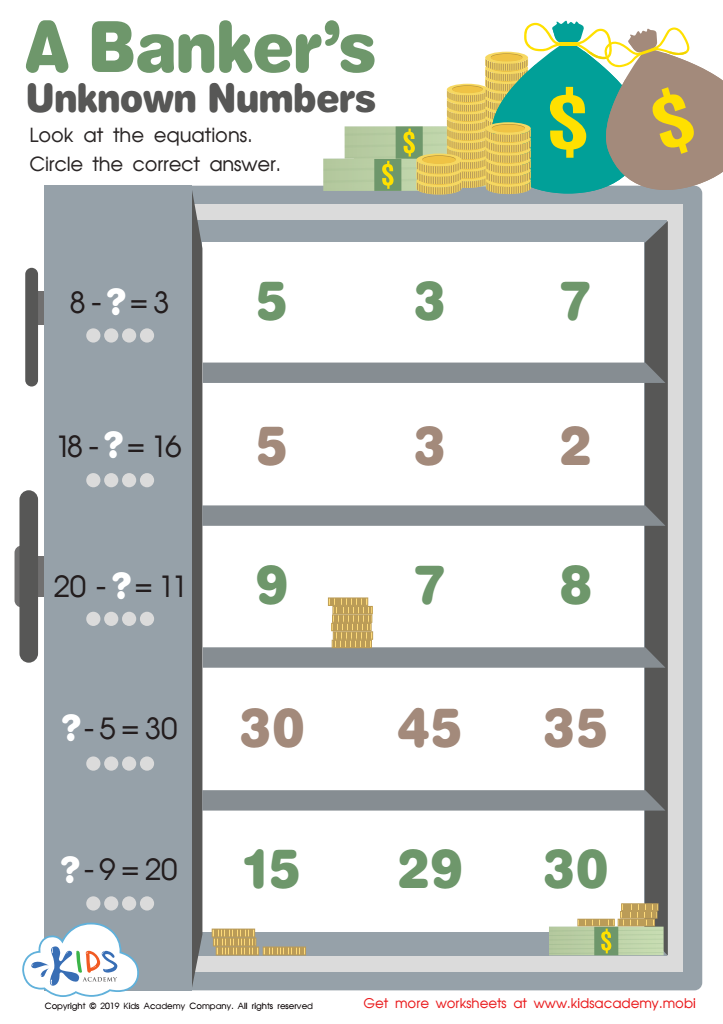
A Banker's Unknown Numbers Worksheet
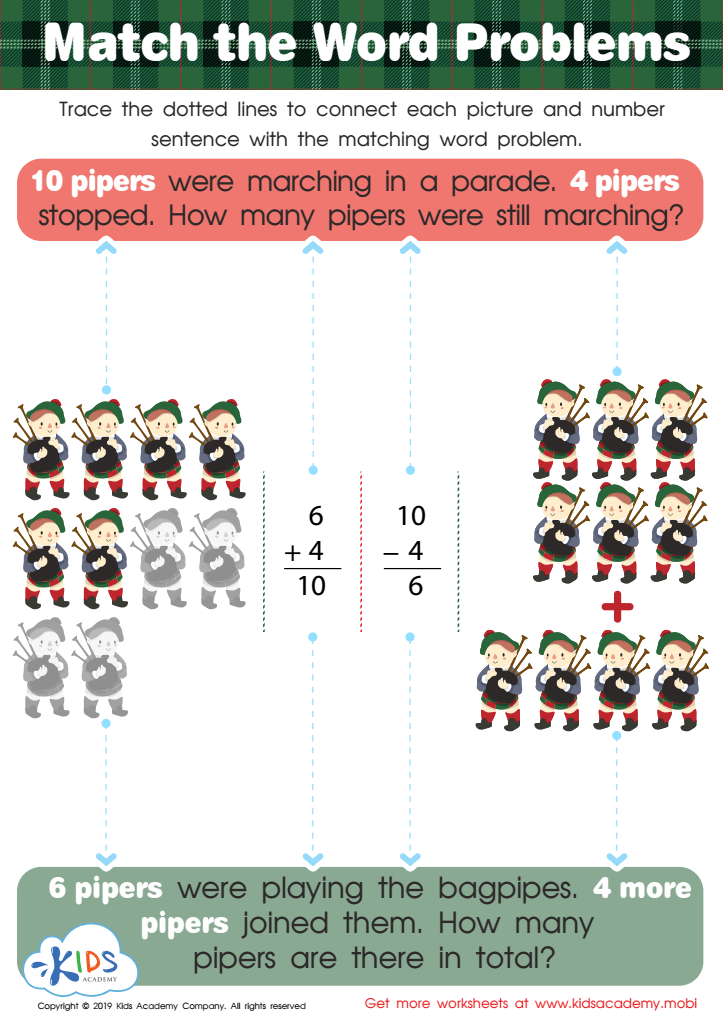
Match the Word Problems Worksheet
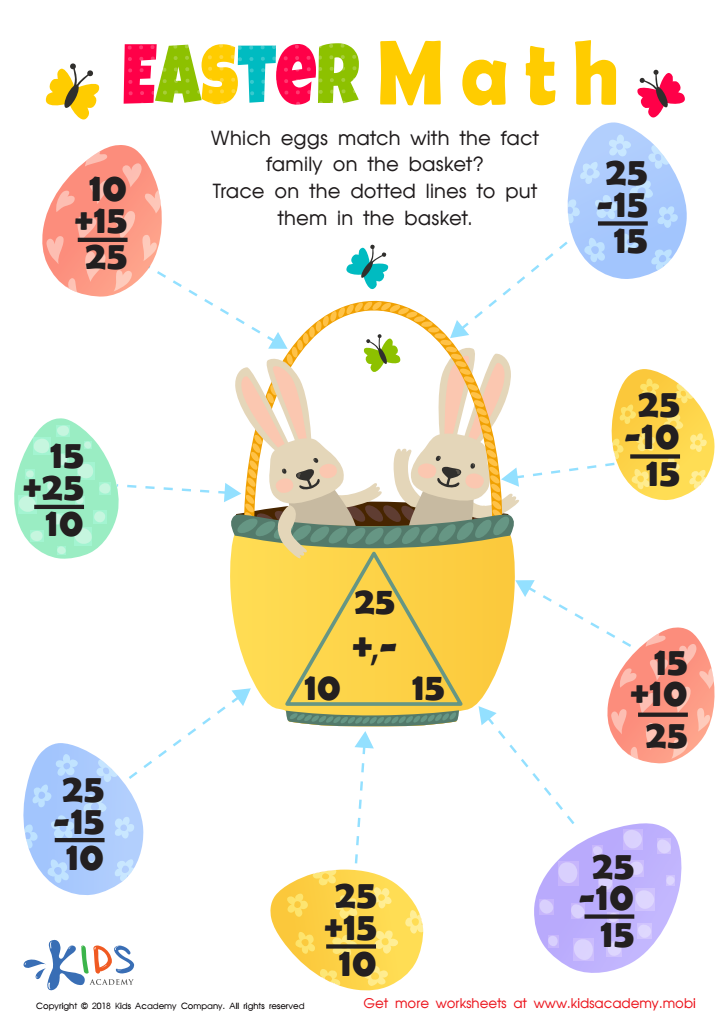
Fact Families: Easter Math Worksheet
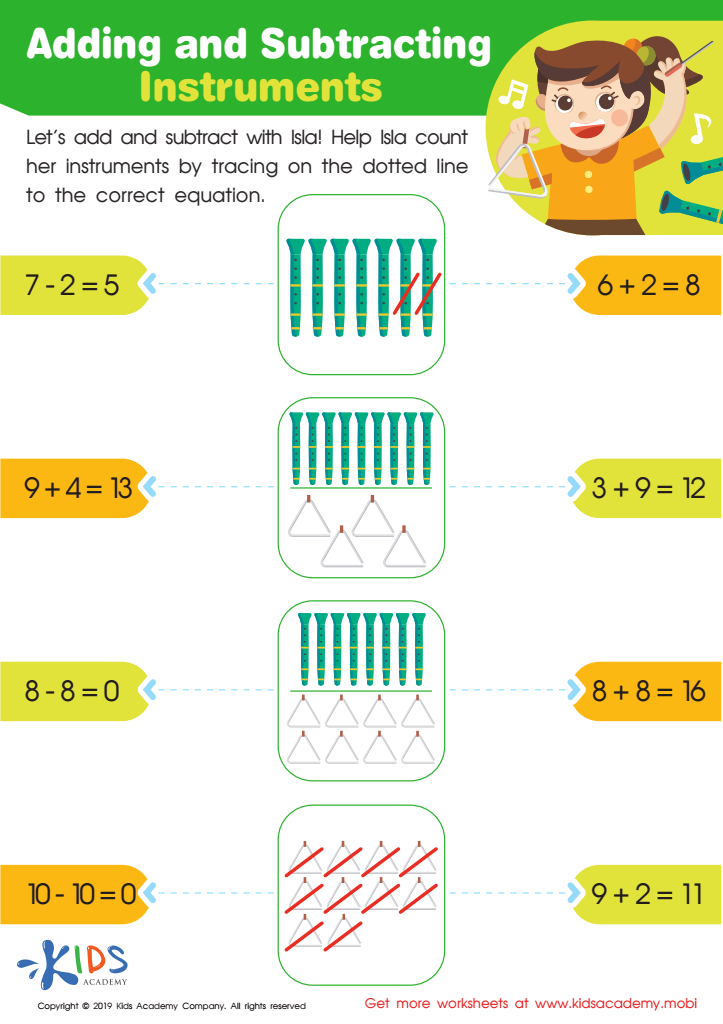
Adding and Subtracting: Instruments Worksheet
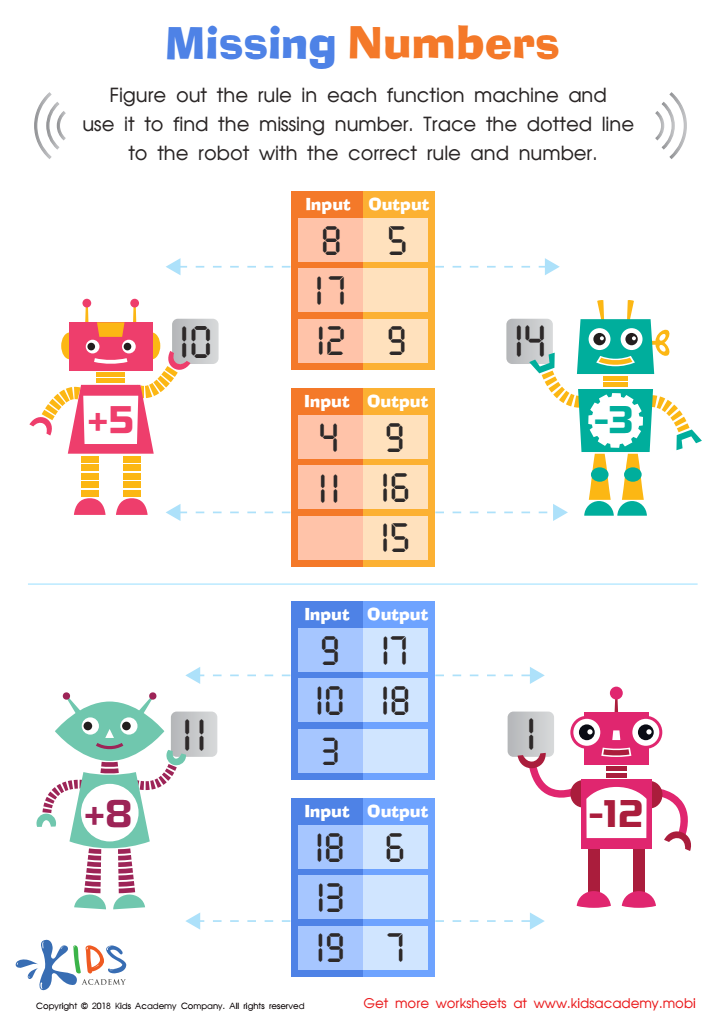
Missing Numbers Worksheet
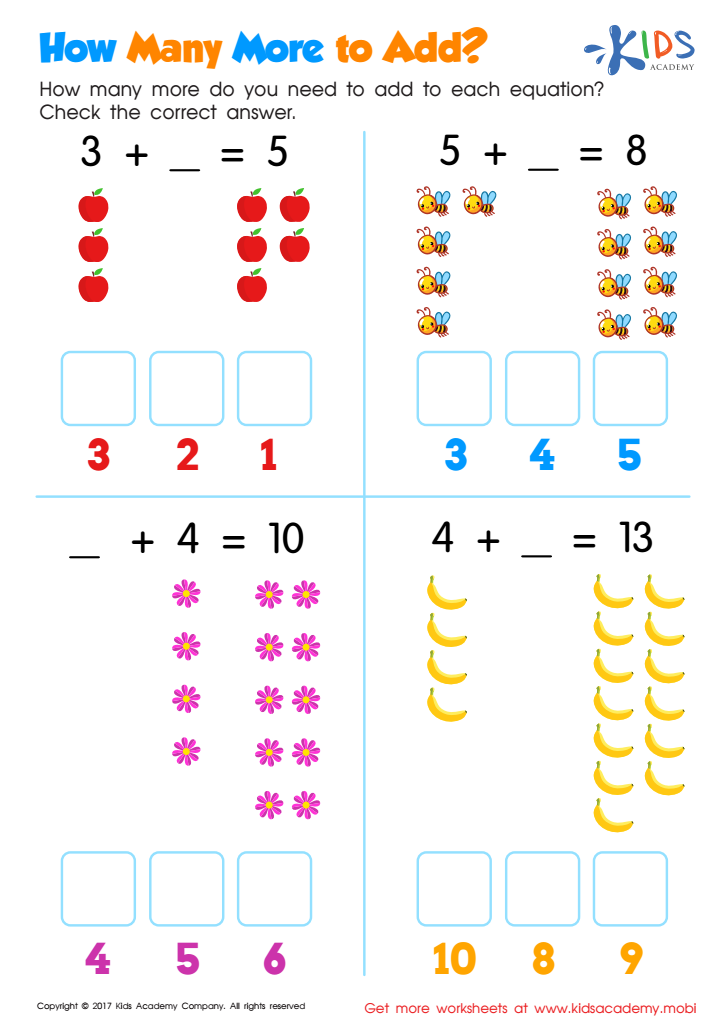
How Many More to Add Worksheet
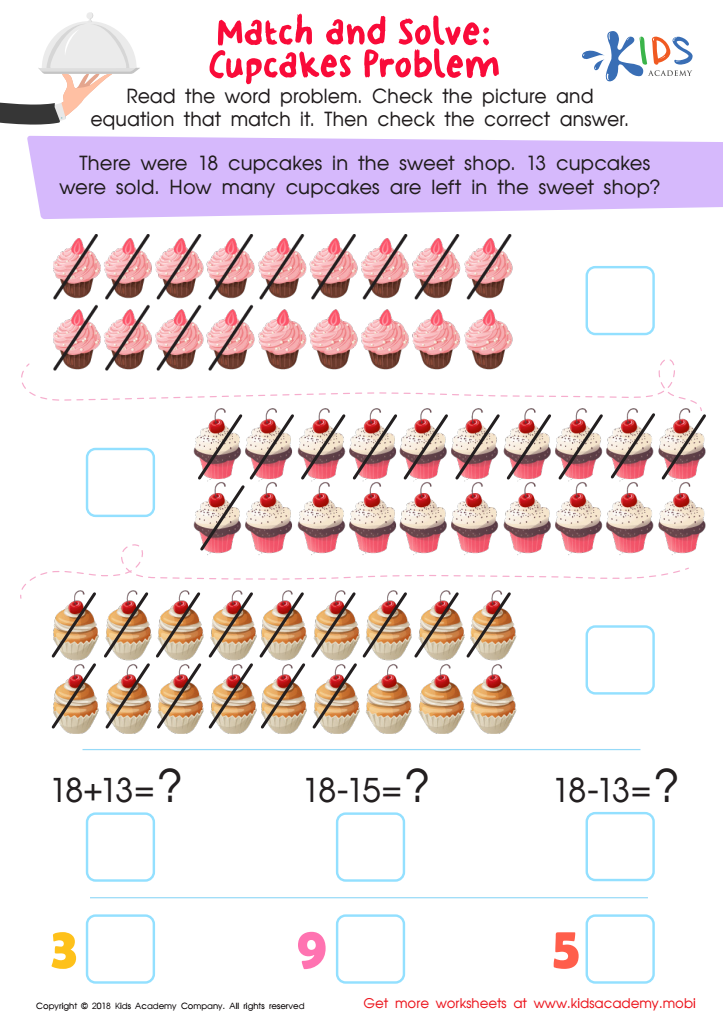
Match and Solve: Cupcakes Problem Worksheet
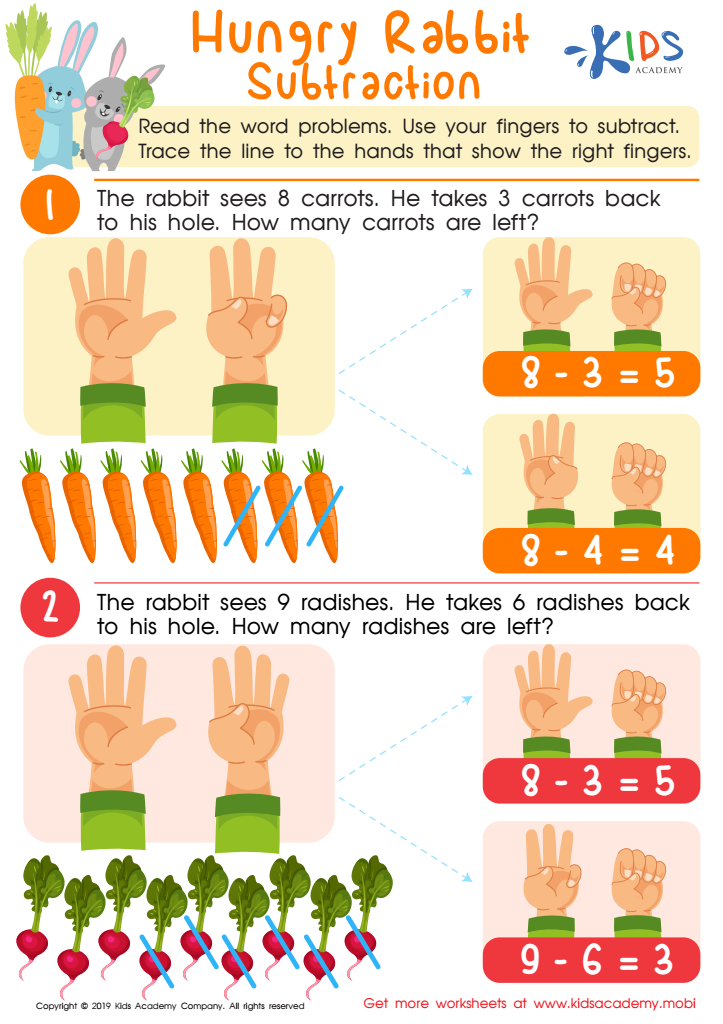
Hungry Rabbit Subtraction Worksheet
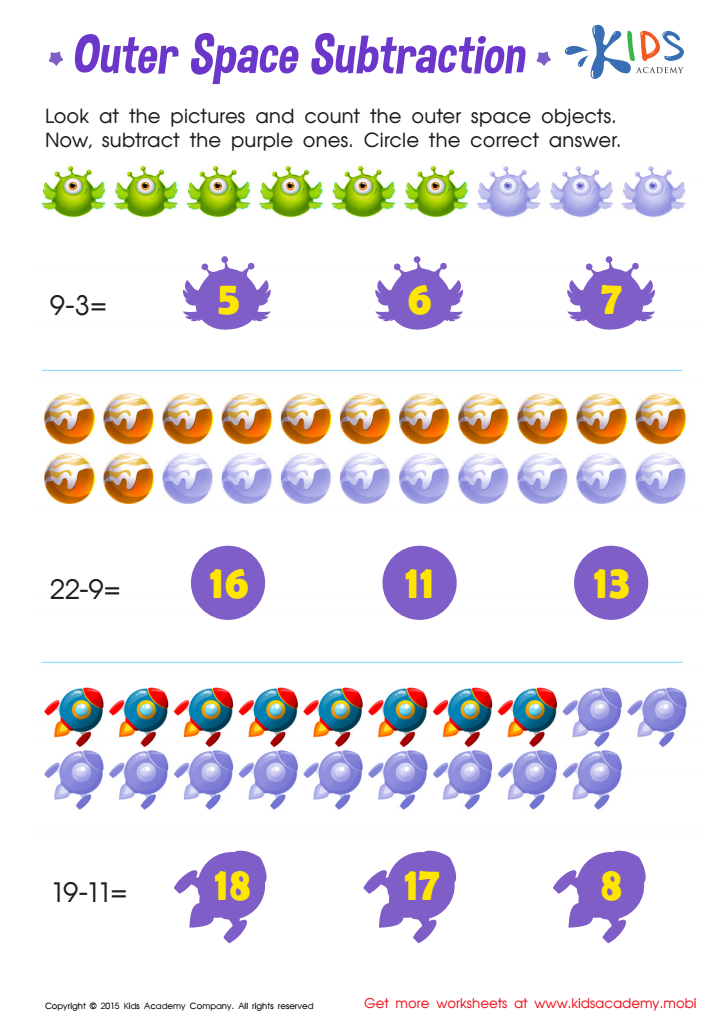
Outer Space Substraction Worksheet
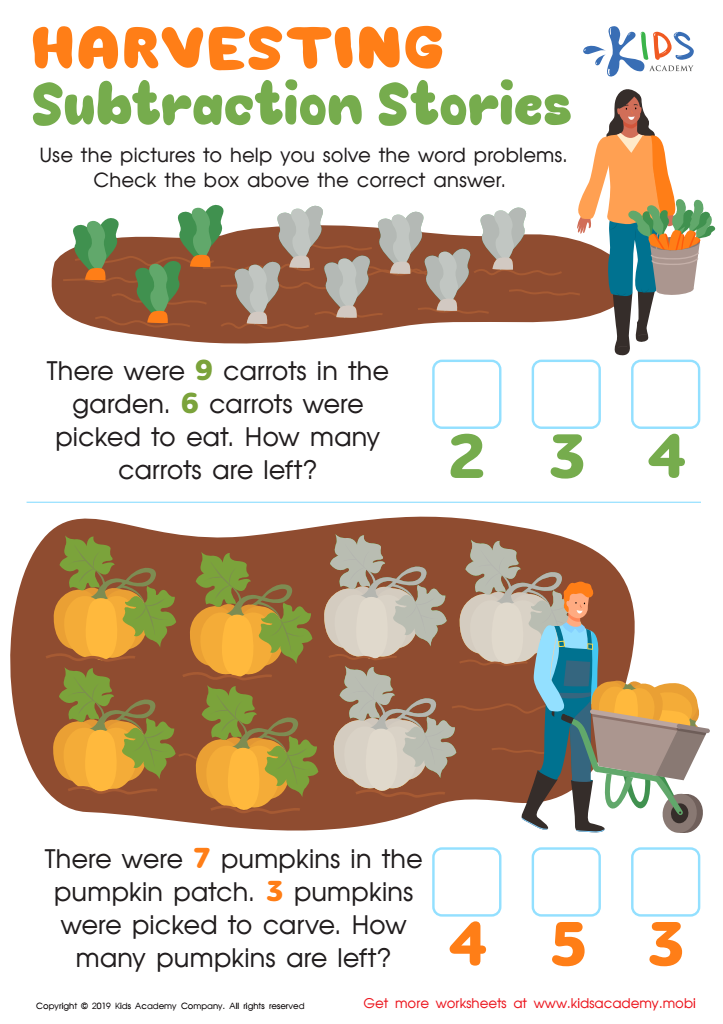
Harvesting Subtraction Stories Worksheet
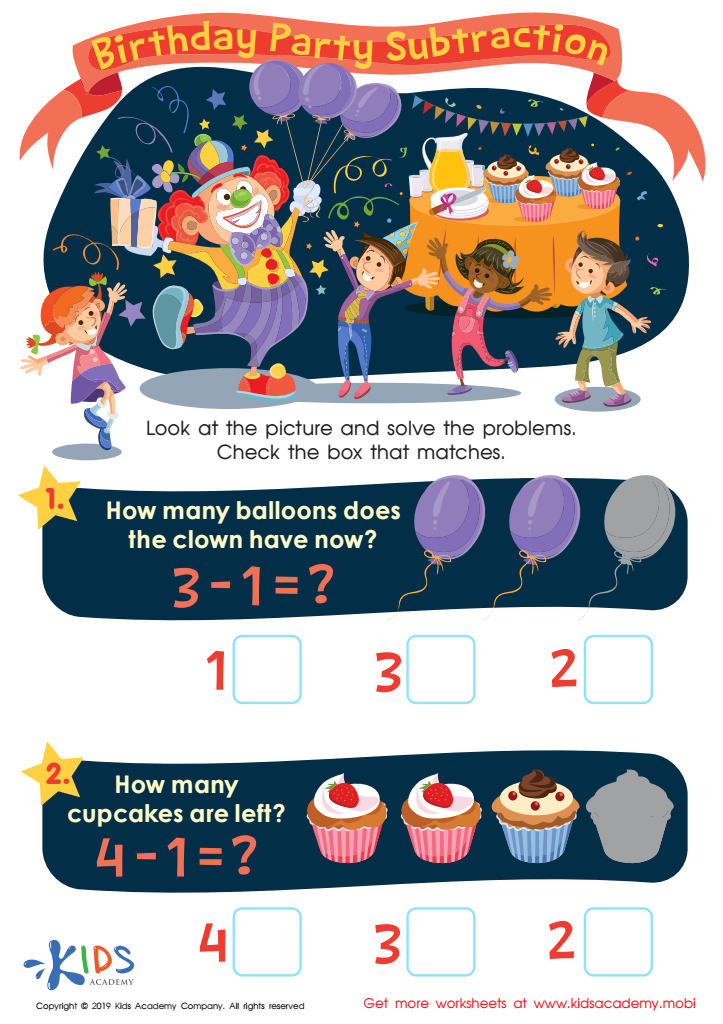
Birthday Party Subtraction Worksheet
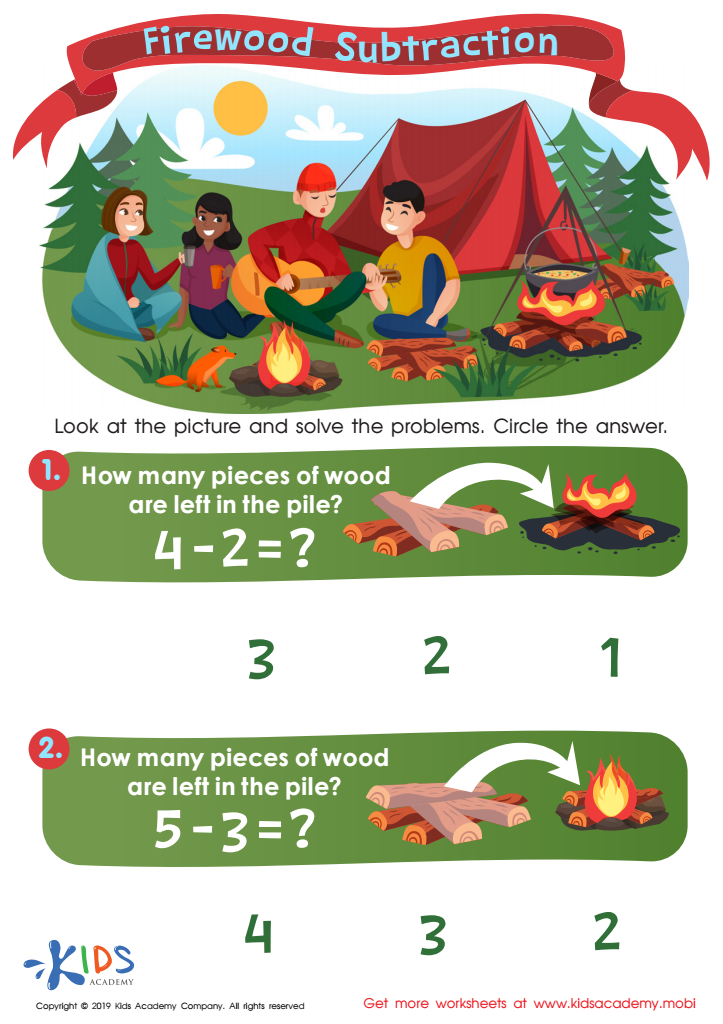
Firewood Subtraction Worksheet
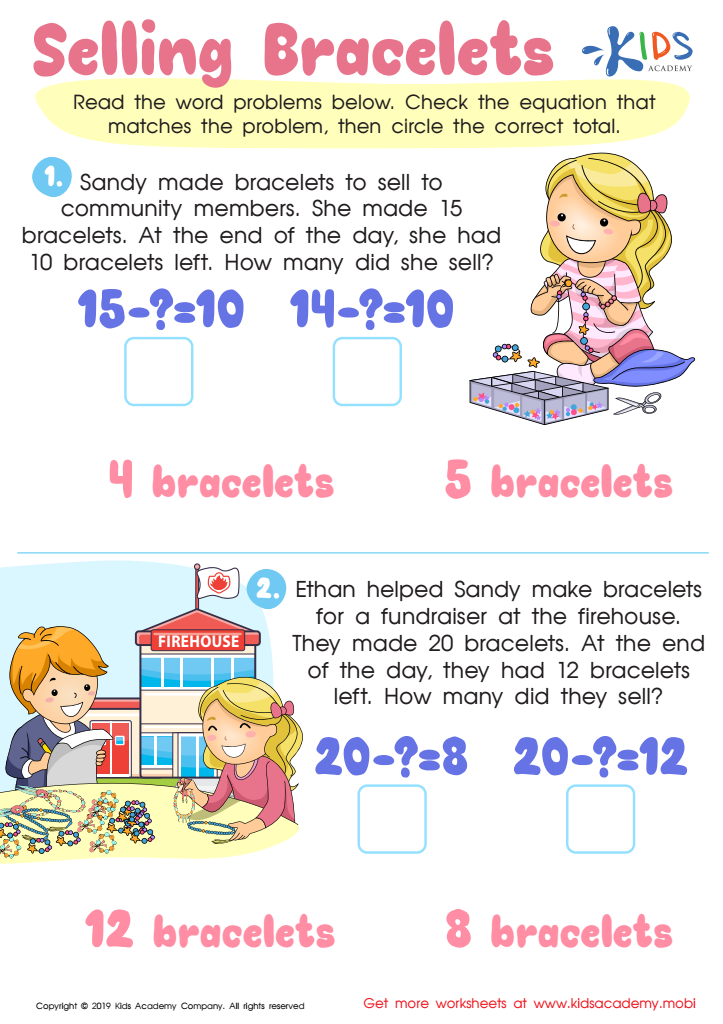
Selling the Bracelets Worksheet
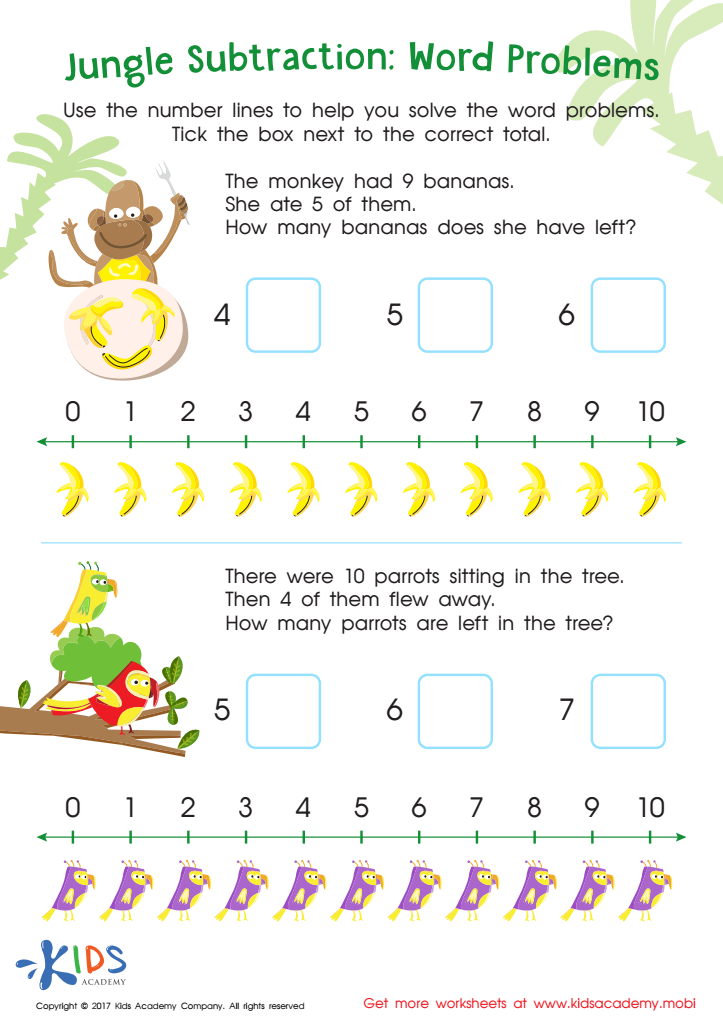
Jungle Subtraction Word Problems Substraction Worksheet








Problem-solving skills, especially subtraction, are vital for children aged 3-8 because they lay the groundwork for future mathematical understanding and everyday decision-making. During these early years, children’s brains are highly receptive to new information and forming neural connections, making it the ideal time to introduce foundational numerical concepts. Teaching subtraction is more than just learning to count backward; it helps children understand the concept of taking away and the relationship between numbers, which are crucial for more complex arithmetic later on.
Furthermore, developing problem-solving skills fosters critical thinking and logical reasoning. Encouraging children to solve subtraction problems nurtures their ability to think in steps, analyze situations, and arrive at solutions independently. This educational foundation builds confidence and reduces math anxiety, which can hinder their academic progress as they advance in school.
Subtraction also appears in daily life, such as figuring out how much change to receive, sharing items equally among friends, or distributing snacks. Early practice makes these skills second nature, equipping children with practical knowledge they’ll use regularly.
Parents and teachers play essential roles in fostering a supportive and engaging environment for learning these skills through playful activities and real-life scenarios, making math both fun and relevant. Therefore, focusing on problem-solving skills and subtraction not only benefits academic growth but also promotes essential life skills.








