Word Problems Worksheets for Ages 3-8 - Page 6
123 filtered results
-
From - To
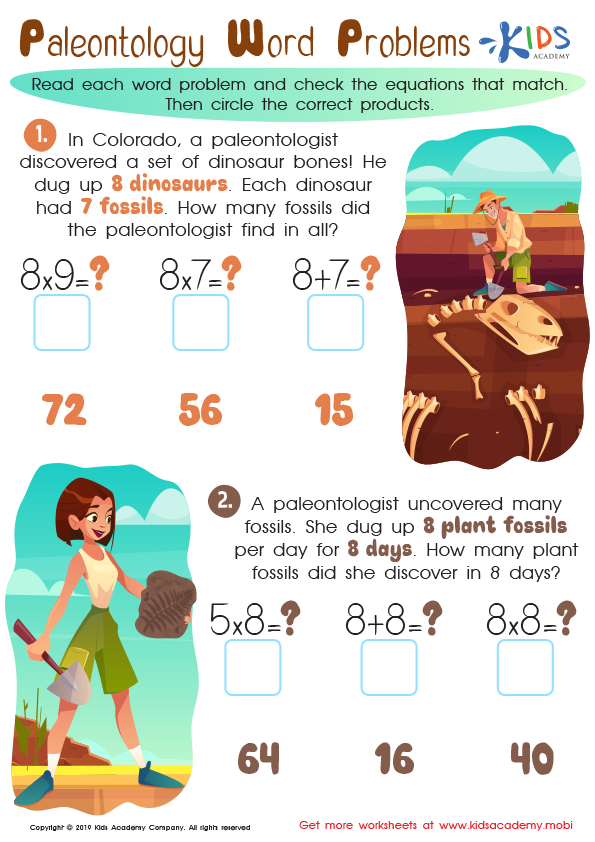
Archeology Word Problems Worksheet
 Assign to My Students
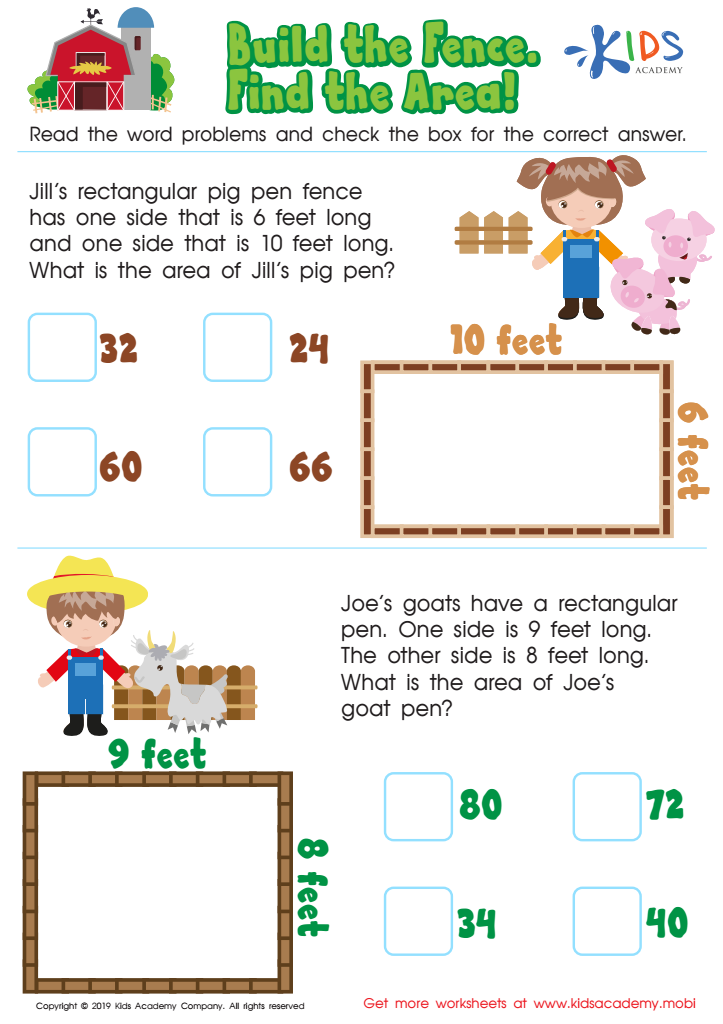
Build the Fence, Find the Area Worksheet
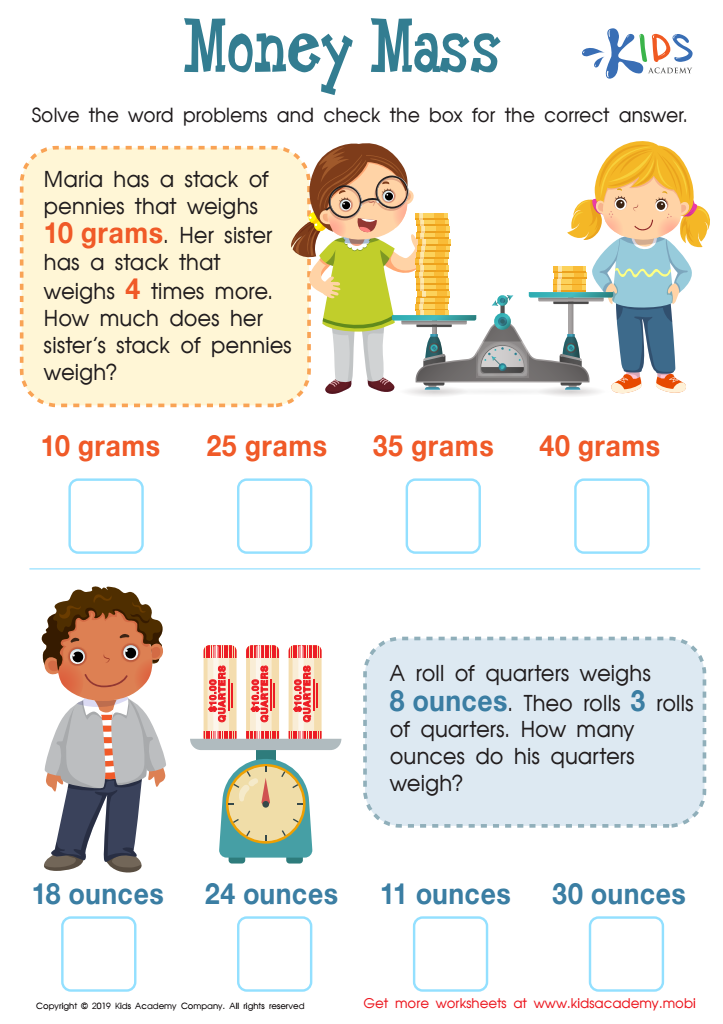
Money Mass Worksheet








Word problems play a crucial role in developing early math skills for children aged 3-8. During these formative years, children are not only learning basic arithmetic but also how to understand and interpret information. Word problems encourage critical thinking and problem-solving abilities, key components of early mathematical understanding.
When parents and teachers engage children with word problems, they help them make connections between abstract numbers and real-world scenarios. This contextual learning makes math more relatable and less intimidating. By articulating problems verbally, children practice important language skills, enhancing both their literacy and mathematical vocabulary.
Furthermore, tackling word problems requires children to visualize scenarios, fostering their ability to reason and strategize. This multi-modal approach—combining reading comprehension, language development, and mathematics—catalyzes a more robust cognitive development. As they solve word problems, children also build confidence in their abilities to approach complex tasks, setting a foundation for lifelong learning.
Incorporating word problems into everyday activities can make math fun and engaging. Ultimately, by fostering an appreciation for problem-solving at an early age, parents and teachers help instill skills necessary for academic success and everyday life. This early exposure lays the groundwork for future mathematical challenges and instills a positive attitude towards math.








