Text analysis Reading Worksheets for Ages 3-8
4 filtered results
-
From - To
Unlock your child's reading potential with our Text Analysis Reading Worksheets designed specifically for ages 3-8! These engaging activities help young learners develop essential skills such as comprehension, vocabulary, and critical thinking through interactive exercises. Our worksheets encourage children to analyze texts by identifying main ideas, supporting details, and understanding context. Suitable for both classroom and home use, these resources make learning fun and effective! Parents and teachers will appreciate the variety of topics and engaging formats that cater to diverse learning styles. Foster a love for reading and improve analytical skills with our specially curated worksheets today!
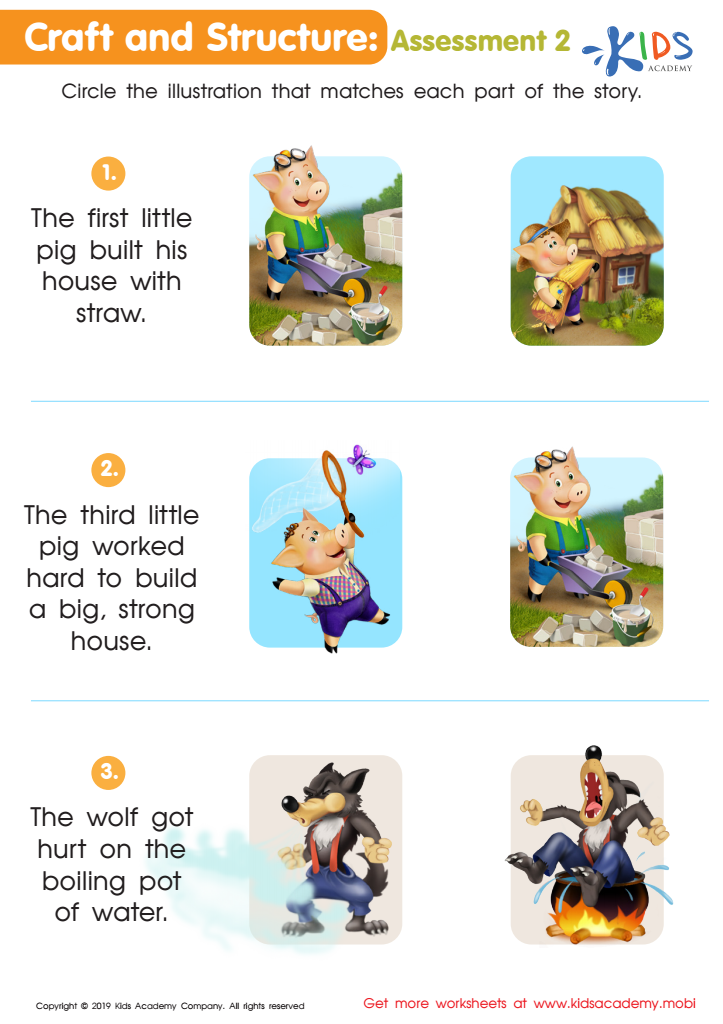
Craft and Structure: Assessment 2 Worksheet 2
 Assign to My Students
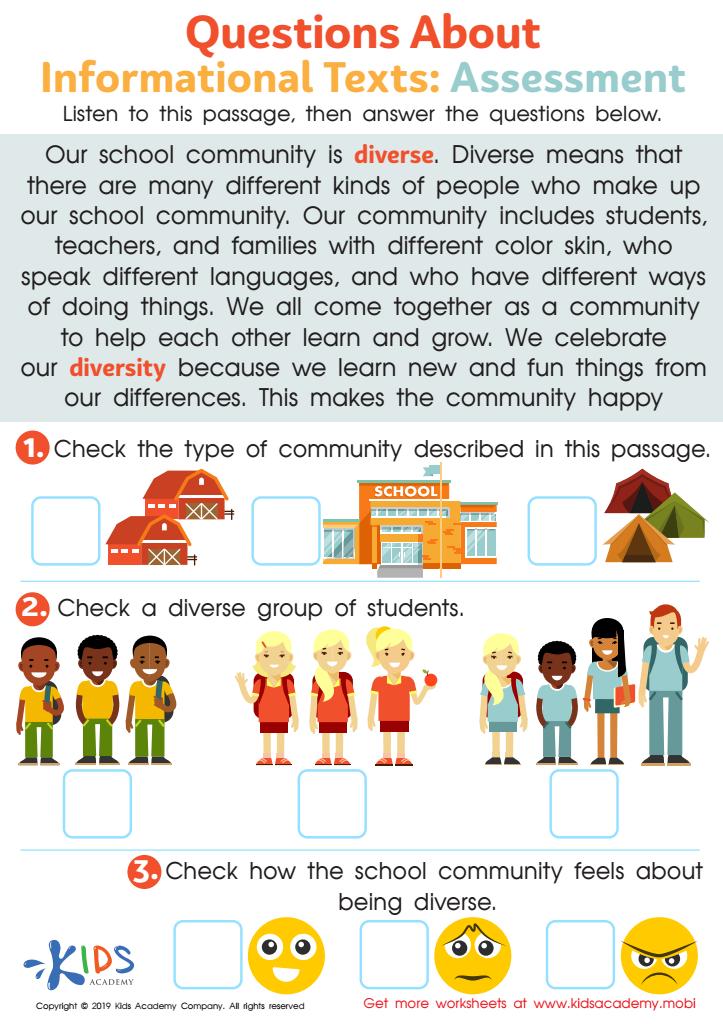
Questions About Informational Texts: Assessment 1 Worksheet
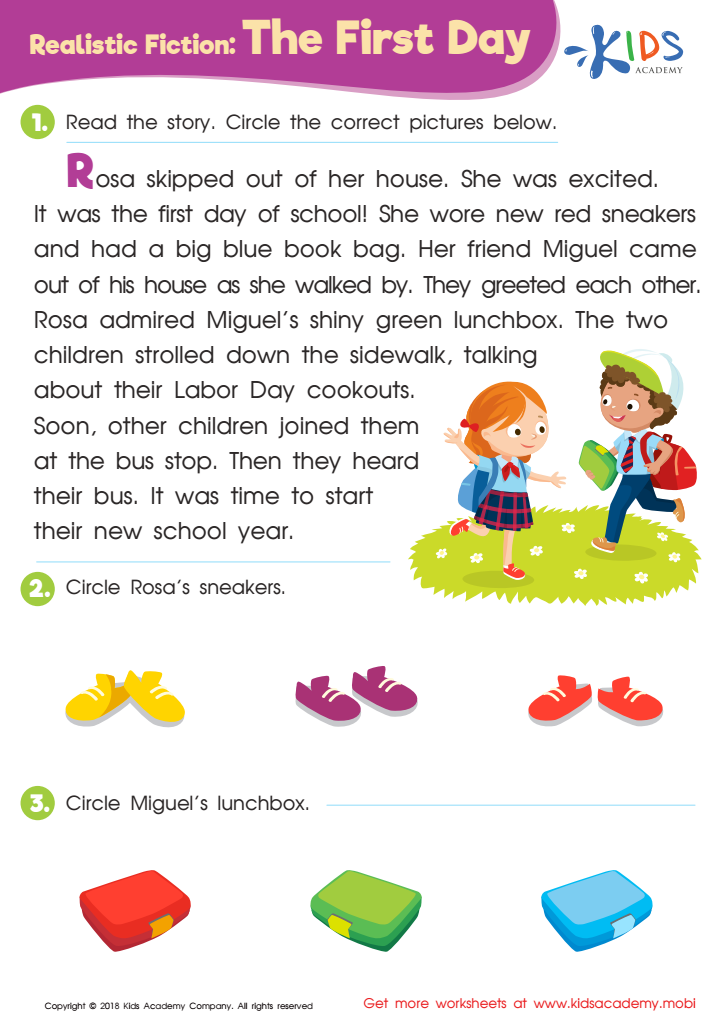
Realistic Fiction: The First Day Worksheet
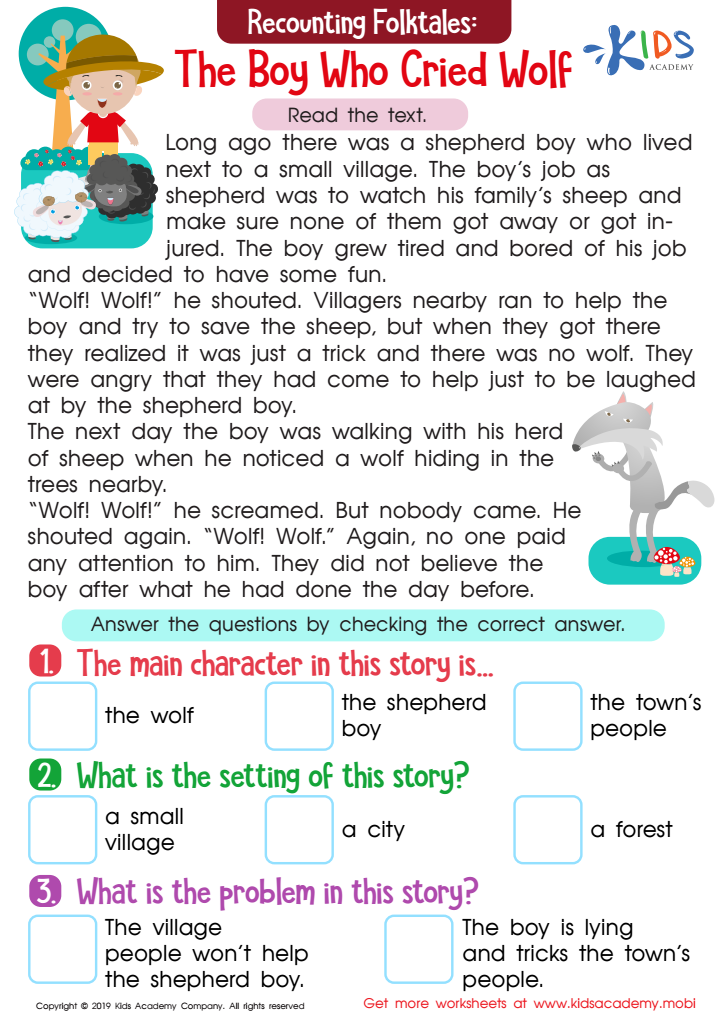
The Boy Who Cried Wolf Part 1 Worksheet







Text analysis reading is an essential activity for children ages 3 to 8, as it lays the foundation for language development, critical thinking, and comprehension skills. At this formative age, children are naturally curious and eager to learn about the world around them. Engaging in text analysis helps them understand the structure of stories, identify main ideas, and connect with characters and themes. Parents and teachers should value this practice because it fosters early literacy skills that are crucial for academic success.
When children analyze texts, they learn to dissect information, distinguish fact from opinion, and assess the author's purpose. This skill not only enhances their reading abilities but also empowers them to become thoughtful consumers of information as they grow. Furthermore, discussing stories with parents and teachers promotes interactive dialogue and shared learning experiences, strengthening the child’s vocabulary and communication skills.
Moreover, early engagement in text analysis reading supports social-emotional growth. By understanding diverse perspectives through literature, children can develop empathy and make connections to their own lives. Thus, investing time in text analysis reading is vital for empowering young learners, ensuring they become confident readers and informed thinkers in the future.








