Geography knowledge Science Worksheets for Ages 3-8
3 filtered results
-
From - To
Explore our engaging Geography Knowledge Science Worksheets designed specifically for children ages 3-8! These interactive worksheets are perfect for young learners, helping them develop foundational geographical skills while having fun. Each activity features vibrant illustrations and age-appropriate content that encourages curiosity about the world around them. From identifying landforms and maps to recognizing continents and habitats, these worksheets promote critical thinking and enhance observational skills. Ideal for home or classroom use, our resources are crafted to inspire a love for geography. Encourage your child's learning journey today with our captivating and educational worksheet collection that supports early childhood development in science!
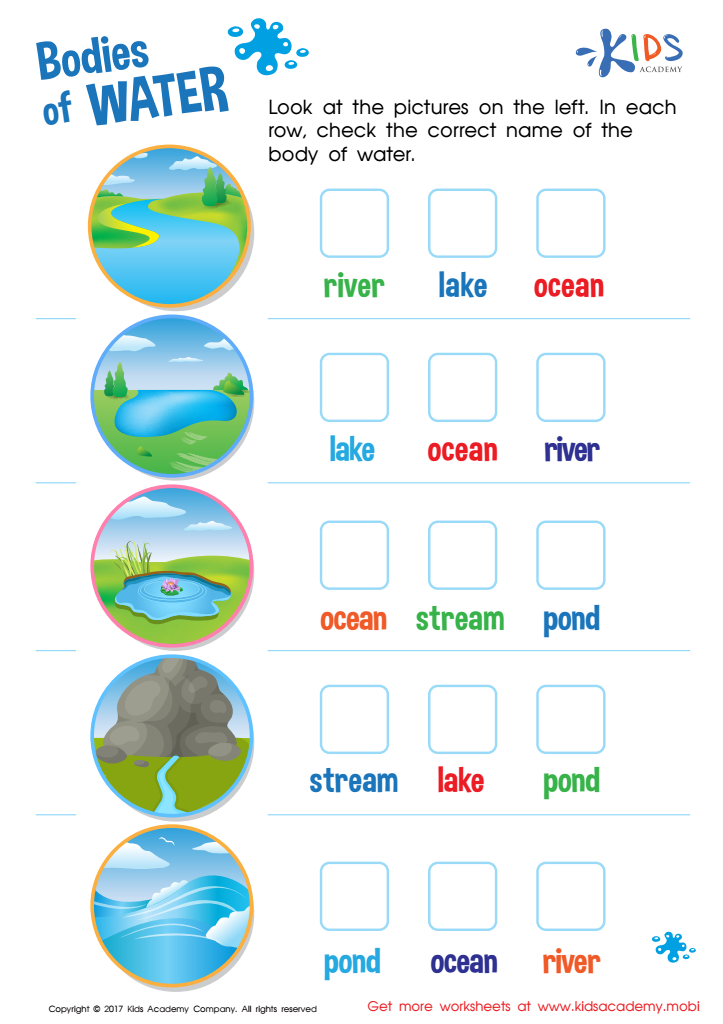
Bodies of Water Worksheet
 Assign to My Students
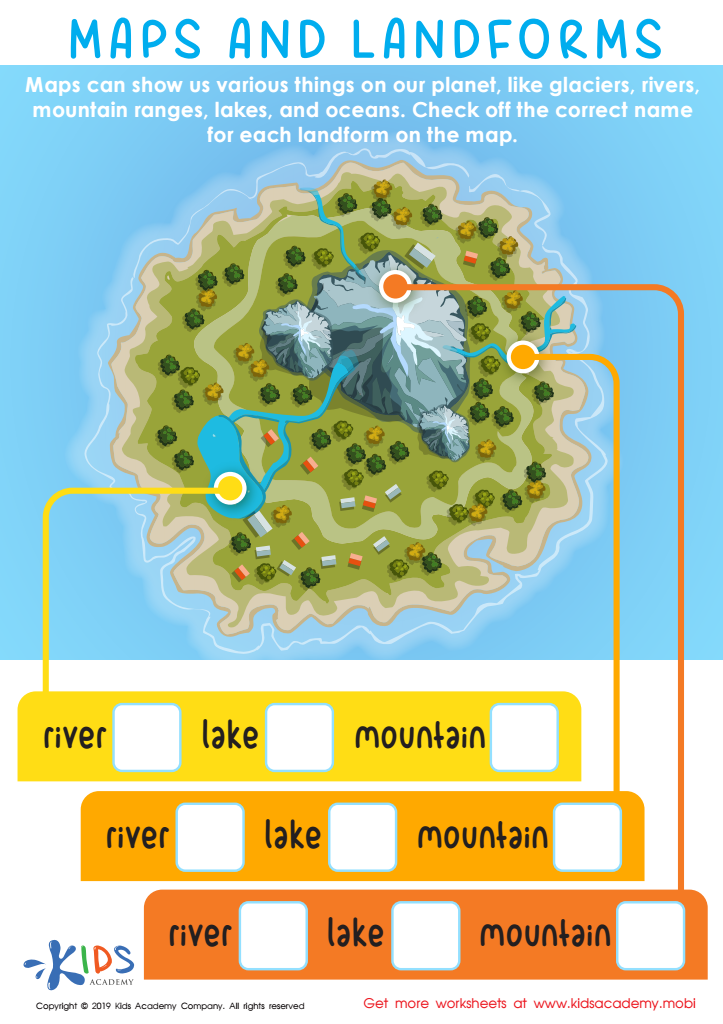
Maps and Landforms Worksheet
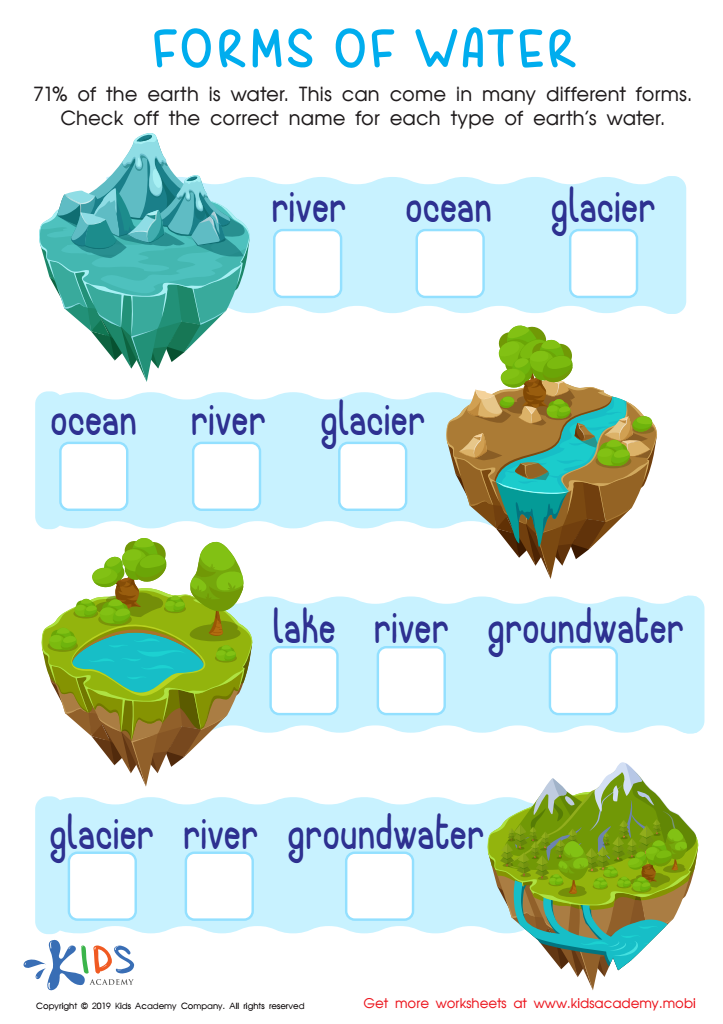
Forms of Water Worksheet







Understanding geography is essential for children aged 3-8 as it lays the foundation for their awareness of the world around them. At this formative stage, kids show an innate curiosity about their surroundings, making it the perfect time to introduce geographical concepts. Learning geography enhances their sense of place and space, helping them recognize where they fit within their community, country, and the global environment.
Geographical knowledge fosters critical thinking skills as children learn to make connections between locations, cultures, and ecosystems. This knowledge helps cultivate empathy and global citizenship, nurturing a generation that values diversity and is informed about environmental issues.
Moreover, geography integrates seamlessly with literacy, math, science, and social studies, reinforcing a holistic approach to education. Activities such as map reading, exploring different cultures, and understanding the Earth's features can be both fun and educational, making it an engaging experience for young learners. As parents and teachers prioritize geography knowledge, they not only enrich children's cognitive development but also inspire curiosity about the planet, encouraging them to explore, ask questions, and think critically from an early age, ultimately preparing them for a more interconnected world.







