
Understanding food chains Science Worksheets for Ages 3-8
3 filtered results
Difficulty Level
Grade
Age
-
From - To
Subject
Activity
Standards
Discover the vibrant world of food chains with our engaging science worksheets tailored for ages 3-8! At Kids Academy, our printable worksheets simplify complex ecological concepts, transforming them into interactive learning experiences. Children will love tracing energy flow through ecosystems, identifying various predators and prey, and recognizing the crucial role each organism plays. Perfect for early learners, these worksheets foster curiosity and environmental awareness in young minds. Dive into the fascinating relationships in nature and watch your child gain a deeper understanding of the delicate balance within food chains. Empower your child’s learning journey with Kids Academy's dynamic resources today!
Favorites
With answer key
Interactive
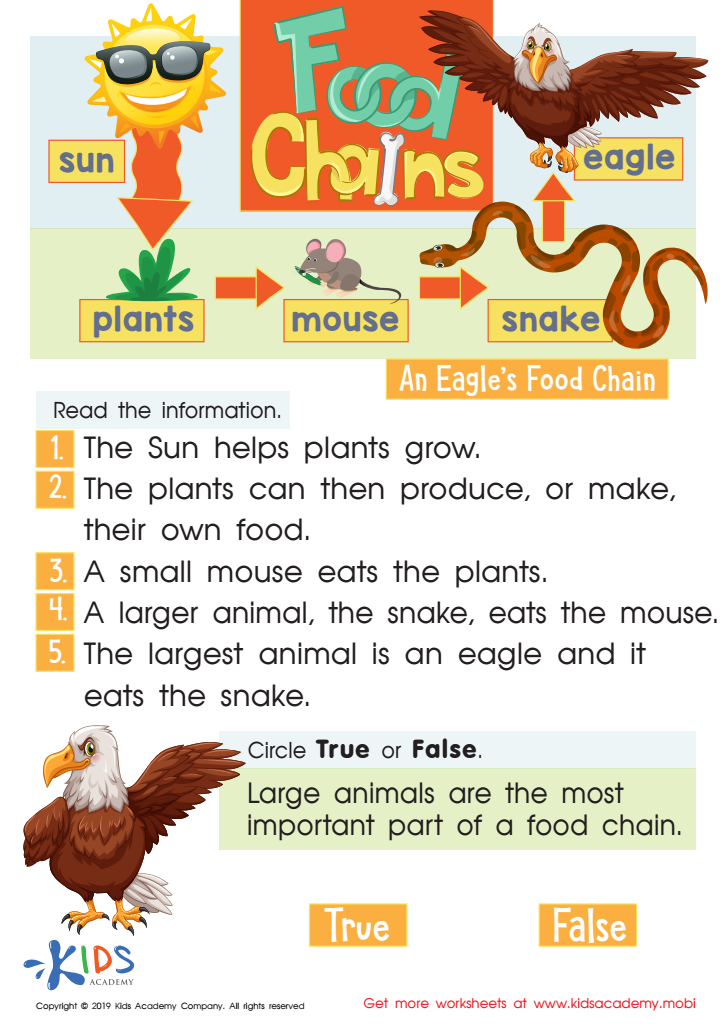
Food Chains Worksheet
This worksheet gets your child thinking about the sun's key role in the food chain. Read the info on the page, then discuss the true/false question. Are large animals the most important? Explain that without the sun, the other organisms would not exist. Have them circle the correct answer to finish.
 Assign to My Students
Food Chains Worksheet
Worksheet
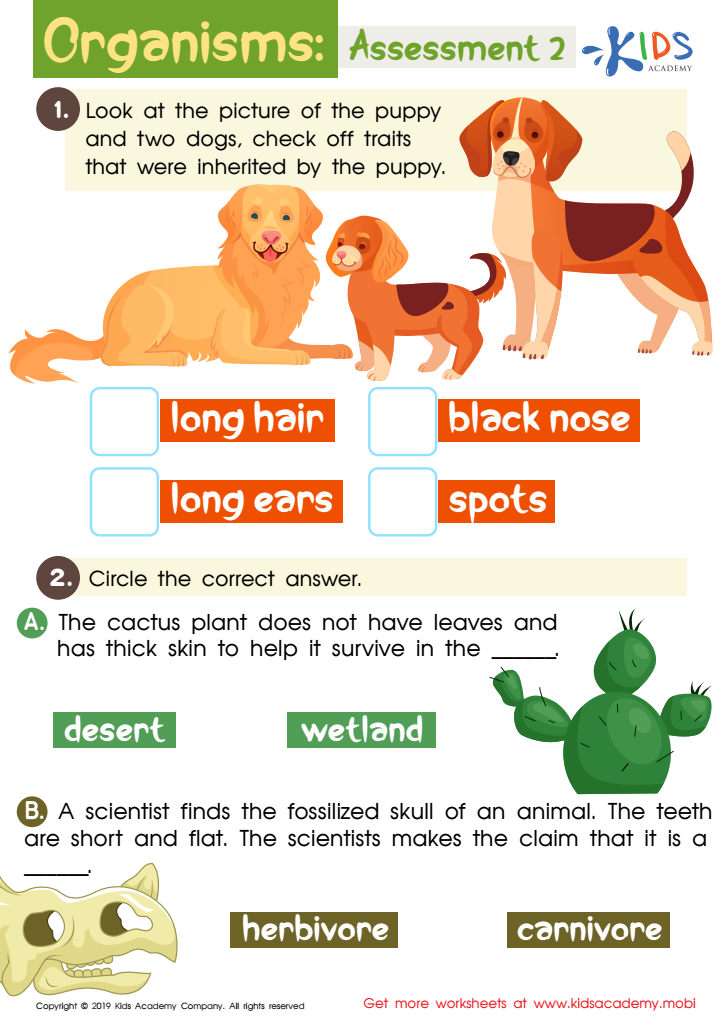
Organisms: Assessment 2 Worksheet
This free assessment helps you measure your child's science knowledge. They can check off traits a puppy inherited, identify a cactus's habitat, and review a dinosaur's diet. It's an efficient way to assess their skills.
Organisms: Assessment 2 Worksheet
Worksheet
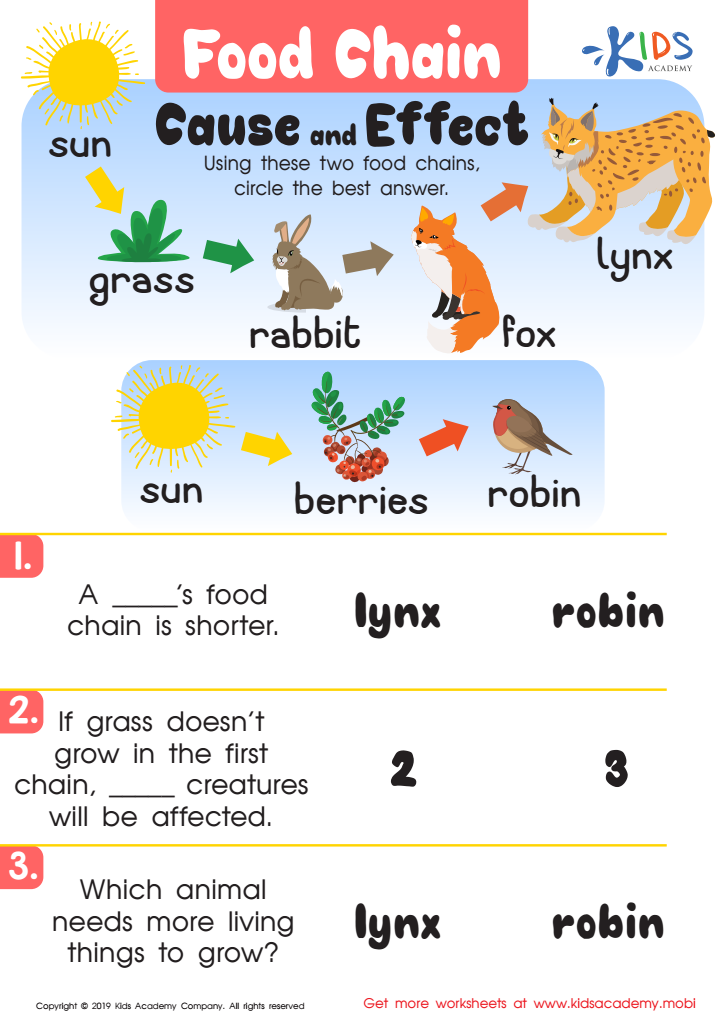
Food Chain Cause Worksheet
Help your little learner analyze ecosystems and compare food chains with this Kids Academy worksheet! Kids will compare a carnivore's and herbivore's food chain; which is longer and why? Questions at the bottom of the page will help them compare and circle the best answers. A great way to understand animal food chains!
Food Chain Cause Worksheet
Worksheet
Learning Skills
Understanding food chains
Learning about ecosystems
Comprehending energy transfer
Identifying animal diets
Recognizing predator-prey relationships
Identifying organisms
Analyzing organisms relationships
Understanding organisms interactions
Identifying cause and effect
Analyzing ecological relationships
Join Kids Academy for Free
Who is primarily going to use this learning content?






Understanding food chains is crucial for young children because it lays the foundation for essential ecological literacy. At ages 3-8, children are naturally curious about the world around them, and introducing them to food chains helps them grasp important concepts about nature and life that promote empathy, responsibility, and critical thinking. Knowing how plants, animals, and humans are interconnected fosters an awareness of the balance in ecosystems. This comprehension helps children understand the significance of preserving the environment, recognizing how their actions (like reducing waste or protecting wildlife) influence the broader ecological web.
Moreover, it's not just scientific knowledge at stake; learning about food chains can enhance a child's vocabulary, pattern recognition, and reasoning skills. These cognitive skills are transferable and deepen critical, inquiry-based learning – processes valuable in overall education and life.
For parents and teachers, knowing and teaching about food chains is a way to cultivate environmental stewardship from a young age. Early education on such fundamental science topics encourages responsible future citizens who care about the planet. Additionally, engaging in activities like discussing or crafting food chains can improve parent-child and teacher-student bonds while ensuring the information is both fun and digestible for little minds.







