Understanding patterns Science Worksheets for Ages 3-8
4 filtered results
-
From - To
Discover the world of patterns with our engaging science worksheets designed for children aged 3-8. Our "Understanding Patterns" worksheets promote critical thinking, attention to detail, and foundational science skills through fun, interactive activities. Ideal for young learners, these printable worksheets feature colorful illustrations and diverse pattern challenges to captivate children's curiosity and enhance their cognitive development. Perfect for parents and teachers looking to support early learning, our resources help kids recognize, predict, and create patterns while fostering a love for science. Boost your child's problem-solving abilities today with our expertly crafted worksheets!
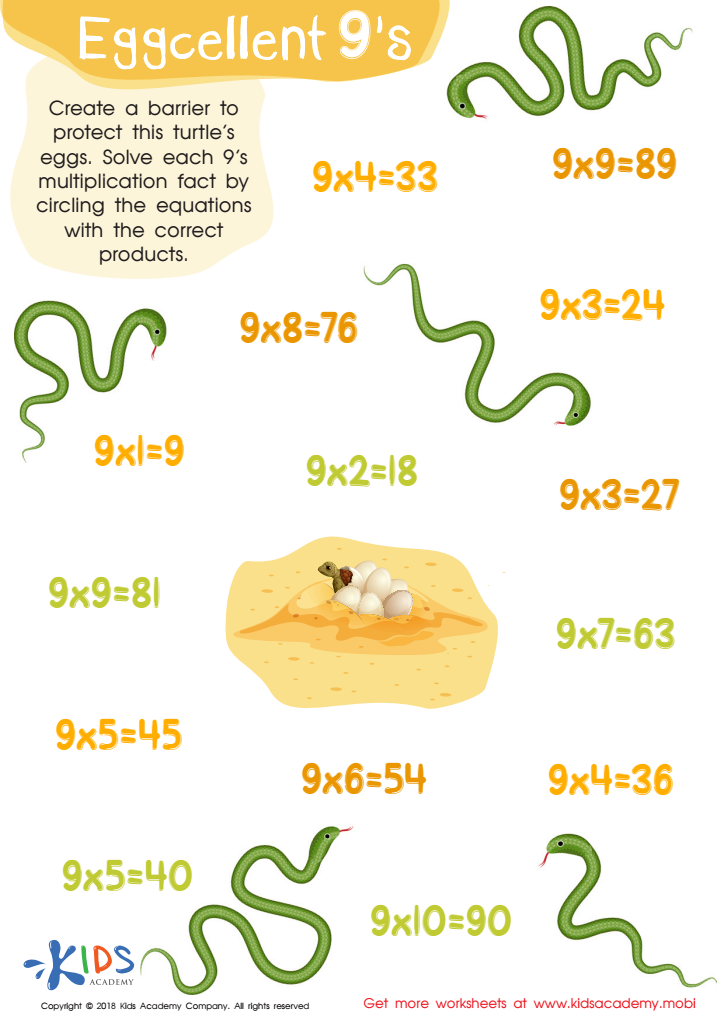
Eggcellent 9’s Worksheet
 Assign to My Students
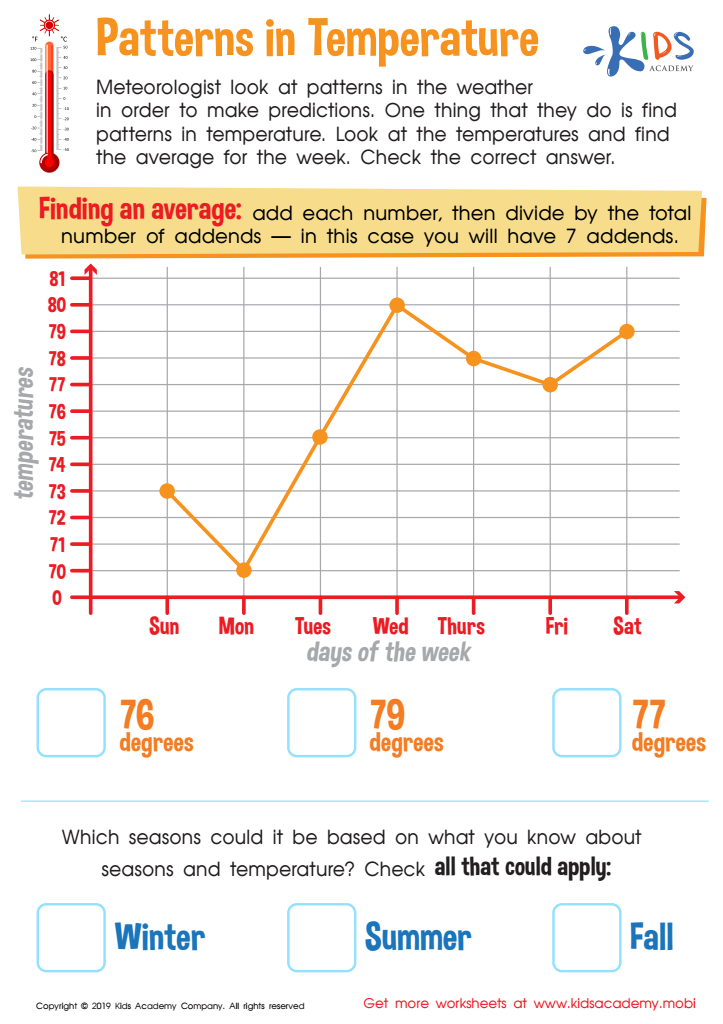
Patterns in Temperature Worksheet
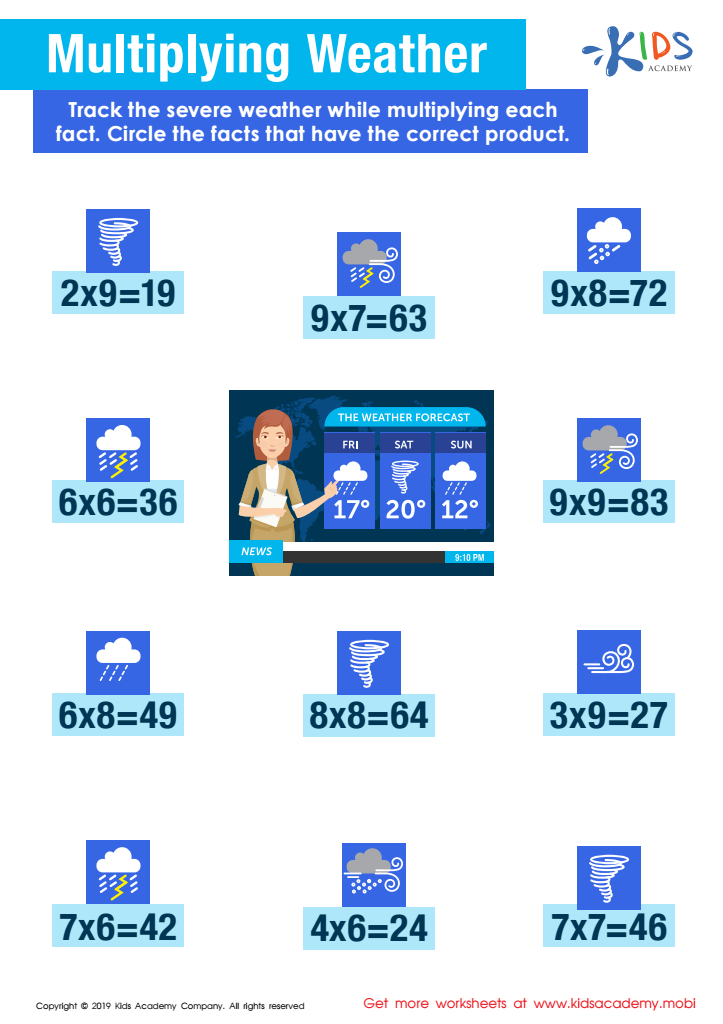
Multiplying Weather Worksheet
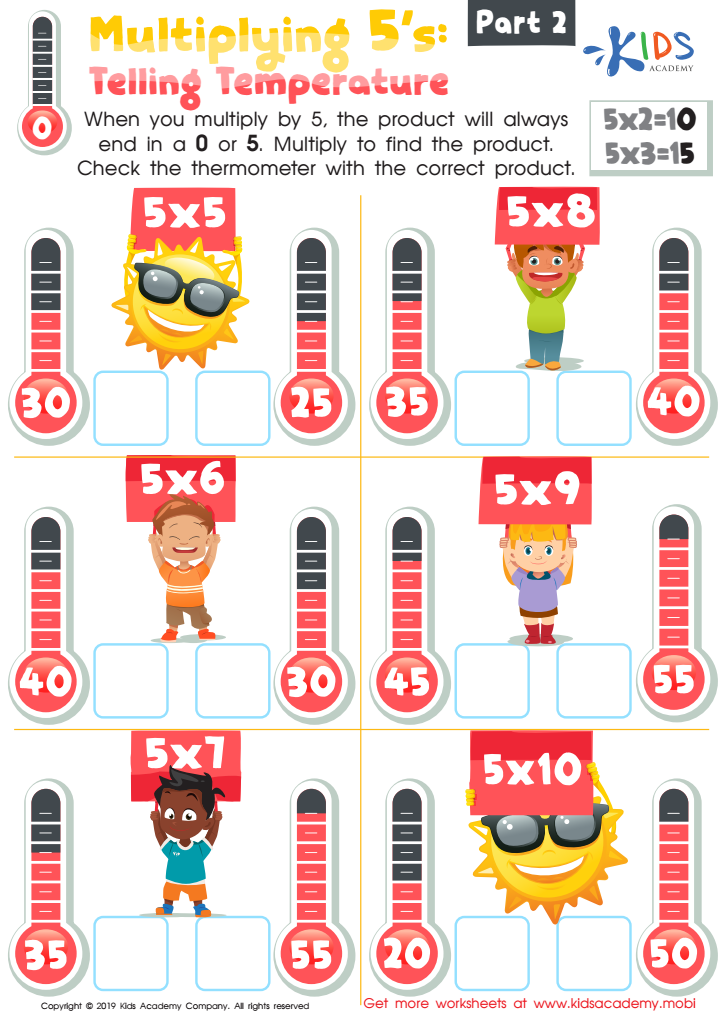
Multiplying 5’s: Telling Temperature Part 2 Worksheet







Understanding patterns in science is crucial for young children as it fosters critical thinking, problem-solving, and prediction skills, which are foundational for future learning. By identifying and understanding patterns, children begin to make sense of the world around them. Patterns provide a way for young minds to organize data, make connections, and recognize relationships between objects and events.
For parents and teachers, nurturing this skill in children ages 3-8 is essential because it sets the stage for success in not only science, but also math, reading, and even social interactions. When children begin to recognize patterns, such as the sequence of seasons or the daily routine, they develop a sense of order and predictability. This predictability enhances their understanding and helps them to anticipate what comes next, thus reducing anxiety and building confidence.
Furthermore, early exposure to patterns strengthens cognitive development. The act of observing, comparing, and categorizing objects according to patterns sharpens a child’s analytical abilities. Activities such as sorting shapes, sequencing numbers, or even identifying rhythms in music all contribute to a child's ability to think systematically and approach new problems with a structured mindset.
In summary, understanding patterns at a young age is not only a pivotal academic skill but also a vital tool that assists children in making sense of their environment and experiences.







