Learning about ecosystems Plants and Animals Worksheets for Ages 3-8
4 filtered results
-
From - To
Discover a vibrant collection of "Learning about Ecosystems: Plants and Animals Worksheets" designed for children ages 3-8. Our engaging worksheets introduce young learners to the fascinating world of ecosystems, helping them understand the relationships between plants and animals. With fun activities like matching, coloring, and fill-in-the-blank exercises, children will explore various habitats and the crucial roles different species play within them. These educational resources promote critical thinking and creativity while ensuring a solid foundation in science. Perfect for both home and classroom use, our worksheets make learning about nature enjoyable and accessible to your little ones!
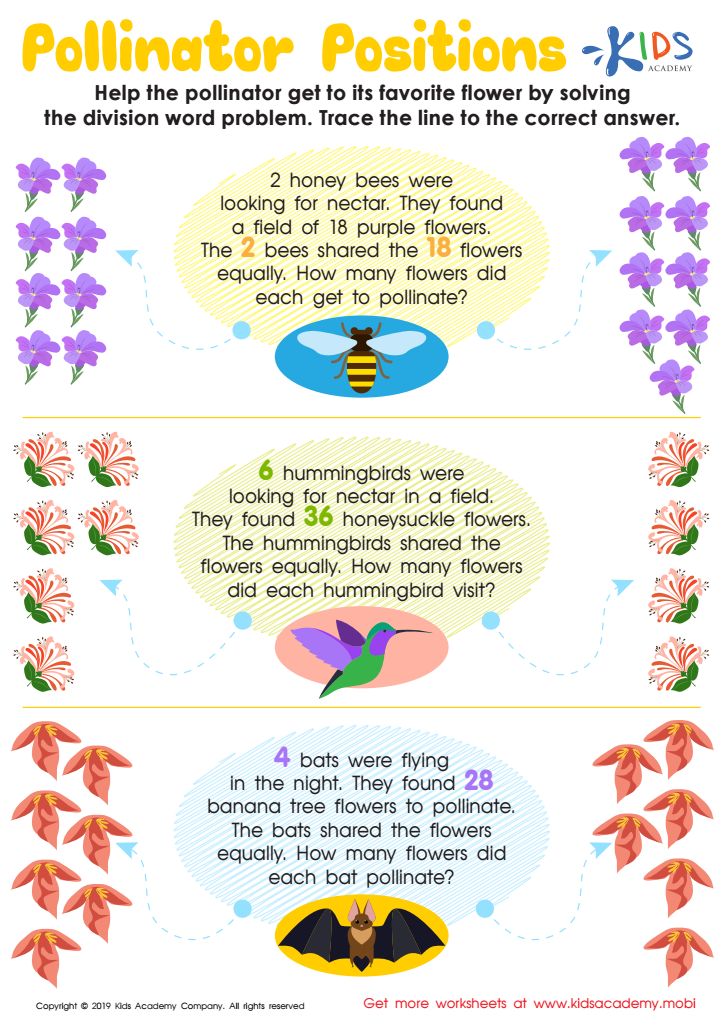
Pollinator Positions Worksheet
 Assign to My Students











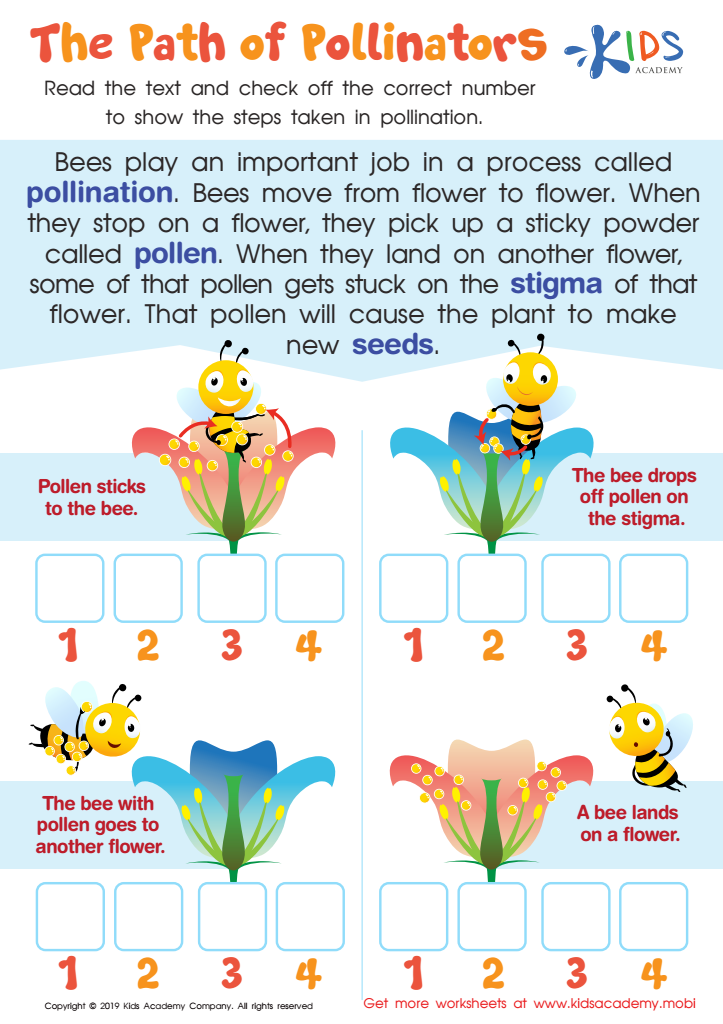
The Path of Pollinators Worksheet
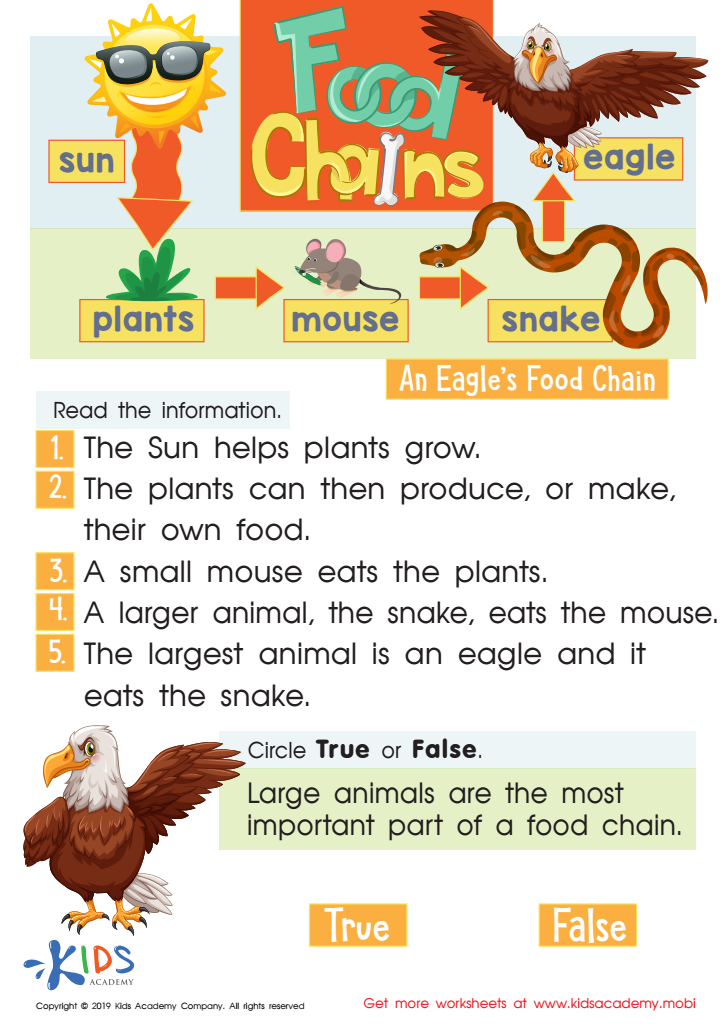
Food Chains Worksheet
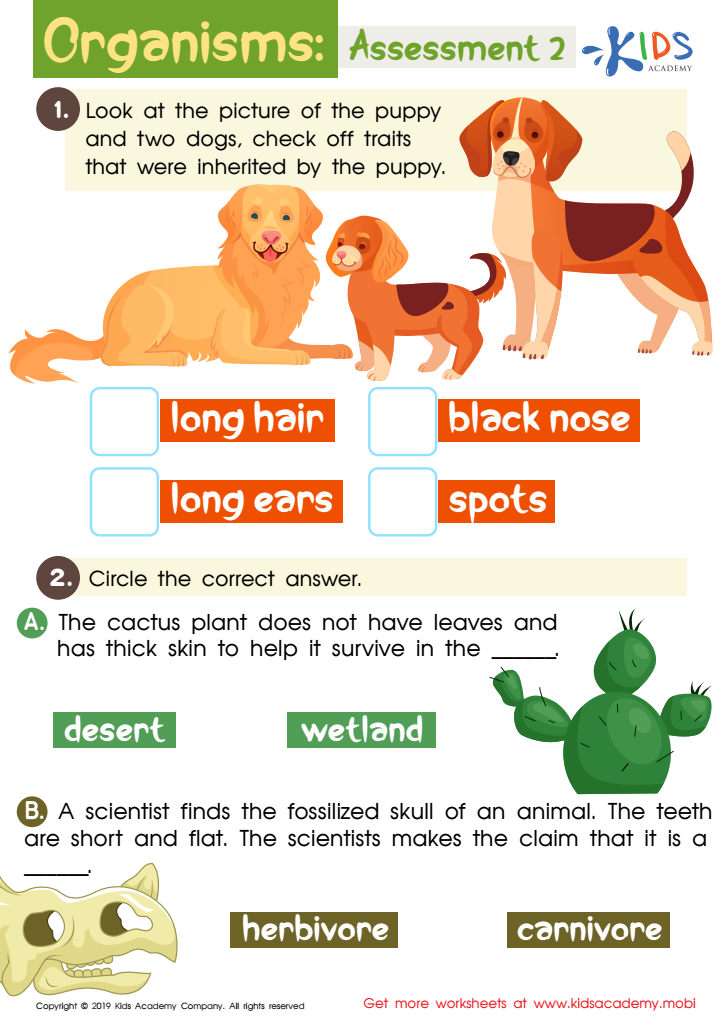
Organisms: Assessment 2 Worksheet








Understanding ecosystems, plants, and animals is crucial for children ages 3-8 as it lays the foundation for their appreciation of the environment and life sciences. During this developmental stage, children are naturally curious about the world around them. Engaging them in learning about ecosystems allows them to explore the relationships between living organisms and their habitats, fostering a sense of wonder and discovery.
Parents and teachers play a vital role in this learning journey. When adults emphasize the importance of ecosystems, they cultivate awareness and responsibility regarding environmental stewardship. Children learn about the essential roles plants and animals play in maintaining ecological balance and how human actions impact their surroundings. This knowledge not only nurtures a love for nature but also helps children develop critical thinking skills as they observe and question.
Moreover, integrating such themes can enhance multiple areas of learning, including science, art, and even storytelling. Hands-on activities like planting seeds or visiting a local park further enrich the experience, making it engaging and memorable. By facilitating exploration of ecosystems from an early age, parents and teachers empower children to become informed, caring individuals who are prepared to make positive choices regarding the environment in the future.








