Vowel Diphthongs Worksheets for Ages 3-9 - Page 2
27 filtered results
-
From - To
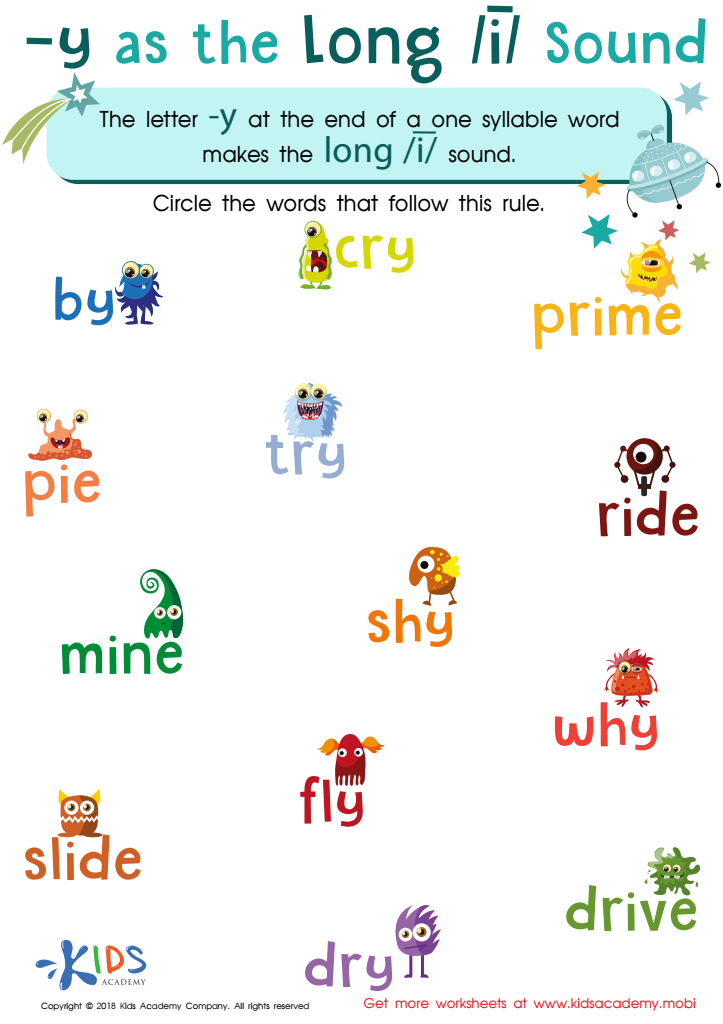
Reading: Y as Long I Worksheet
 Assign to My Students
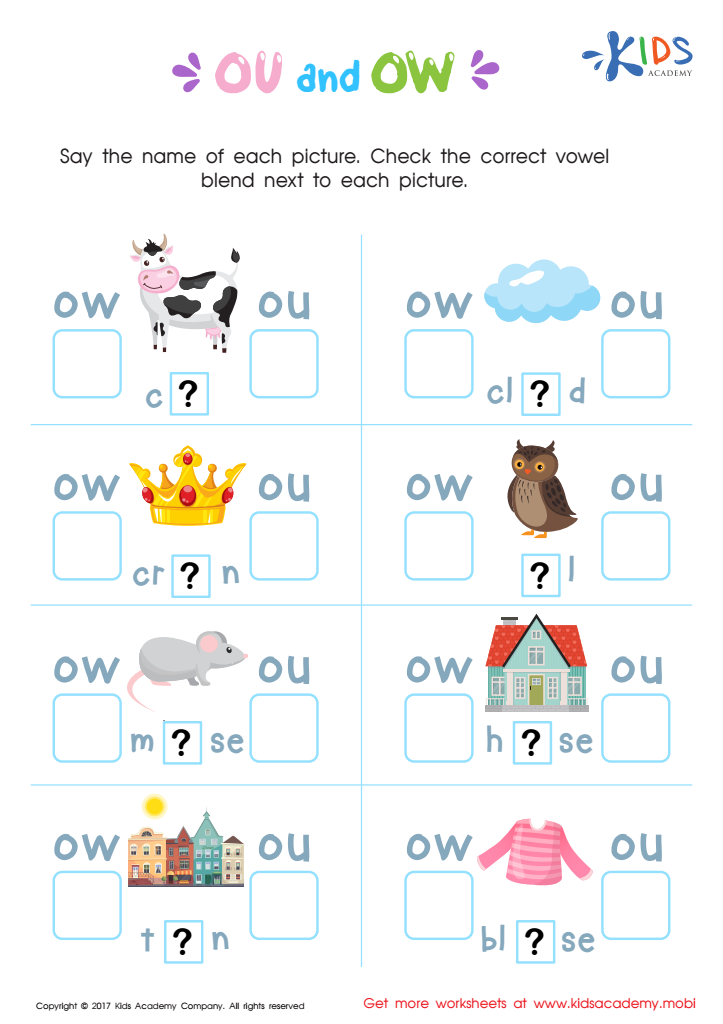
OU and OW Words Worksheet
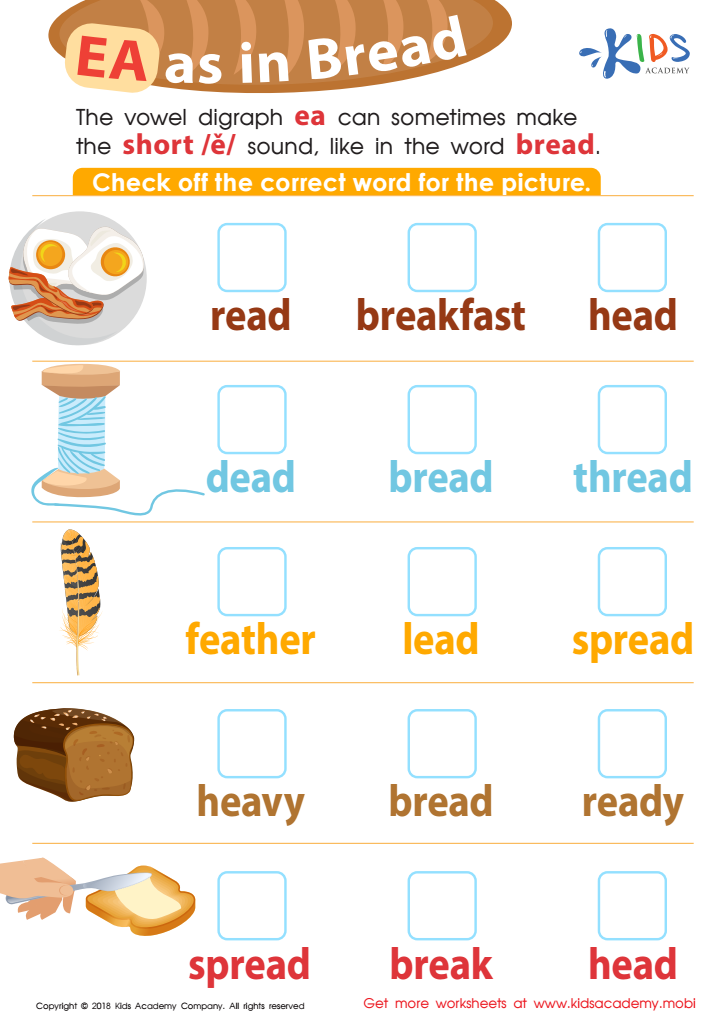
Reading: EA as in Bread Worksheet


Vowel diphthongs, such as "ou" in "house" or "oi" in "boil," are essential phonetic components for children aged 3-9. Understanding these blends equips young learners with the skills needed for reading and spelling, laying a foundation for literacy development. As children begin to recognize these diphthongs, they gain confidence in their reading abilities, allowing them to tackle more complex words and texts.
Incorporating lessons on vowel diphthongs into early education nurtures phonemic awareness, which enhances overall language proficiency. This awareness supports not only reading but also writing, enabling children to improve their communication skills. Moreover, recognizing diphthongs allows pupils to decode unfamiliar words more effectively, fostering a love for reading that enriches their vocabulary and comprehension.
Parents and teachers should prioritize vowel diphthong education to support early literacy. Engaging activities and playful phonics games make learning enjoyable while reinforcing these concepts. By prioritizing this aspect of literacy, adults can help build confident, capable readers who can excel in their future academic journeys. Ultimately, focusing on vowel diphthongs contributes significantly to a child’s linguistic development and lays the groundwork for future learning success.