Vowels Worksheets for Ages 3-9 - Page 5
98 filtered results
-
From - To
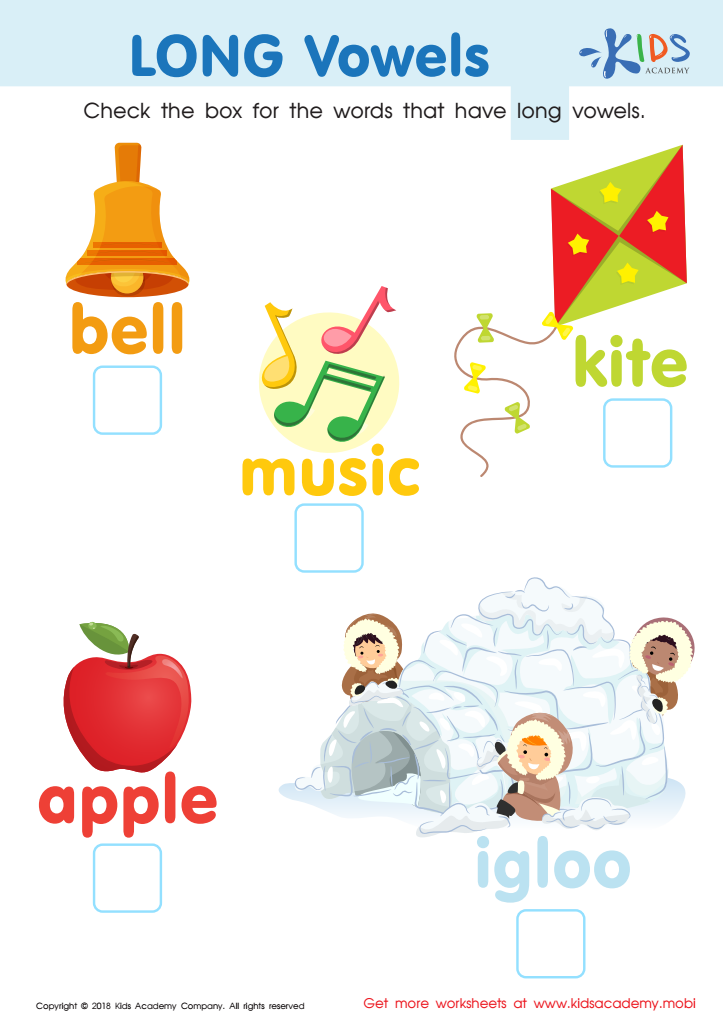
long vowels Worksheet
 Assign to My Students
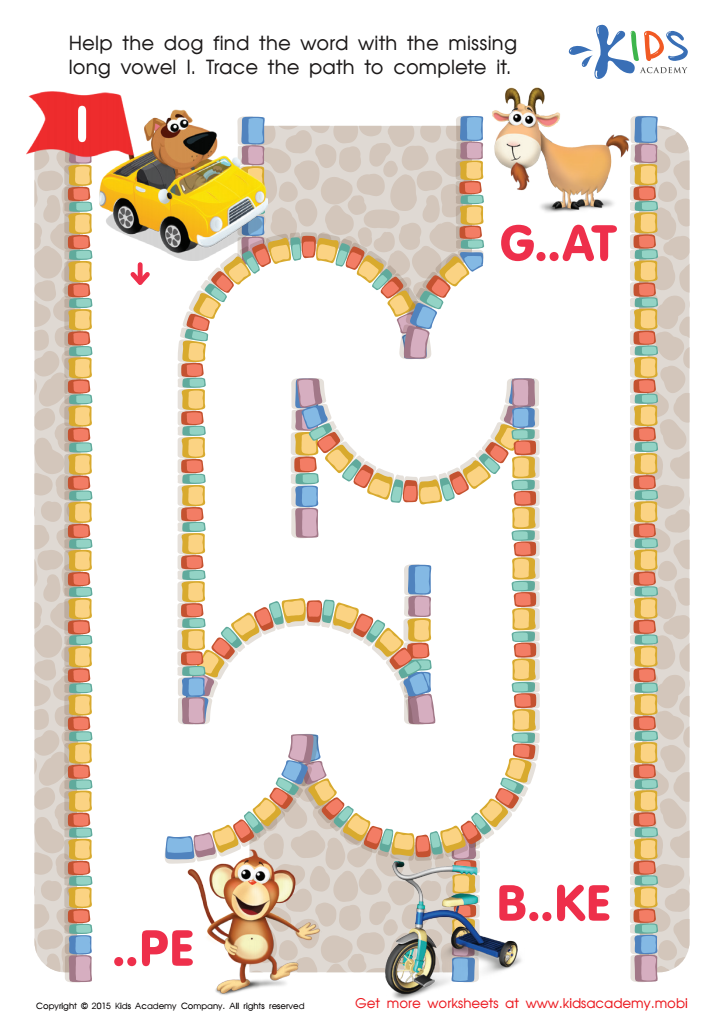
Long Vowel Sound I Worksheet





Vowels are fundamental to early literacy and language development. For children aged 3 to 9, understanding vowels is crucial, as they are integral to forming words and improving reading and writing skills. Vowels—A, E, I, O, U—and sometimes Y, are the building blocks of phonics, guiding children in decoding words and fostering their ability to communicate effectively.
When parents and teachers emphasize vowels in learning, they cultivate phonemic awareness in young learners, enabling them to recognize sound patterns. This recognition is essential for spelling and reading fluency. Additionally, a solid grasp of vowels encourages creativity in writing, allowing children to construct sentences and express their thoughts articulately.
Moreover, vowels play a pivotal role in vocabulary acquisition. Recognizing and using vowels helps children differentiate between words, enhancing their understanding of language nuances. Early exposure to vowel sounds through games, songs, and interactive activities fosters a love for language and reading, crucial for lifelong learning.
Ultimately, advocating for vowel education builds confidence in young learners, equipping them with vital skills for academic success and effective communication. Therefore, parents and teachers should prioritize vowel instruction to empower children as they embark on their literacy journey.







