Our Counting Proficiency Worksheets for ages 3-9 are designed to make learning math fun and engaging for young minds. These printable activities are perfect for preschoolers, kindergarteners, and early elementary students, helping to develop fundamental counting skills. With a variety of themes and difficulty levels, children can practice counting objects, sequencing numbers, and simple calculations in an interactive and enjoyable way. Our worksheets aim to build a strong numerical foundation, boost confidence, and enhance cognitive development through playful, hands-on experiences. Download and print to nurture your child's love for numbers and ensure a solid start in math!
Check out this FREE "Counting proficiency" Trial Lesson for age 3-9!

Trading Tens for Hundreds

Favorites
With answer key
Interactive
  • 3-9
  • Counting proficiency
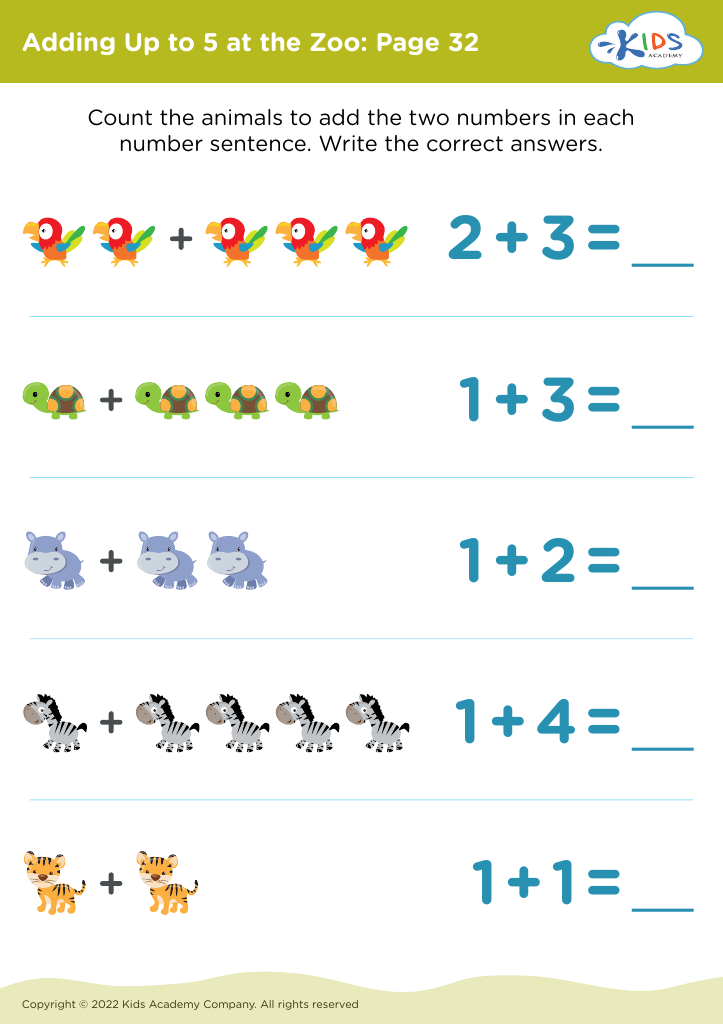
Adding Up to 5 at the Zoo: Page 32
Worksheet
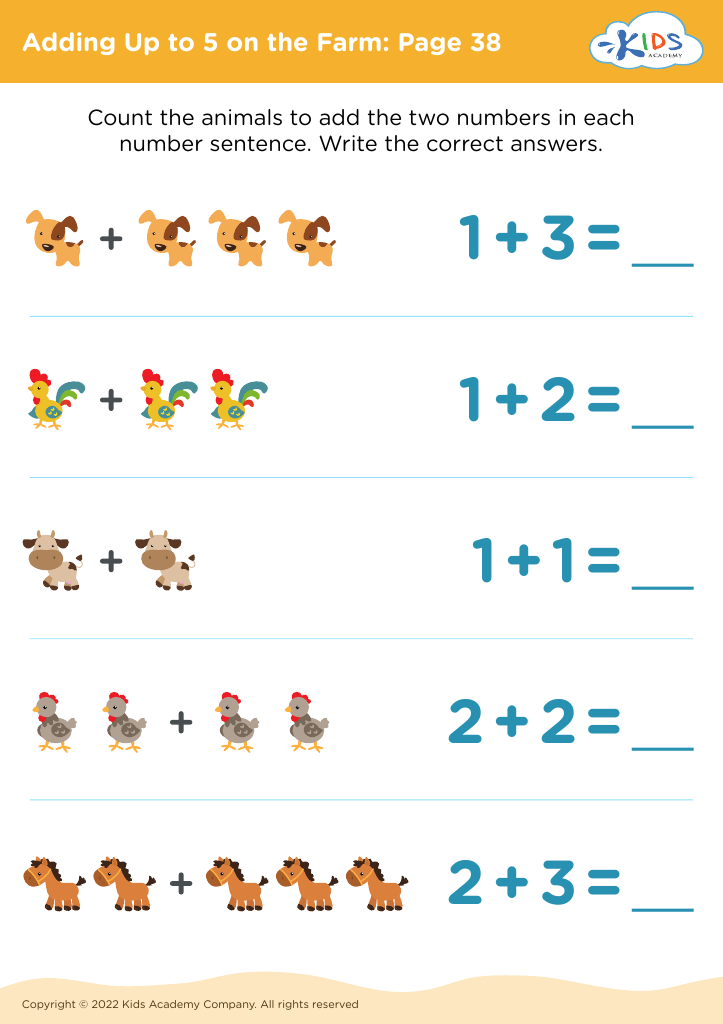
Adding Up to 5 on the Farm: Page 38
Worksheet
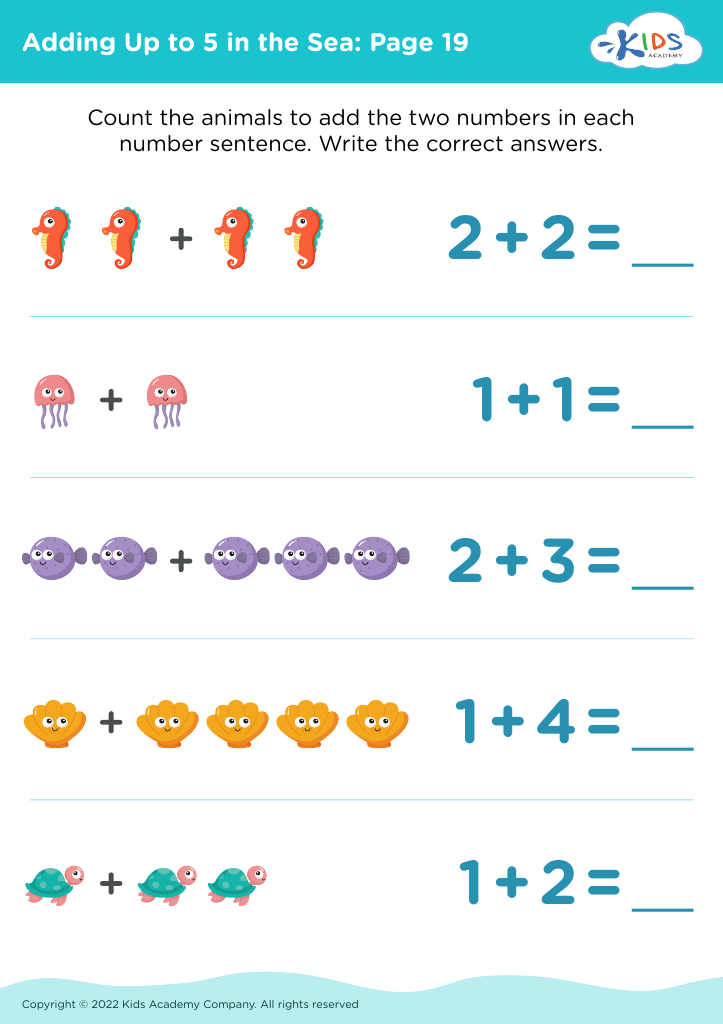
Adding Up to 5 in the Sea: Page 19
Worksheet
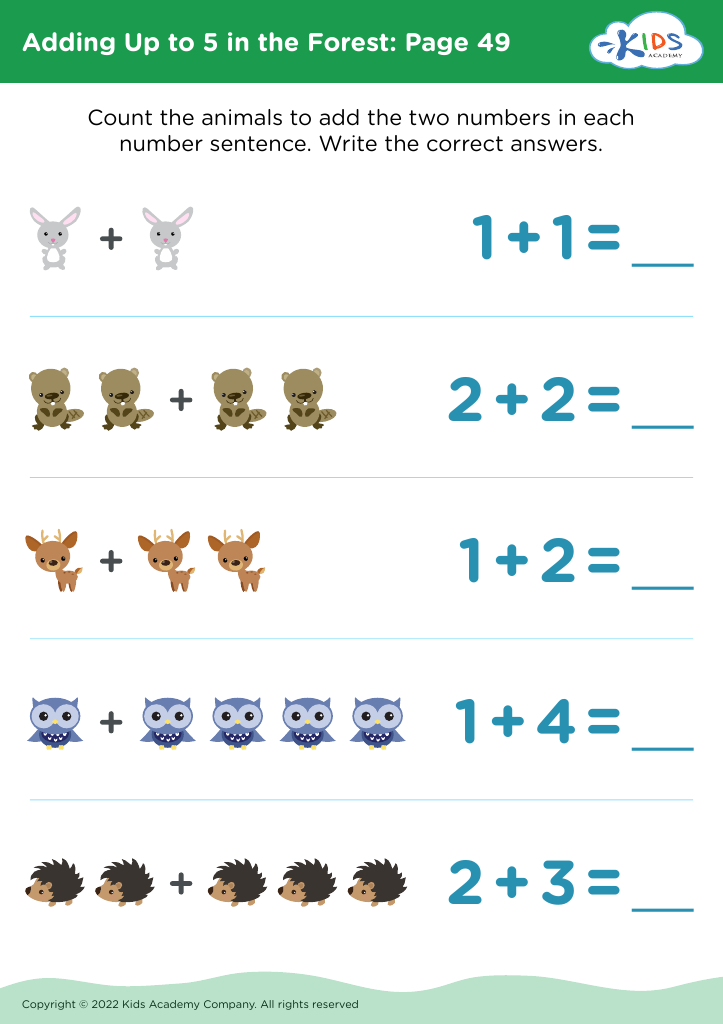
Adding Up to 5 in the Forest: Page 49
Worksheet
10 Tens Make 1 Hundred Worksheet

10 Tens Make 1 Hundred Worksheet

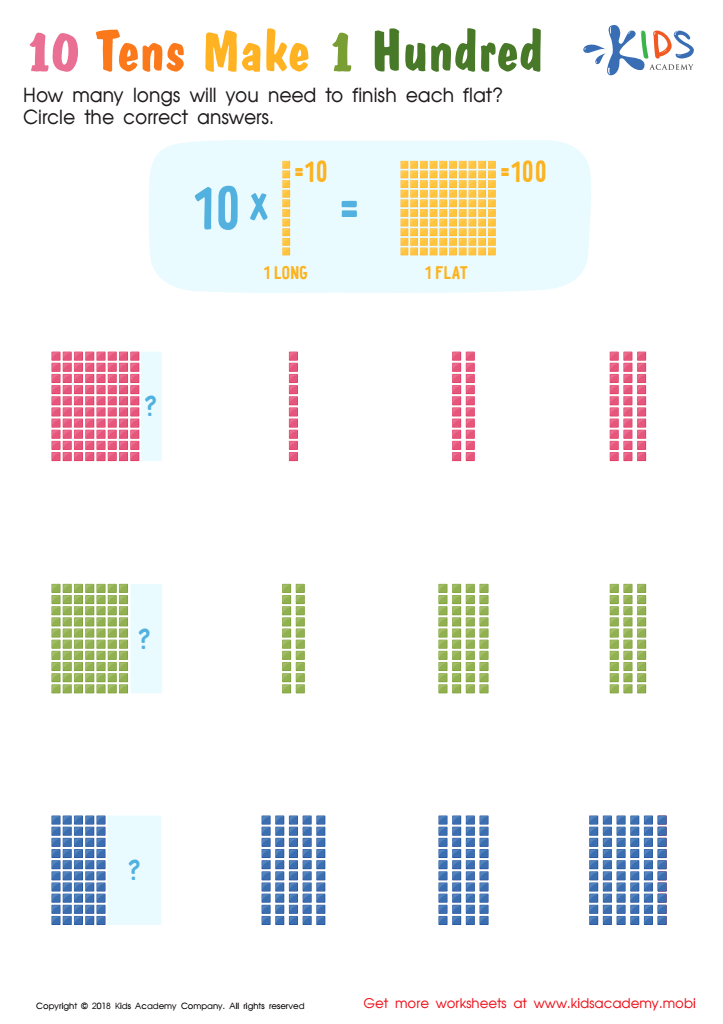
Help your child understand multiplication with this worksheet. Ask them how many 'longs' will be needed to complete each flat, then have them circle the correct answer from the options. With this exercise, your child will learn that 10 'tens' make 1 'hundred'!
10 Tens Make 1 Hundred Worksheet
Worksheet
Adding Up with Old MacDonald Worksheet

Adding Up with Old MacDonald Worksheet

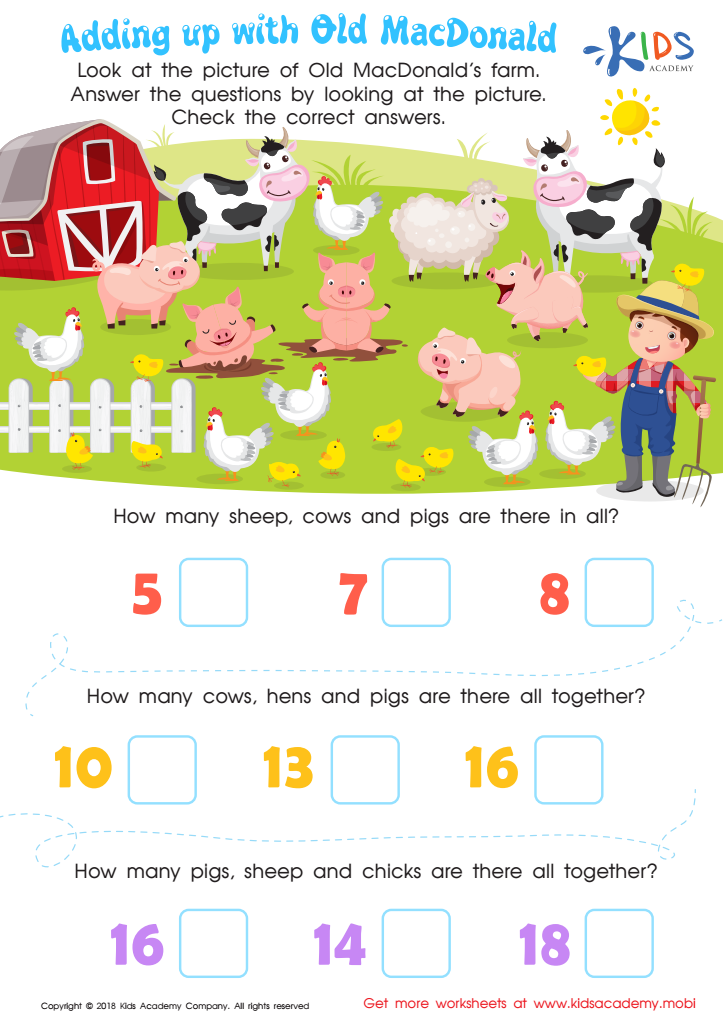
Old MacDonald needs help counting his animals! Give your little math whiz a fun challenge with a free PDF worksheet. They'll love counting the animals and doing basic addition with two or three addends. Who knew math could be so much fun on the farm?
Adding Up with Old MacDonald Worksheet
Worksheet
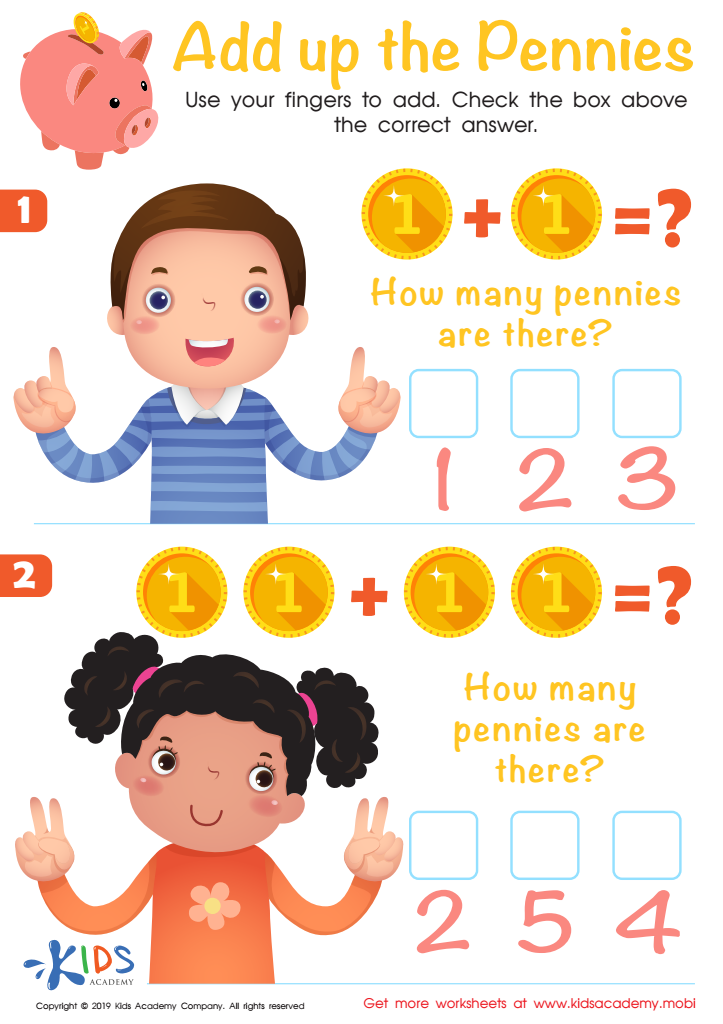
Add up the Pennies Worksheet
Add up the Pennies Worksheet
Help your kids ace their math skills with this simple worksheet! You can guide them to use their fingers to add numbers and then check the box above the correct answer. With practice and your support, they can become faster and better at adding numbers. No sweating required!
Add up the Pennies Worksheet
Worksheet
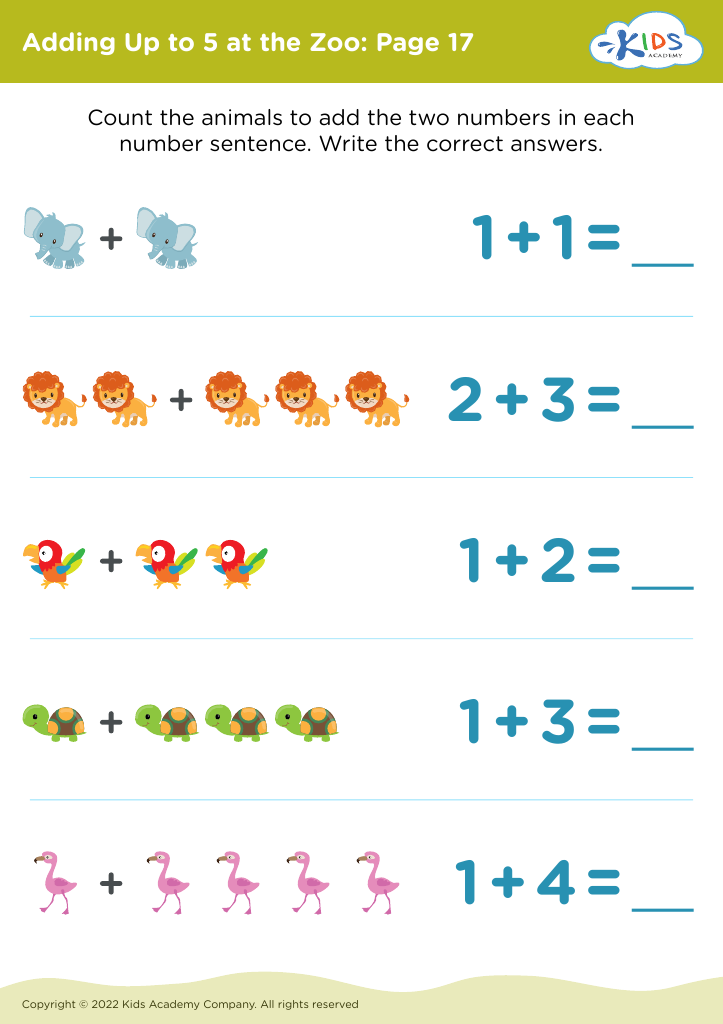
Adding Up to 5 at the Zoo: Page 17
Worksheet
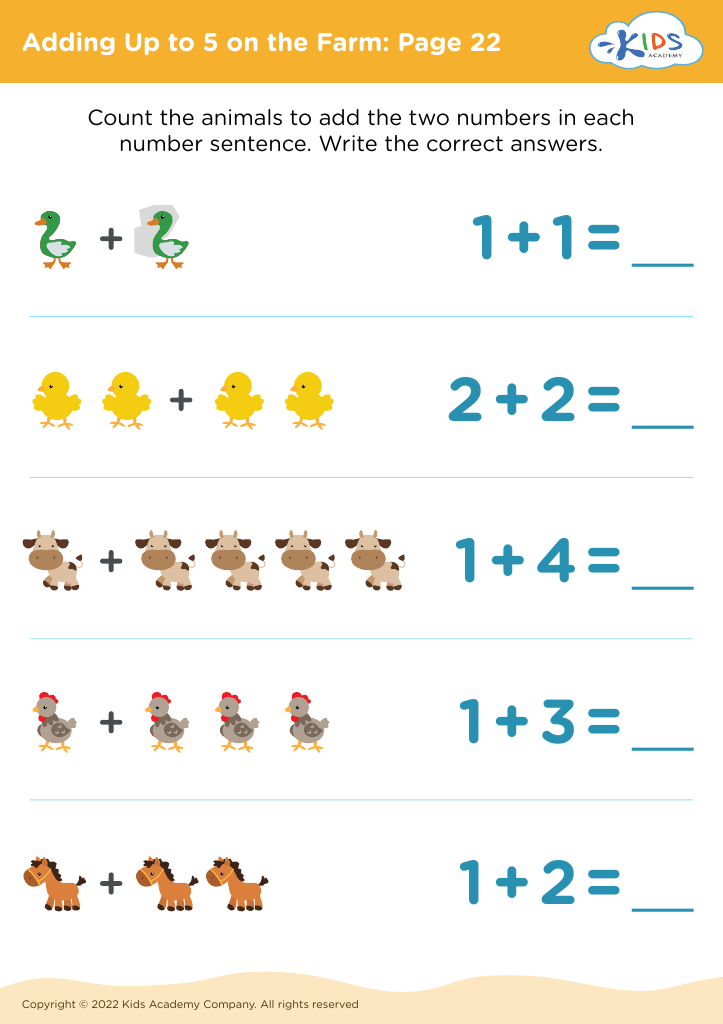
Adding Up to 5 on the Farm: Page 22
Worksheet
Kindergarten Sorting Worksheet

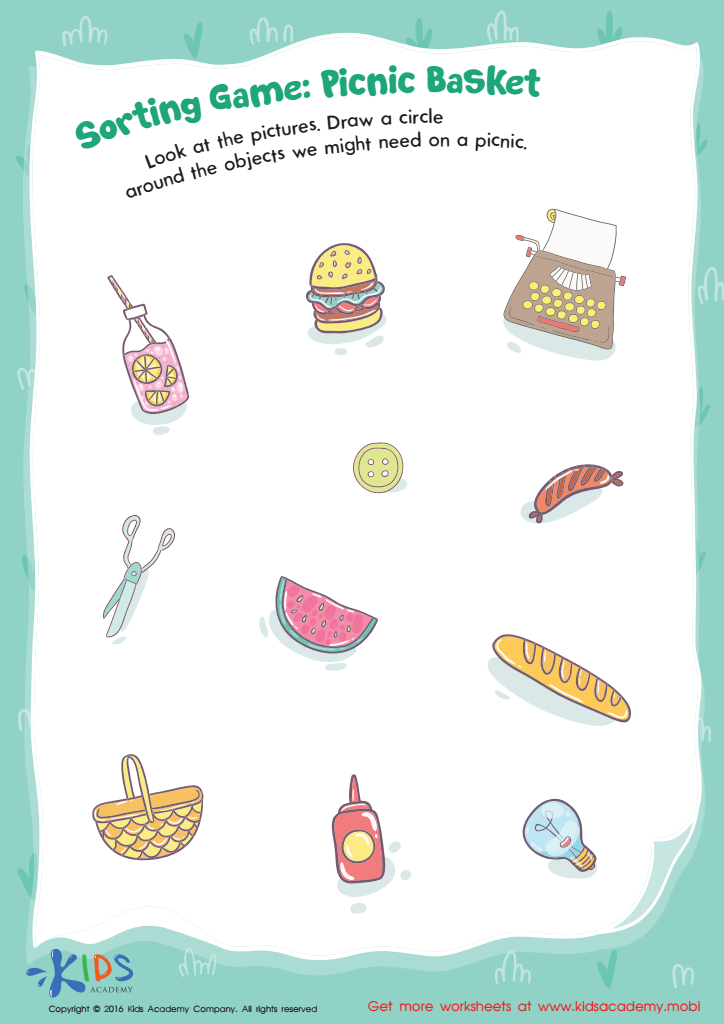
Picnic Basket Sorting Worksheet
Make picnic planning fun with this kindergarten sorting worksheet! Your child will sort everyday objects to find picnic supplies, and then use the worksheet to plan a real or pretend picnic. Extend the learning by discussing the event and its connection to the worksheet. Print out the other worksheets to sharpen sorting and classifying skills in an engaging way!
Picnic Basket Sorting Worksheet
Worksheet
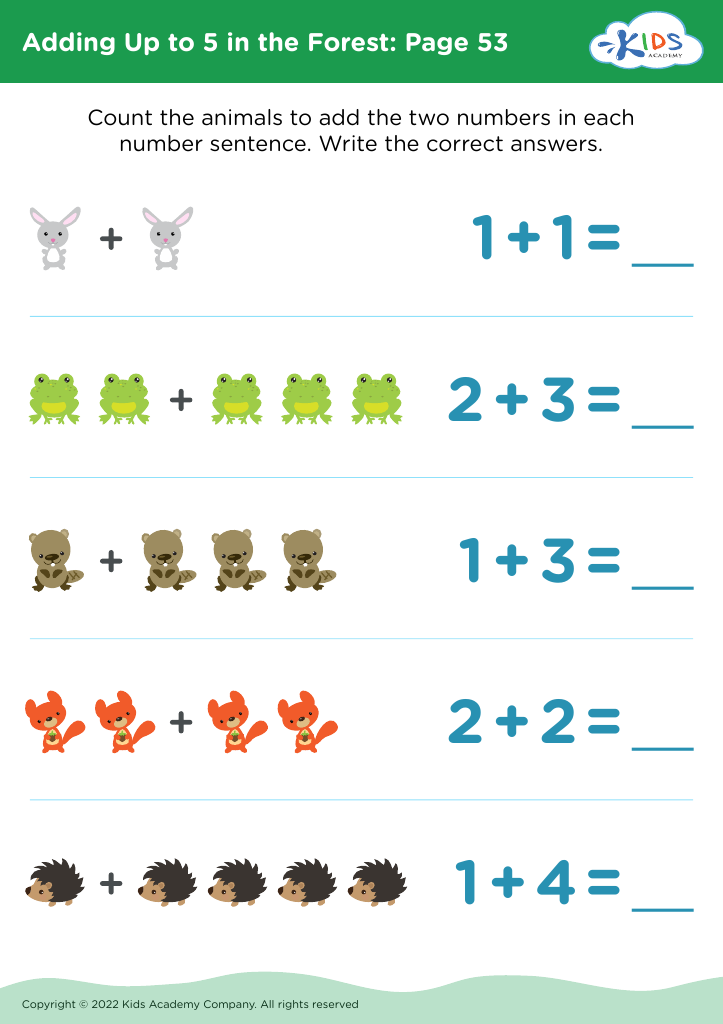
Adding Up to 5 in the Forest: Page 53
Worksheet
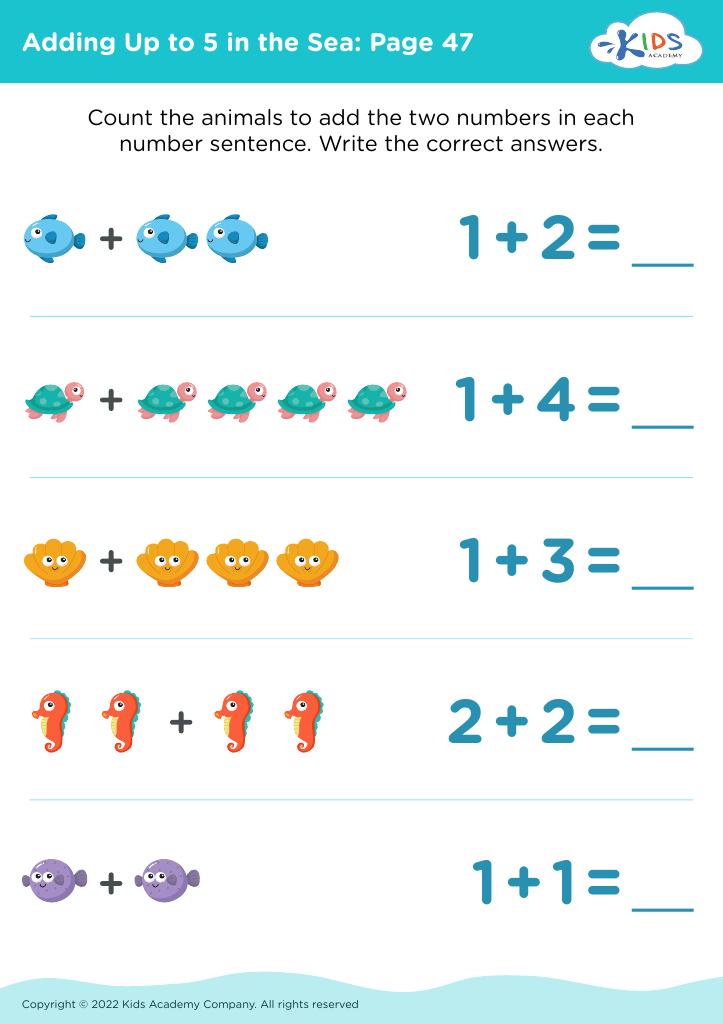
Adding Up to 5 in the Sea: Page 47
Worksheet
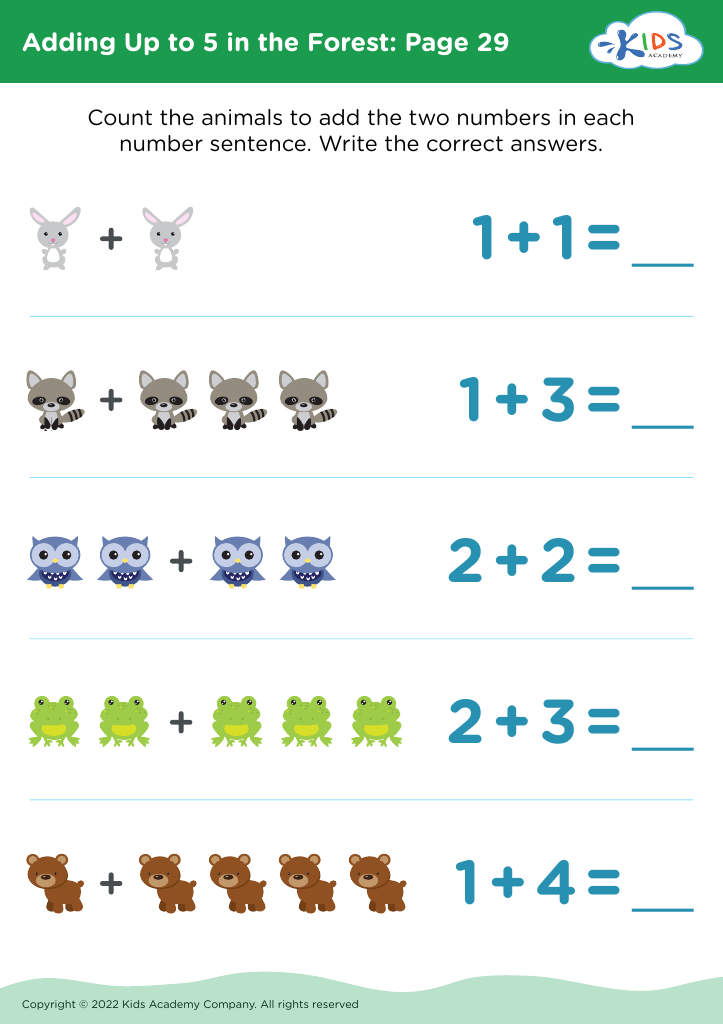
Adding Up to 5 in the Forest: Page 29
Worksheet
Birdy Graph Matching Worksheet


Birdy Graph Matching Worksheet
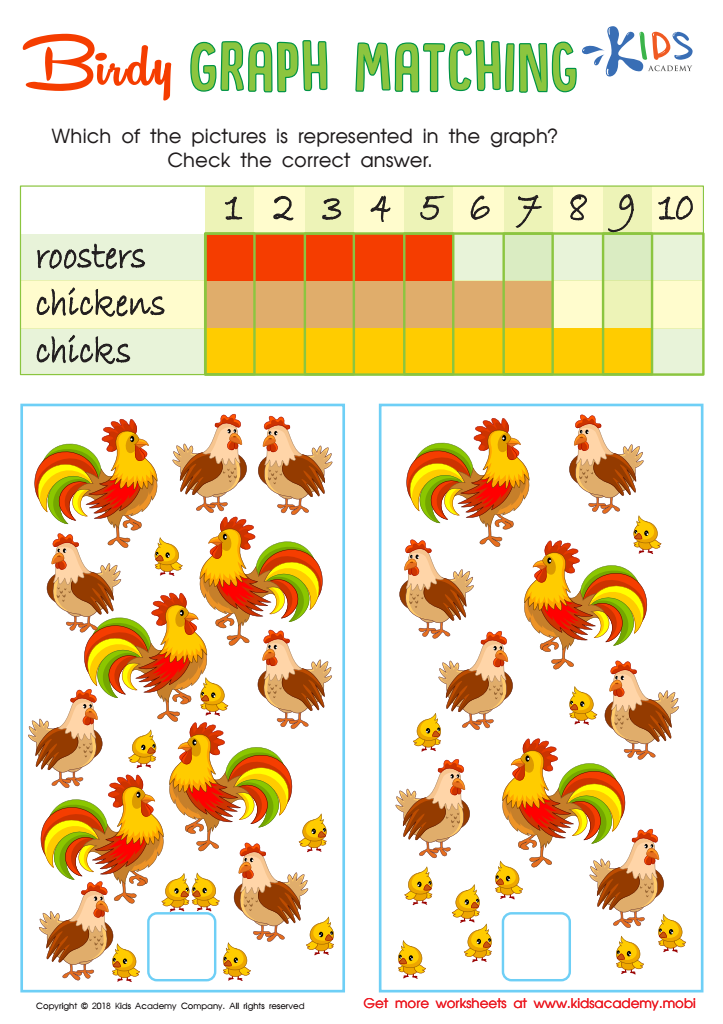
Treat your little one to a fun worksheet to practice visual discrimination, counting, graphing and tallying! They will sort the birds, count and assign values and use graph reading to answer the questions. They'll be so busy enjoying the counting that they won't even realize they are honing their skills!
Birdy Graph Matching Worksheet

Worksheet


Counting proficiency in children between the ages of 3-9 is a foundational skill crucial for their overall cognitive development. Parents and teachers should prioritize this because it is the building block for more complex mathematical concepts such as addition, subtraction, multiplication, and division. When children are adept at counting, they develop a strong number sense, which is the understanding of how numbers work and relate to each other. This early competency enhances their ability to solve problems and grasp higher-level math concepts more easily in the future.

Moreover, counting isn't just about mathematics; it improves cognitive skills like memory, attention, and logical thinking. For instance, when children count objects, they learn to concentrate and organize information sequentially, fostering better organizational skills and attention span.

Fluency in counting also supports literacy. Understanding sequences and patterns in numbers can translate to recognizing patterns in words and sentences, aiding reading comprehension. Socially and emotionally, mastering counting can boost a child's confidence and willingness to tackle new challenges, fostering a positive attitude toward learning.

Given its foundational role, counting proficiency during early years sets the stage for future academic success and practical life skills, making it essential for parents and teachers to nurture this ability. Investing time and resources in counting activities can lead to well-rounded intellectual growth and an enriched educational experience.