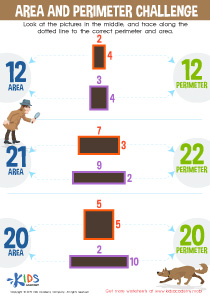
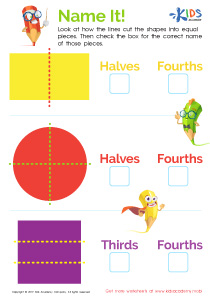
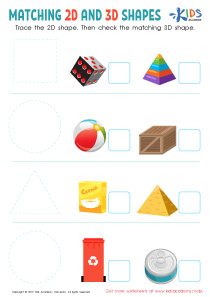
2D Shapes Worksheets for Ages 3-9 - Page 4
75 filtered results
-
From - To
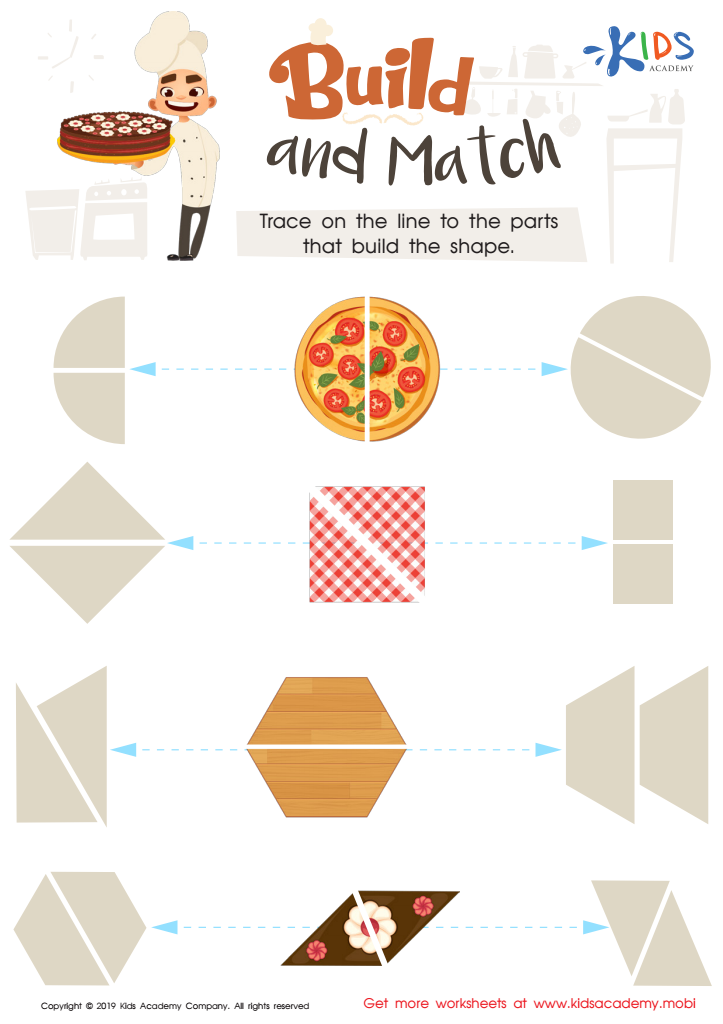
Build and Match Worksheet
 Assign to My Students











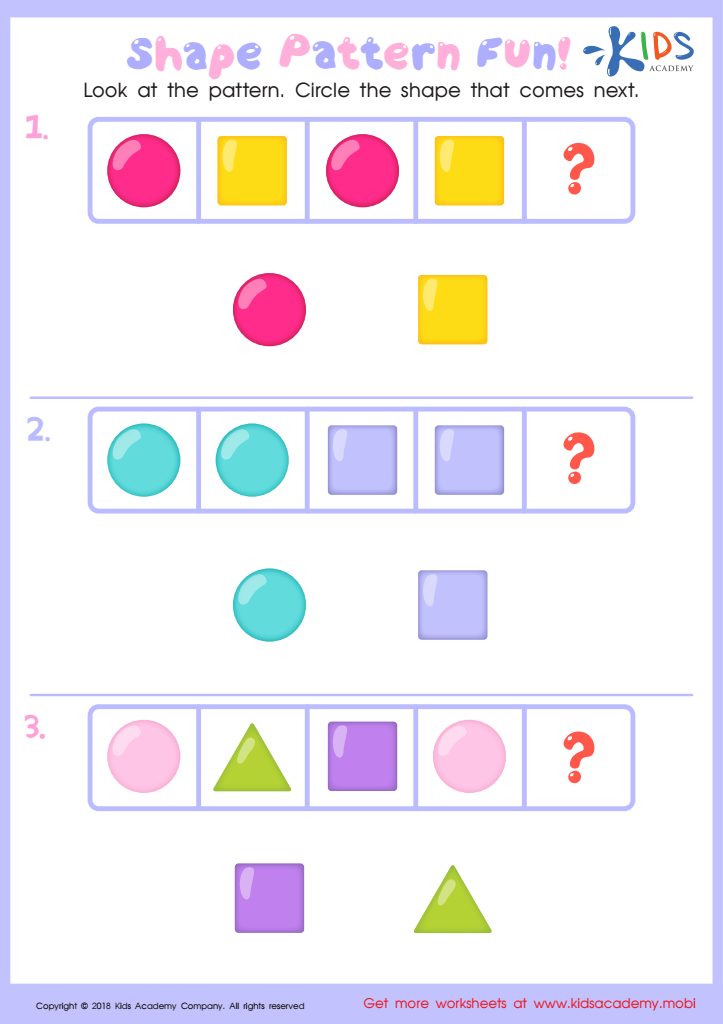
Shape Pattern Fun Worksheet
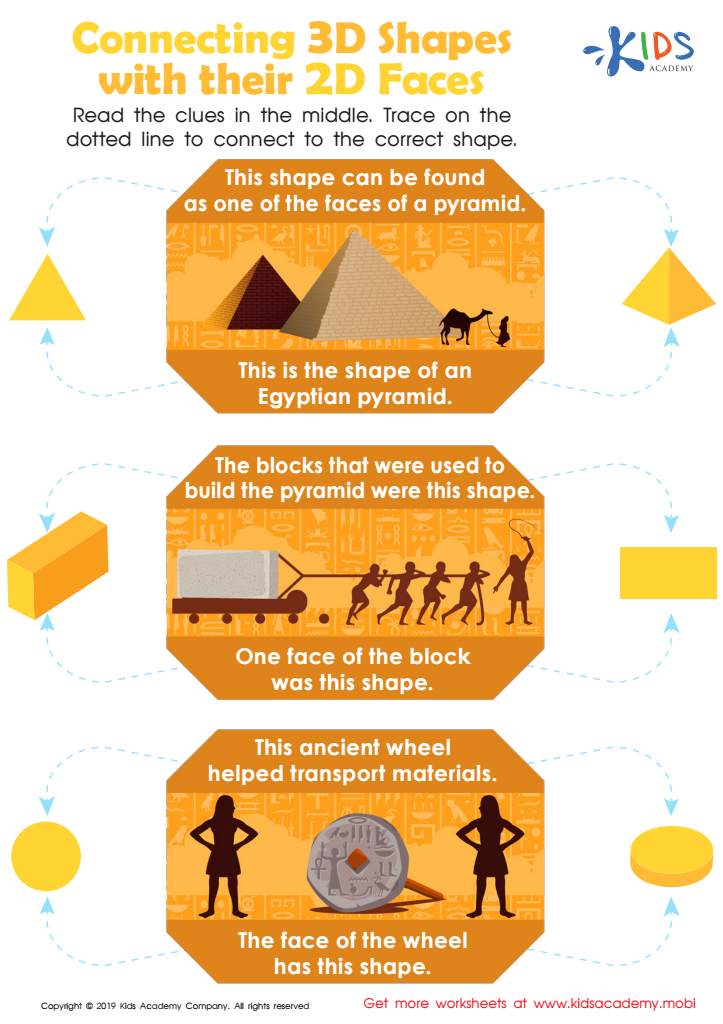
Connecting 3D Shapes with Their 2d Faces Worksheet








Understanding 2D shapes is crucial for young children, particularly those aged 3-9, as it lays a foundational framework for their cognitive and academic development. Parents and teachers should emphasize this because recognizing and understanding shapes enhances children's spatial awareness, an essential skill for everyday tasks and problem solving. For instance, comprehending shapes helps kids follow directions, organize spaces, and recognize patterns in their environment.
Early exposure to shapes also supports mathematical skills. Identifying and distinguishing between shapes like circles, squares, and triangles introduces basic geometry concepts, which are fundamental to more advanced math topics encountered later in school. This early math skill development is crucial for academic success in subjects beyond mathematics, influencing performance in subjects like science and art.
Moreover, discussing and exploring shapes boosts language skills. When children describe shapes and their properties, they expand their vocabulary and enhance their ability to convey ideas clearly. It also fosters creativity and critical thinking; for instance, understanding how different shapes can fit together enhances puzzle-solving abilities and leads to better grasping complex problems as they grow older.
Encouraging a child's interest in 2D shapes offers a multifaceted developmental advantage that underpins many academic and real-world abilities.