Adding up to 1000 Without Regrouping Worksheets for Ages 3-9 - Page 3
73 filtered results
-
From - To
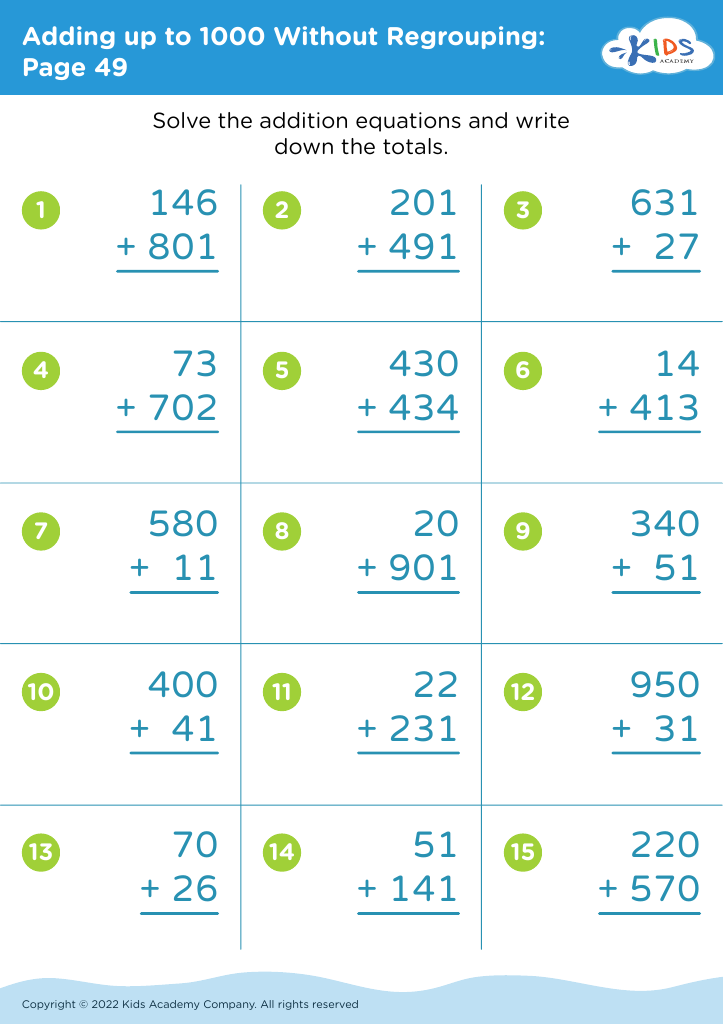
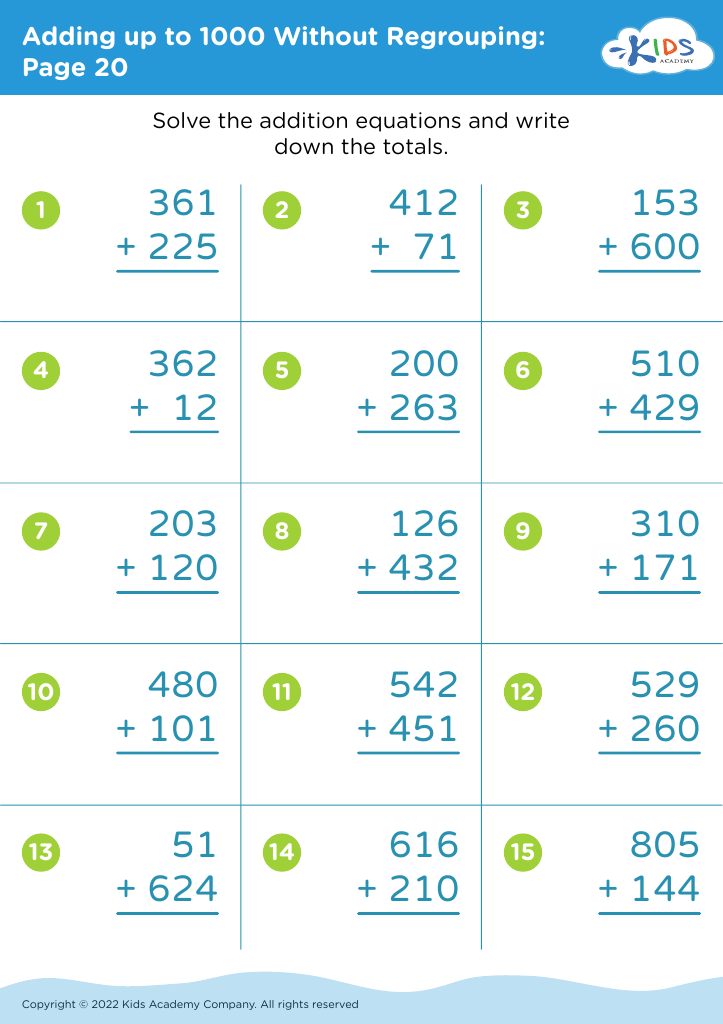
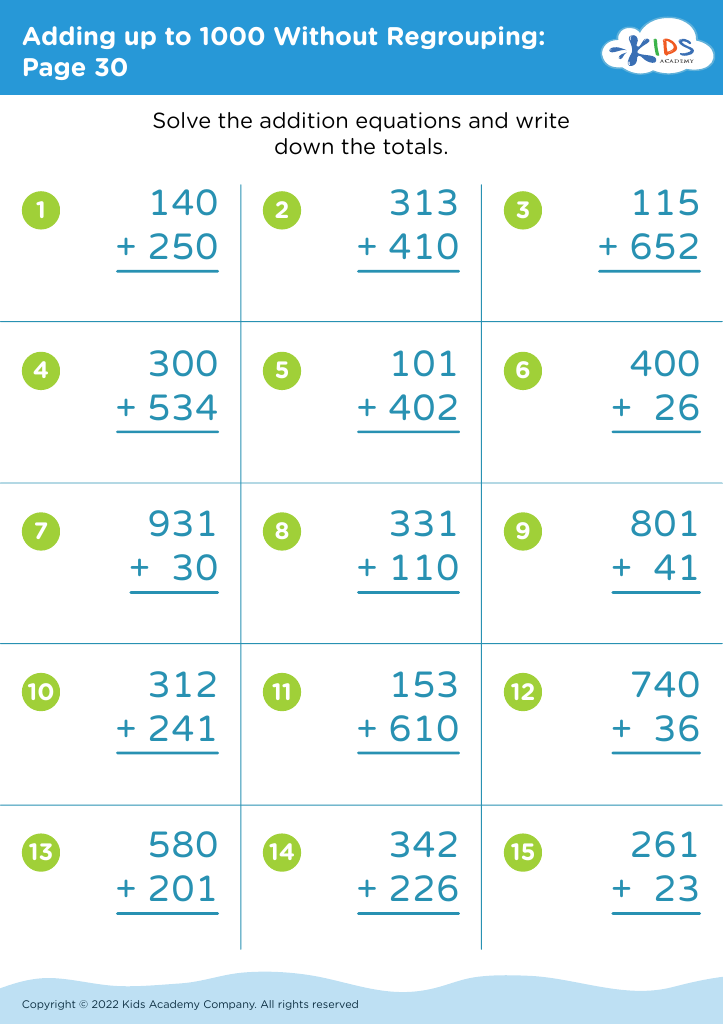
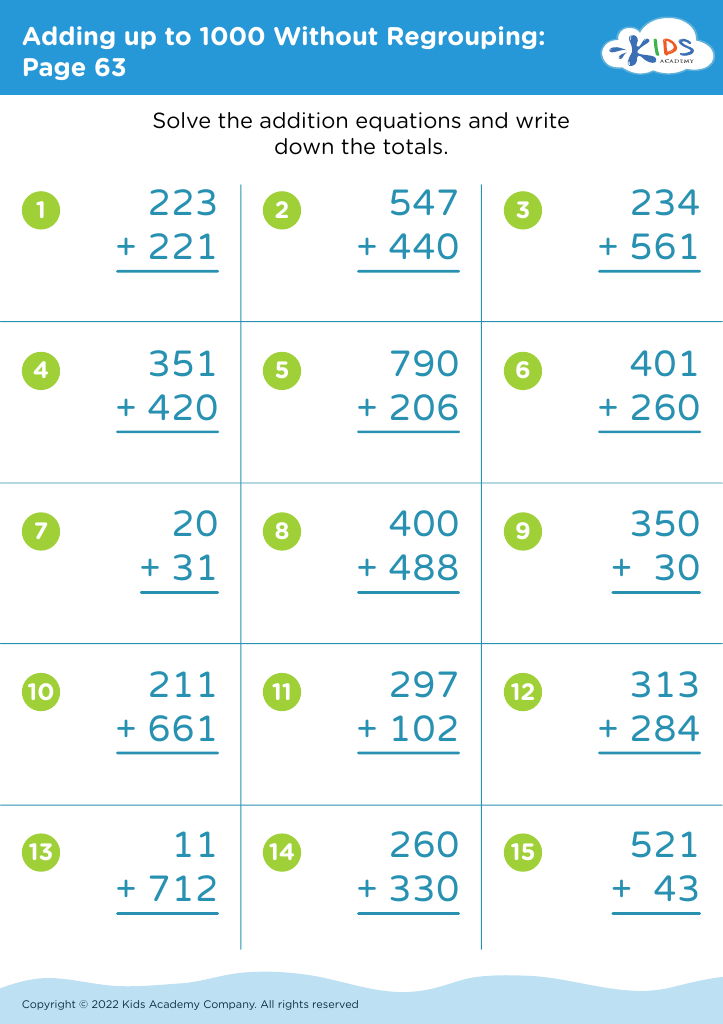
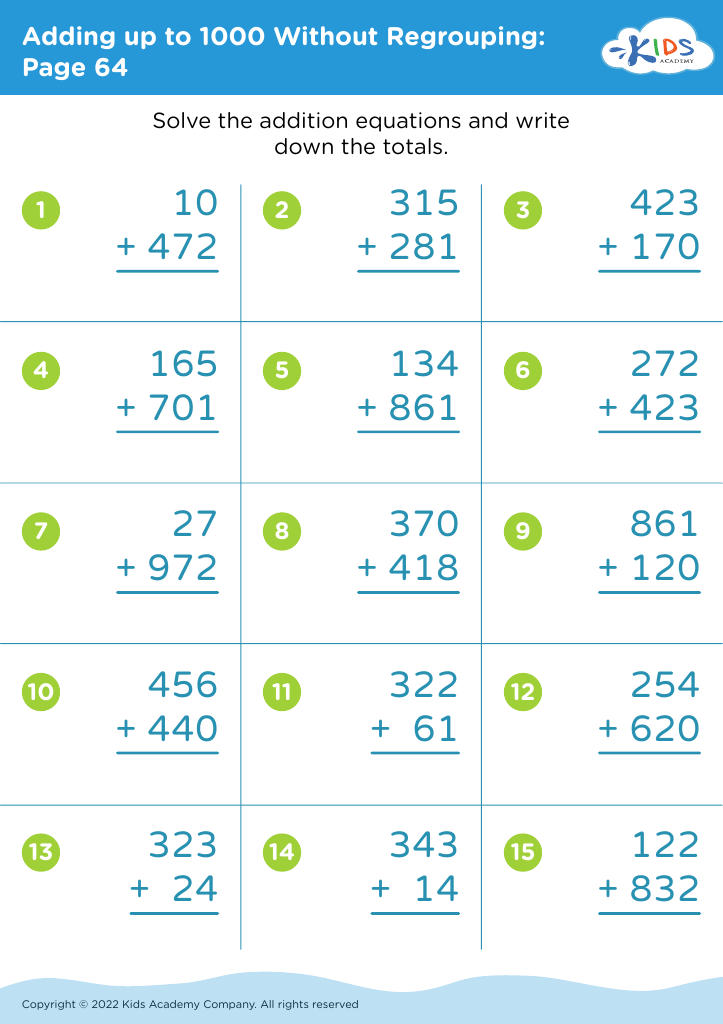
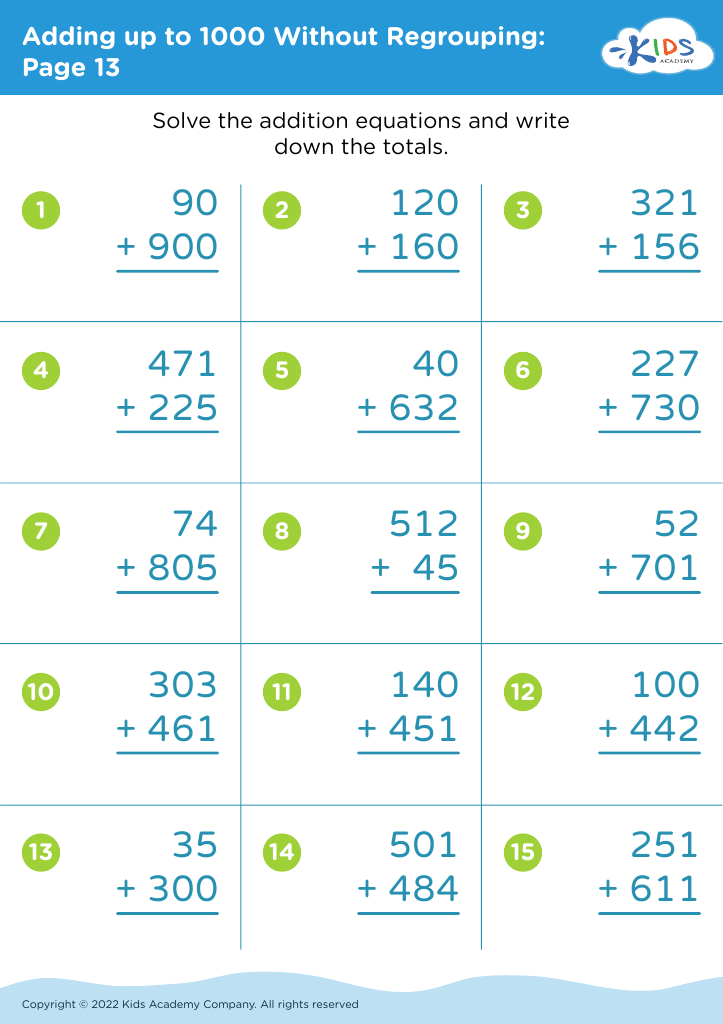
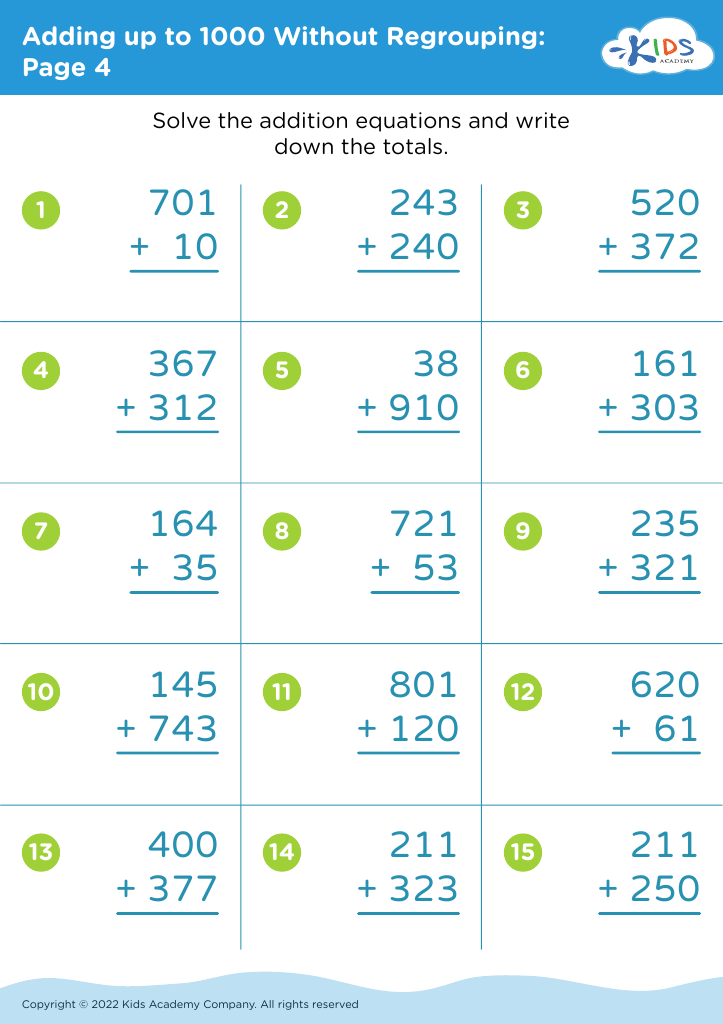
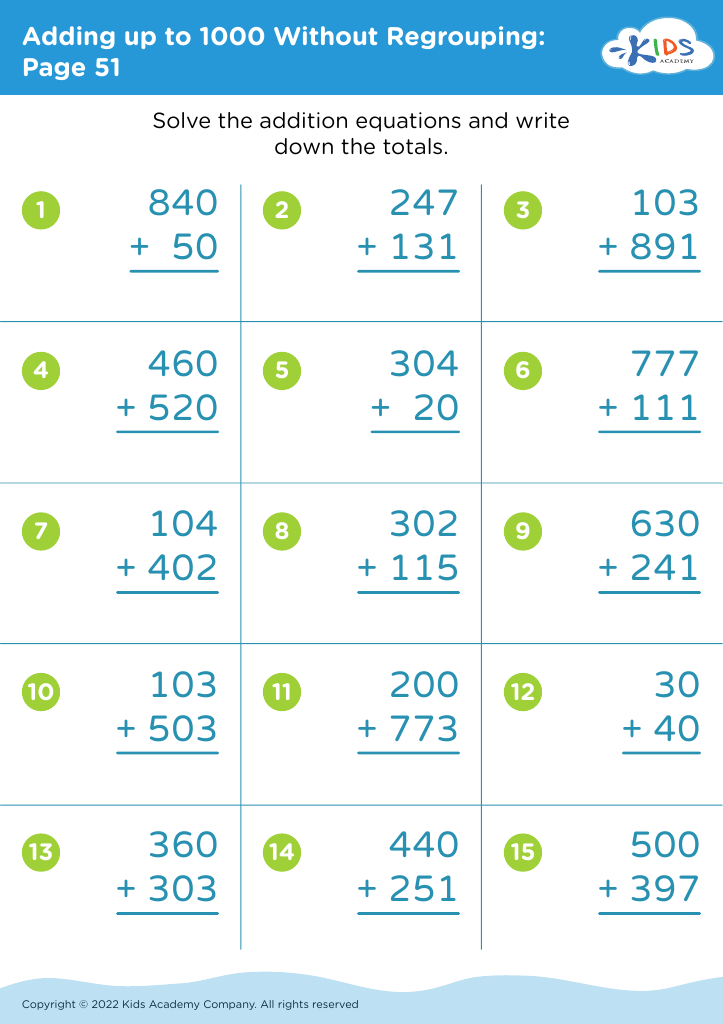
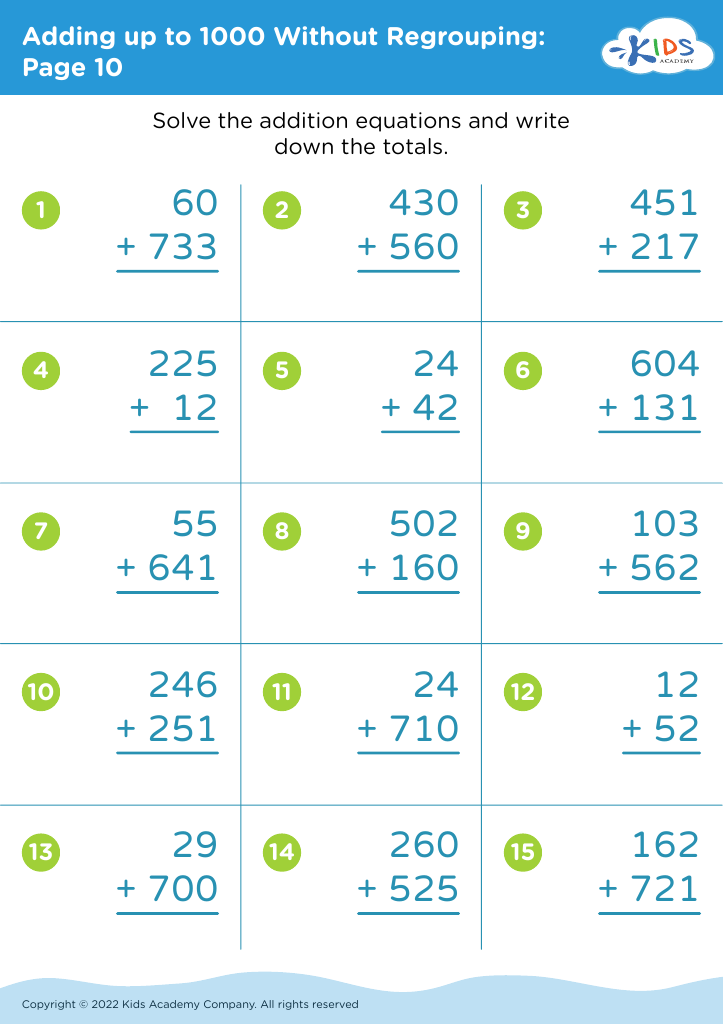
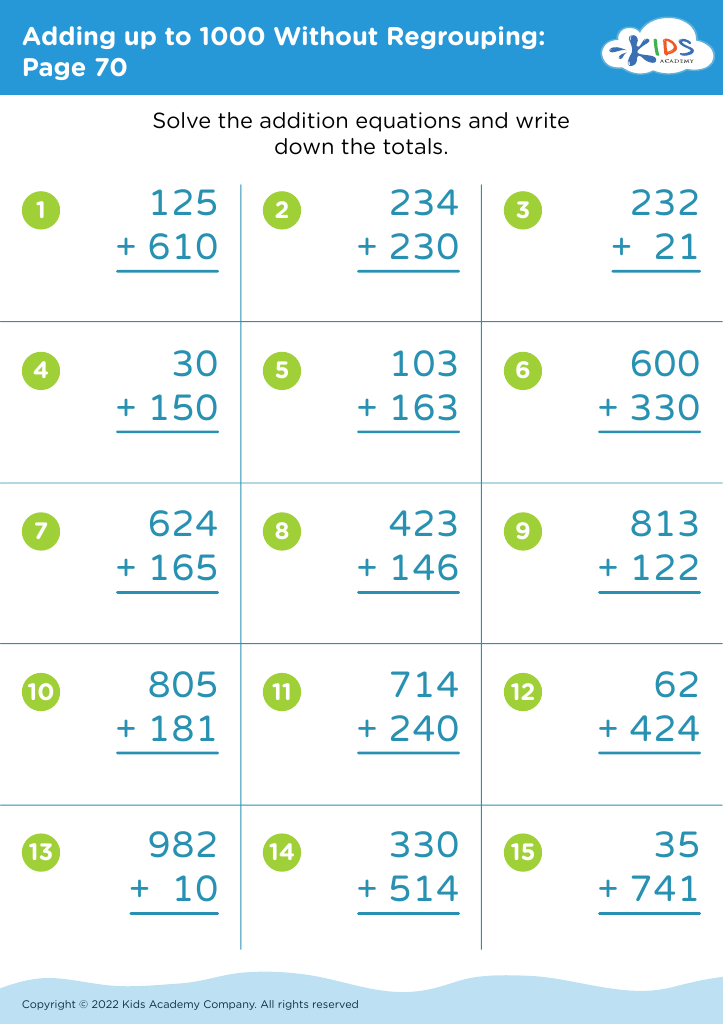
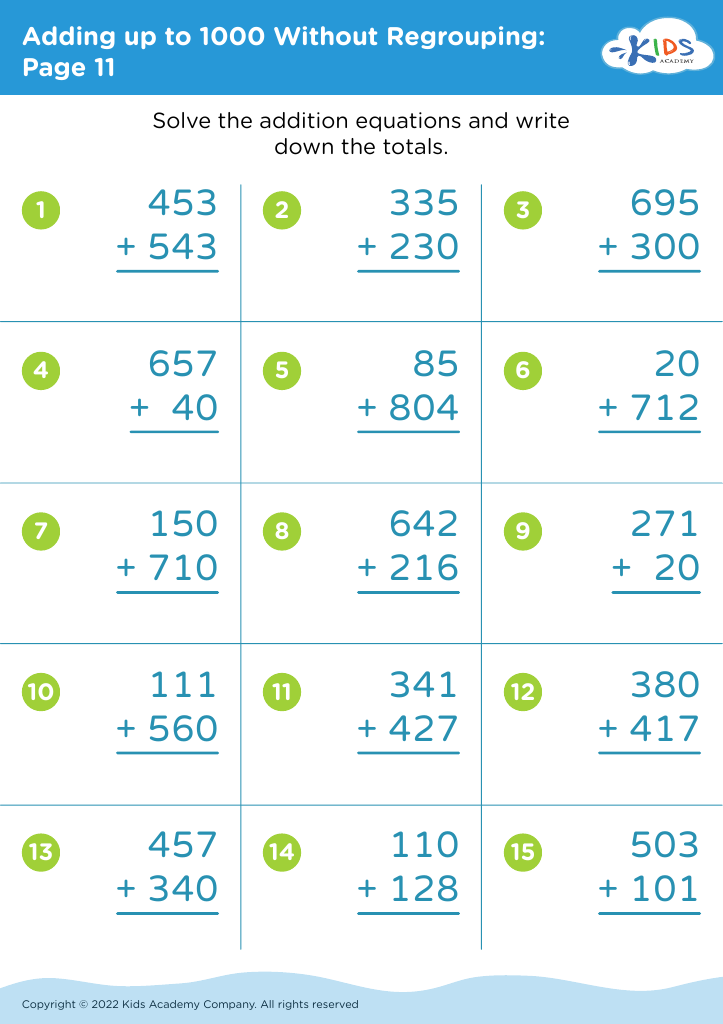
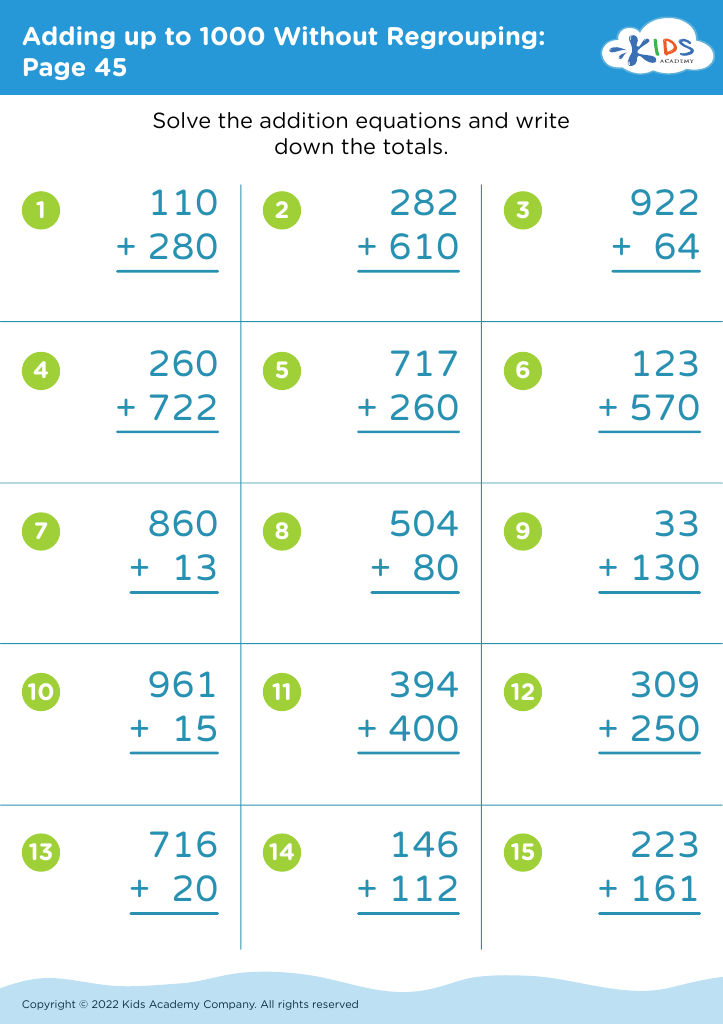
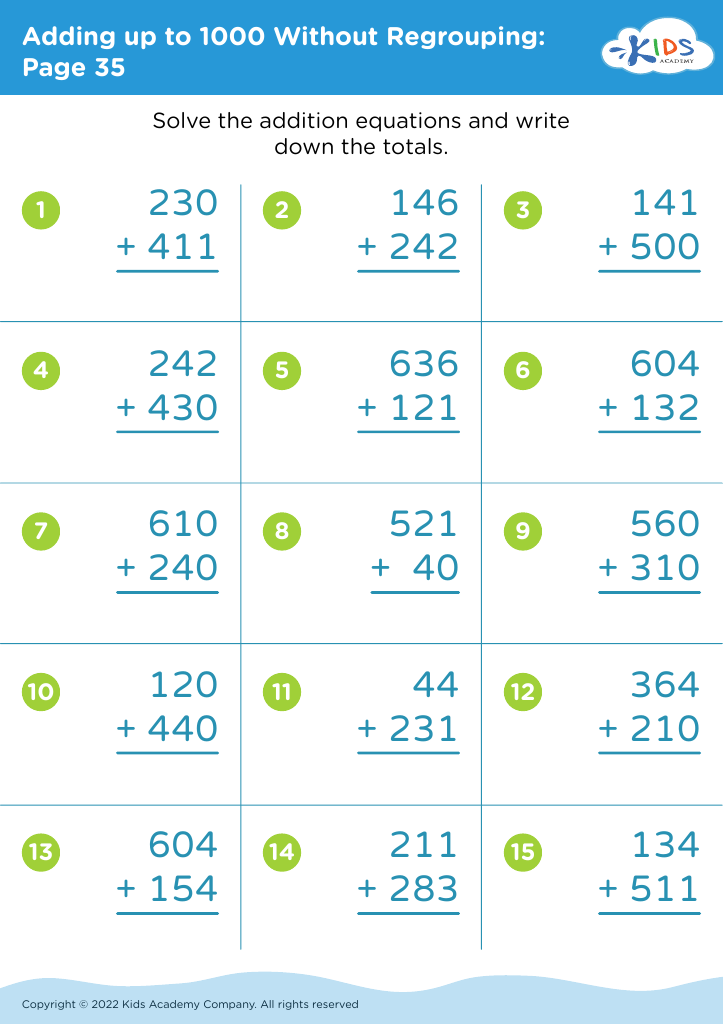
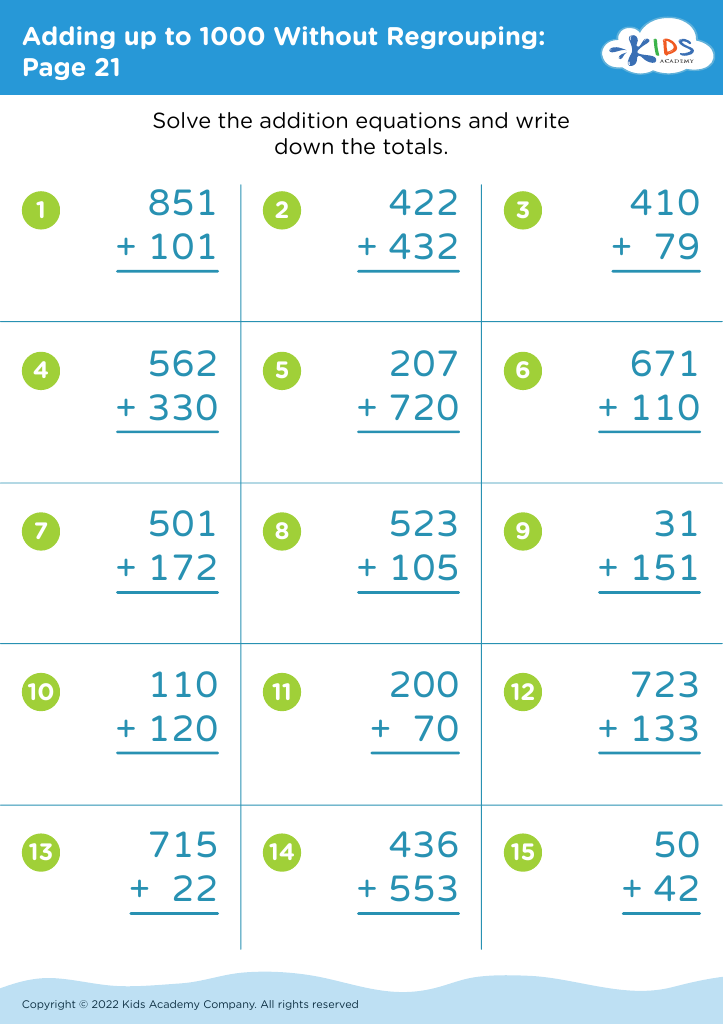
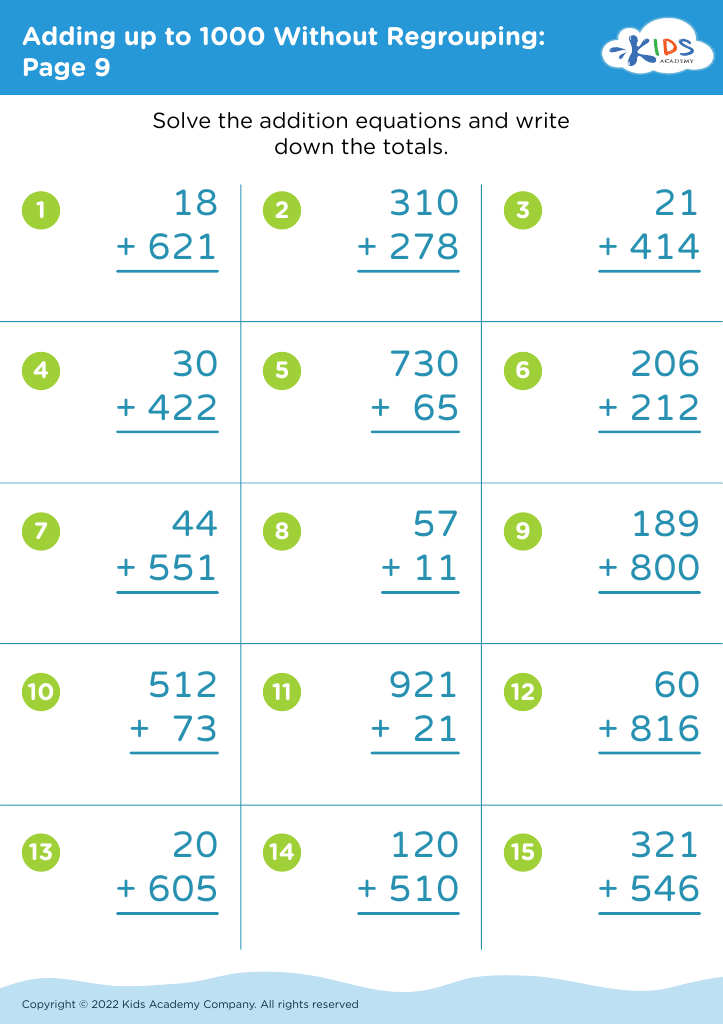
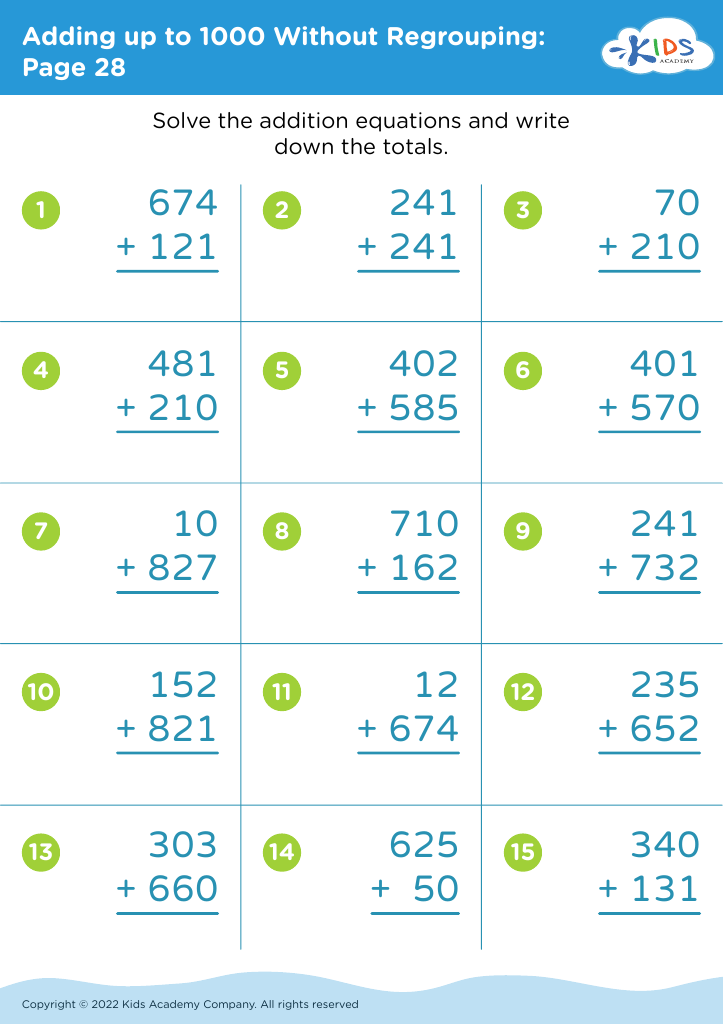
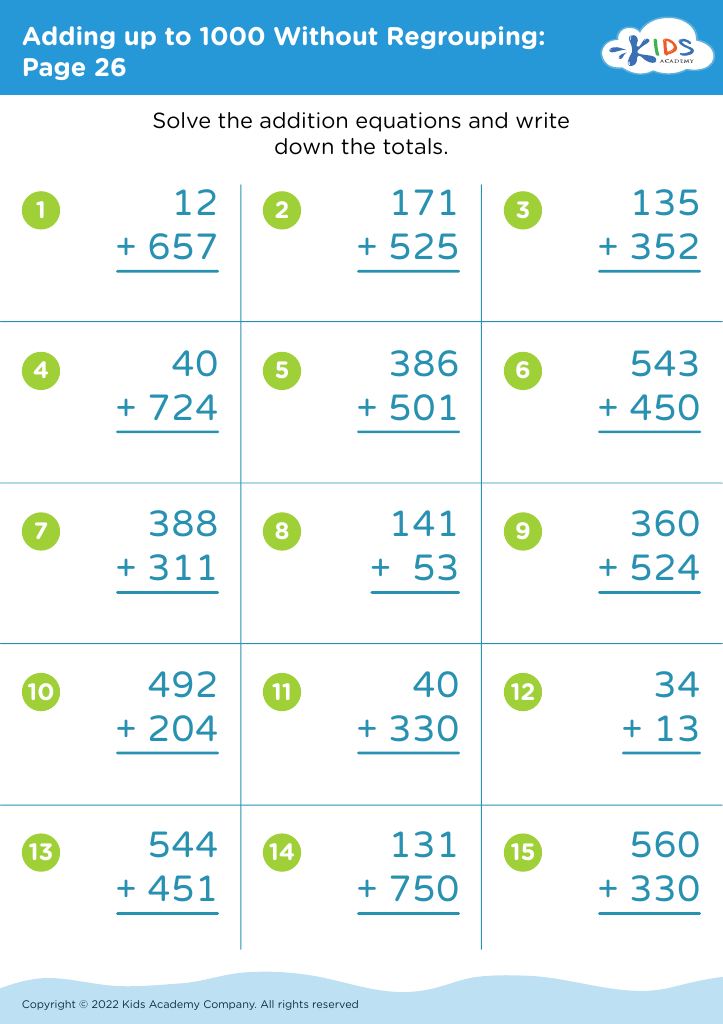
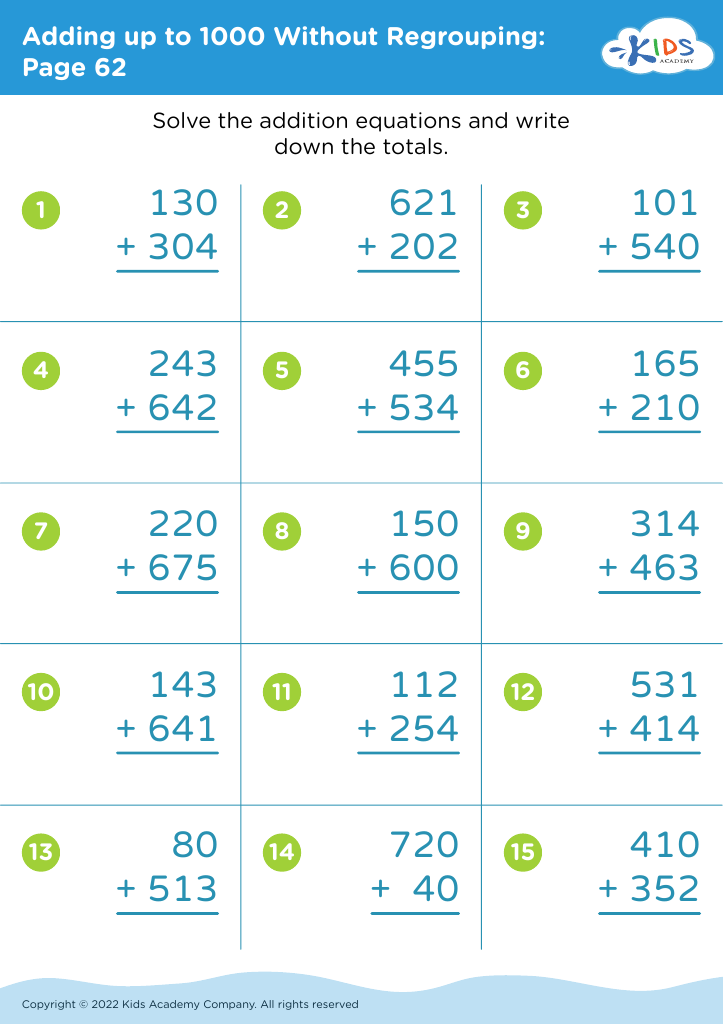
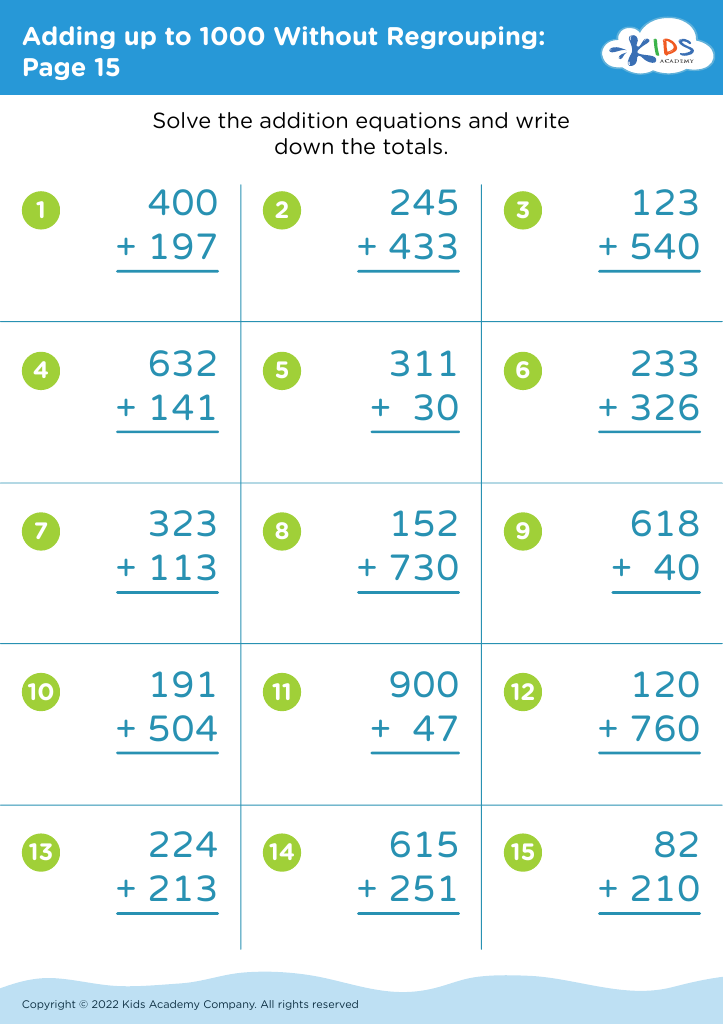
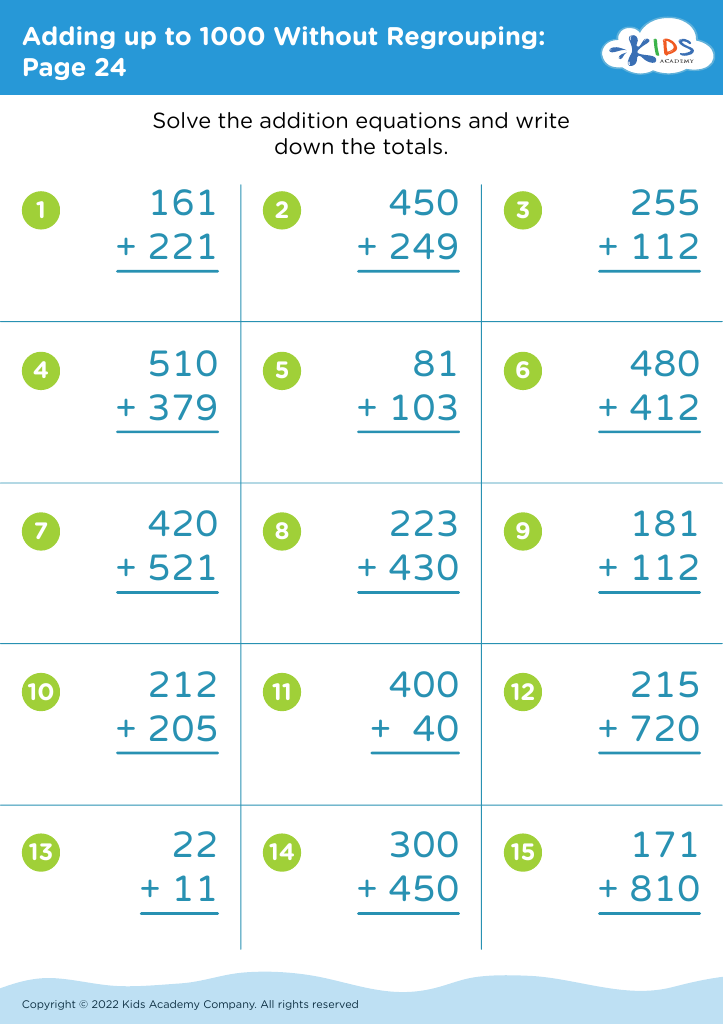


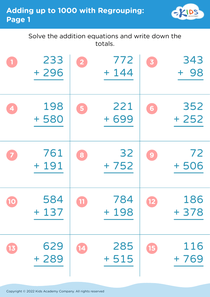
Adding up to 1000 without regrouping is a fundamental skill for children aged 3-9, and it's crucial for their mathematical development. Mastering this concept not only enhances arithmetic proficiency but also builds a solid foundation for more complex math operations. When children learn to add numbers to 1000 without regrouping, they engage in understanding place value and number relationships, which are key components of early math education.
For parents and teachers, this skill is important as it fosters problem-solving abilities and logical thinking. These competencies translate to real-world applications, helping children make sense of numbers in everyday contexts, such as shopping, budgeting, and measuring elements in crafts or cooking.
Moreover, teaching addition at an early age aligns with developmental milestones. Children aged 3-9 are naturally curious and eager to learn; by providing them with the tools to understand addition, we're encouraging a positive attitude towards math. It sets the stage for future math learning, reducing anxiety around numbers. Engaging students in fun, interactive activities that reinforce these skills also promotes teamwork and communication, essential social skills. In short, adding up to 1000 without regrouping is indispensable for nurturing confident, capable young learners.