Filters

1537 filtered results

Clear all filters
Favorites
With answer key
Interactive

1537 filtered results

Difficulty Level

Grade


Subject

    Check out this FREE Trial Lesson on Addition & Subtraction for age 3-9!

    Writing Number Sentences for Addition Story Problems

    Favorites
    With answer key
    Interactive
    • 3-9
    • Addition & Subtraction
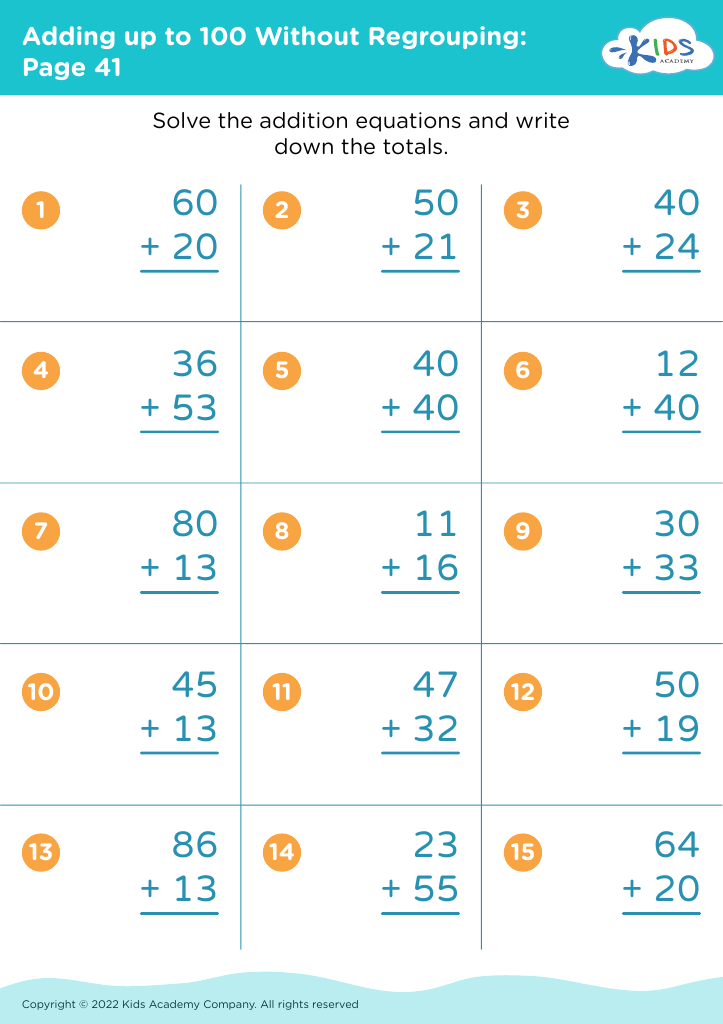
    Adding up to 100 Without Regrouping: Page 41
    Adding up to 100 Without Regrouping: Page 41
    Adding up to 100 Without Regrouping: Page 41
    Worksheet
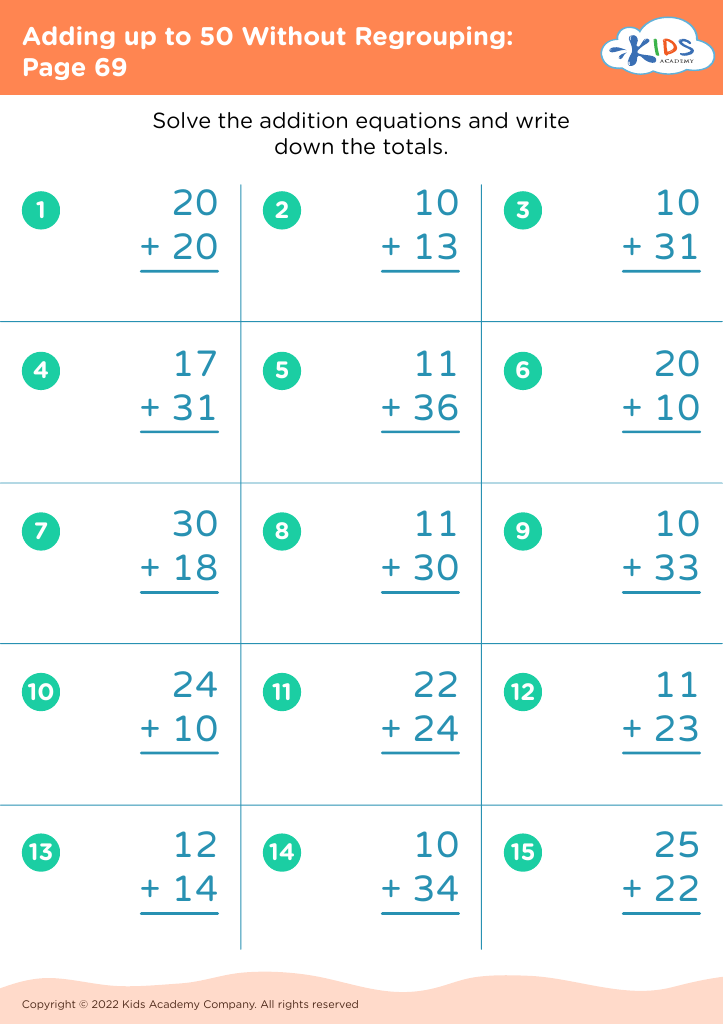
    Adding up to 50 Without Regrouping: Page 69
    Adding up to 50 Without Regrouping: Page 69
    Adding up to 50 Without Regrouping: Page 69
    Worksheet
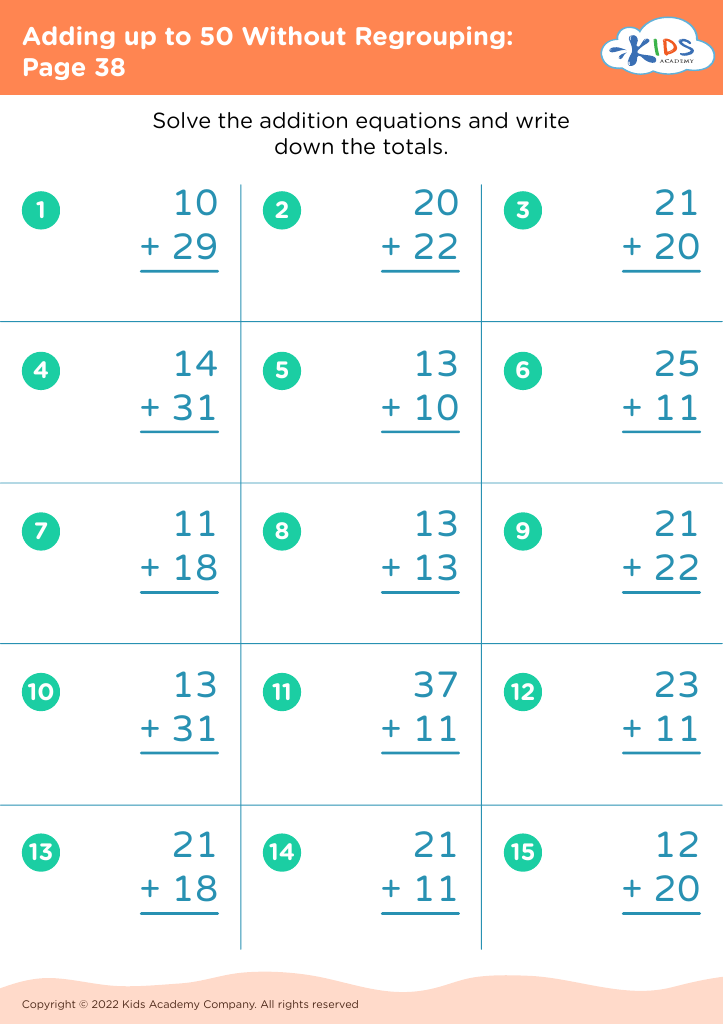
    Adding up to 50 Without Regrouping: Page 38
    Adding up to 50 Without Regrouping: Page 38
    Adding up to 50 Without Regrouping: Page 38
    Worksheet
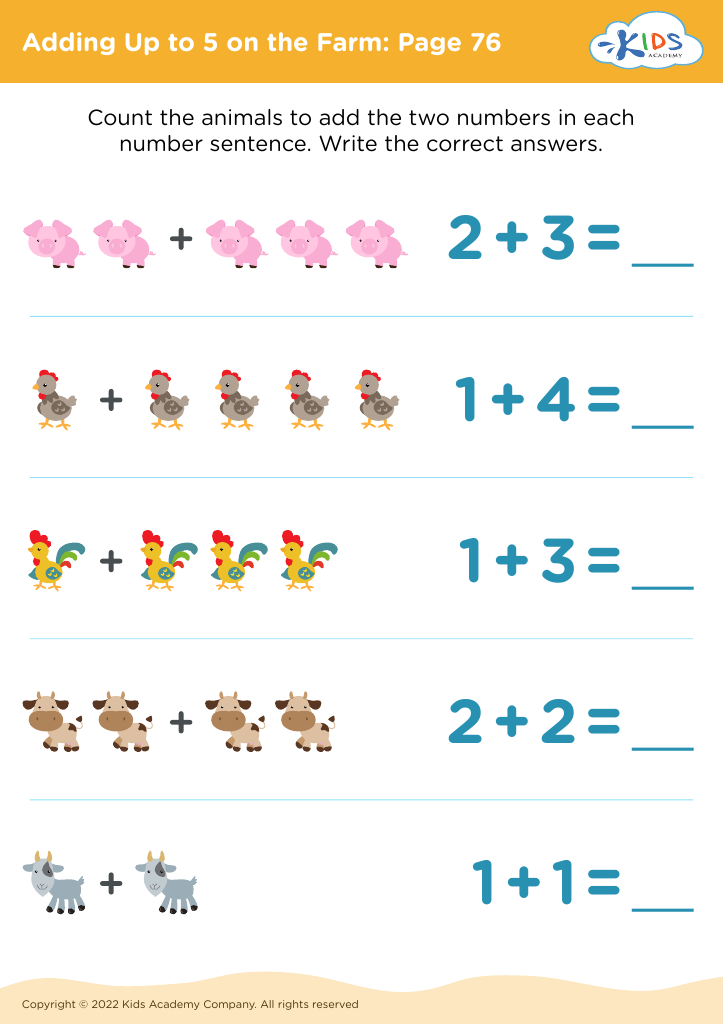
    Adding Up to 5 on the Farm: Page 76
    Adding Up to 5 on the Farm: Page 76
    Adding Up to 5 on the Farm: Page 76
    Worksheet
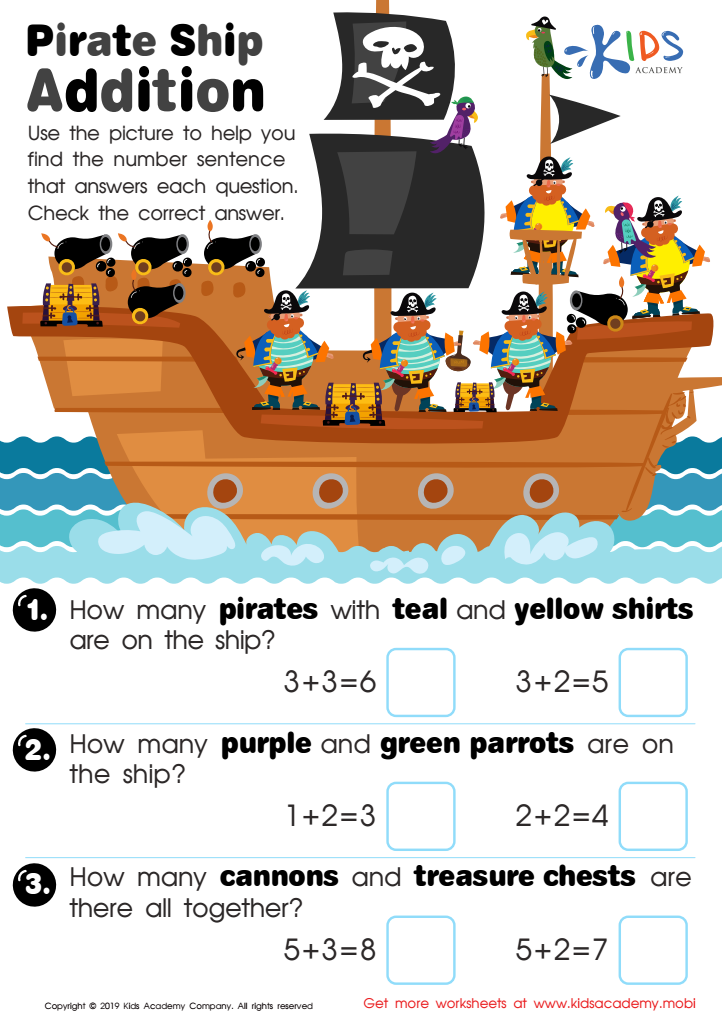
    Pirate Ship Addition Worksheet
    Pirate Ship Addition Worksheet

    Pirate Ship Addition Worksheet

    Does your family love pirate stories? Get your kids excited about this easy activity! Ask them to explain what makes pirate tales special, then look at the picture in the printout. Answer the three number questions at the bottom - use the picture to find the right number sentence. Help your kids check the correct answer. Max 80 words.
    Pirate Ship Addition Worksheet
    Worksheet
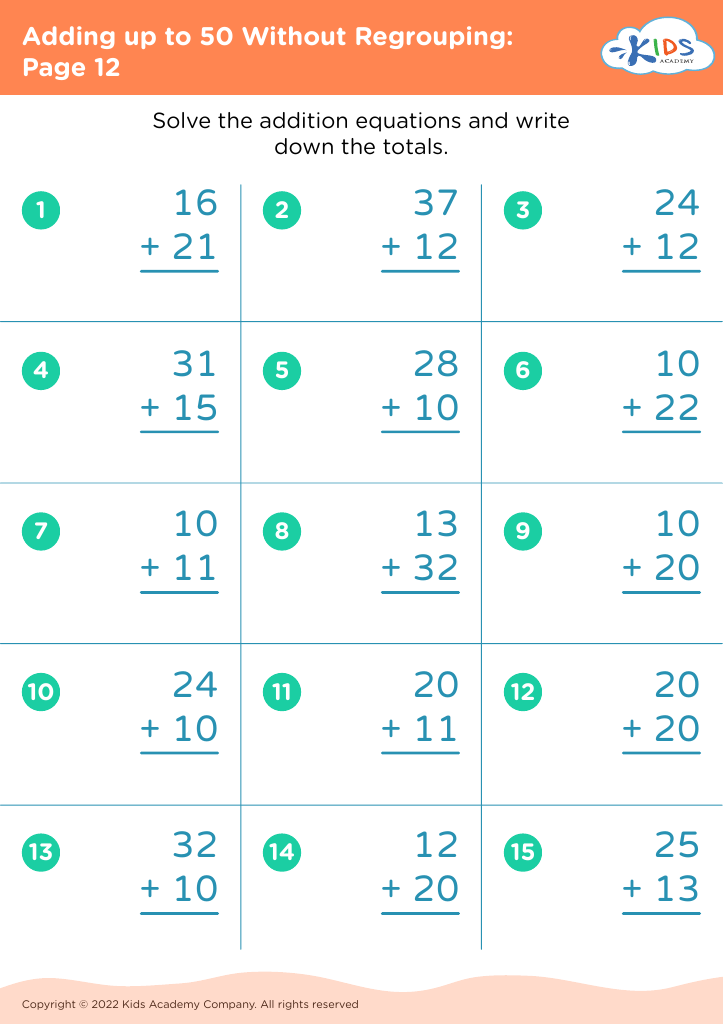
    Adding up to 50 Without Regrouping: Page 12
    Adding up to 50 Without Regrouping: Page 12
    Adding up to 50 Without Regrouping: Page 12
    Worksheet
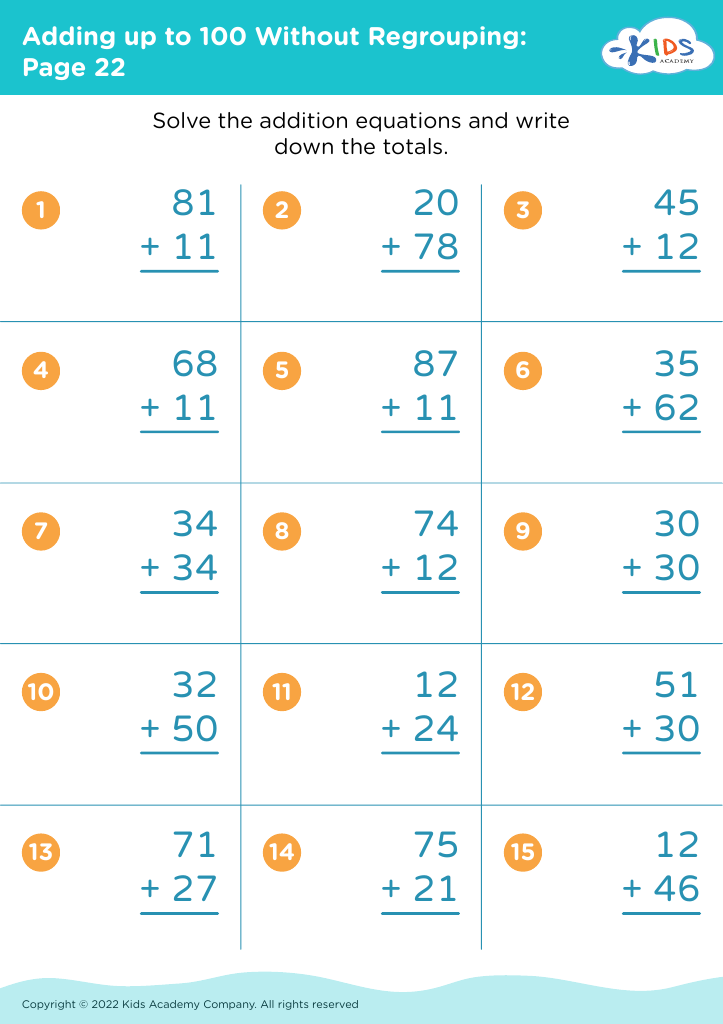
    Adding up to 100 Without Regrouping: Page 22
    Adding up to 100 Without Regrouping: Page 22
    Adding up to 100 Without Regrouping: Page 22
    Worksheet
    Adding Up to 5 on the Farm: Page 65
    Adding Up to 5 on the Farm: Page 65
    Adding Up to 5 on the Farm: Page 65
    Worksheet
    Adding up to 100 Without Regrouping: Page 15
    Adding up to 100 Without Regrouping: Page 15
    Adding up to 100 Without Regrouping: Page 15
    Worksheet
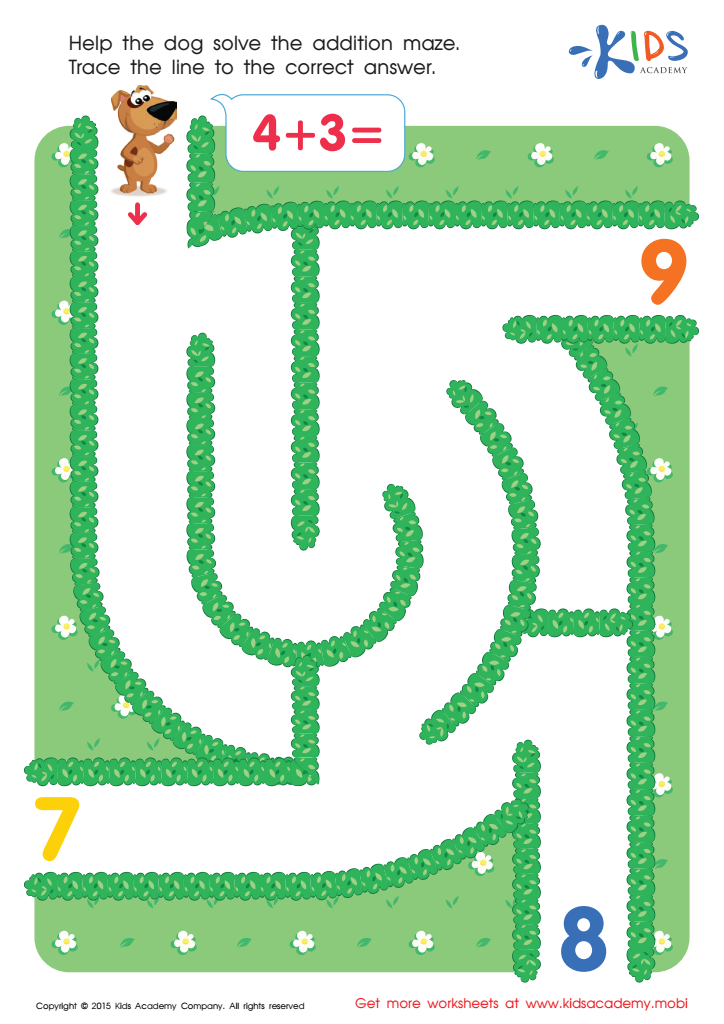
    Math: Addition PDF Worksheet Four And Three
    Math: Addition PDF Worksheet Four And Three

    Addition Four And Three Worksheet

    Let's have fun math practice! Grab a new worksheet to keep your kids engaged while helping them learn. Trace the path to the right answer and see the joy when they find it. Check Kids Academy for more free algebra worksheets and other learning materials - let's make learning exciting!
    Addition Four And Three Worksheet
    Worksheet
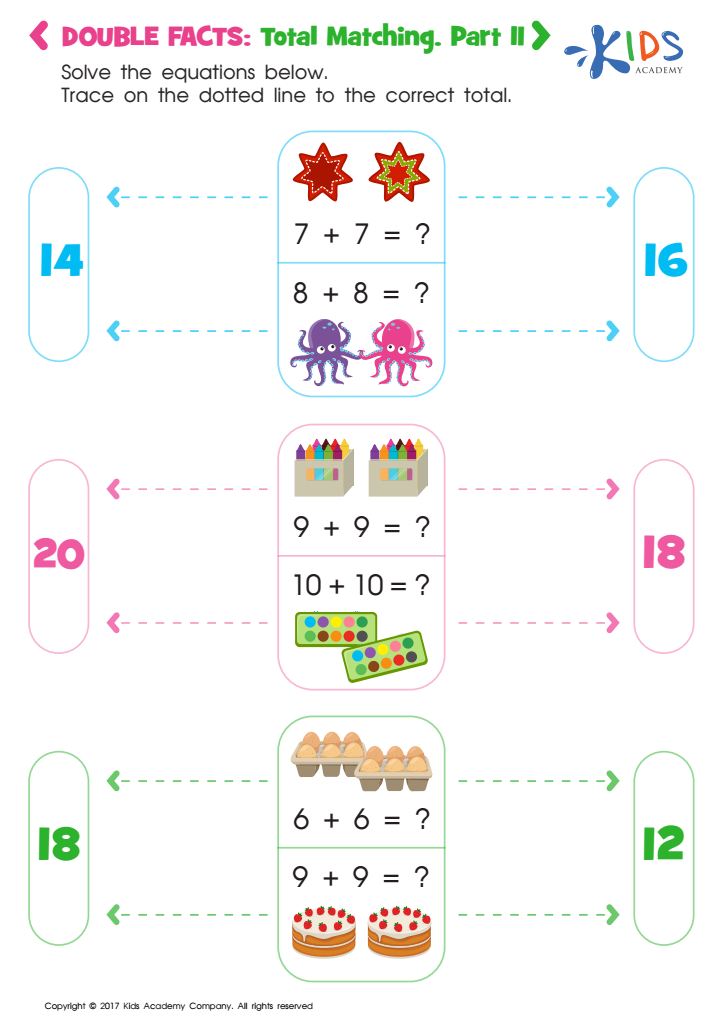
    Double Facts: Total Matching 2 Worksheet
    Double Facts: Total Matching 2 Worksheet
    Double Facts: Total Matching 2 Worksheet
    Having trouble with math? This printable worksheet is perfect for your child or student. It features simple addition problems that can be solved with your help. Trace the dotted line to the right answer and make counting numbers stress-free! Your young one will be solving math equations in no time.
    Double Facts: Total Matching 2 Worksheet
    Worksheet
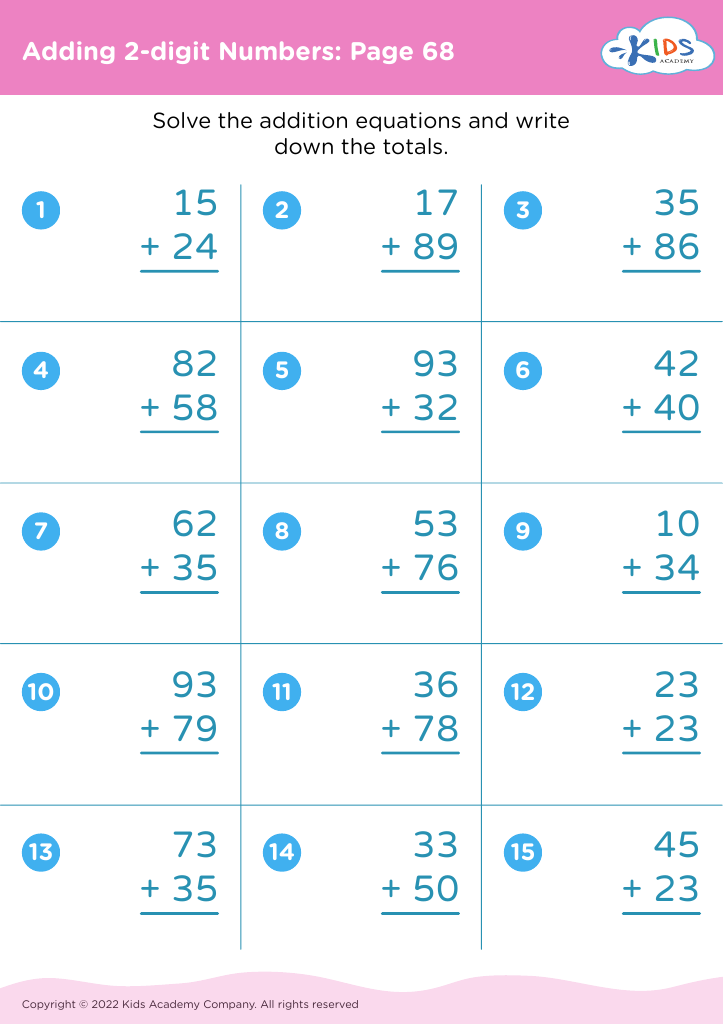
    Adding 2-digit Numbers: Page 68
    Adding 2-digit Numbers: Page 68

    Adding 2-digit Numbers: Page 68

    Adding 2-digit Numbers: Page 68
    Worksheet
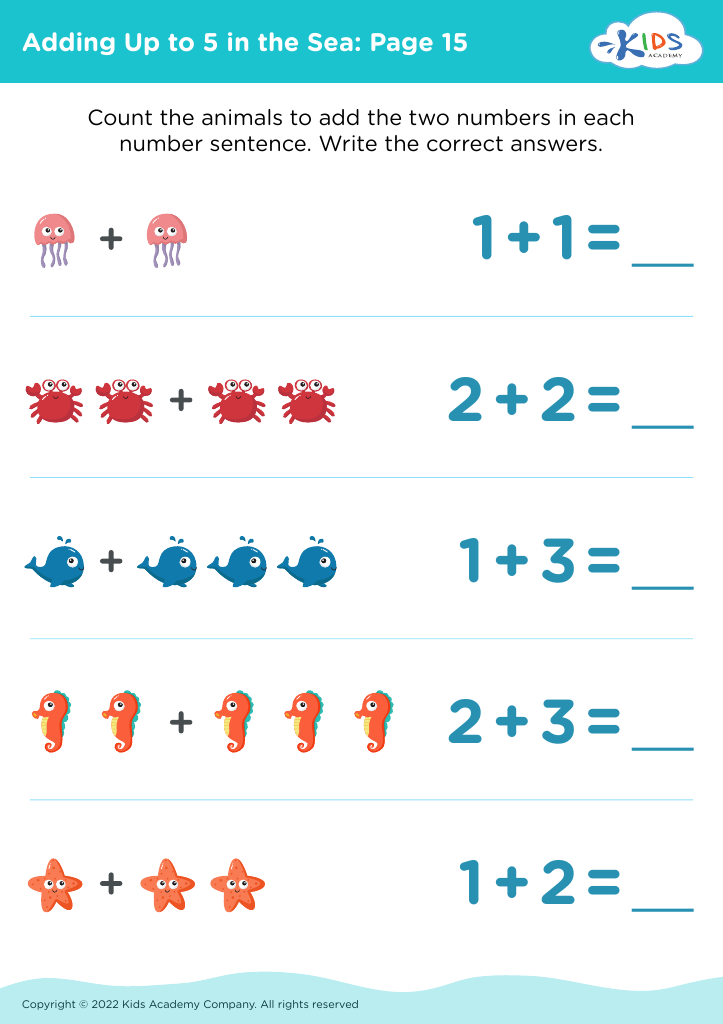
    Adding Up to 5 in the Sea: Page 15
    Adding Up to 5 in the Sea: Page 15
    Adding Up to 5 in the Sea: Page 15
    Worksheet
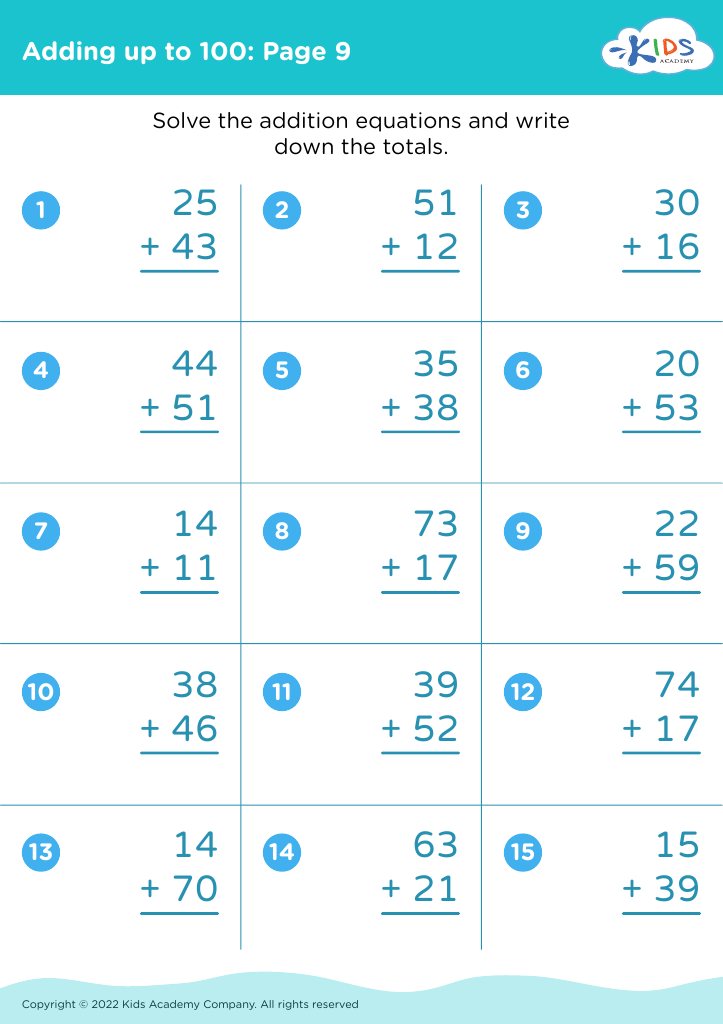
    Adding up to 100: Page 9
    Adding up to 100: Page 9

    Adding up to 100: Page 9

    Adding up to 100: Page 9
    Worksheet
    The Levels of Equal Matter Worksheet
    The Levels of Equal Matter Worksheet
    The Levels of Equal Matter Worksheet
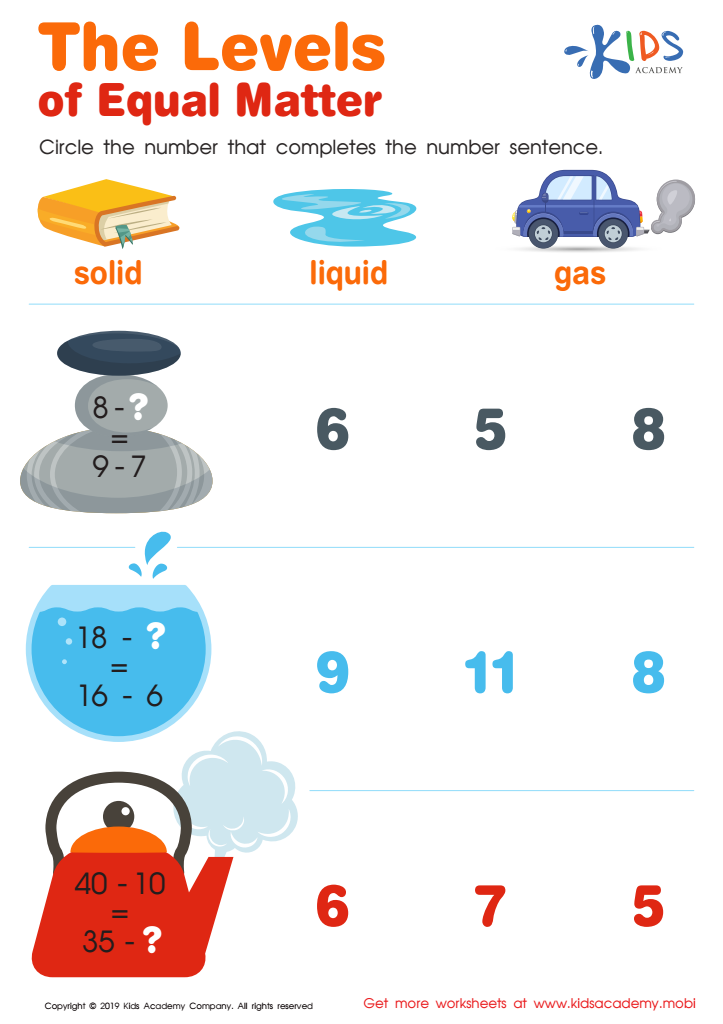
    Matter is anything that has weight and occupies space. Common examples include people, animals, objects and liquids. Have your kids understand this concept by looking at the levels of matter in this worksheet and completing the number sentence mathematical problems beneath.
    The Levels of Equal Matter Worksheet
    Worksheet
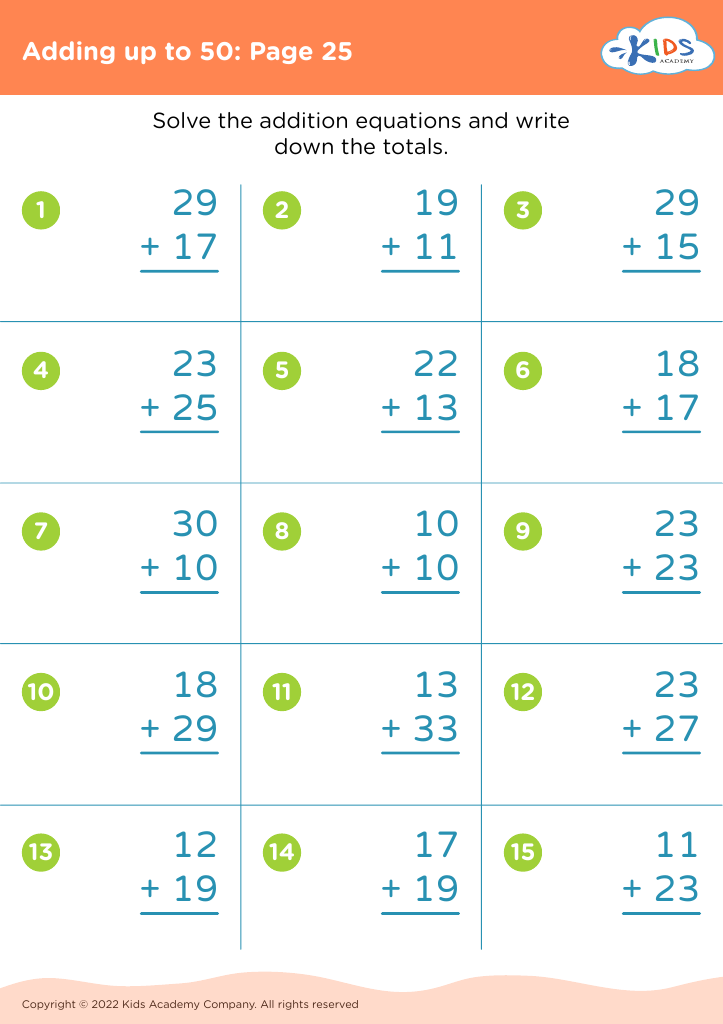
    Adding up to 50: Page 25
    Adding up to 50: Page 25

    Adding up to 50: Page 25

    Adding up to 50: Page 25
    Worksheet
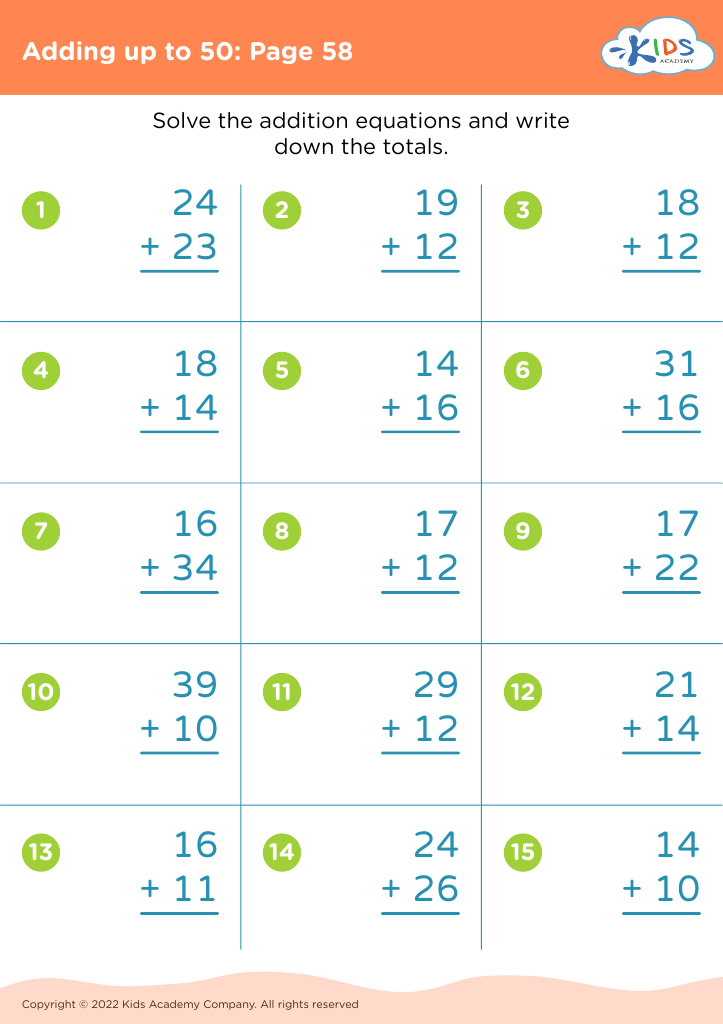
    Adding up to 50: Page 58
    Adding up to 50: Page 58

    Adding up to 50: Page 58

    Adding up to 50: Page 58
    Worksheet
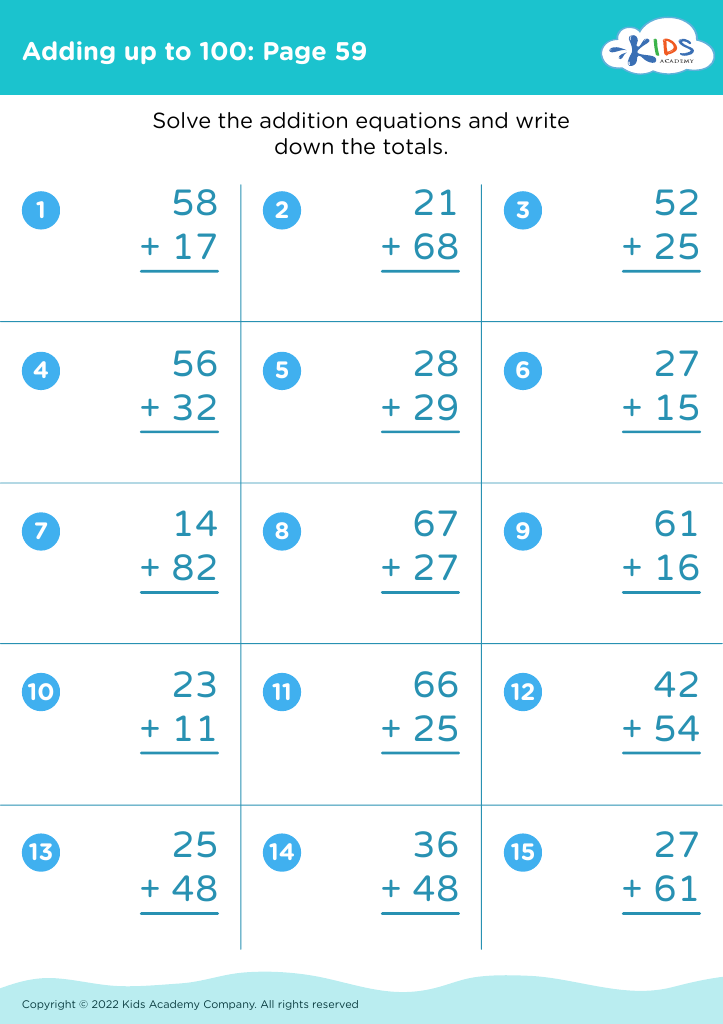
    Adding up to 100: Page 59
    Adding up to 100: Page 59

    Adding up to 100: Page 59

    Adding up to 100: Page 59
    Worksheet
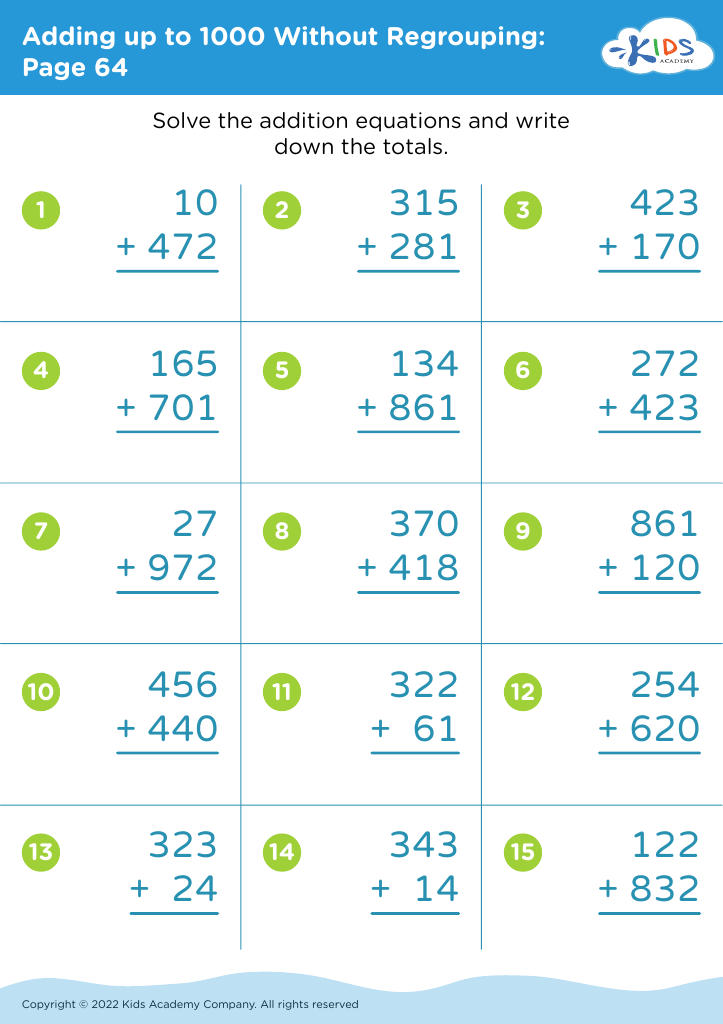
    Adding up to 1000 Without Regrouping: Page 64
    Adding up to 1000 Without Regrouping: Page 64
    Adding up to 1000 Without Regrouping: Page 64
    Worksheet
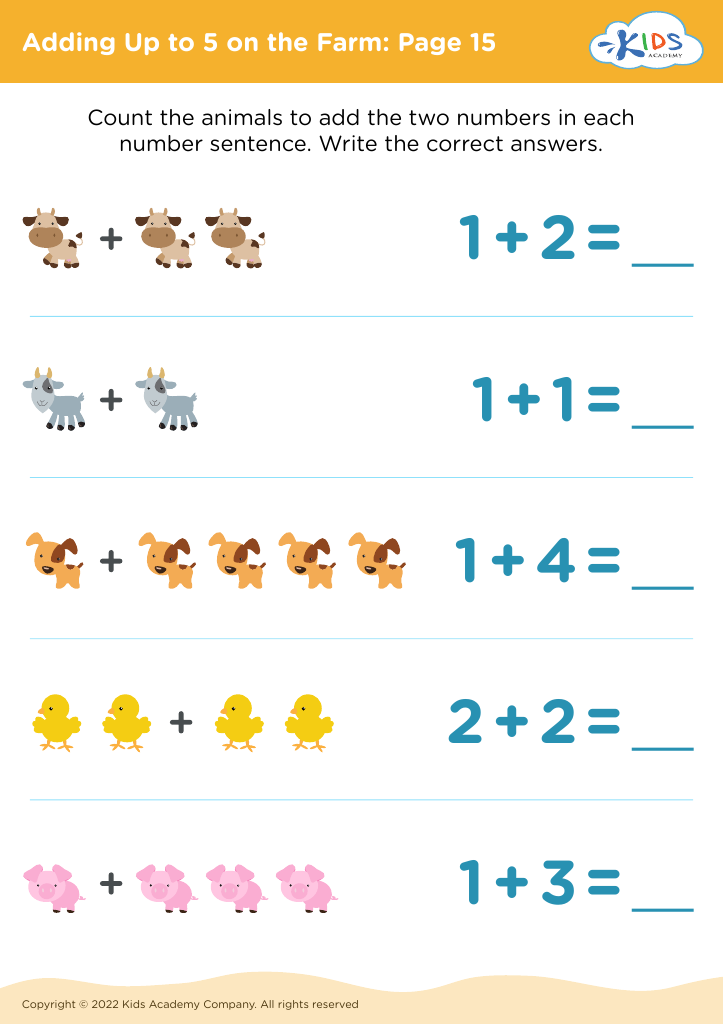
    Adding Up to 5 on the Farm: Page 15
    Adding Up to 5 on the Farm: Page 15
    Adding Up to 5 on the Farm: Page 15
    Worksheet
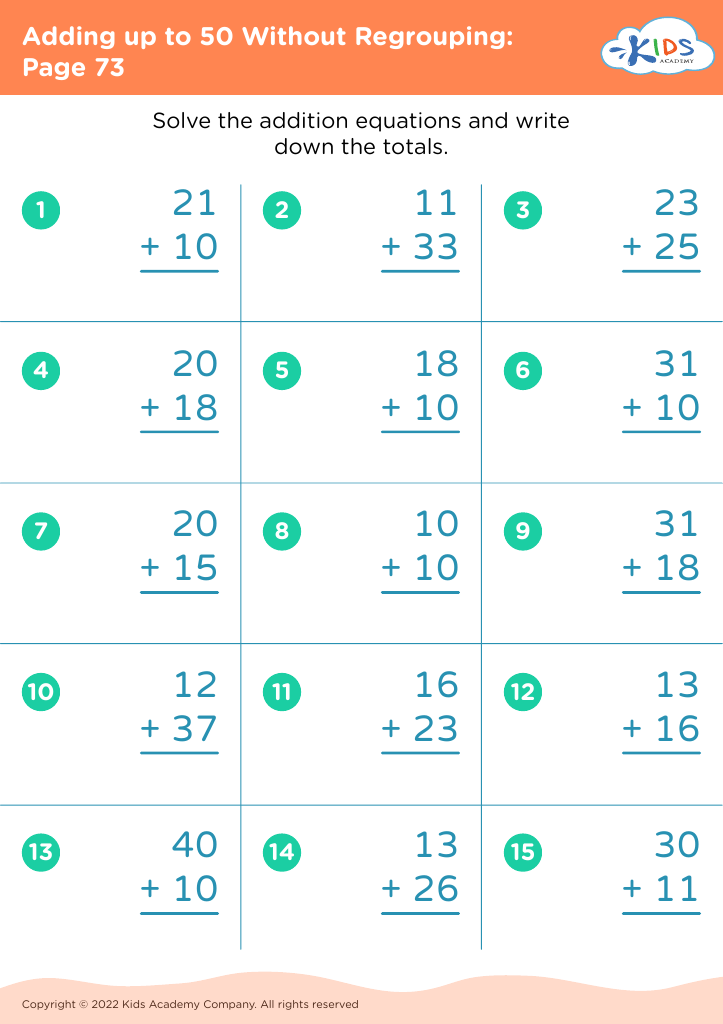
    Adding up to 50 Without Regrouping: Page 73
    Adding up to 50 Without Regrouping: Page 73
    Adding up to 50 Without Regrouping: Page 73
    Worksheet
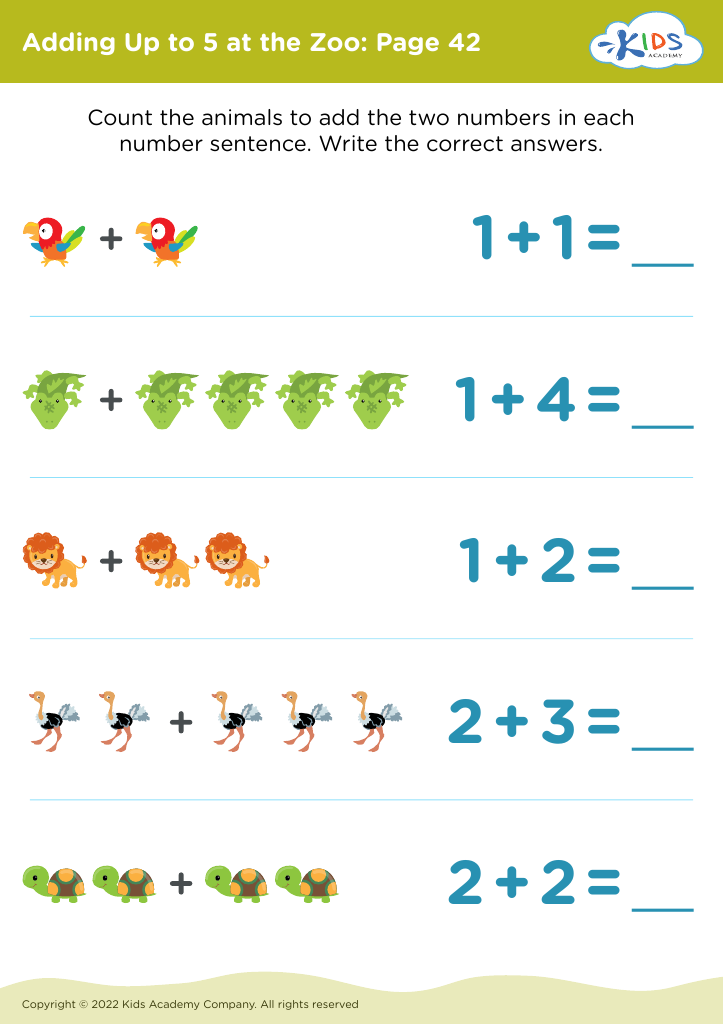
    Adding Up to 5 at the Zoo: Page 42
    Adding Up to 5 at the Zoo: Page 42
    Adding Up to 5 at the Zoo: Page 42
    Worksheet
    Adding 2-digit Numbers: Page 19
    Adding 2-digit Numbers: Page 19

    Adding 2-digit Numbers: Page 19

    Adding 2-digit Numbers: Page 19
    Worksheet
    Adding Up to 5 in the Sea: Page 54
    Adding Up to 5 in the Sea: Page 54
    Adding Up to 5 in the Sea: Page 54
    Worksheet


    Parents and teachers should care deeply about teaching addition and subtraction to children aged 3-9 because these foundational skills are crucial for their overall mathematical development and daily problem-solving capabilities. At this early age, children’s brains are highly receptive, making it an ideal time to introduce fundamental math concepts. Mastering addition and subtraction helps build a solid mathematical foundation, which is essential for understanding more complex math topics later in life, such as multiplication, division, fractions, and algebra.

    Moreover, these early arithmetic skills promote critical thinking and logical reasoning. When children learn to add and subtract, they engage in problem-solving, learn to make decisions, and recognize patterns, all of which are important cognitive skills.

    Basic adding and subtracting also demonstrate immediate practical value, enabling children to handle real-life situations, such as sharing toys, understanding time, and managing simple financial transactions like counting money.

    Finally, early success in mastering these skills can instill a sense of confidence and a positive attitude towards learning mathematics. Positive early math experiences lay the foundation for academic success and a lifelong appreciation for numbers. This, in turn, can foster improved performance in various subjects, emphasizing the importance of early math education for young learners.