Graphs Worksheets for Ages 3-9 - Page 2
27 filtered results
-
From - To
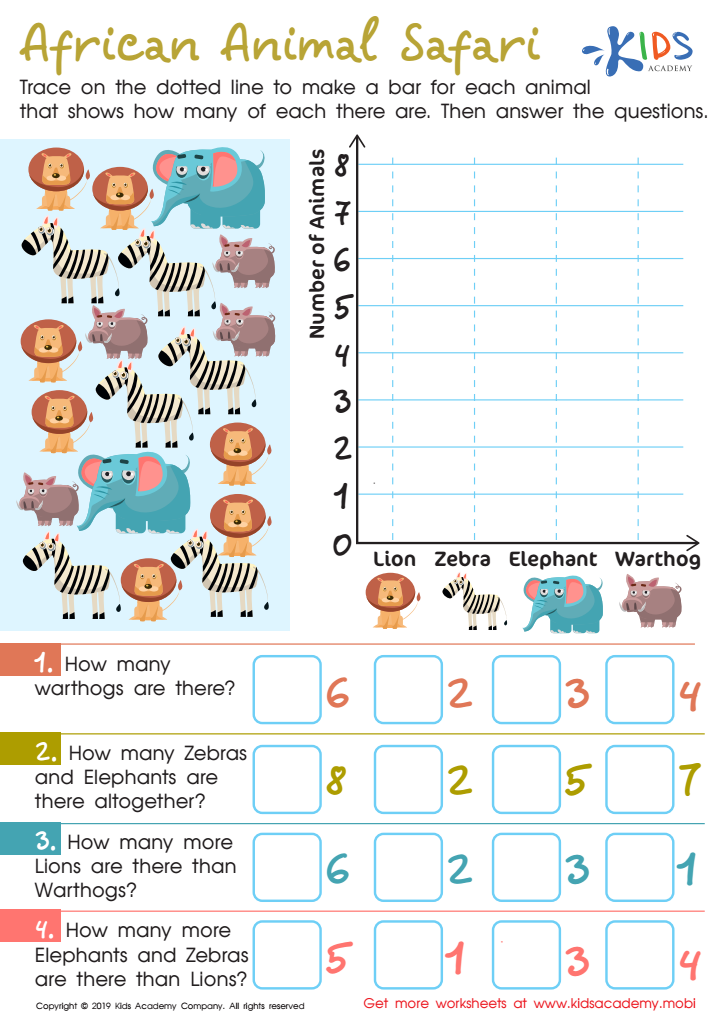
African Animal Safari Worksheet
 Assign to My Students
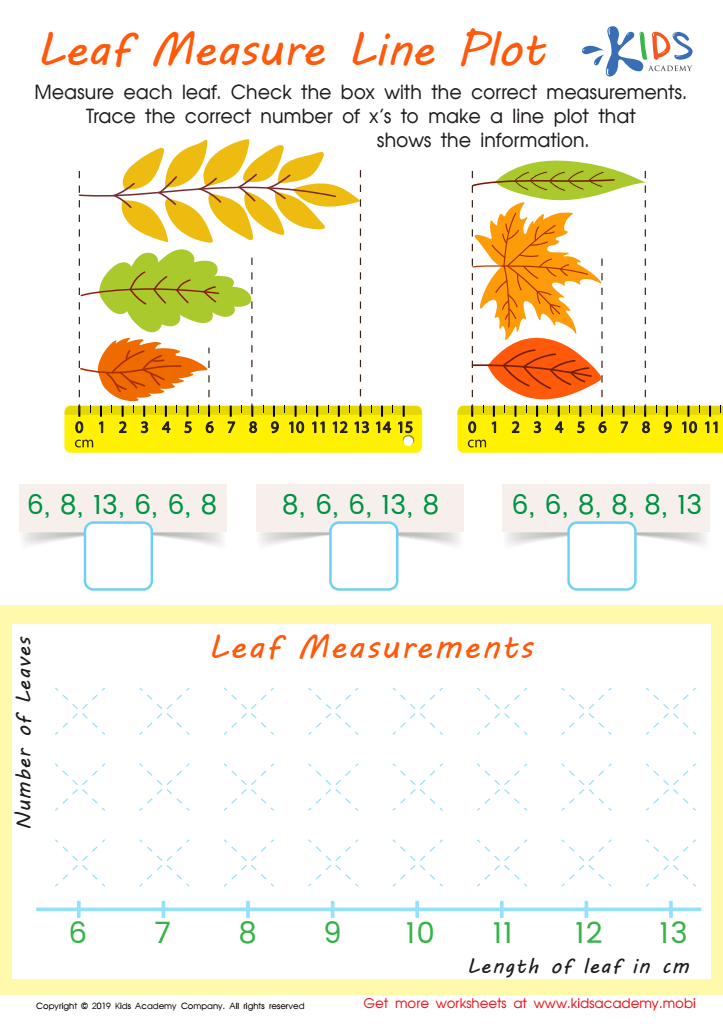
Leaf Measure Line Plot Worksheet
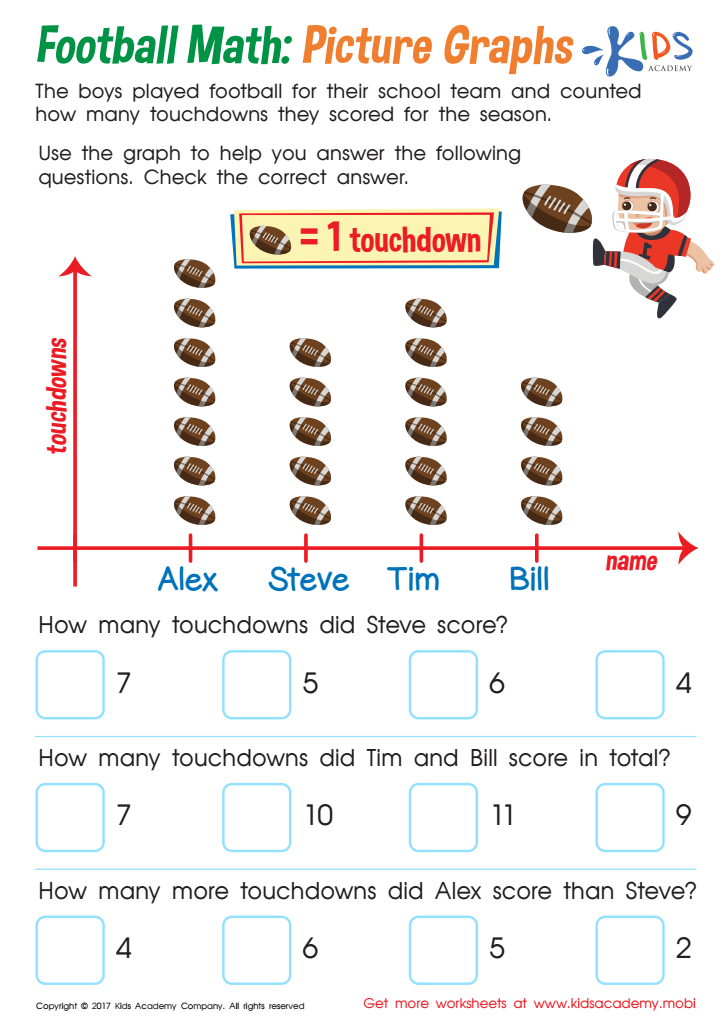
Football Math Worksheet








Graphs play a crucial role in children's educational development, particularly for those aged 3-9. Understanding basic concepts of graphs helps young learners visualize and interpret data, fostering critical thinking and analytical skills. At this age, children are naturally curious and, when introduced to graphs, they can transform information into a format that is easier to comprehend.
For parents and teachers, addressing graph literacy encourages engagement with mathematical concepts and scientific inquiry early on. Graphs help simplify complex information, making it accessible and relatable for children, enabling them to make connections in their everyday lives. For instance, everyday experiences—like comparing the height of plants or tracking the weather—can be represented through graphs, enhancing their observational skills.
Moreover, learning about graphs supports language development as children articulate their observations and reasoning about data. It cultivates teamwork and cooperation skills when children collaborate on group projects involving graphs. Overall, fostering an understanding and appreciation of graphs promotes foundational skills in mathematics and reasoning, setting the stage for more advanced learning in the future. By integrating graphing activities into their education, parents and teachers empower children with the tools to explore and explain the world around them.








