Problem-Solving Skills Numbers Worksheets for Ages 3-9 - Page 3
52 filtered results
-
From - To
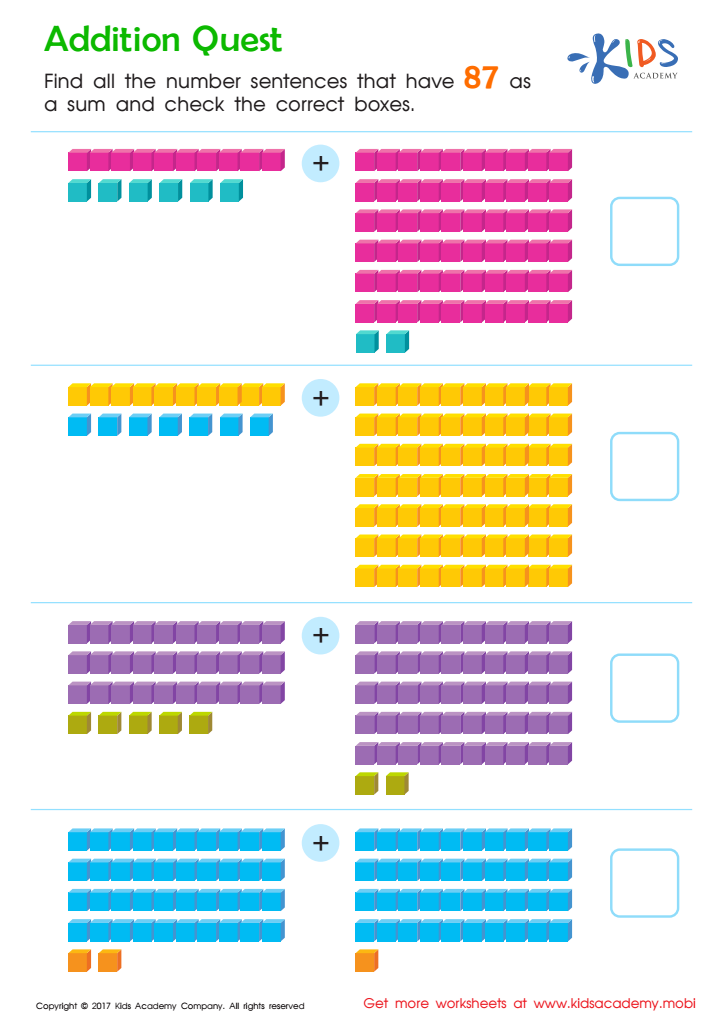
Addition Quest Worksheet: Part 1
 Assign to My Students
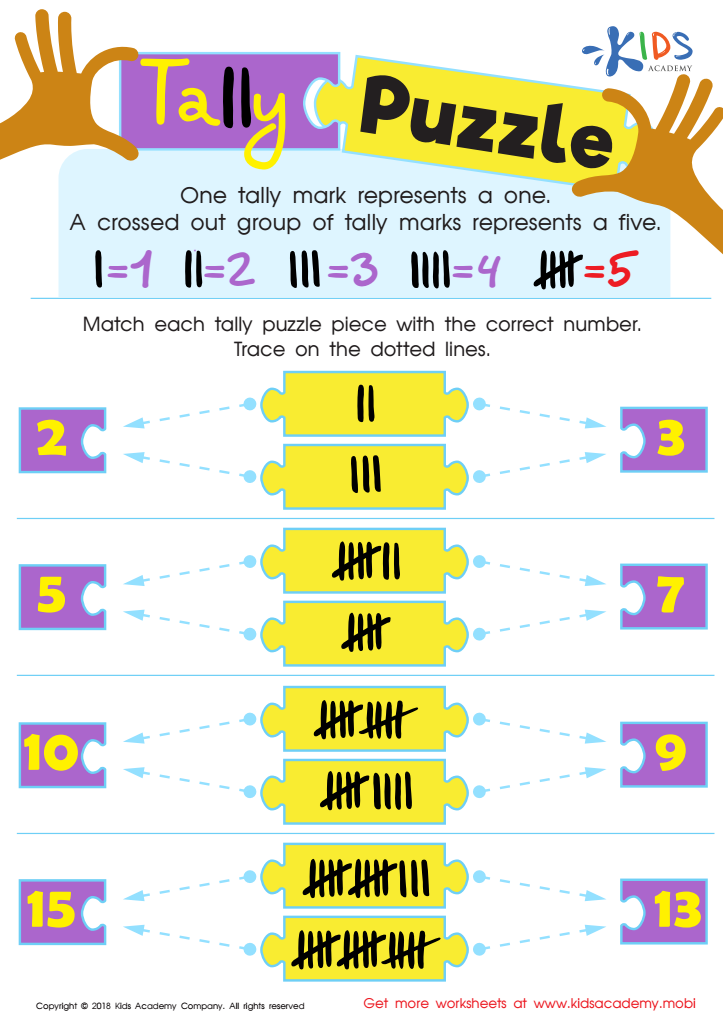
Tally Puzzle Worksheet

Haystack Steps Worksheet
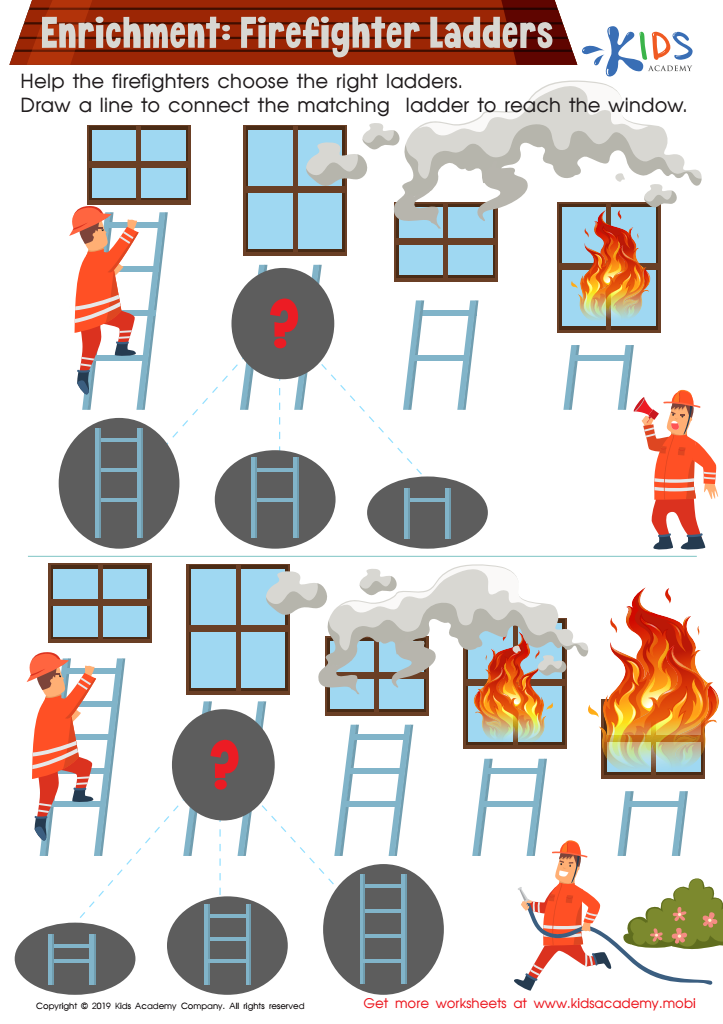
Enrichment: Firefighter Ladders Worksheet






.jpg)

Problem-solving skills are crucial for children aged 3-9, as they lay the foundation for critical thinking and independence in later life. For parents and teachers, cultivating these skills is vital for several reasons.
First, problem-solving helps children develop resilience. When kids face challenges and learn to navigate them, they build confidence and a growth mindset, understanding that mistakes are part of the learning process. This resilience will serve them throughout their education and future careers.
Second, these skills enhance cognitive abilities. Engaging with problems encourages children to think creatively, analyze situations, and devise solutions. Such thinking promotes strong mathematical reasoning, essential for later academic success across subjects, not just mathematics.
Additionally, fostering problem-solving skills facilitates better emotional regulation. Children learn to process their emotions and consider others’ perspectives when working collaboratively to address challenges, paving the way for improved social interactions.
Lastly, encouraging problem-solving at an early age prepares children for real-world situations, helping them develop the ability to assess risks and make informed decisions. By prioritizing problem-solving from a young age, parents and teachers equip children with essential tools for lifelong personal and academic success.








