Filters

186 filtered results

Clear all filters
Favorites
With answer key
Interactive

186 filtered results

Difficulty Level

Grade


Check out this FREE Trial Lesson on Math for age 3-9!

Making 12

Favorites
With answer key
Interactive
  • 3-9
  • Cognitive Development
  • Math
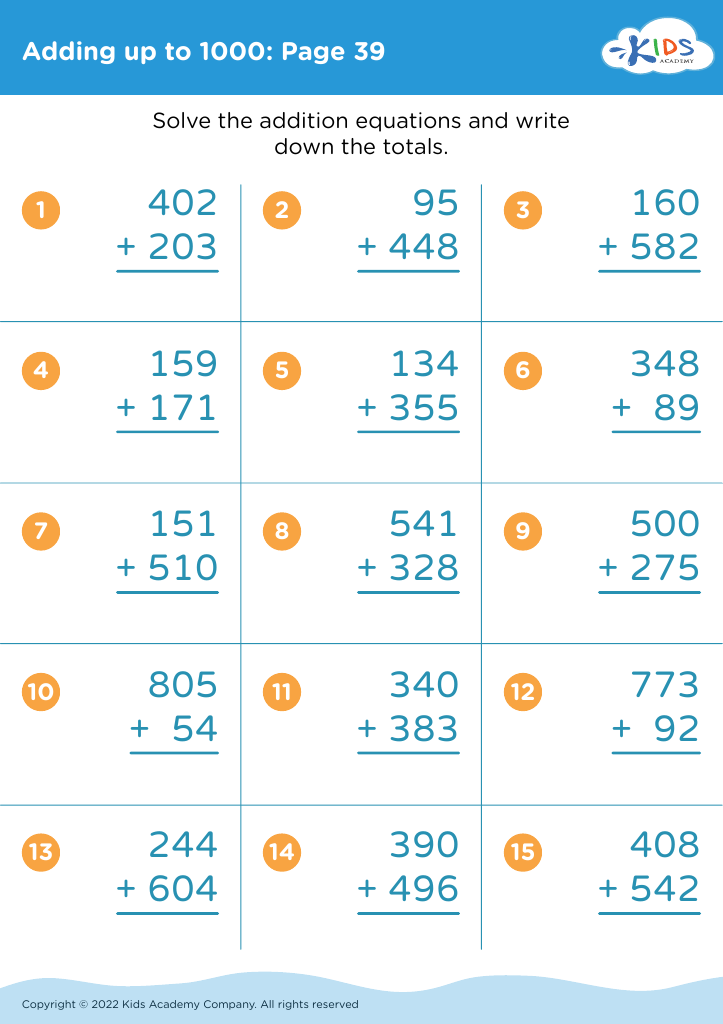
Adding up to 1000: Page 39

Adding up to 1000: Page 39

Adding up to 1000: Page 39
Worksheet
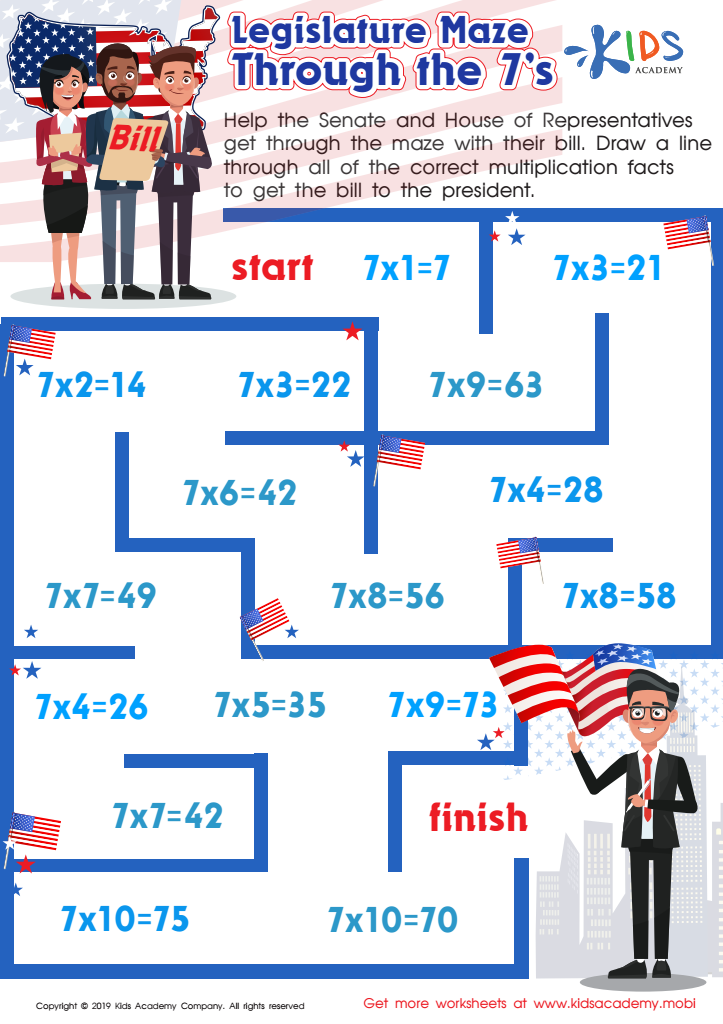
Legislature Maze Through the 7’s Worksheet

Legislature Maze Through the 7’s Worksheet

Students can review their math and social studies skills with this exciting worksheet. By drawing a line through only the correct multiplication facts in the 7x multiplication table maze, they can lead the members of Congress to the President to get the law signed and finish the puzzle.
Legislature Maze Through the 7’s Worksheet
Worksheet
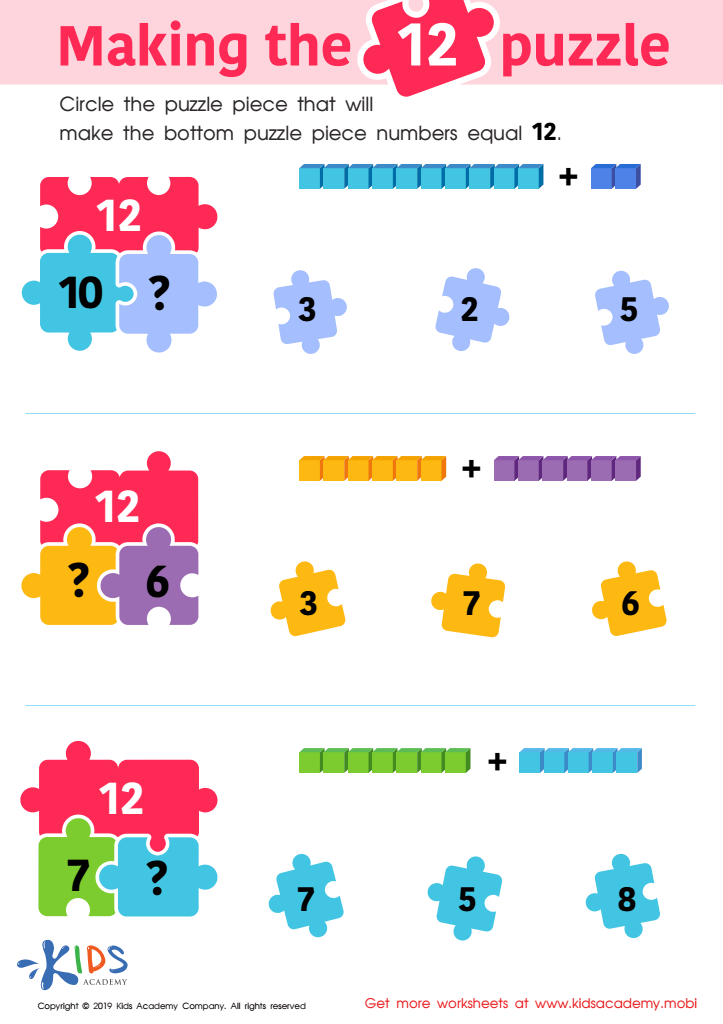
Making the 12 Puzzle Worksheet

Making the 12 Puzzle Worksheet

Engage preschoolers in learning with this fun and colorful worksheet. Ask them to look at the picture and identify the missing equation on each puzzle piece; then help them solve the problems. When all the puzzle pieces make the bottom numbers equal 12, have them circle it. This is a great way to combine learning and fun!
Making the 12 Puzzle Worksheet
Worksheet
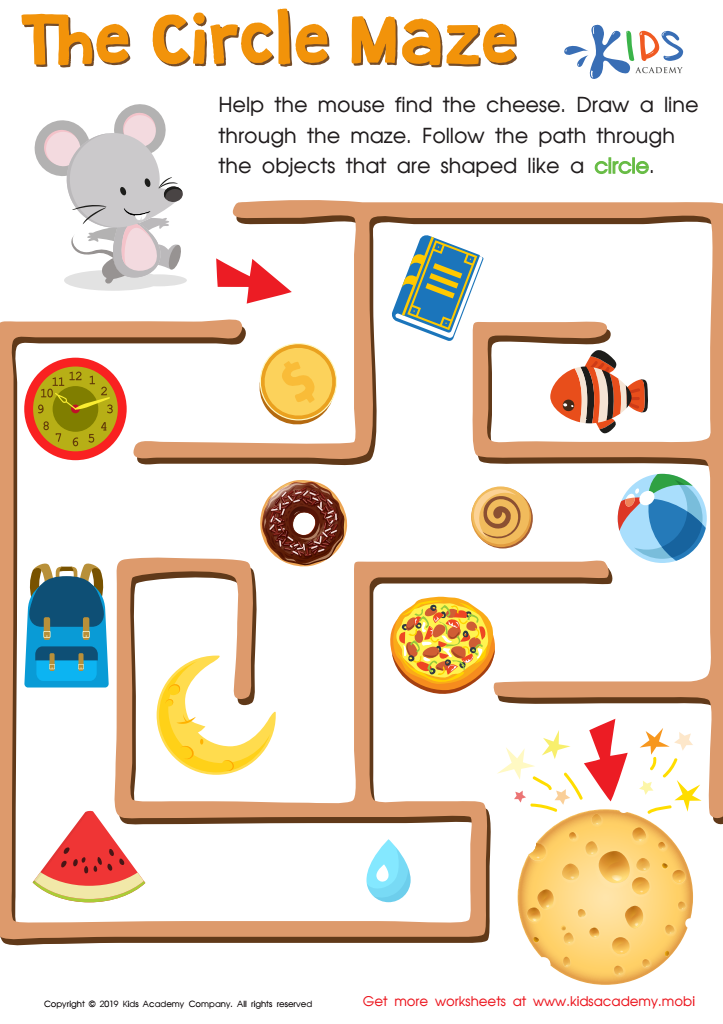
The Circle Maze Worksheet
The Circle Maze Worksheet
Kids can have fun learning shapes with this maze worksheet. They can help the mouse find its cheese by tracing the path of a circle through the maze. This printable is great for classroom learning or as an activity at home.
The Circle Maze Worksheet
Worksheet
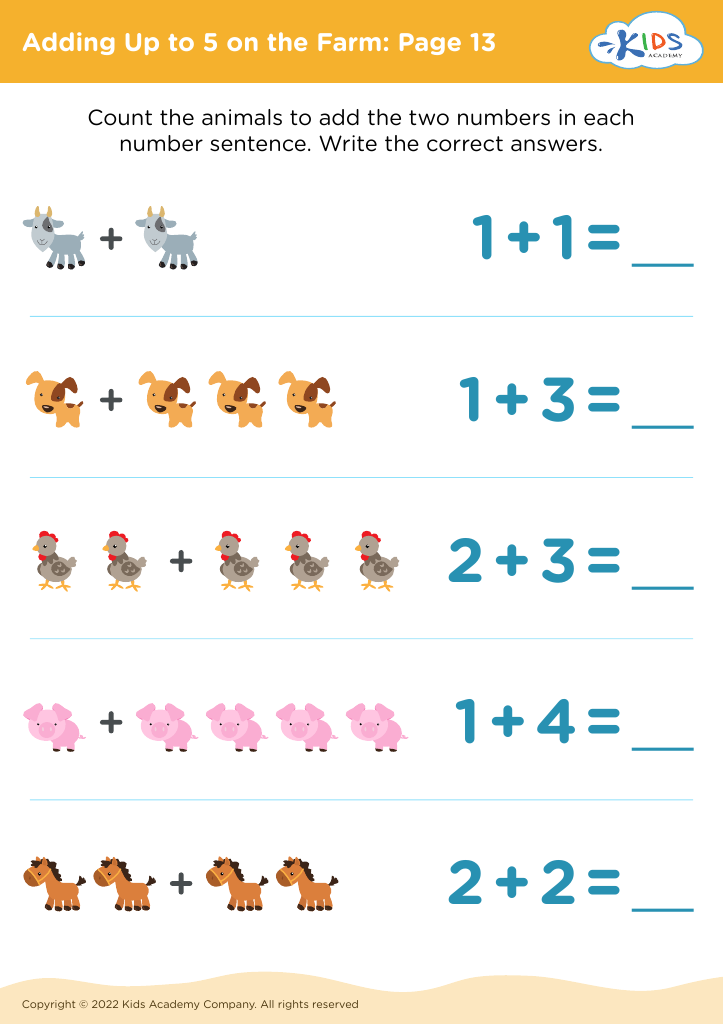
Adding Up to 5 on the Farm: Page 13
Worksheet
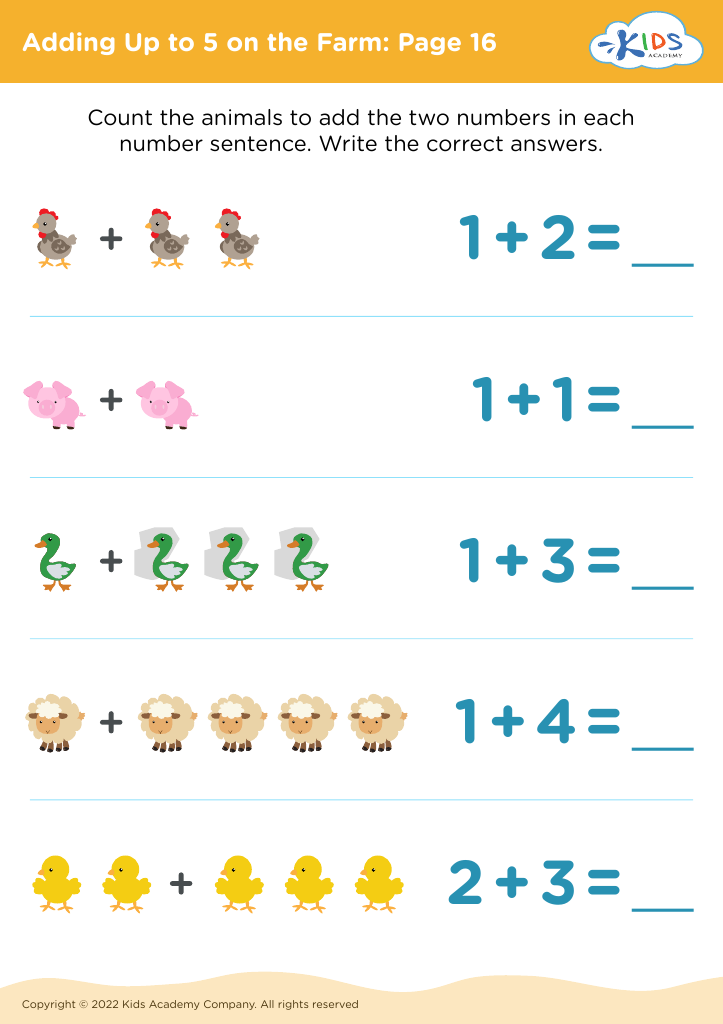
Adding Up to 5 on the Farm: Page 16
Worksheet
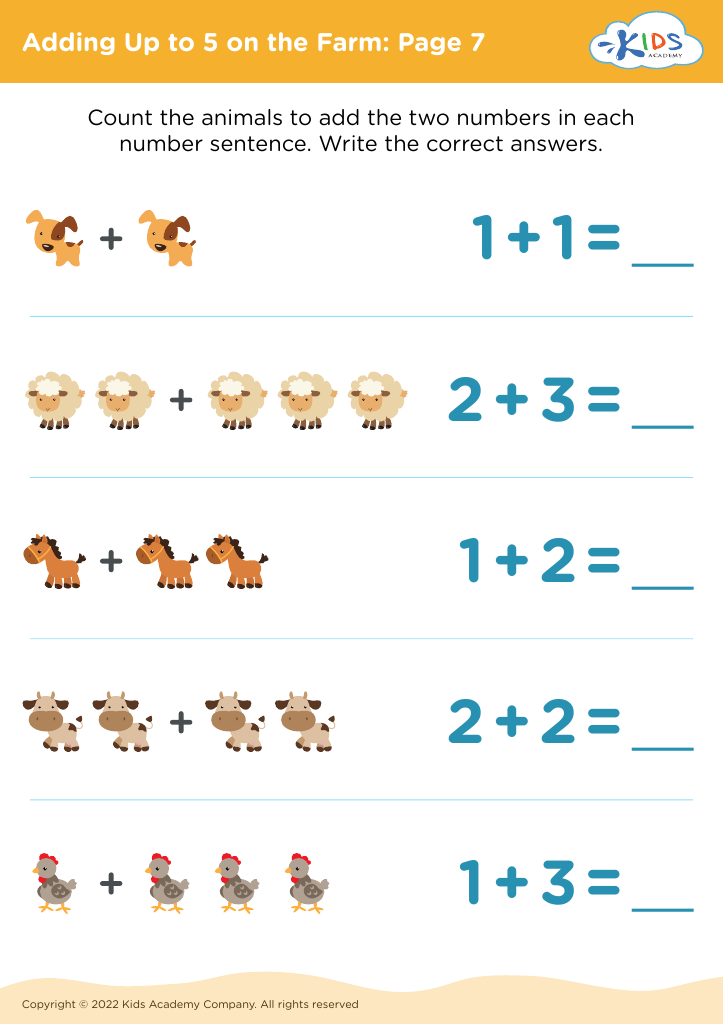
Adding Up to 5 on the Farm: Page 7
Worksheet
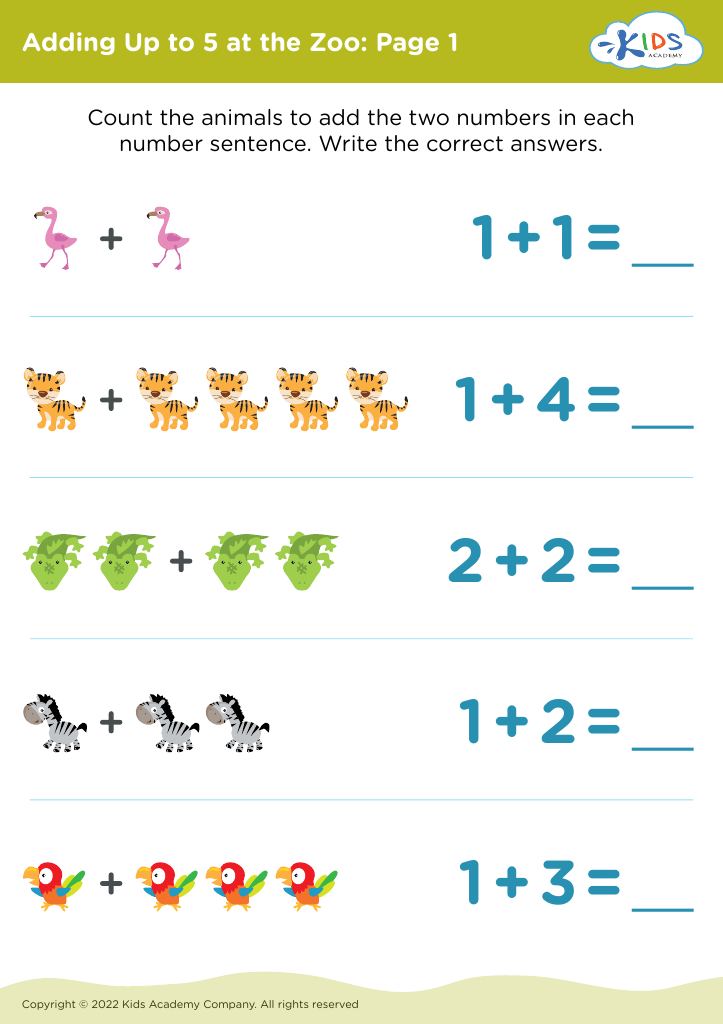
Adding Up to 5 at the Zoo: Page 1

Adding Up to 5 at the Zoo: Page 1

Adding Up to 5 at the Zoo: Page 1
Worksheet
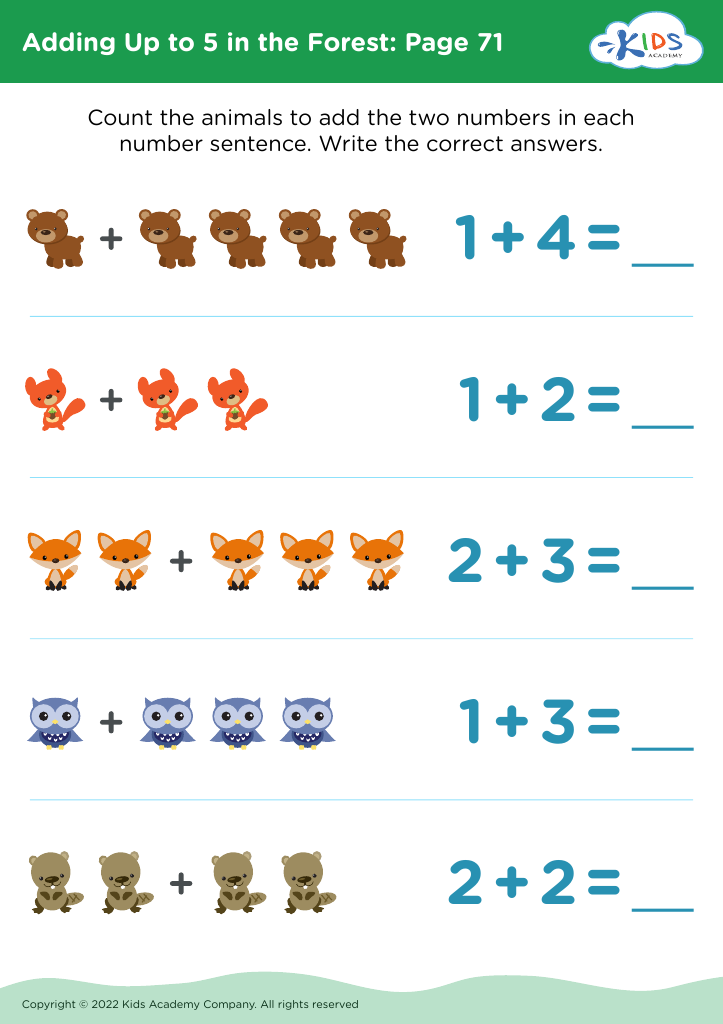
Adding Up to 5 in the Forest: Page 71
Worksheet
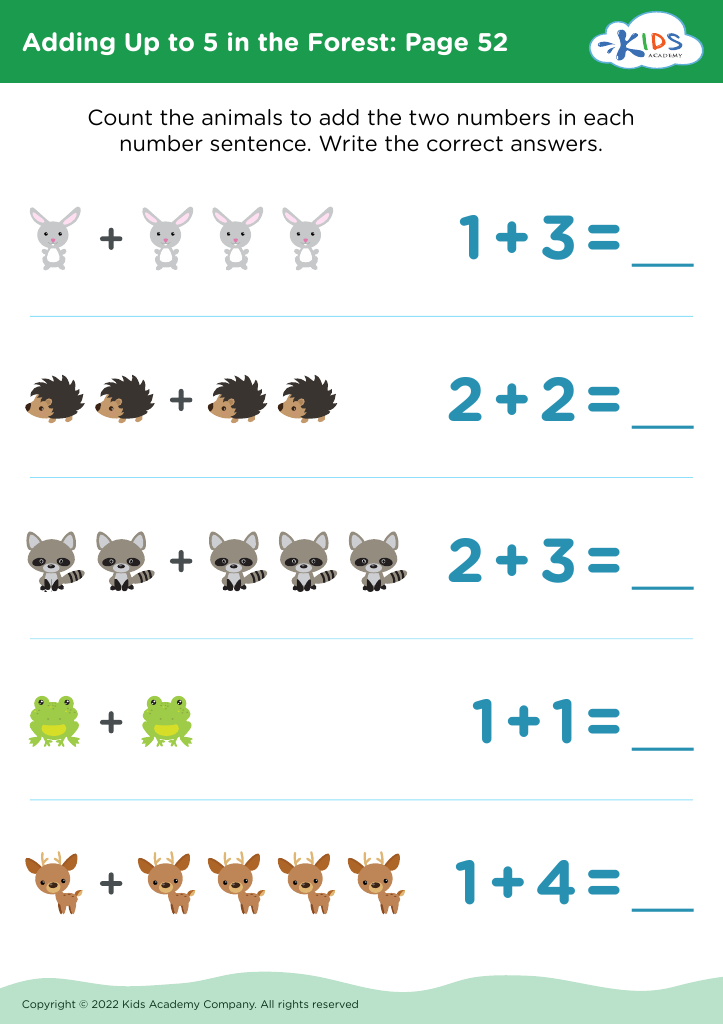
Adding Up to 5 in the Forest: Page 52
Worksheet
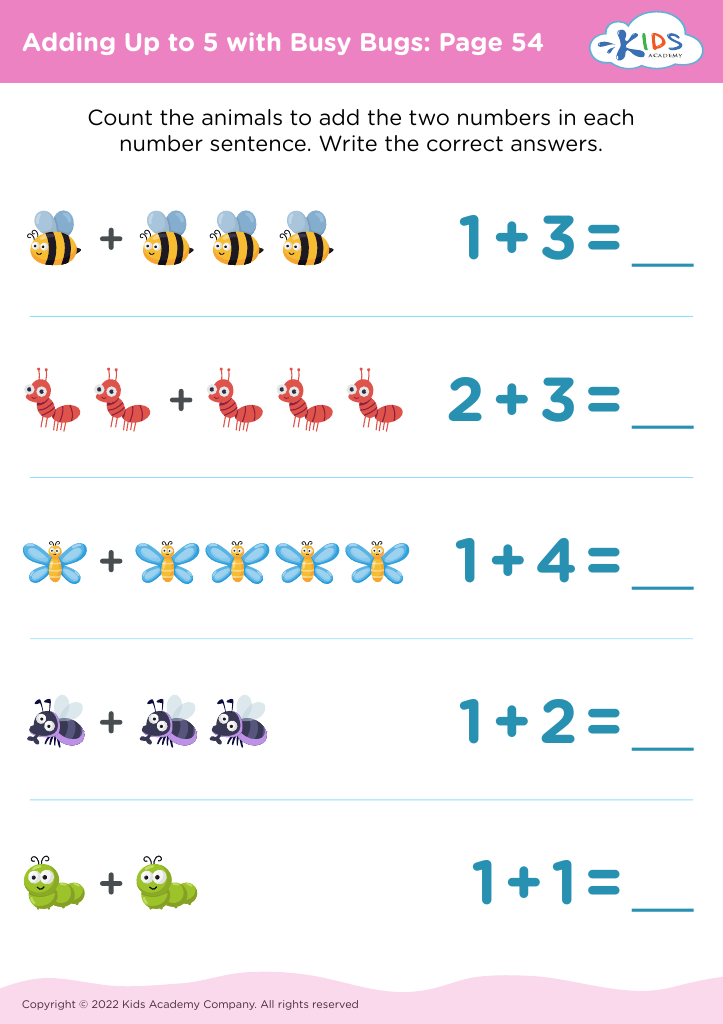
Adding Up to 5 with Busy Bugs: Page 54
Worksheet
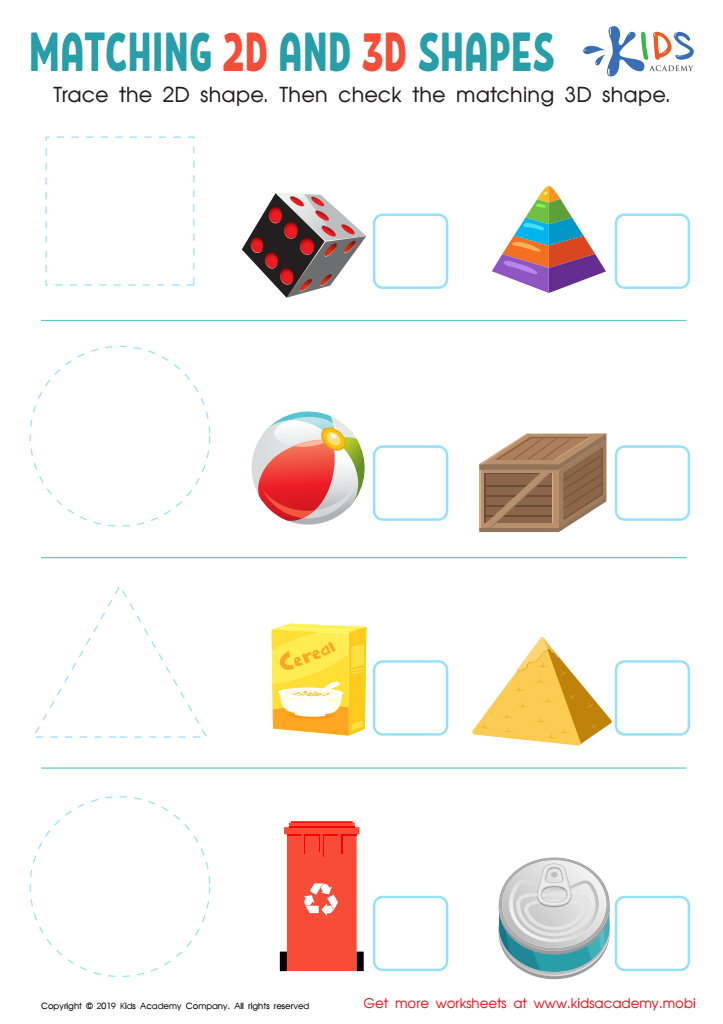
Matching 2D and 3D Shapes Worksheet
Matching 2D and 3D Shapes Worksheet
Before starting this worksheet, ask your kids what shapes they know and point out the 2D and 3D shapes on it. Help your kids trace the 2D shapes and then match them to the 3D versions. It'll be a fun new world for your kids to explore!
Matching 2D and 3D Shapes Worksheet
Worksheet
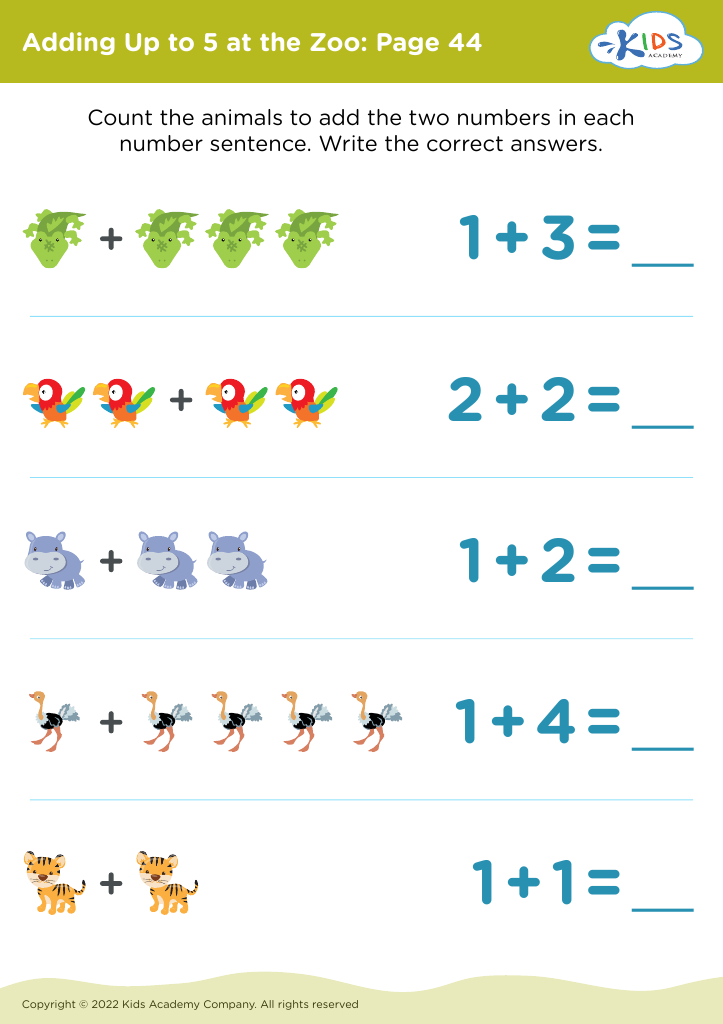
Adding Up to 5 at the Zoo: Page 44
Worksheet
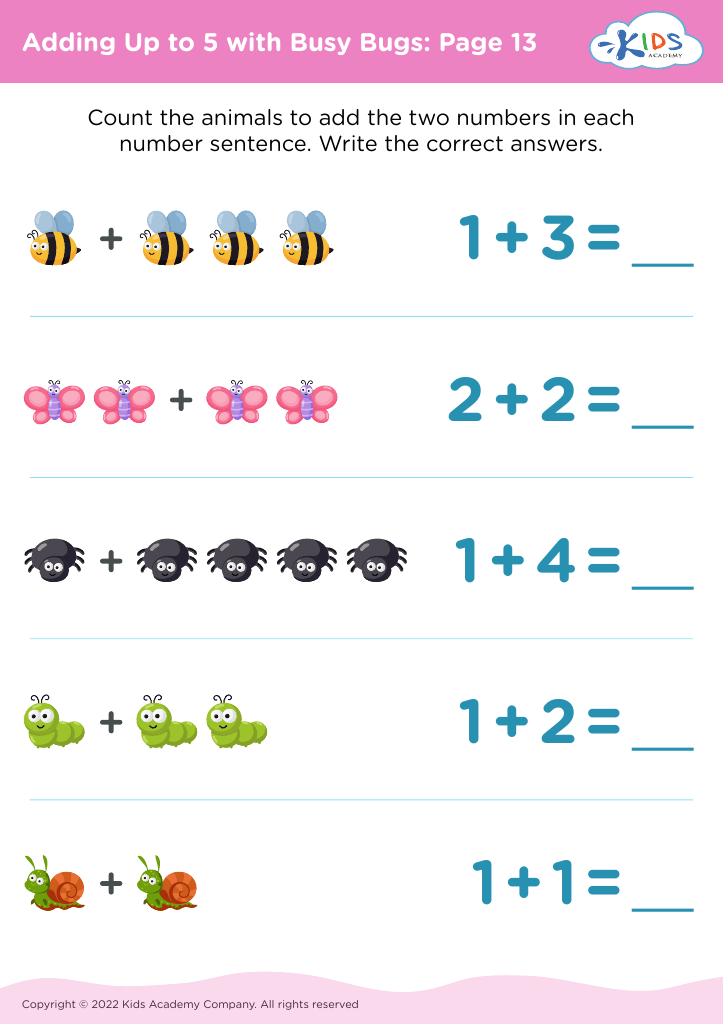
Adding Up to 5 with Busy Bugs: Page 13
Worksheet
Matching Shapes Worksheet
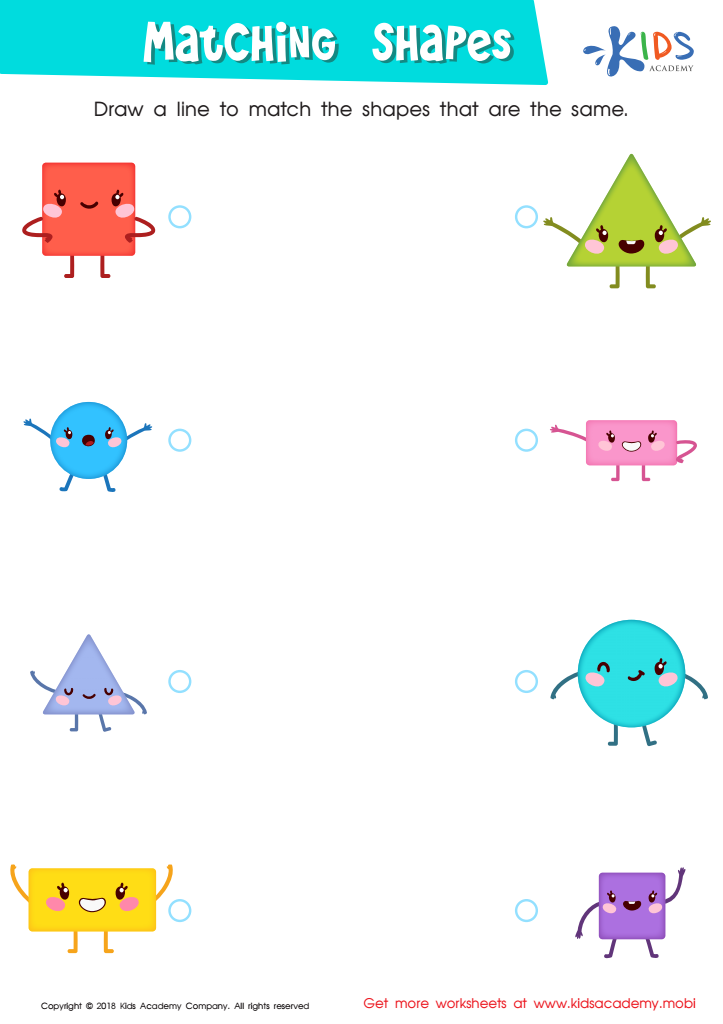
Matching Shapes Worksheet
Introduce your students to the 4 most common shapes: squares, triangles, rectangles and circles. When they progress, show them other shapes like rhombuses and parallelograms. Use this matching shapes worksheet to help them match two identical shapes. Print out the worksheet and instruct them to draw lines connecting them.
Matching Shapes Worksheet
Worksheet
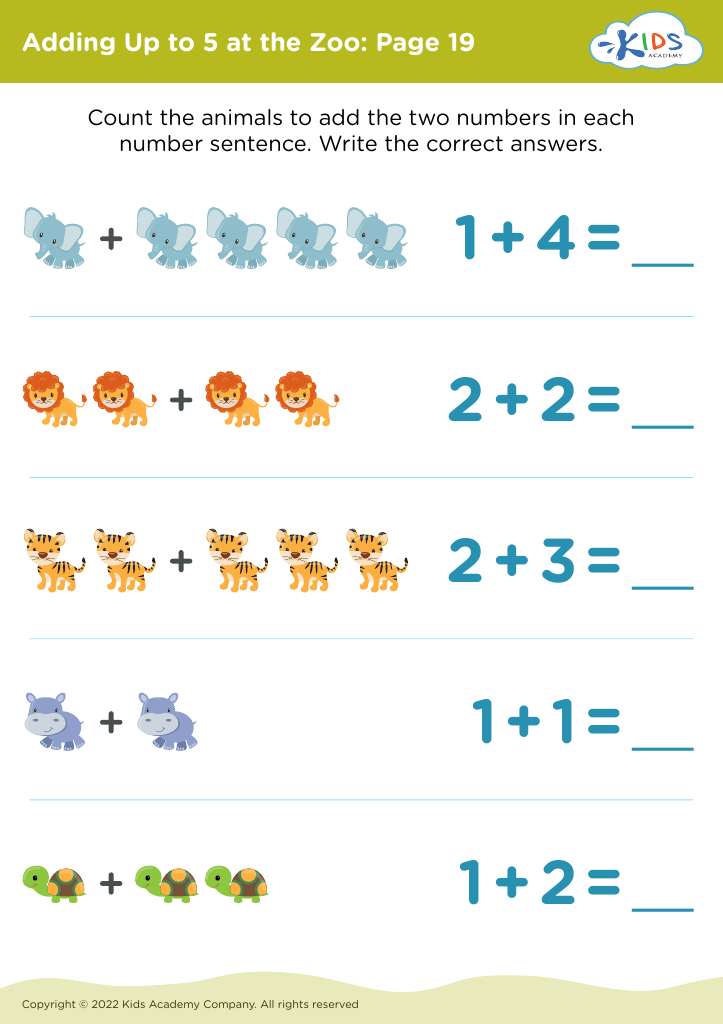
Adding Up to 5 at the Zoo: Page 19
Worksheet
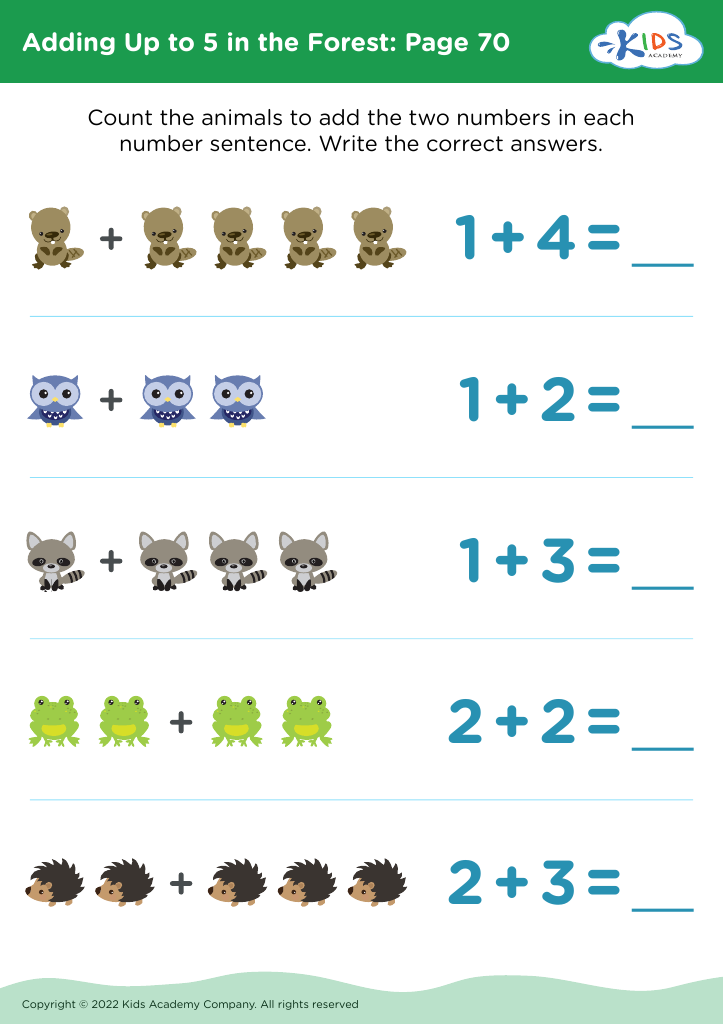
Adding Up to 5 in the Forest: Page 70
Worksheet
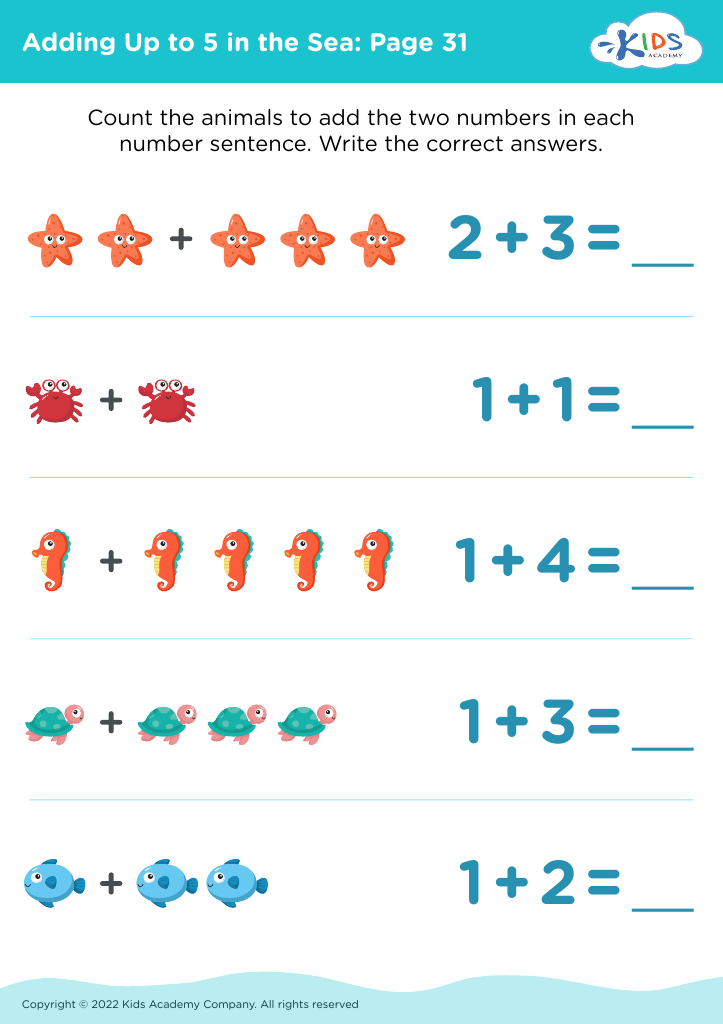
Adding Up to 5 in the Sea: Page 31
Worksheet
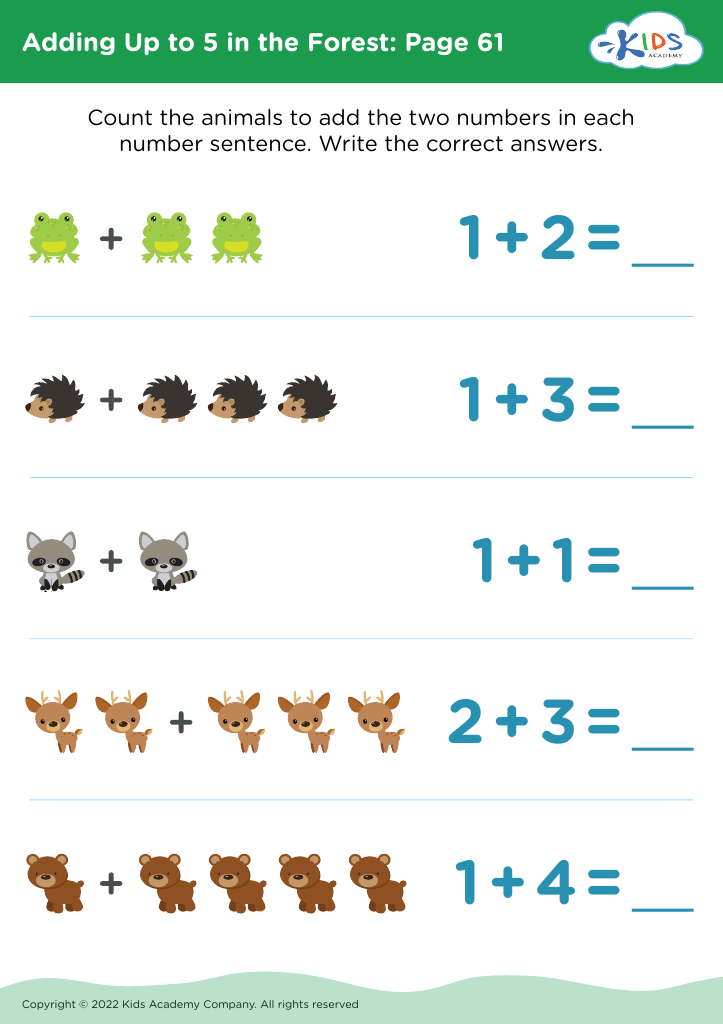
Adding Up to 5 in the Forest: Page 61
Worksheet
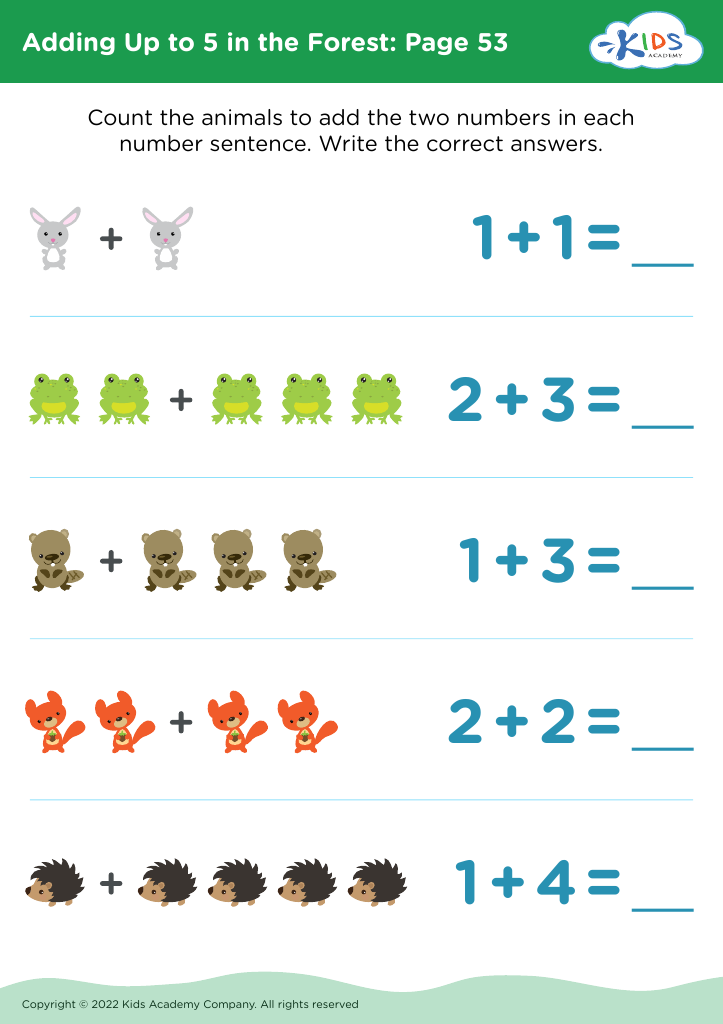
Adding Up to 5 in the Forest: Page 53
Worksheet
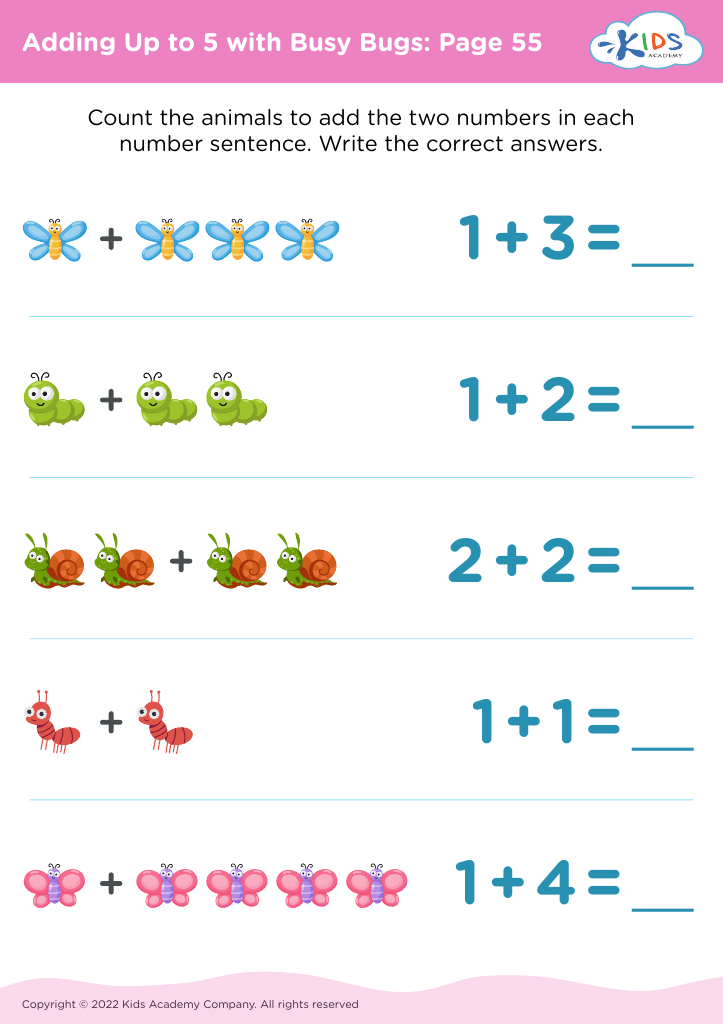
Adding Up to 5 with Busy Bugs: Page 55
Worksheet
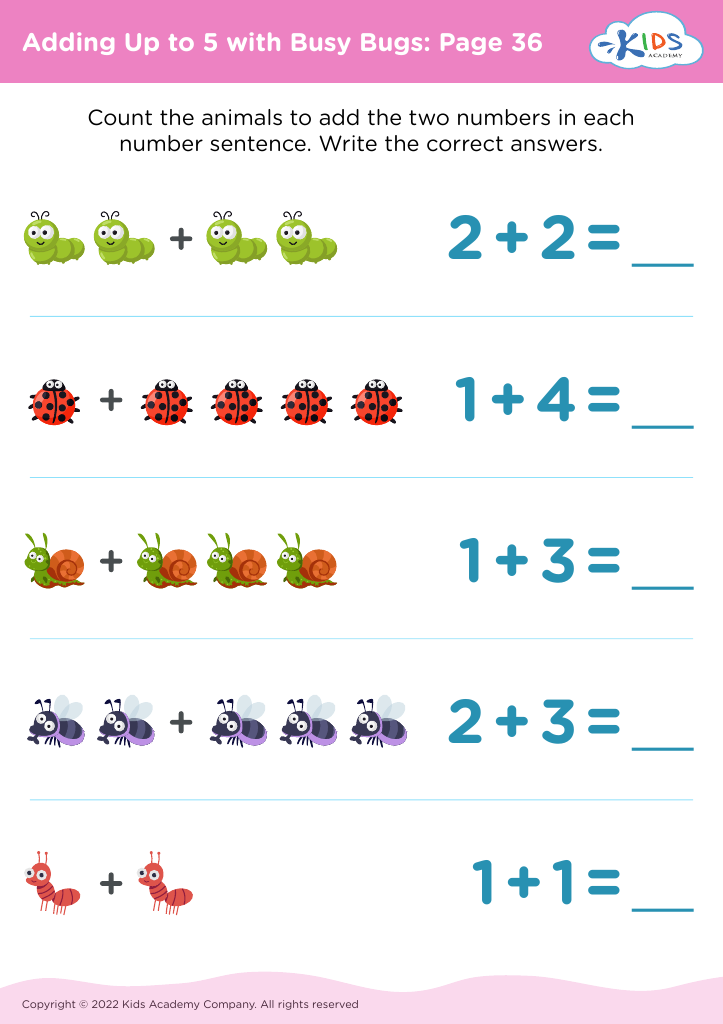
Adding Up to 5 with Busy Bugs: Page 36
Worksheet
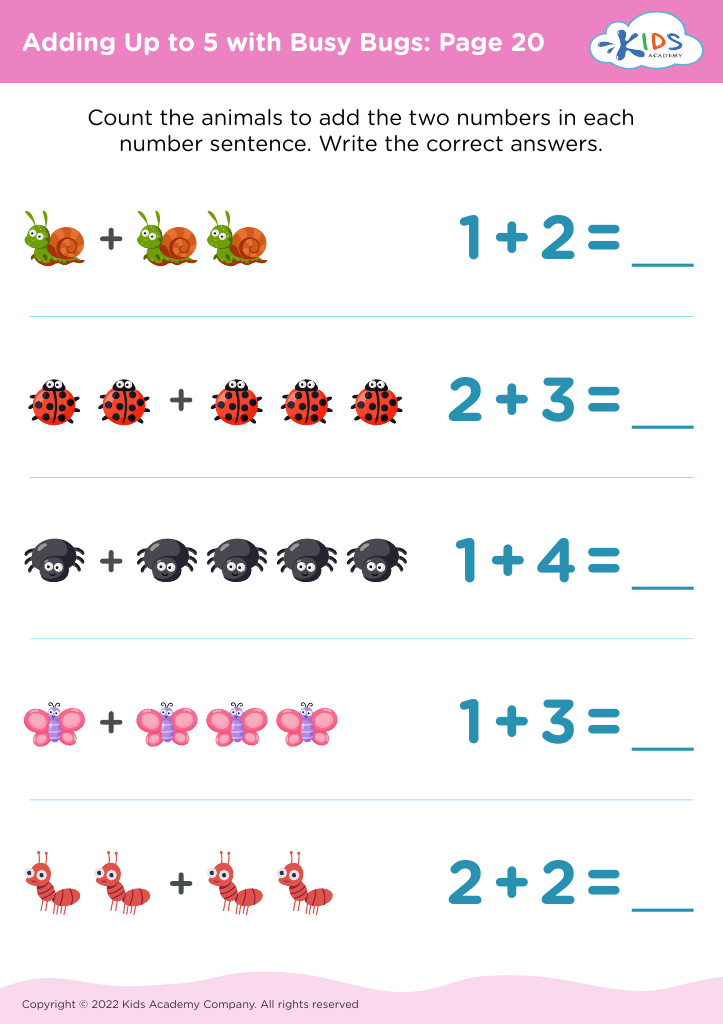
Adding Up to 5 with Busy Bugs: Page 20
Worksheet
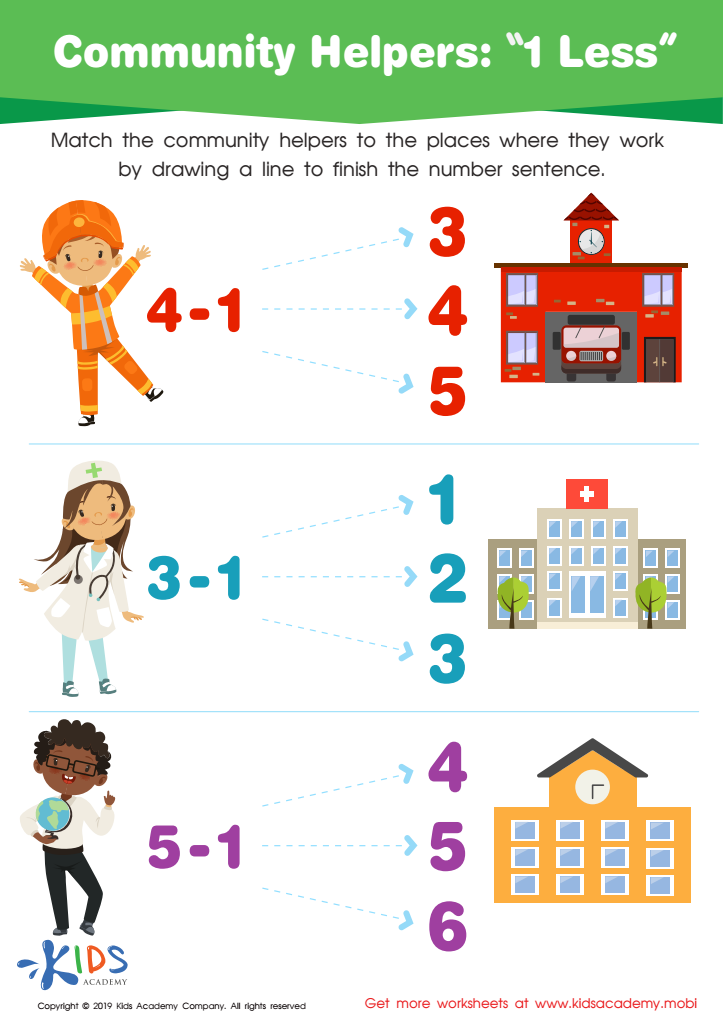
Community Helpers: 1 less Worksheet


Community Helpers: 1 less Worksheet

Look at this worksheet with your child and ask them to identify the different community helpers. Match them to the places where they work by drawing a line to finish the number sentence. This helps them identify the people that help keep the community organized and running smoothly. Examples of community helpers include doctors, police officers, firefighters, teachers, etc.
Community Helpers: 1 less Worksheet

Worksheet


Cognitive development in math for children ages 3-9 is crucial as it lays the foundation for their logical thinking, problem-solving abilities, and future academic success. During these formative years, children’s brains are exceptionally receptive, making it an optimal period for learning basic mathematical concepts such as counting, sorting, recognizing patterns, and understanding shapes.

Engaging kids in math activities from an early age enhances their number sense, which is the fundamental ability to understand and work with numbers. This not only prepares them for more complex math in later grades, but also improves their critical thinking and reasoning skills. For example, simple tasks like sorting objects by size or color help develop categorization skills and reasoning, while playing with building blocks introduces them to spatial awareness.

Moreover, early math skills are strongly correlated with later academic achievement, not just in mathematics but in other subjects as well. By fostering a positive and fun experience with math early on, parents and teachers can build confidence and reduce math anxiety. This creates a solid and enthusiastic attitude toward learning, ensuring that children are not left behind in a subject that is pivotal for their long-term educational development and everyday life skills.

In essence, prioritizing cognitive development in math for young children is not just about learning numbers. It’s about nurturing a comprehensive skill set that supports their growth as innovative thinkers and capable learners.