Understanding subtraction Math Worksheets for Ages 3-9
19 filtered results
-
From - To
Dive into the world of numbers with our "Understanding Subtraction Math Worksheets for Ages 3-9". Tailored specifically for young learners, these engaging worksheets from Kids Academy make mastering subtraction an exciting journey. Designed to build foundational math skills, each worksheet offers a variety of fun, interactive exercises that cater to different learning styles. Whether it's through colorful visuals, stories, or number games, children build subtraction skills progressively and confidently. Ideal for complementing classroom learning or for practice at home, these resources ensure that understanding subtraction is both enjoyable and educational for kids ages 3 to 9.
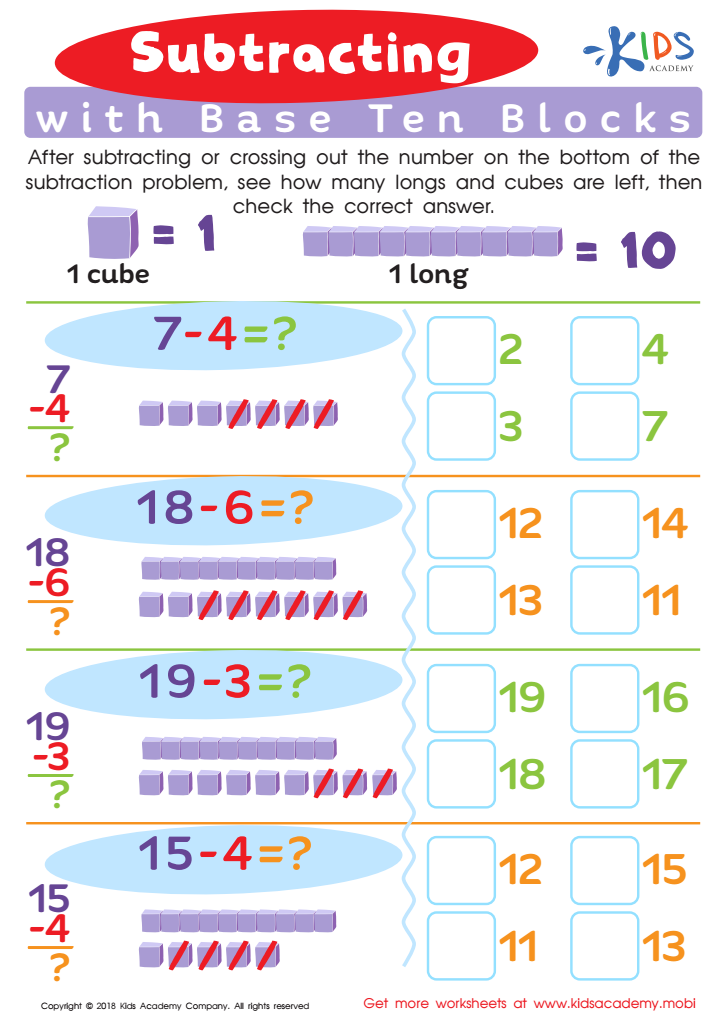
Subtracting With Base 10 Blocks Worksheet
 Assign to My Students
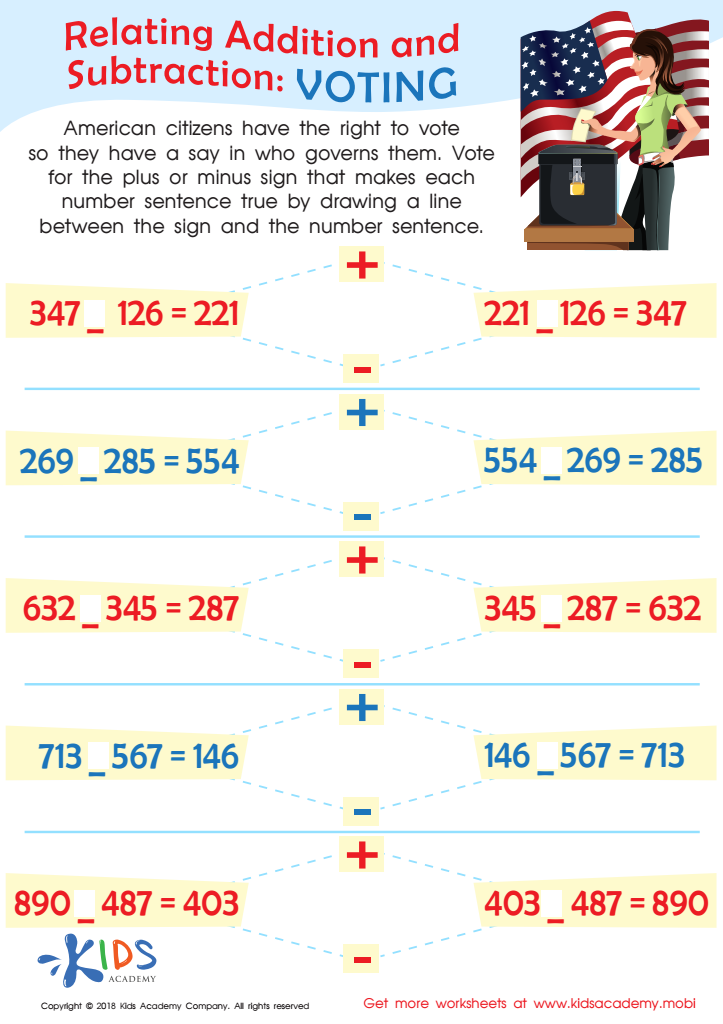
Voting Worksheet
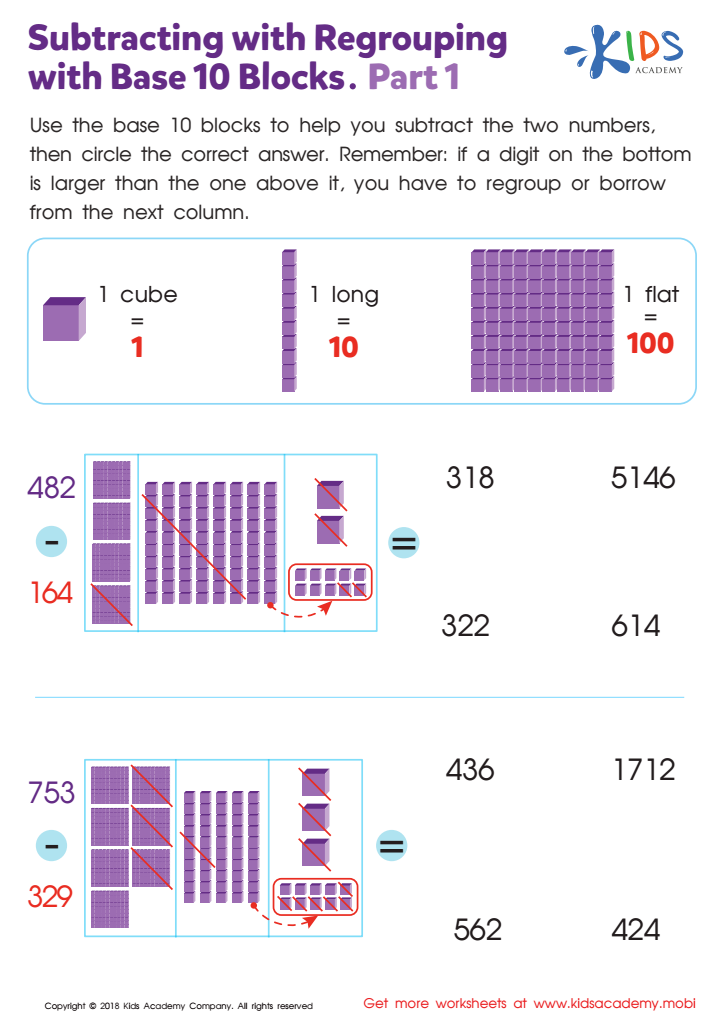
Subtracting with Regrouping with Base 10 Blocks. Part1 Worksheet
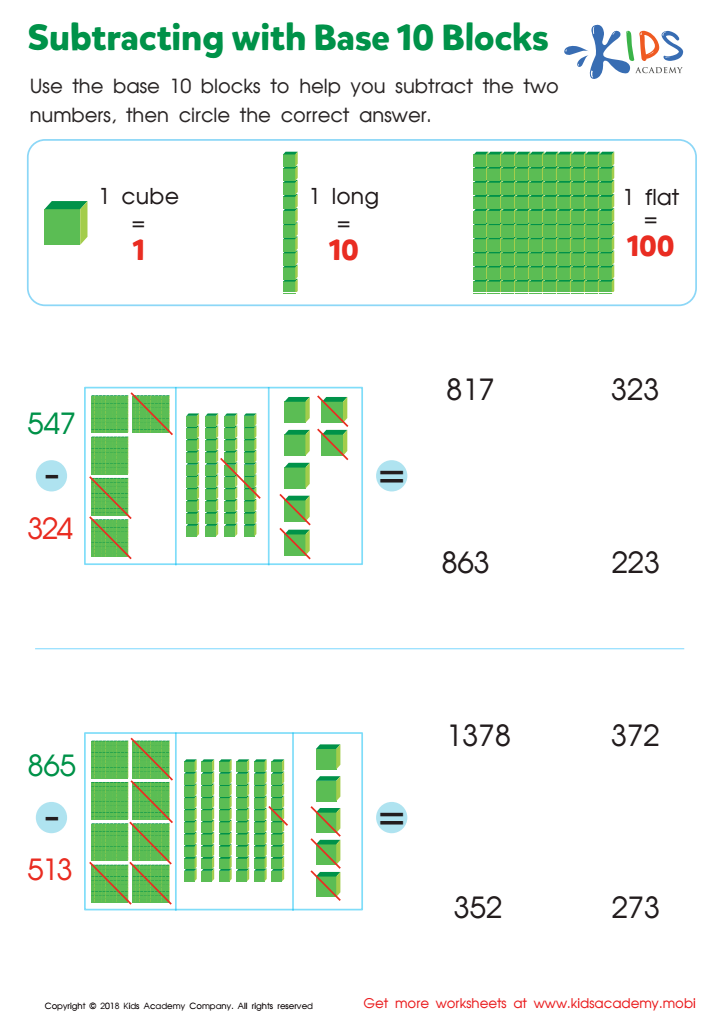
Subtracting with Base 10 Blocks Worksheet
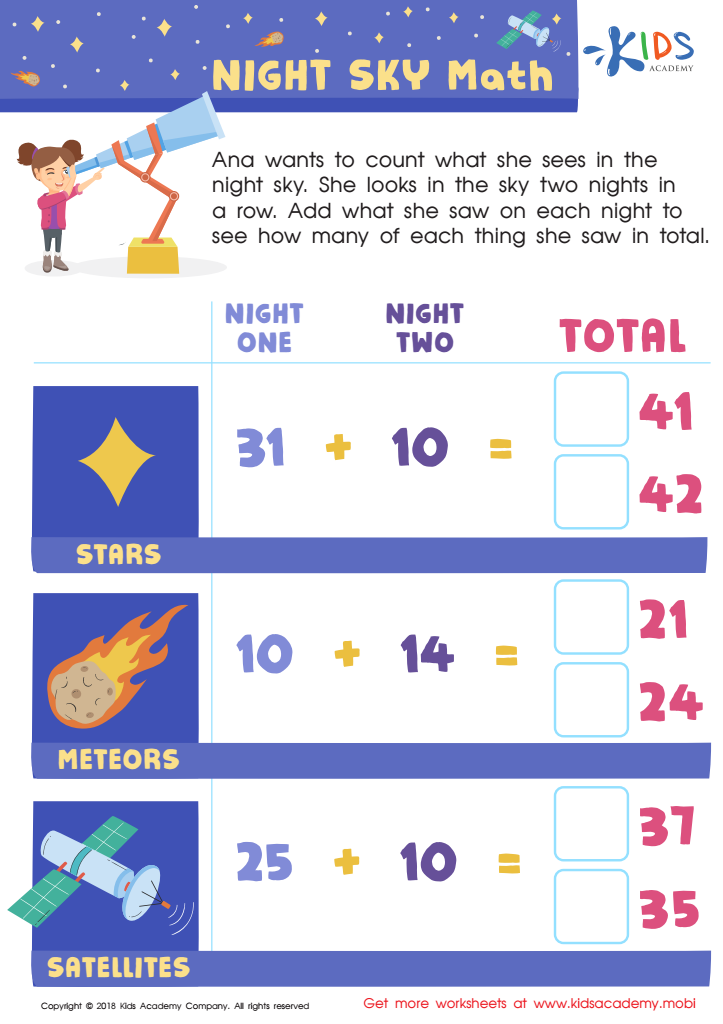
Night Sky Math Worksheet
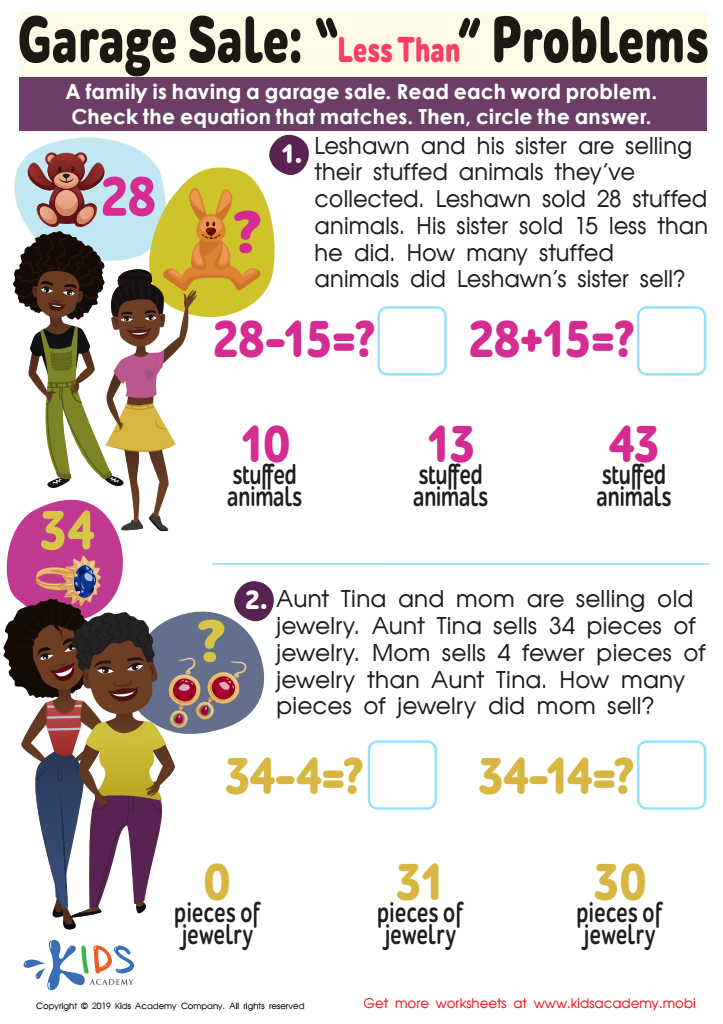
Garage Sale Less Than Worksheet
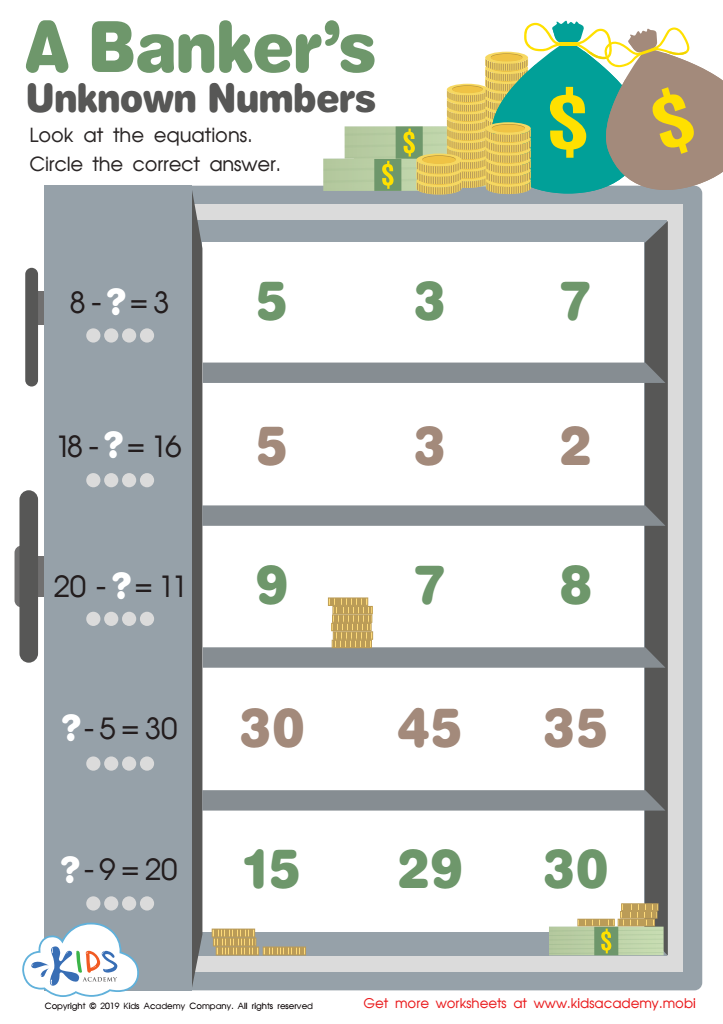
A Banker's Unknown Numbers Worksheet
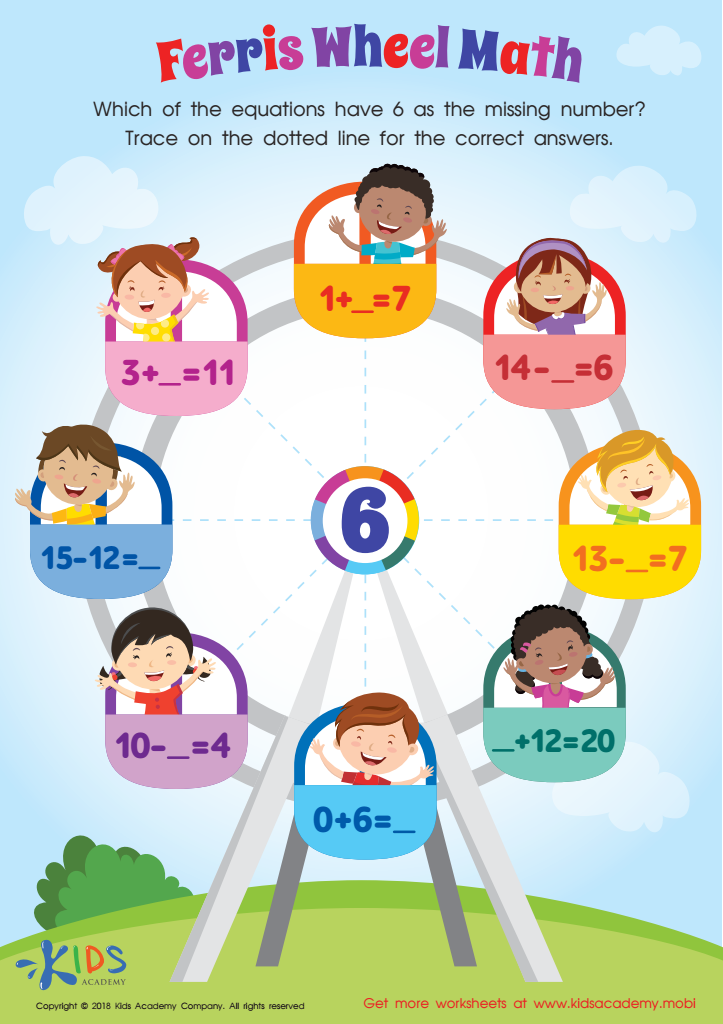
Missing Number: Ferris Wheel Math Worksheet
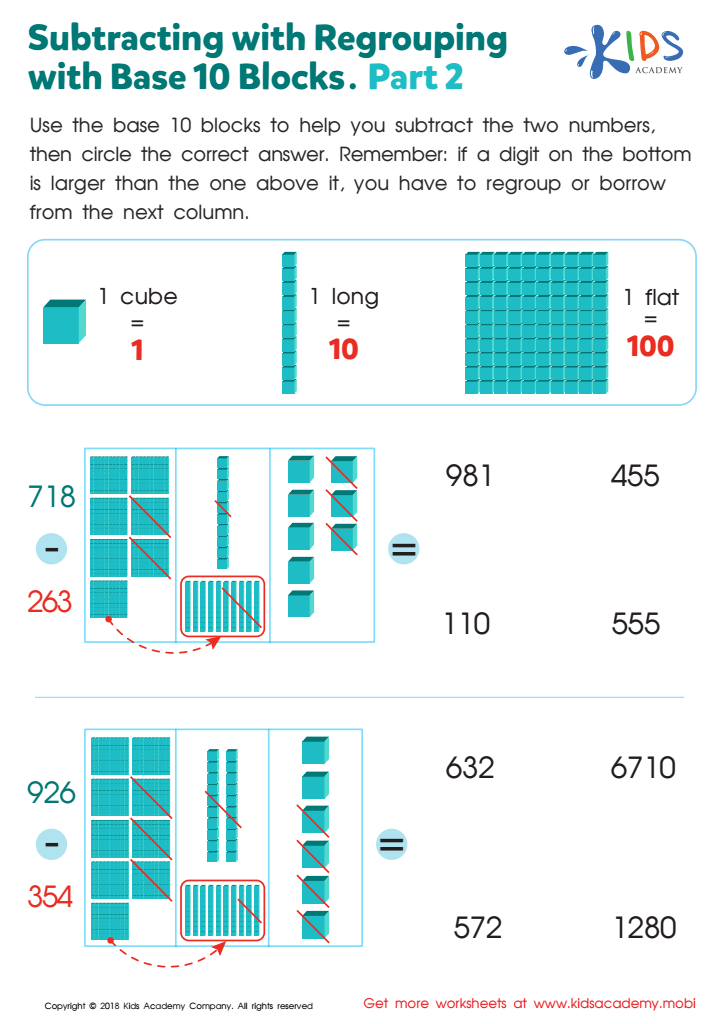
Subtracting with Regrouping with Base 10 Blocks. Part 2 Worksheet
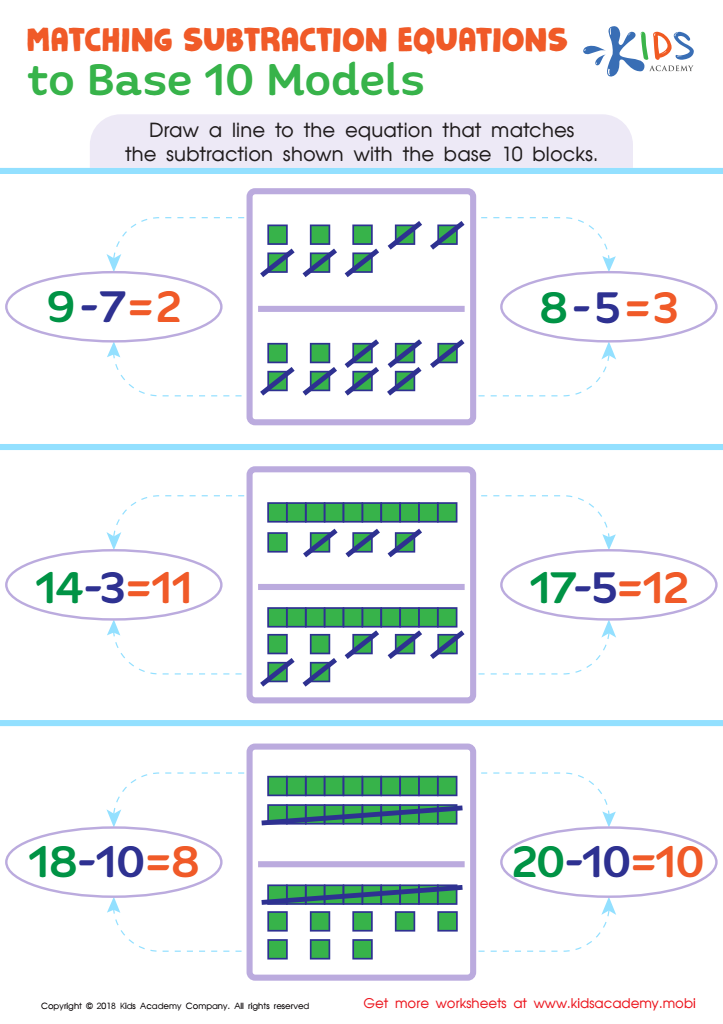
Matching Subtraction Equations To Base 10 Models Worksheet
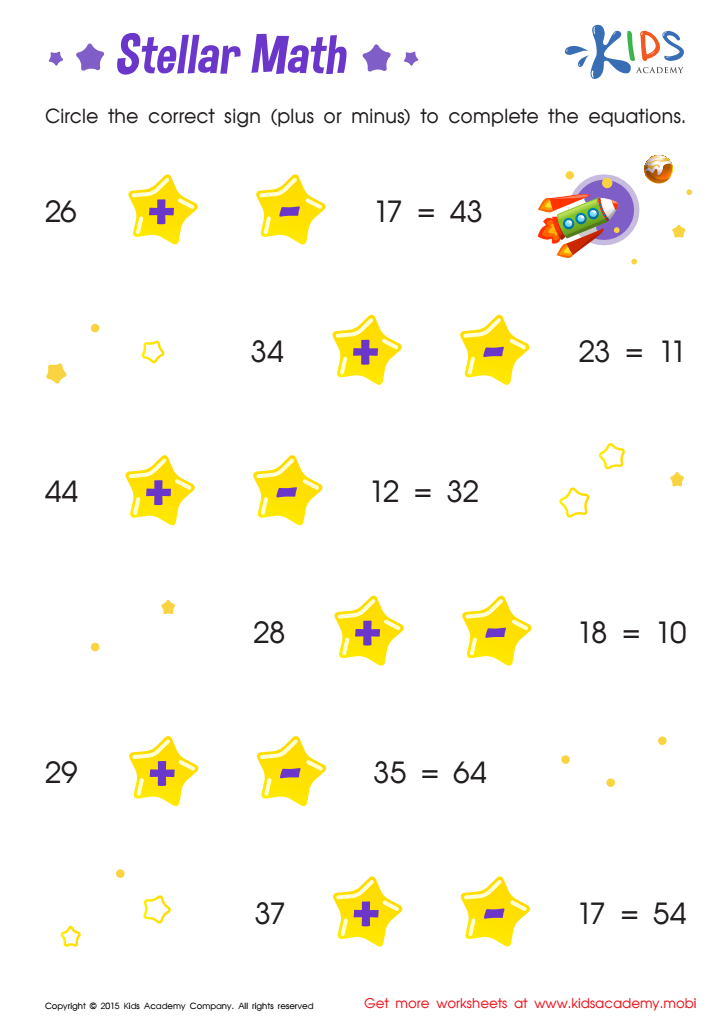
Stellar Math Substraction Worksheet
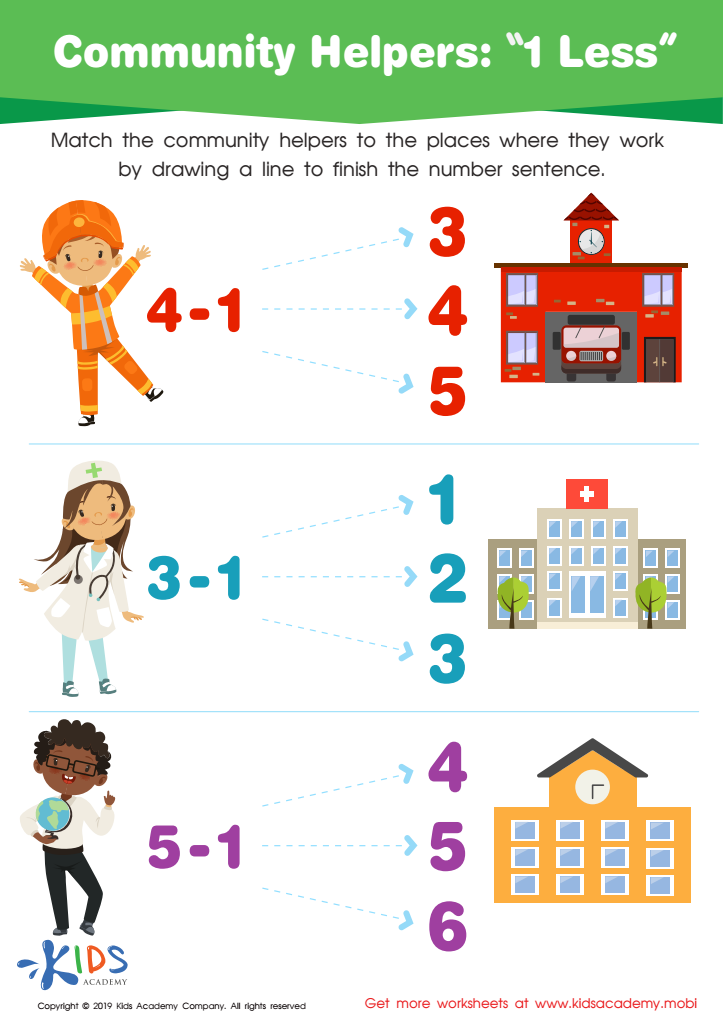
Community Helpers: 1 less Worksheet
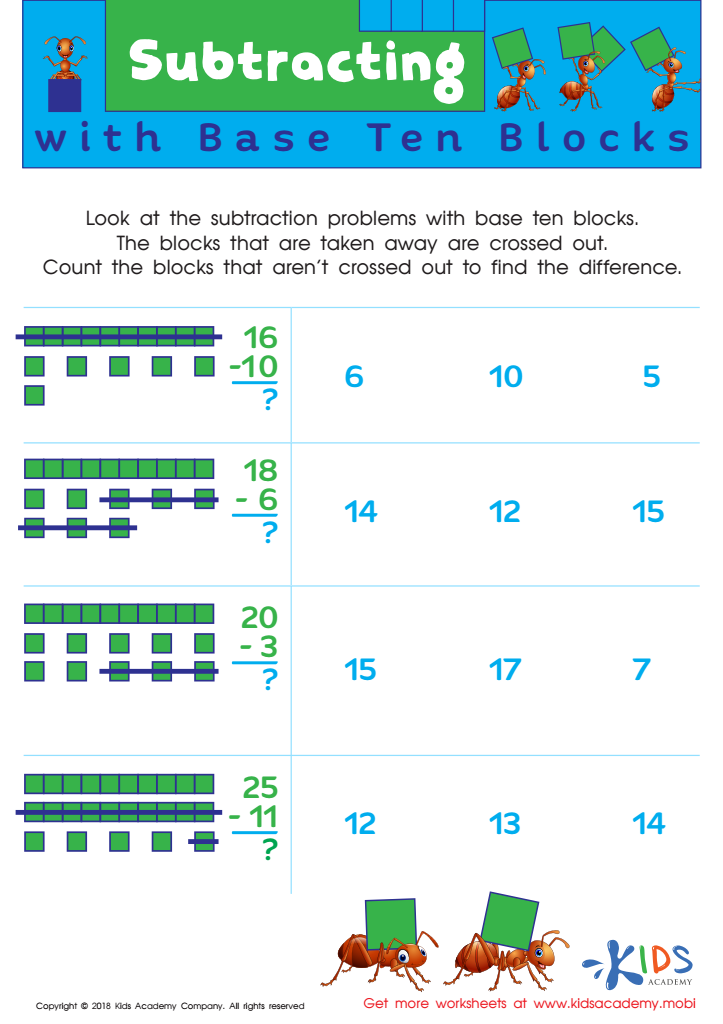
Subtracting with Base Blocks Worksheet
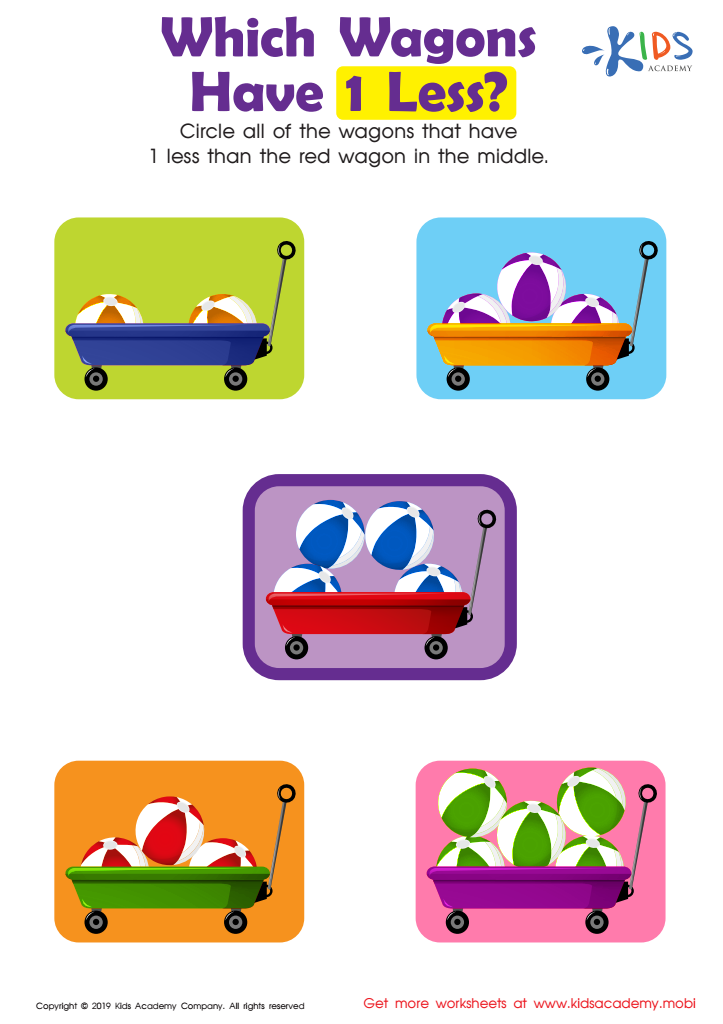
Which Wagons Have 1 Less? Worksheet
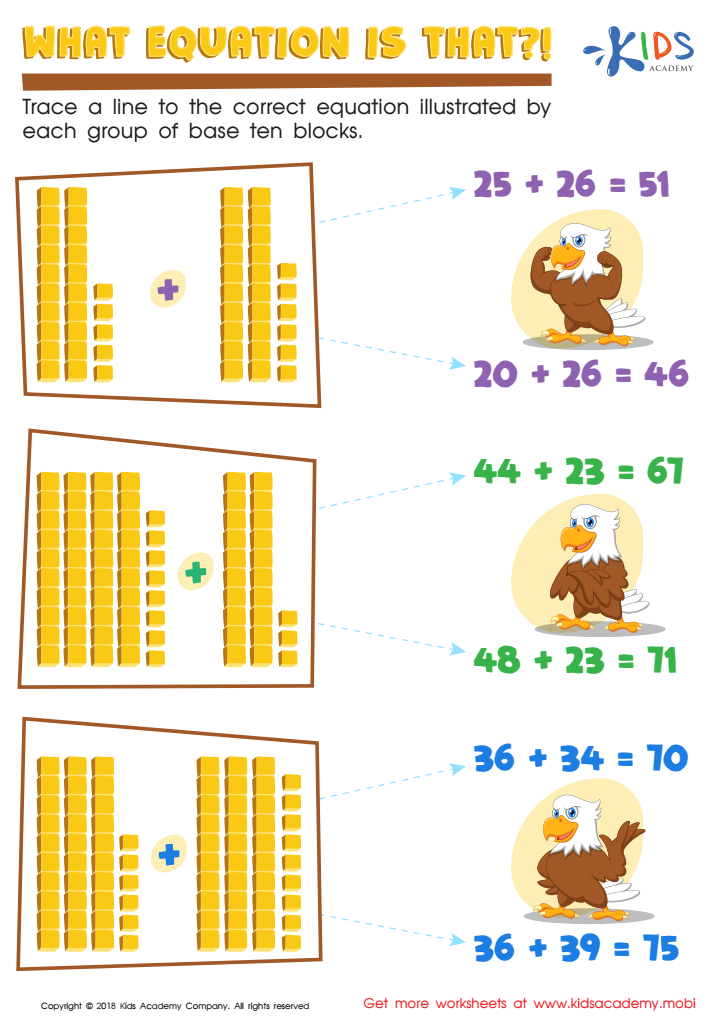
What Equation Is That? Worksheet
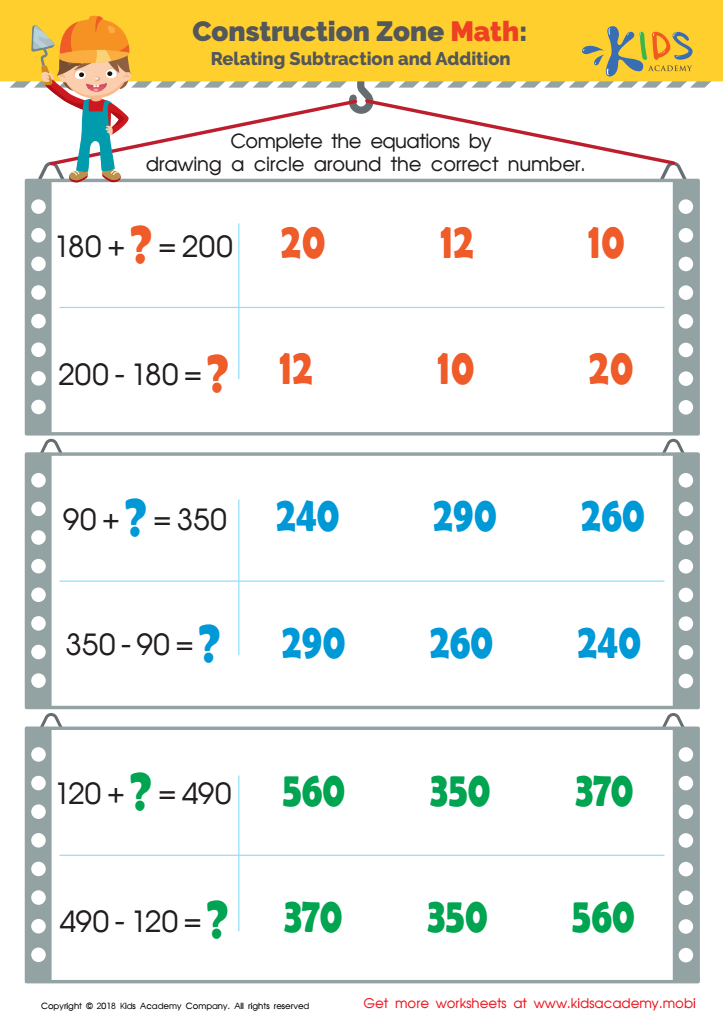
Construction Zone Math: Relating Subtraction and Addition Worksheet
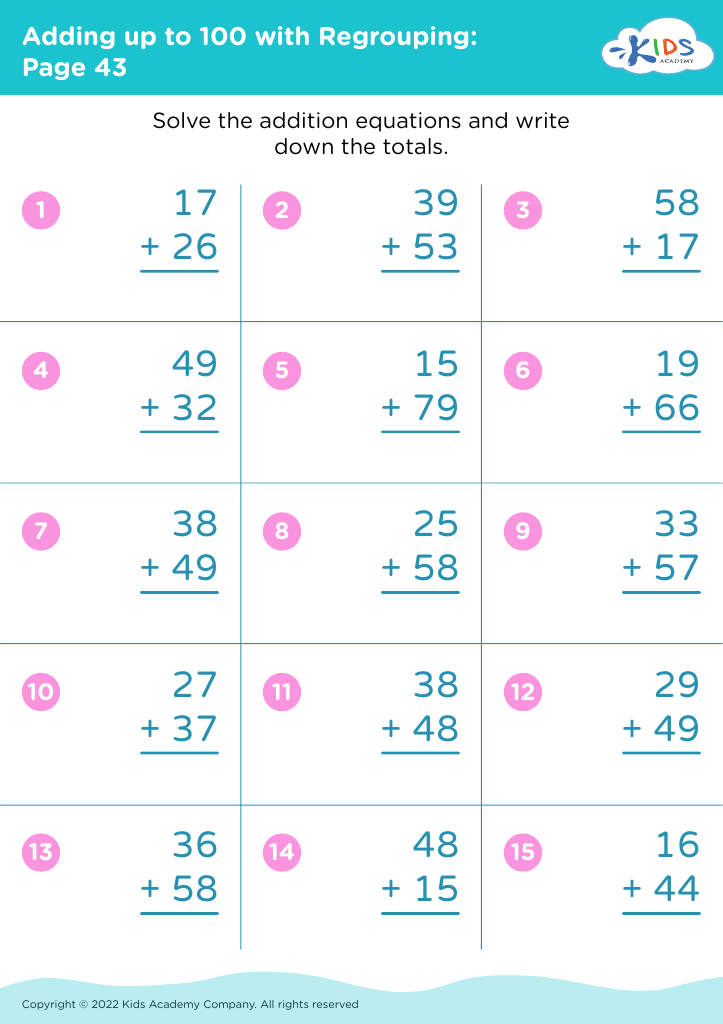








Understanding subtraction is crucial for children aged 3-9 because it lays the foundation for advanced mathematical concepts and real-life problem-solving skills. During these early years, children's brains are highly receptive to new information, making it the optimal time to develop a strong mathematical base.
First, mastering subtraction helps build numerical literacy. Knowing how to take away objects or quantities enables children to grasp the concept of "less than," aiding their understanding of value, quantity, and size. This fundamental skill is not only essential for more complex arithmetic but also practical for everyday situations like sharing, measuring, and saving money.
Second, subtraction promotes cognitive development by encouraging logical reasoning, critical thinking, and the ability to recognize patterns. When children practice subtraction, they learn to analyze problems, decide how to approach them, and determine the most efficient solutions.
Furthermore, subtraction skills enhance children's confidence in math, positively impacting their overall academic success. Young learners who develop a strong mathematical foundation are more likely to approach new challenges with a positive attitude and persistence.
Therefore, parents and teachers should focus on teaching subtraction through engaging, hands-on activities and real-world examples. By doing so, they provide children with valuable tools that will benefit them both academically and in their daily lives.








