Categorization skills Matching Worksheets for Ages 3-9
6 filtered results
-
From - To
Enhance your child's early learning experience with our engaging Categorization Skills Matching Worksheets, designed for ages 3-9. These interactive worksheets encourage critical thinking and fine motor skills as children learn to sort and classify objects based on attributes like size, color, and shape. Our visually appealing activities promote independence and provide an enjoyable way to practice vital skills that lay the foundation for more advanced concepts. Perfect for homeschool settings or supplementary classroom activities, these worksheets foster cognitive development through play. Download your free worksheets today and watch your child thrive in a fun, educational environment!
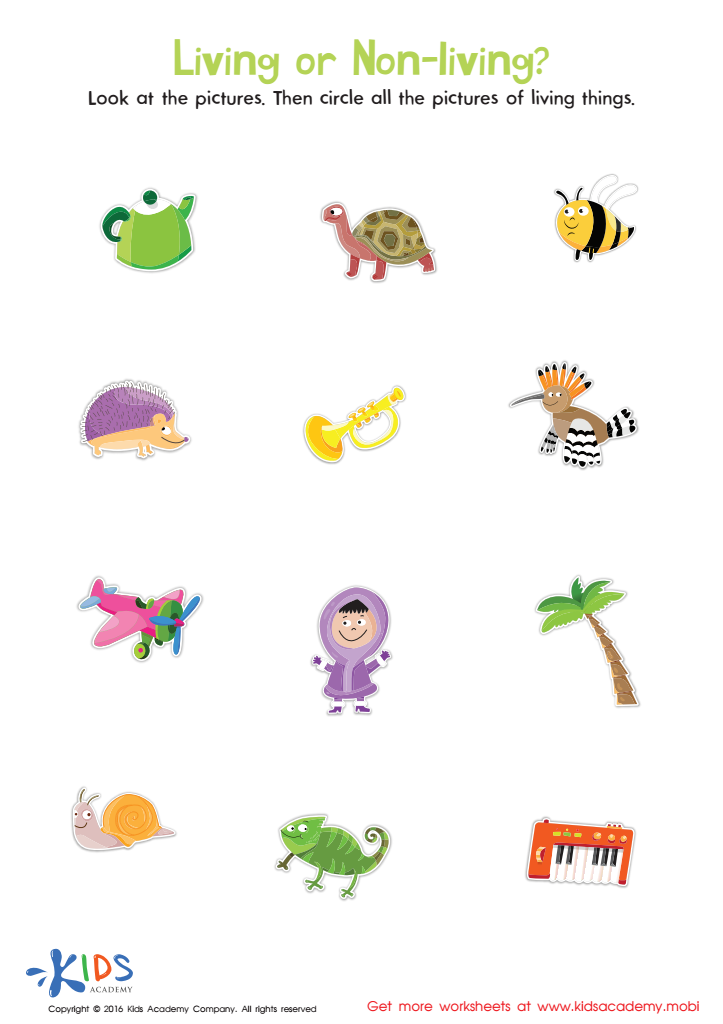
Identifying Living and Non–living Things Sorting Worksheet
 Assign to My Students
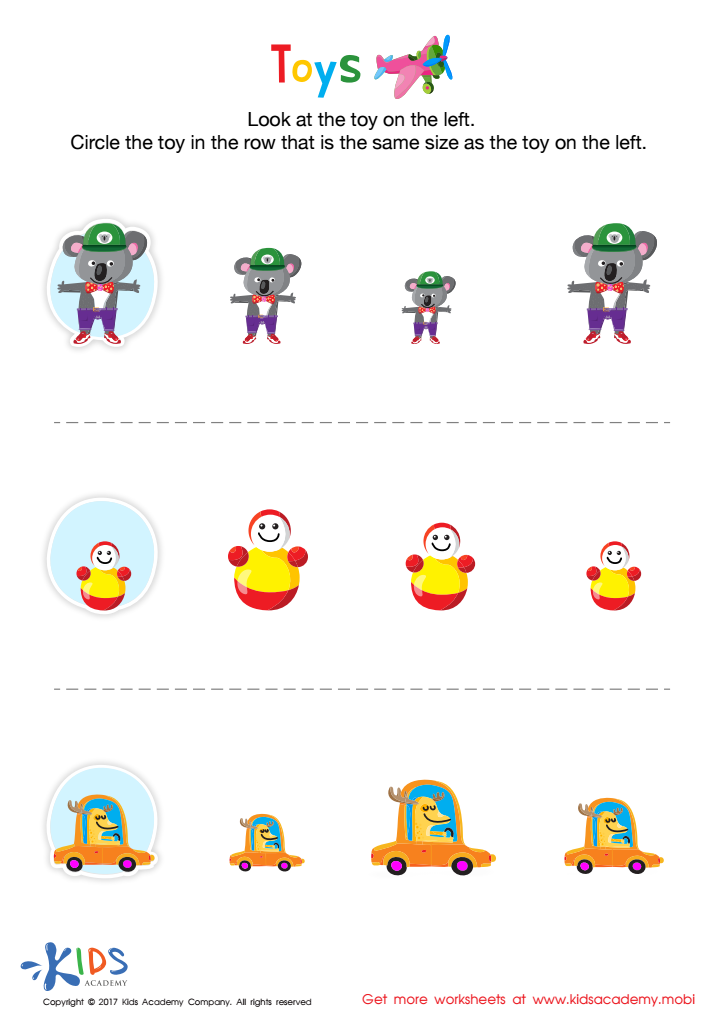
Matching: Classifying Toys by Size Worksheet
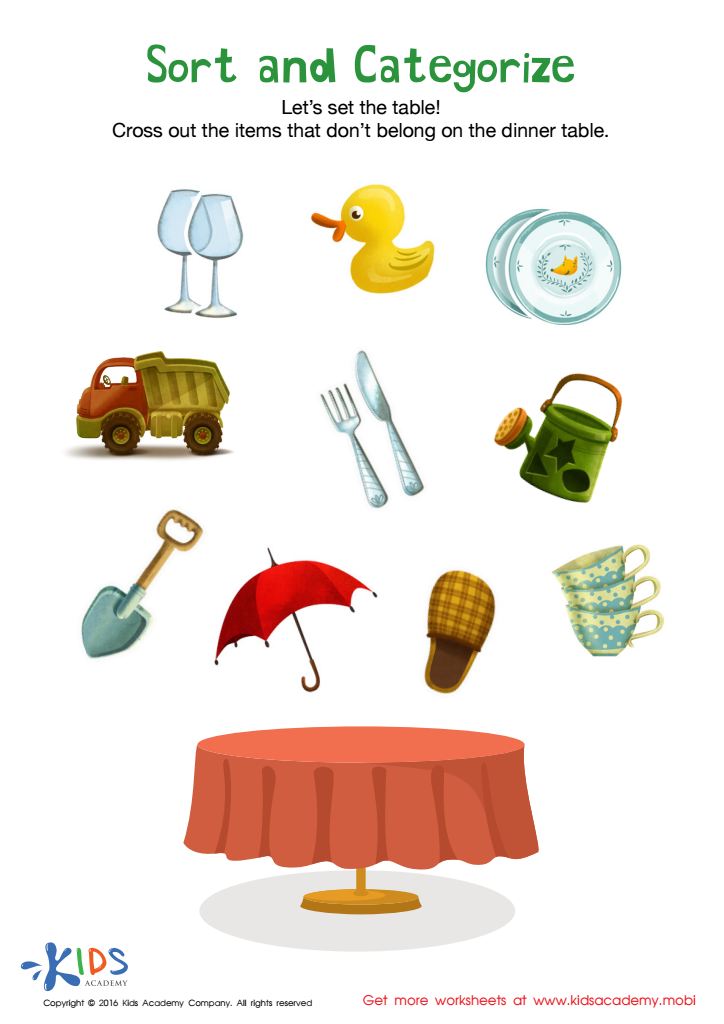
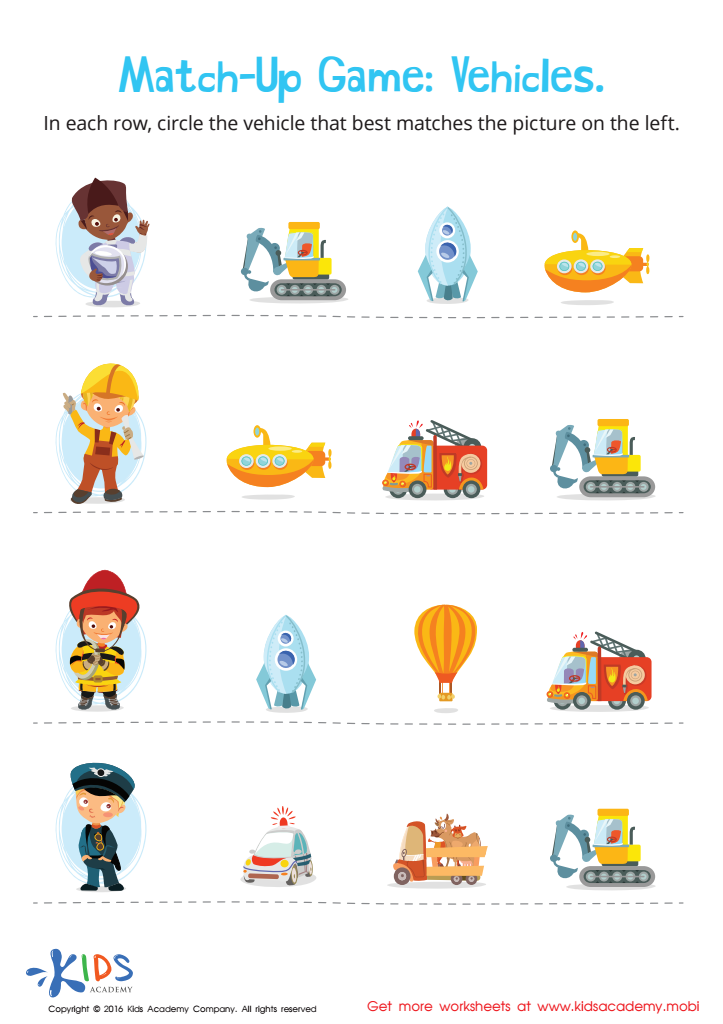
Vehicles Worksheet
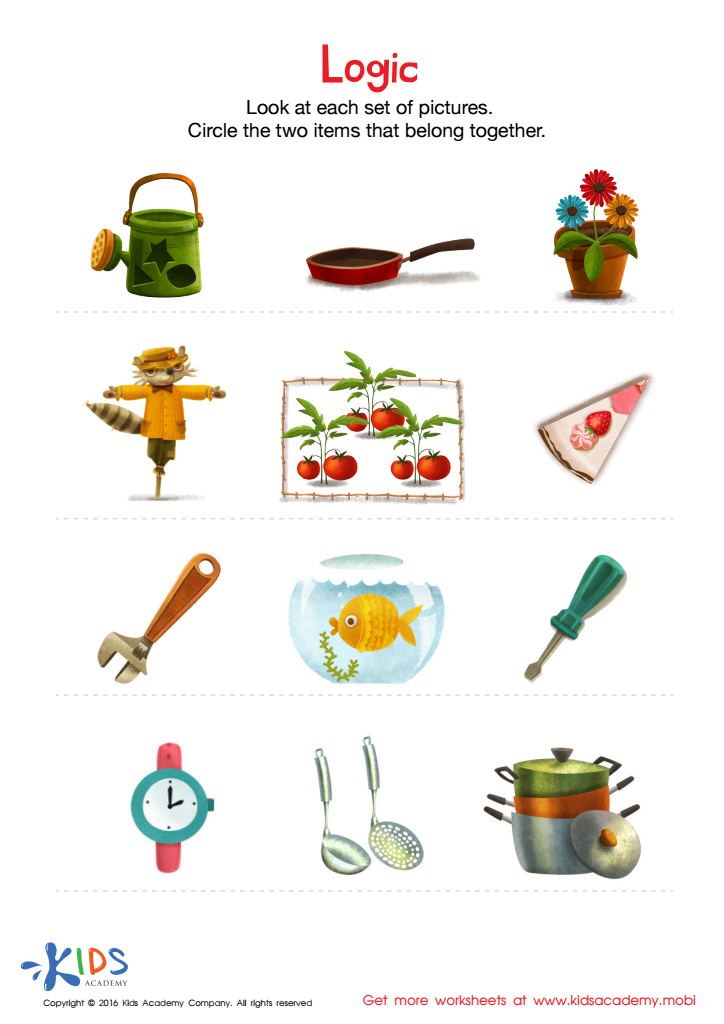
Logic Game Sorting Worksheet







Categorization skills, particularly matching, are crucial for children aged 3 to 9 as they serve as the foundation for cognitive development and critical thinking. These skills involve recognizing similarities and differences and organizing objects or concepts based on shared characteristics. By engaging in matching activities, children enhance their ability to classify, which is essential for later learning in subjects like math and science.
Parents and teachers should care about these skills because they play a vital role in brain development during these formative years. Mastering categorization aids in vocabulary expansion, supports problem-solving skills, and fuels creativity by encouraging children to make connections between seemingly unrelated items.
Moreover, strong categorization skills foster independence and confidence; children who successfully match items gain a sense of achievement that motivates them in other learning areas. Additionally, these skills are linked to emotional and social development, as categorization helps children understand their environment and navigate social interactions.
Therefore, investing time and resources into enhancing matching and categorization skills through play, structured activities, and everyday experiences can create a supportive environment that helps children thrive academically and socially.








