Learning about ecosystems Science Worksheets for Ages 3-9
4 filtered results
-
From - To
Introduce young minds to the wonders of nature with our "Learning about Ecosystems" science worksheets, designed for ages 3-9. These engaging worksheets help children explore various ecosystems, understand the interactions within them, and recognize the importance of habitats. Each activity is crafted to make learning fun through illustrations, simple explanations, and hands-on exercises that cater to early learners. Perfect for curious minds, our worksheets support early science skills and foster a love for the environment. Whether in a classroom or at home, these printables are ideal resources to inspire and educate young explorers about the world around them.
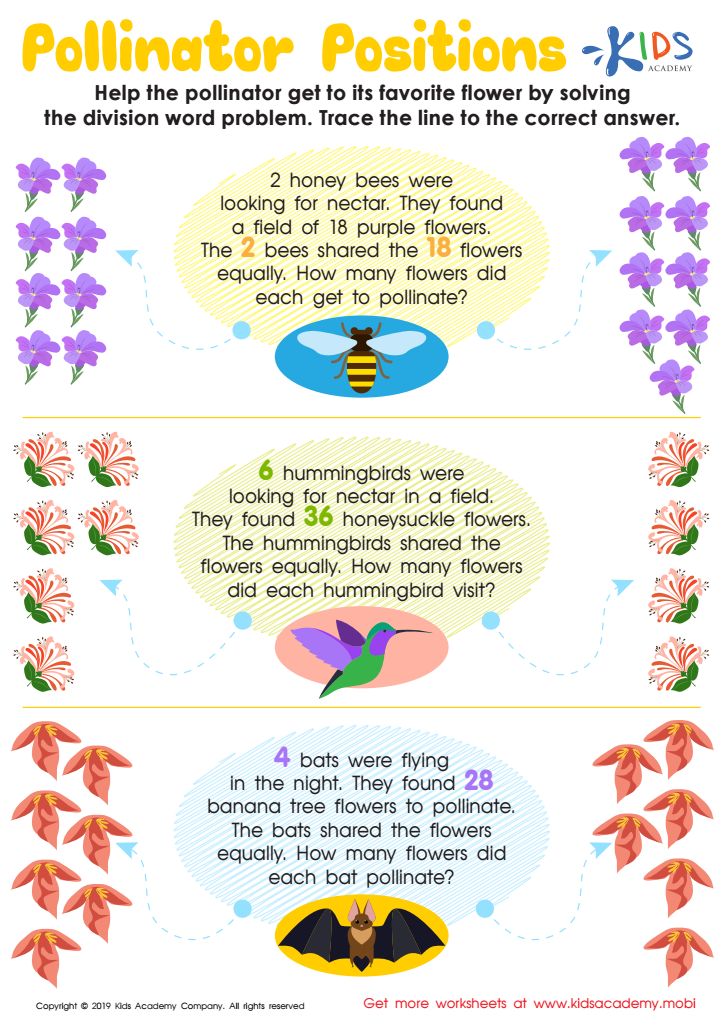
Pollinator Positions Worksheet
 Assign to My Students
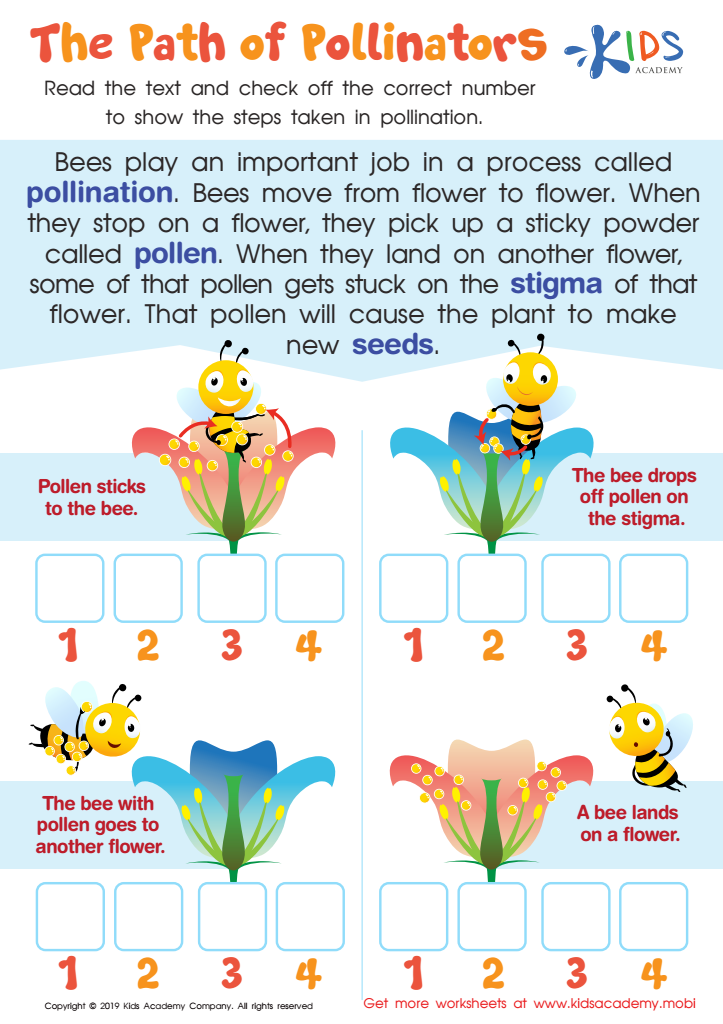
The Path of Pollinators Worksheet
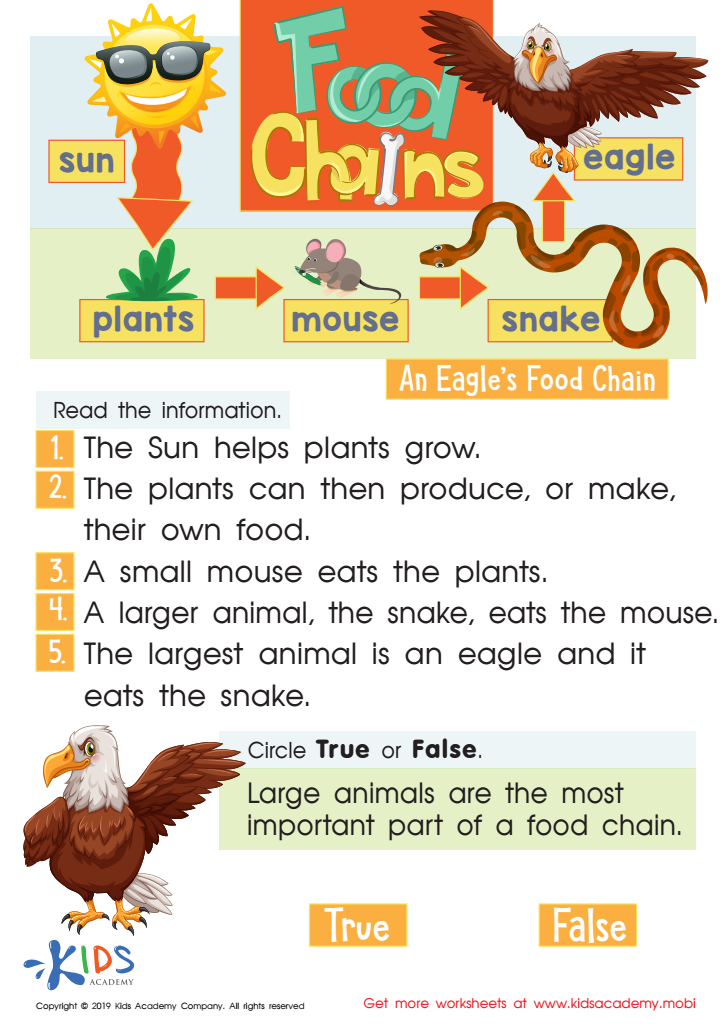
Food Chains Worksheet
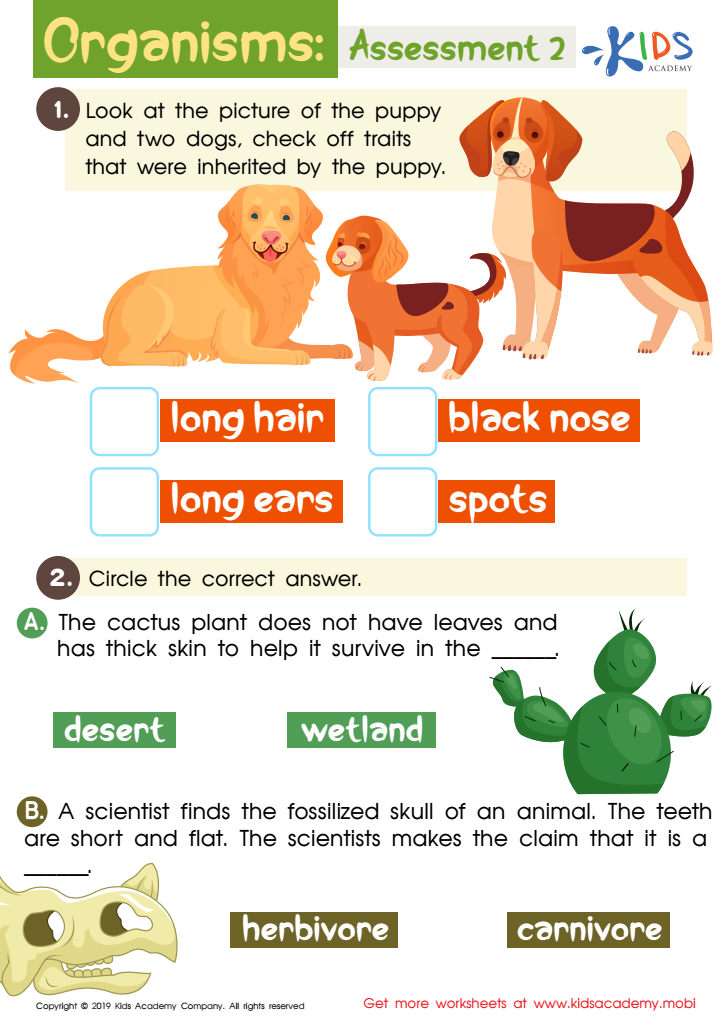
Organisms: Assessment 2 Worksheet








Introducing the concept of ecosystems to children aged 3-9 is incredibly important as it lays the foundation for a lifelong appreciation and understanding of the natural world. At this early stage, children are naturally curious and eager to explore. Learning about ecosystems taps into this curiosity, fostering a sense of wonder and respect for nature.
Understanding ecosystems helps children recognize the interconnectedness of all living things, from plants and animals to humans. This awareness encourages empathy and responsibility towards the environment, promoting behaviors like conservation and sustainable living from a young age.
Moreover, lessons about ecosystems incorporate various educational elements, including science, mathematics, and language arts. For instance, counting animals, observing plant growth, and using descriptive vocabulary all enhance cognitive skills. By engaging with these topics, children develop critical thinking, problem-solving, and observational skills.
In a world facing environmental challenges, educating the next generation about ecosystems is crucial. It empowers them to make informed decisions and contributes to a future populace that's knowledgeable and passionate about protecting our planet. Thus, parents and teachers play a pivotal role by supporting and integrating ecosystem education into early learning experiences.







