Plants Worksheets for Ages 3-9 - Page 2
25 filtered results
-
From - To
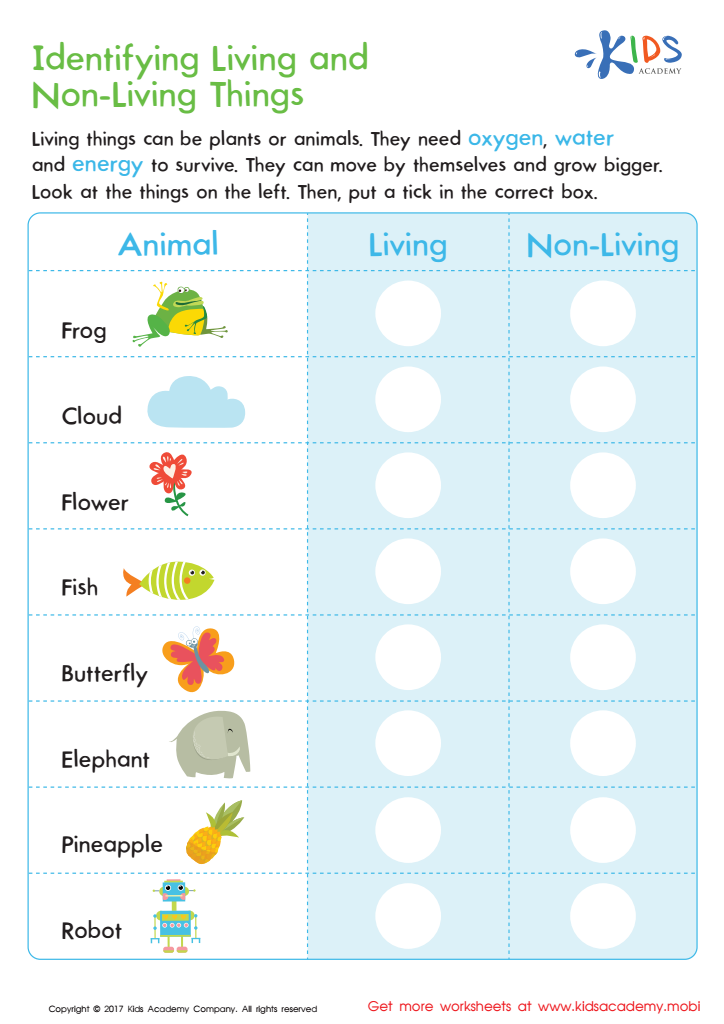
Identifying Living or Non–living Worksheet
 Assign to My Students







Parents and teachers should care about plants for children ages 3-9 due to the immense educational, emotional, and environmental benefits they offer. At this age, kids are naturally curious and enthusiastic learners. Introducing them to plants encourages hands-on learning and nurtures their innate curiosity. This practical engagement helps children understand basic biological concepts, such as plant life cycles, photosynthesis, and ecosystems.
Moreover, caring for plants can strengthen fine motor skills and improve attention spans. Activities like planting seeds, watering, and observing growth engage children in routine responsibilities, fostering responsibility and patience. Additionally, the presence of greenery can reduce stress and boost mood, promoting a healthier mental environment for young learners.
Environmental stewardship is another crucial aspect. Teaching kids about the importance of plants and ecology fosters an early appreciation for nature. This develops into long-term environmentally-conscious behavior, promoting sustainability and ecological responsibility from a young age.
On a social level, group gardening projects or classroom plant care can sharpen cooperative skills and teamwork among children. Thus, exploring plants isn’t merely a biological lesson; it's an all-encompassing educational experience that nurtures essential life skills, respect for nature, and a sense of community involvement, providing a well-rounded foundation for young minds.