
Color recognition Worksheets for 3-Year-Olds
85 filtered results
Difficulty Level
Grade
Age
-
From - To
Subject
Activity
Standards
Discover our engaging and educational Color Recognition Worksheets for 3-Year-Olds, designed to make learning fun! Our worksheets help toddlers identify and differentiate colors through interactive activities like matching, coloring, and spotting games. These printable resources enhance visual and cognitive skills, laying a strong foundation for future learning. Created for early learners, each worksheet keeps your child entertained while reinforcing essential color concepts. Ideal for both home and classroom use, Kids Academy’s materials offer a delightful blend of education and enjoyment, making color recognition easy and enjoyable for your preschooler. Download now to brighten up learning time!
Favorites
With answer key
Interactive
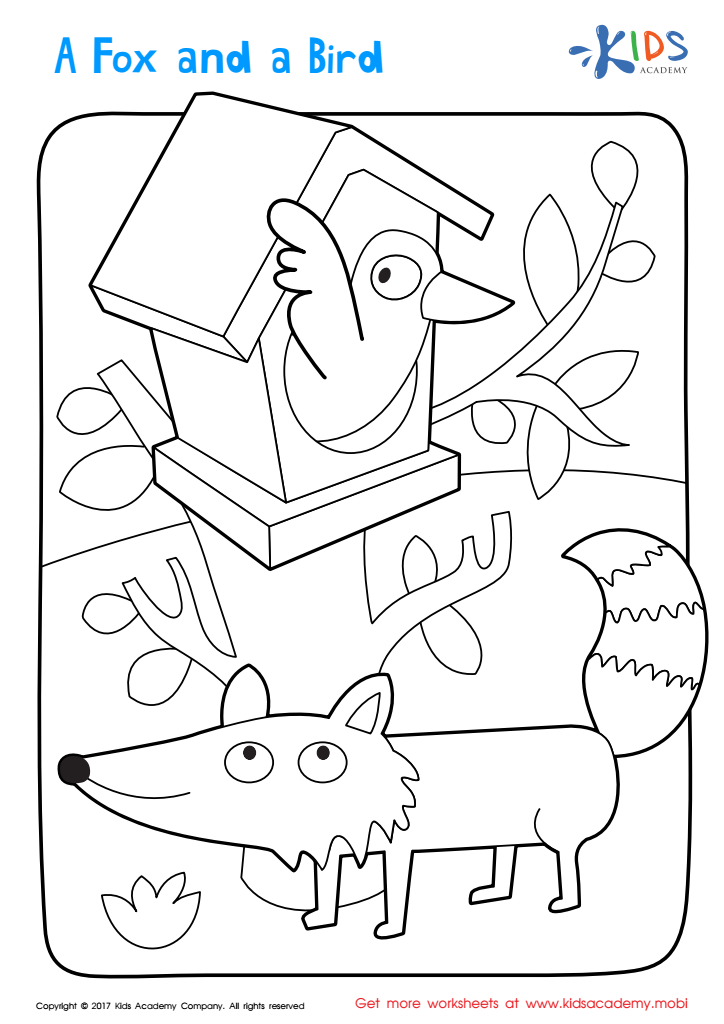
A Fox and Bird Coloring Page
Flex their creativity with this fun-filled coloring page: A Fox and Bird! Let kids express themselves through colors, allowing them to make each scene their own. This picture will bring joy to their art routine!
Download (PDF)
 Assign to My Students
Assign to My Students
A Fox and Bird Coloring Page
Worksheet
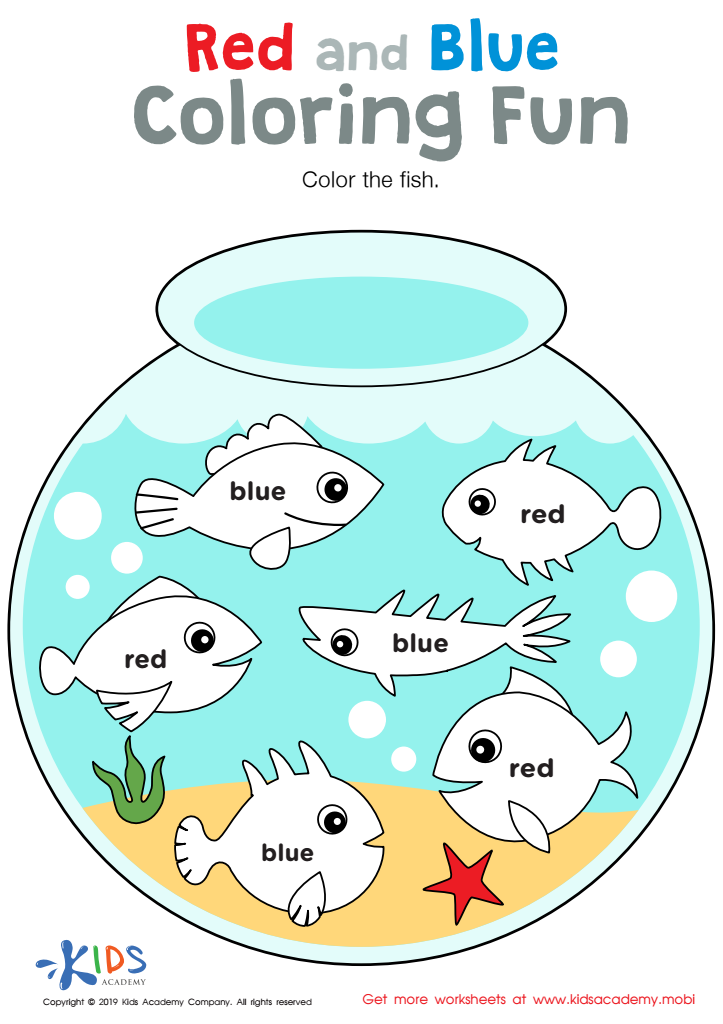
Red and Blue Coloring Fun Worksheet
Kids know colors like red and blue. But can they read these words? Give them practice with this fun fish bowl coloring sheet. They'll look at the fish, then color them the corresponding hue. Home or classroom, they'll be sure to get a kick out of learning colors in this creative way!
Download (PDF)
Assign to My Students
Assign to My Students
Red and Blue Coloring Fun Worksheet
Worksheet
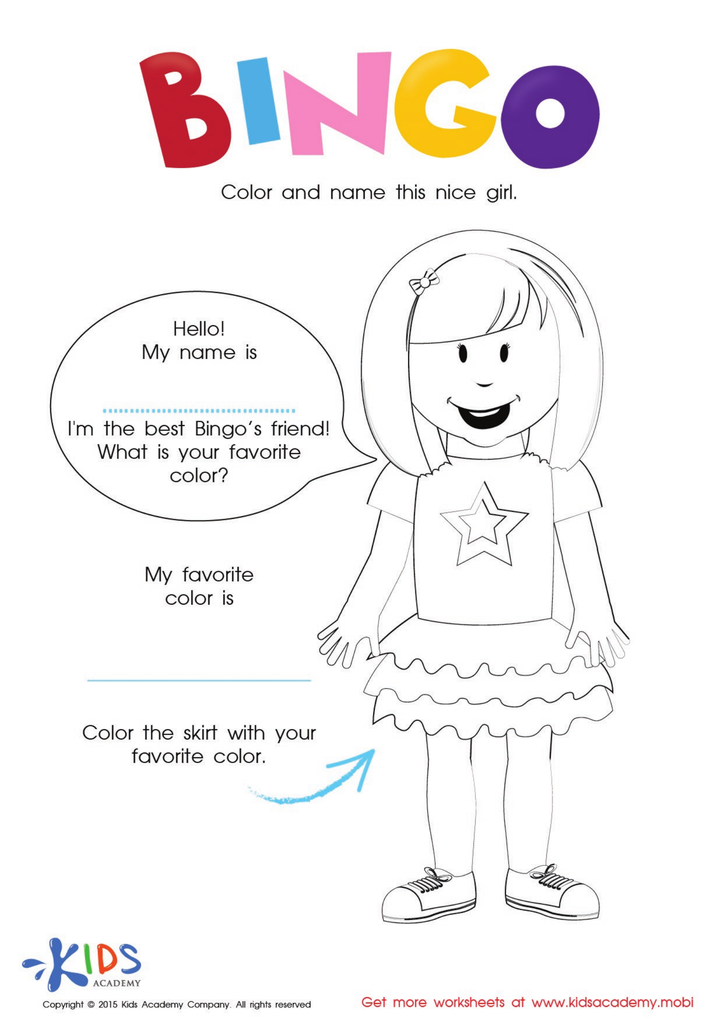
The Bingo Song: Coloring The Girl Worksheet
Revise colors with your kids using our free "Bingo" worksheet. Ask them to come up with a name for the girl, then have them answer her question about favorite colors and spell them out. They can even color her skirt with the colors they chose. Explore more fun worksheets at our website – they'll fascinate your kids and help them learn!
The Bingo Song: Coloring The Girl Worksheet
Worksheet
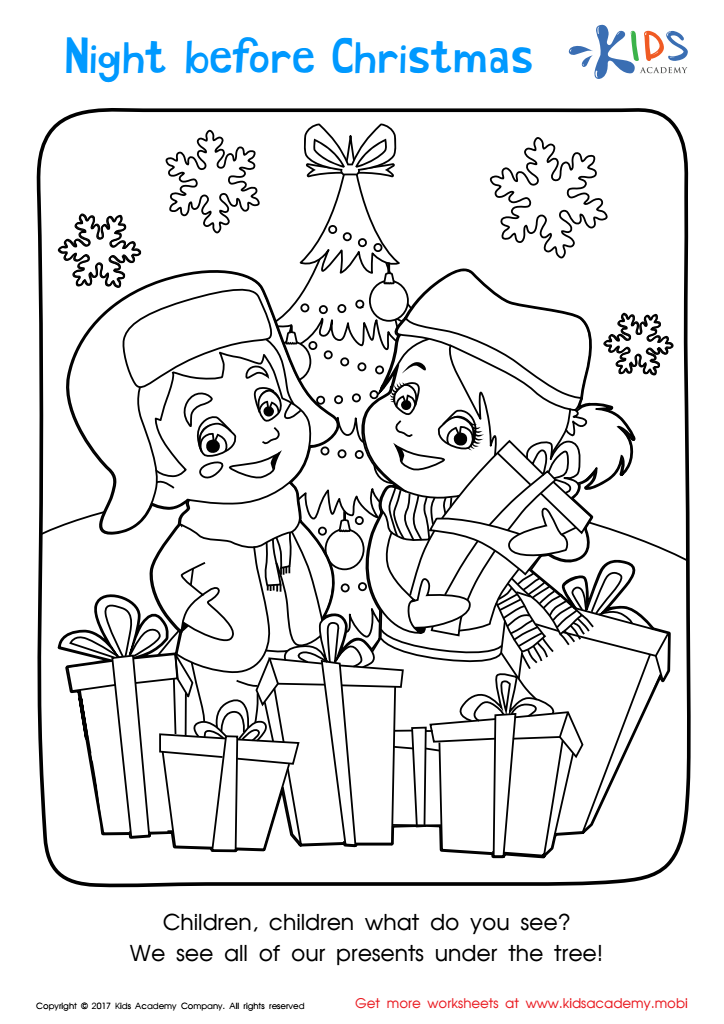
Christmas: Night Before Christmas Printable
Give your kids the gift of coloring this season! Use this boy and girl page to start a conversation on the spirit of giving. Ask your child what they'd like to give and remind them that giving is just as important as receiving. Then, help them pick the perfect colors to bring the image to life! Your child will get in the Christmas spirit while getting ready for Santa's arrival. Print the festive page and spread the joy of the season!
Download (PDF)
Assign to My Students
Assign to My Students
Christmas: Night Before Christmas Printable
Worksheet
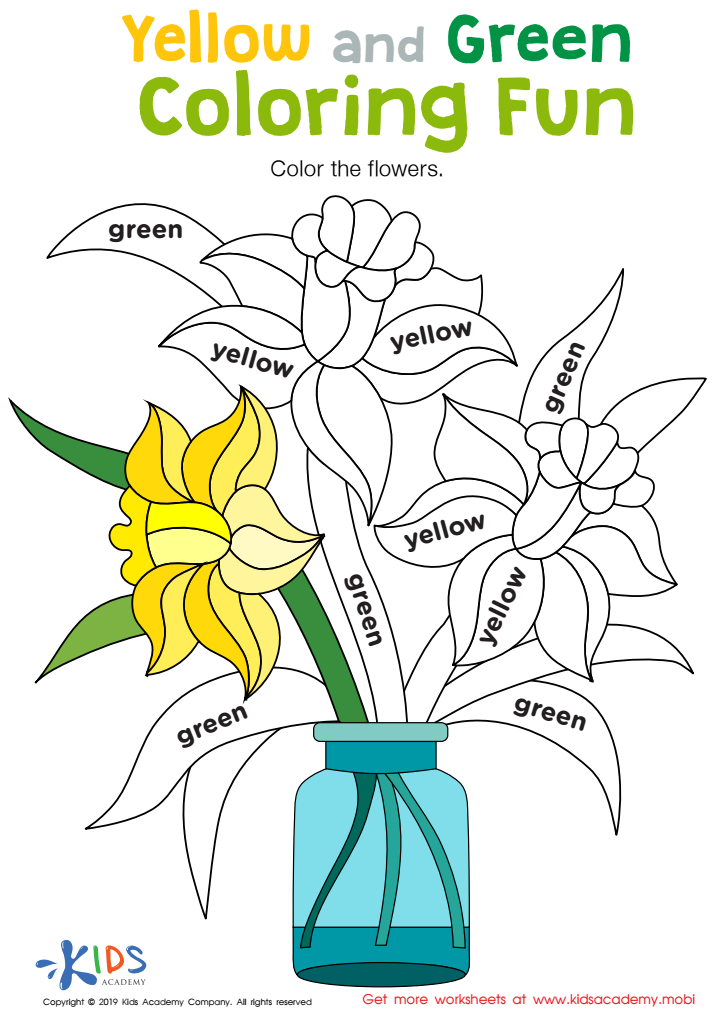
Yellow and Green Coloring Fun Worksheet
Sight words like "yellow" and "green" are easy to teach and fun for kids to learn. This free downloadable worksheet has kids read the color words and color the flower with yellow and green. A great activity for learning to read color words!
Download (PDF)
Assign to My Students
Assign to My Students
Yellow and Green Coloring Fun Worksheet
Worksheet
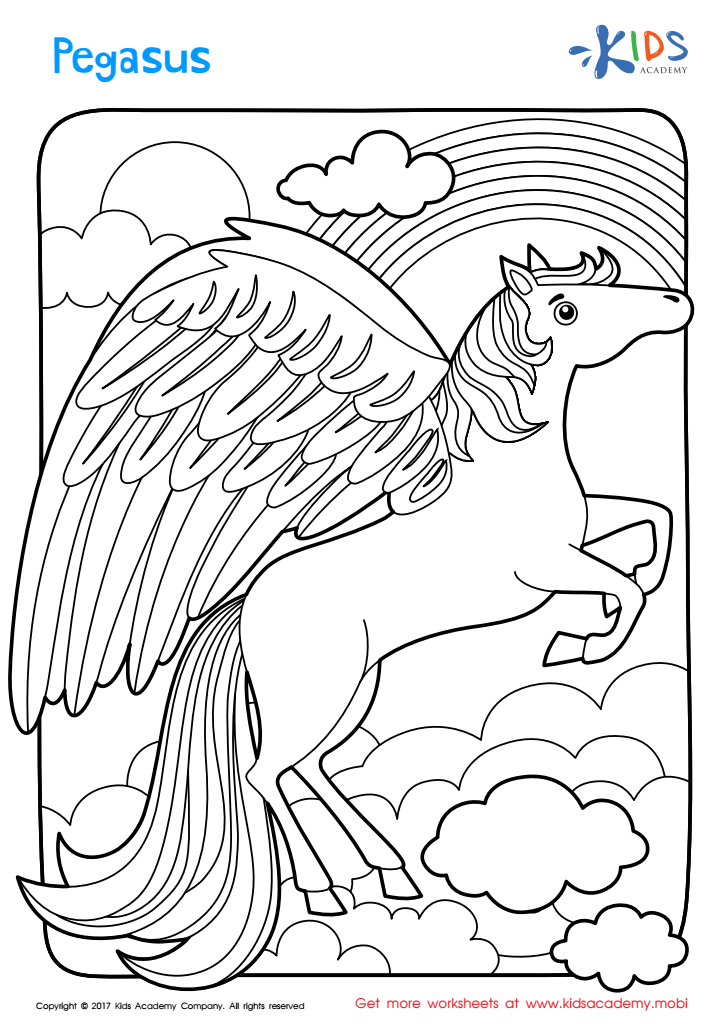
Pegasus Printable
Learn about ancient Greek mythology with your child! Print our Pegasus coloring page to bring the myths to life. Encourage your child to read the stories and let his/her imagination soar. This activity will make the tales of the gods come alive!
Download (PDF)
Assign to My Students
Assign to My Students
Pegasus Printable
Worksheet
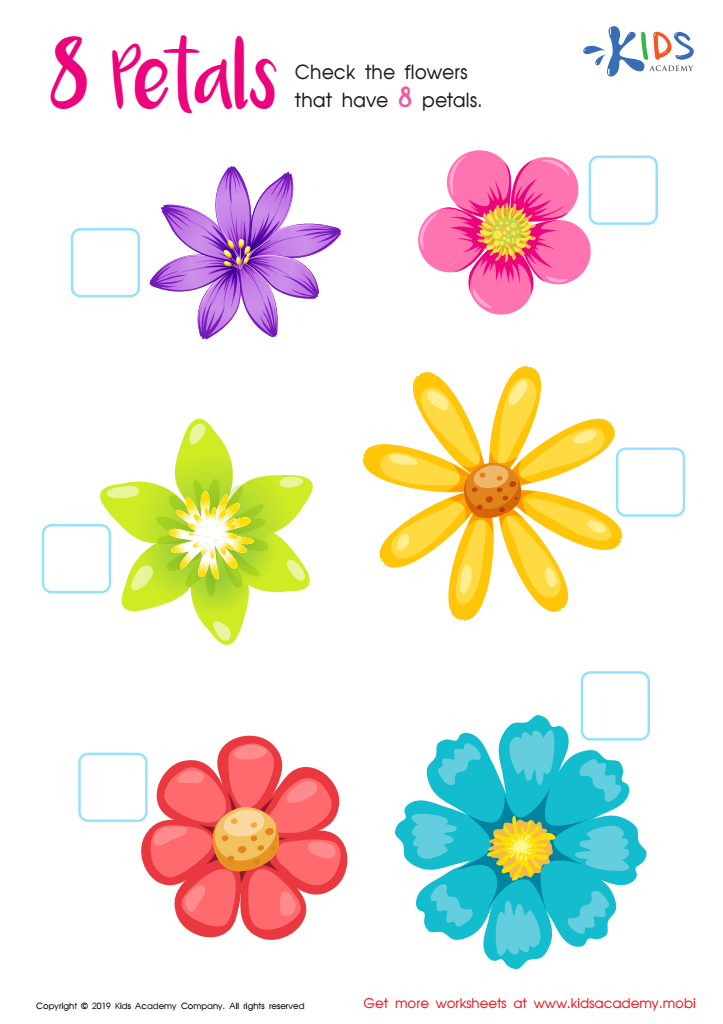
8 Petals Worksheet
Help your children master counting with this fun worksheet. It's filled with colorful flowers and they must count the petals and check the flowers with 8 petals. It's a great way to practice their counting skills and have some fun too!
8 Petals Worksheet
Worksheet
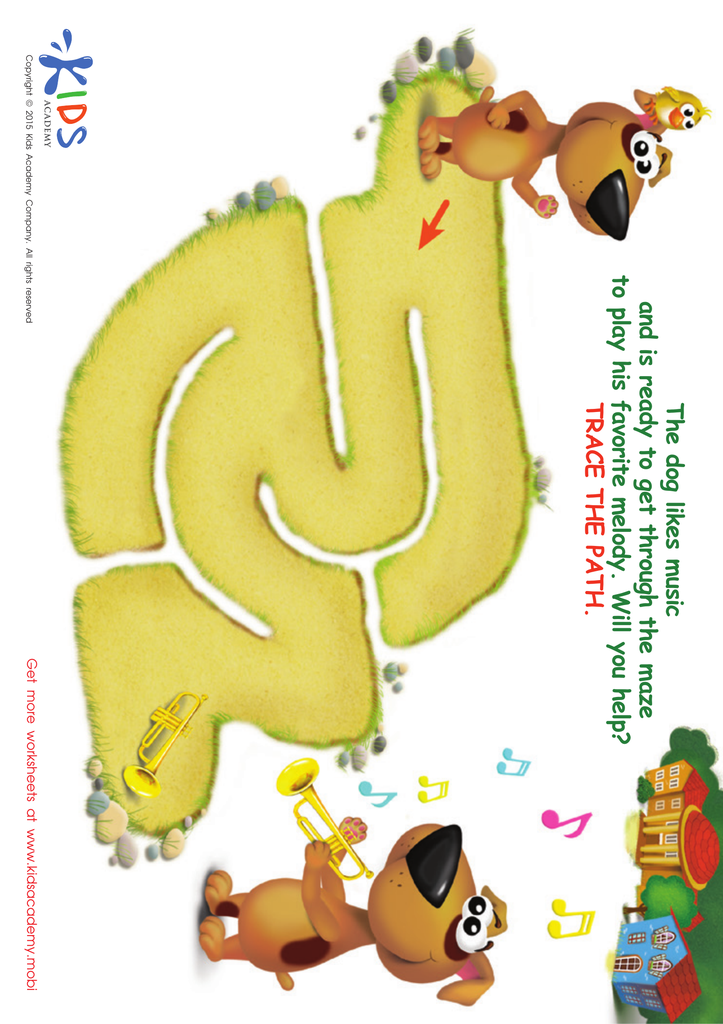
Trumpeter Maze Worksheet
Help your kid to find the way out of the maze to hear their favorite melody! Visit Kids Academy now and explore plenty of fun and educational resources.
Trumpeter Maze Worksheet
Worksheet
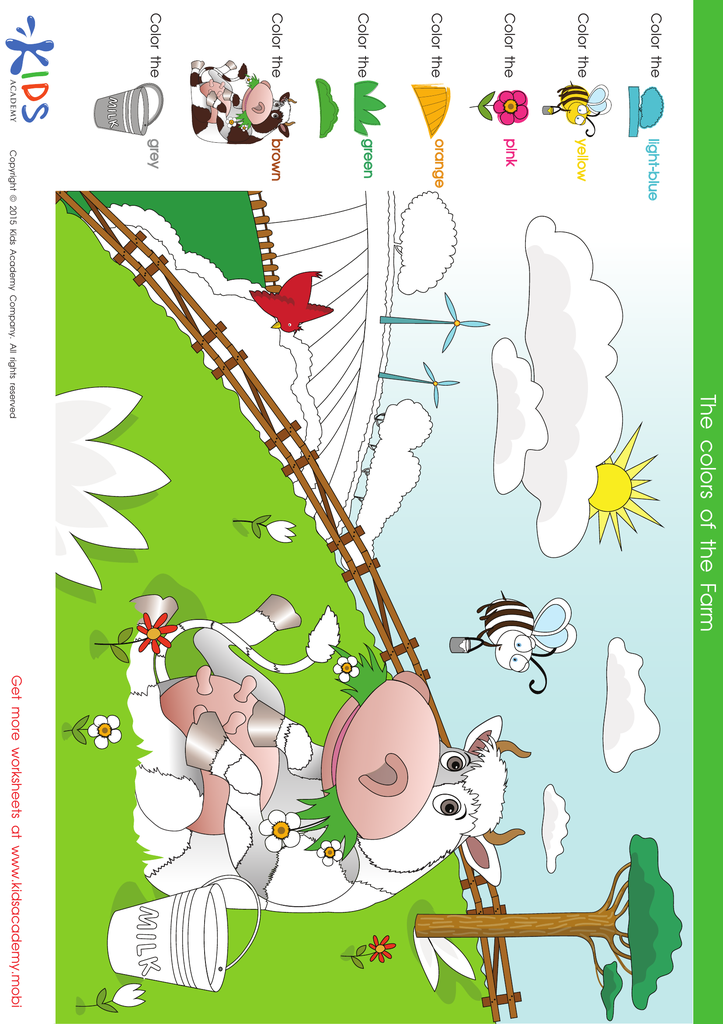
Color the Cow and the Fields Coloring Pages
Let's color a cow in the field and create a new story about farm life! Use the tips in the left side of the picture and have fun! Other coloring sheets can be found at Kids Academy - download and print more materials and develop your kids' skills. Enjoy!
Color the Cow and the Fields Coloring Pages
Worksheet
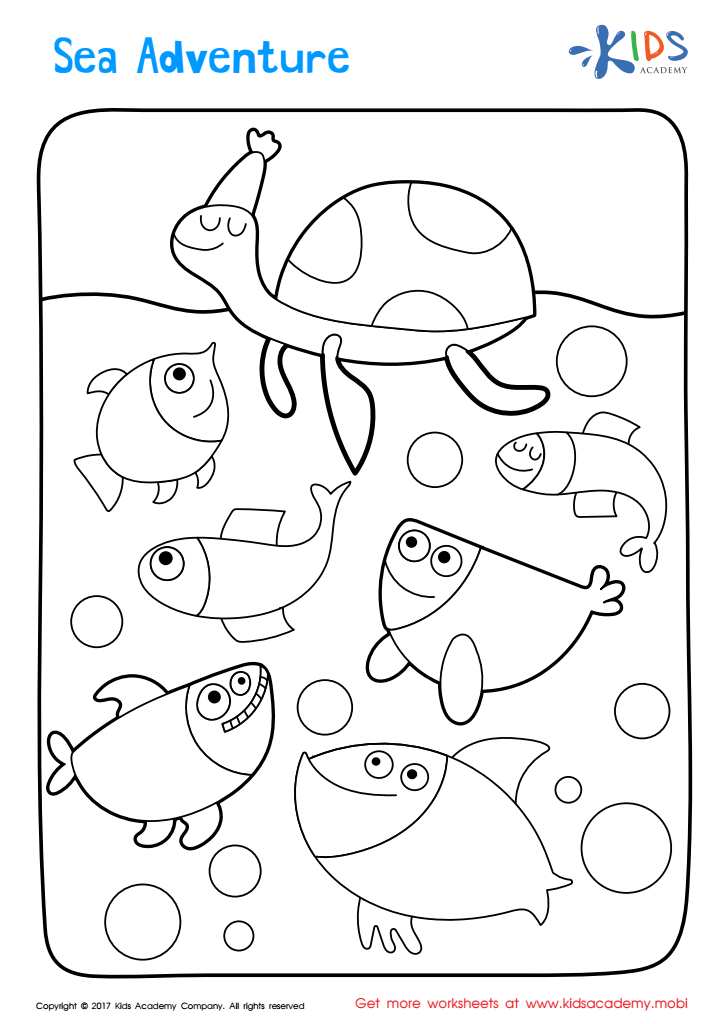
Sea Adventure Coloring Page
Explore the sea with a turtle and color the Sea Adventure printable! Let the turtle lead the way and let the fish watch and follow as kids unleash their creative side and pick the best colors. Have fun!
Download (PDF)
Assign to My Students
Assign to My Students
Sea Adventure Coloring Page
Worksheet
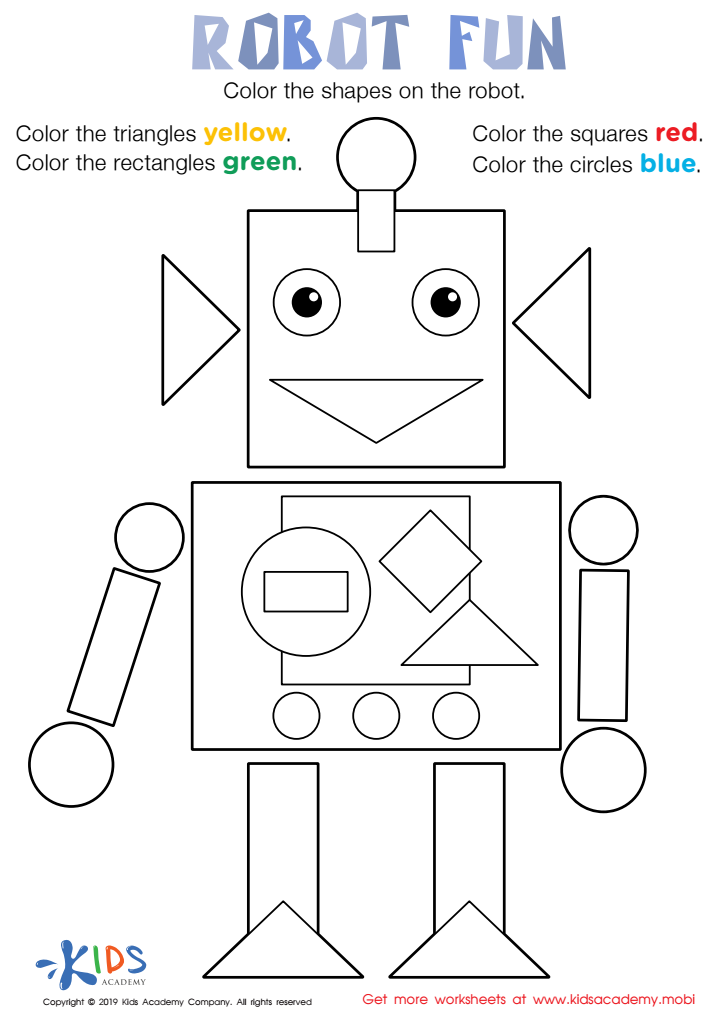
Robot Fun Worksheet
Help your child learn about basic shapes with this fun robot worksheet! Kids practice identifying circles, squares, rectangles and triangles, then color each shape according to directions. Make math practice enjoyable with this coloring page that teaches all four basic shapes - it's an important math skill!
Download (PDF)
Assign to My Students
Assign to My Students
Robot Fun Worksheet
Worksheet
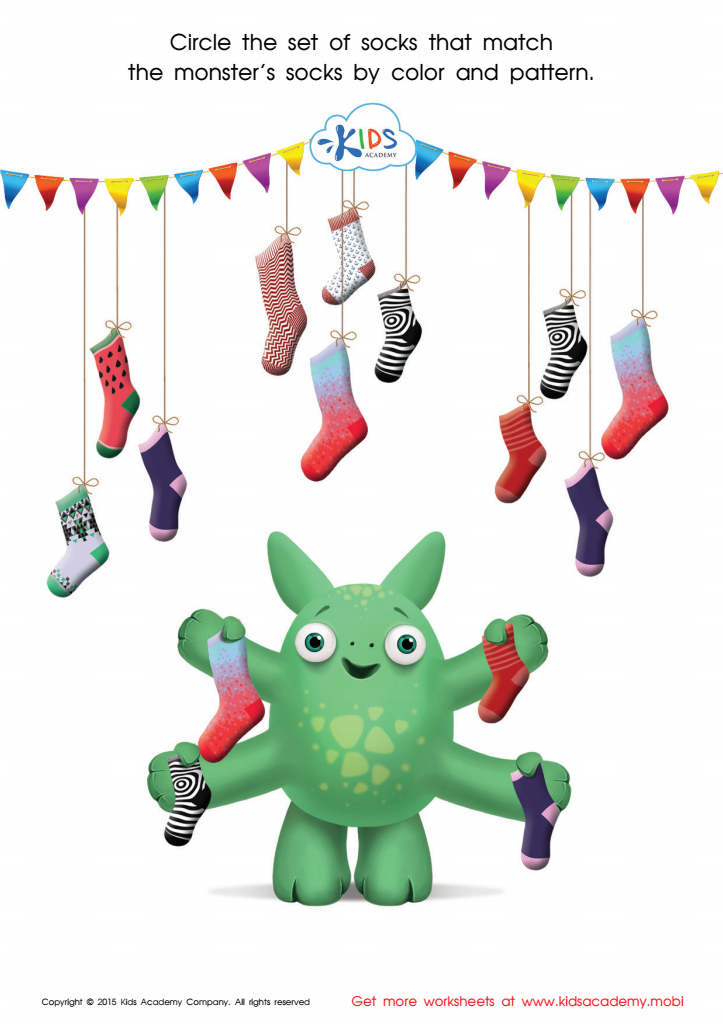
Sort the Monster's Socks Worksheet
Let your little one challenge herself and practice with matching Monster socks. She must be very attentive to match the same socks and draw a line connecting them!
Sort the Monster's Socks Worksheet
Worksheet
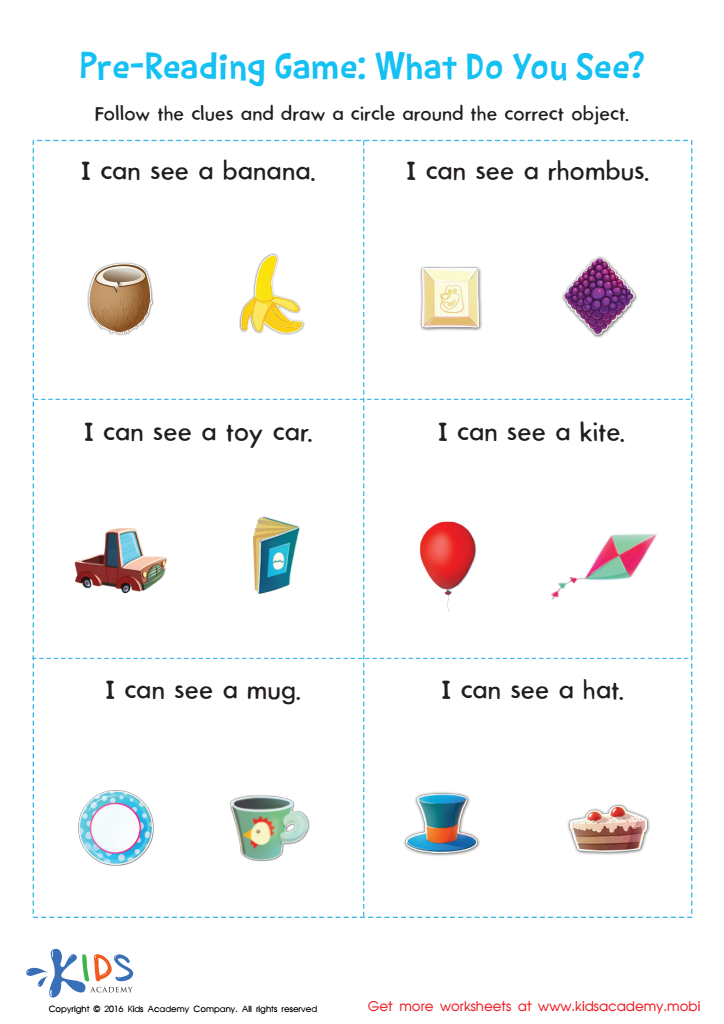
Pre–reading Worksheet: What Do You See?
Get started with this pre-reading worksheet to build your child's early literacy skills. Model, read aloud, and provide consistent repetition for successful learning.
Pre–reading Worksheet: What Do You See?
Worksheet
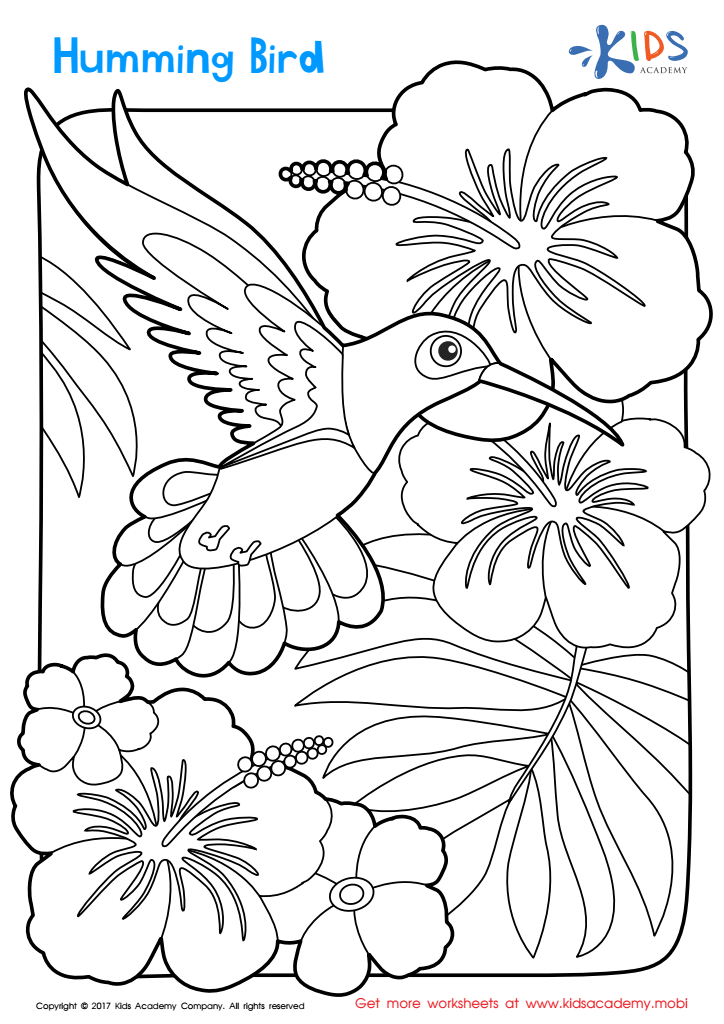
Humming Bird Worksheet
Encourage your child to explore nature with this lovely hummingbird coloring page! Use pictures to learn about the bird and extend the experience with a hummingbird feeder. See the beautiful creature in your own backyard!
Download (PDF)
Assign to My Students
Assign to My Students
Humming Bird Worksheet
Worksheet
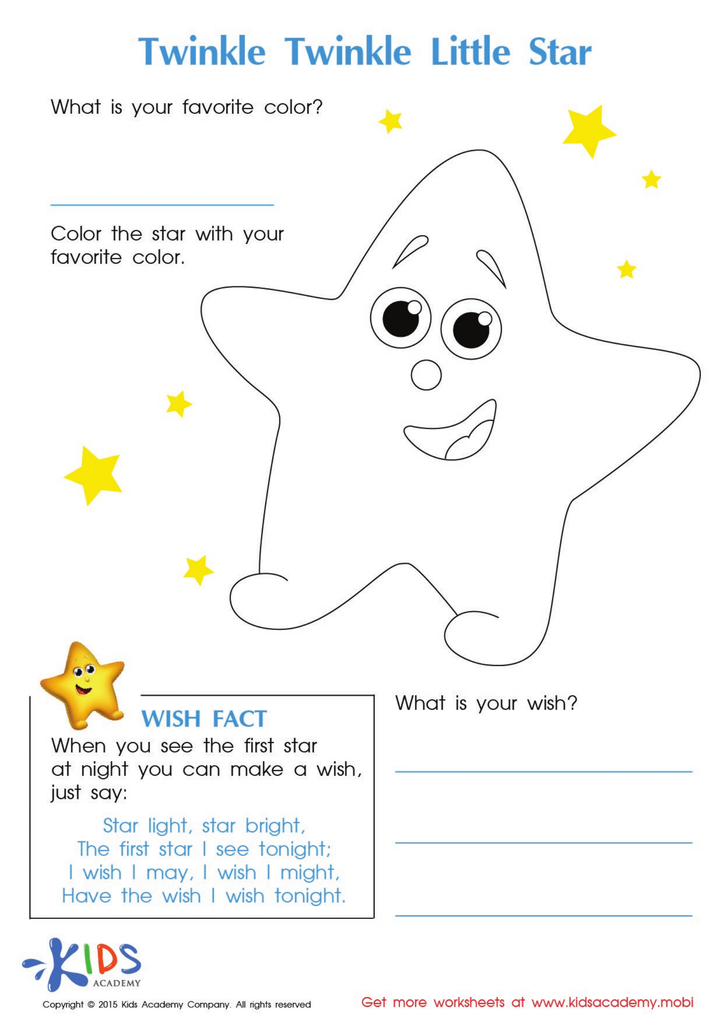
Twinkle Little Star Coloring Worksheet
Let your child color the Twinkle Little Star page - they can choose whatever color they like! Then sing the song and encourage them to make a wish when they spot a star in the sky. If they can write, let them record the wish themselves. If not, write it down for them. Enjoy the starry night sky together!
Twinkle Little Star Coloring Worksheet
Worksheet
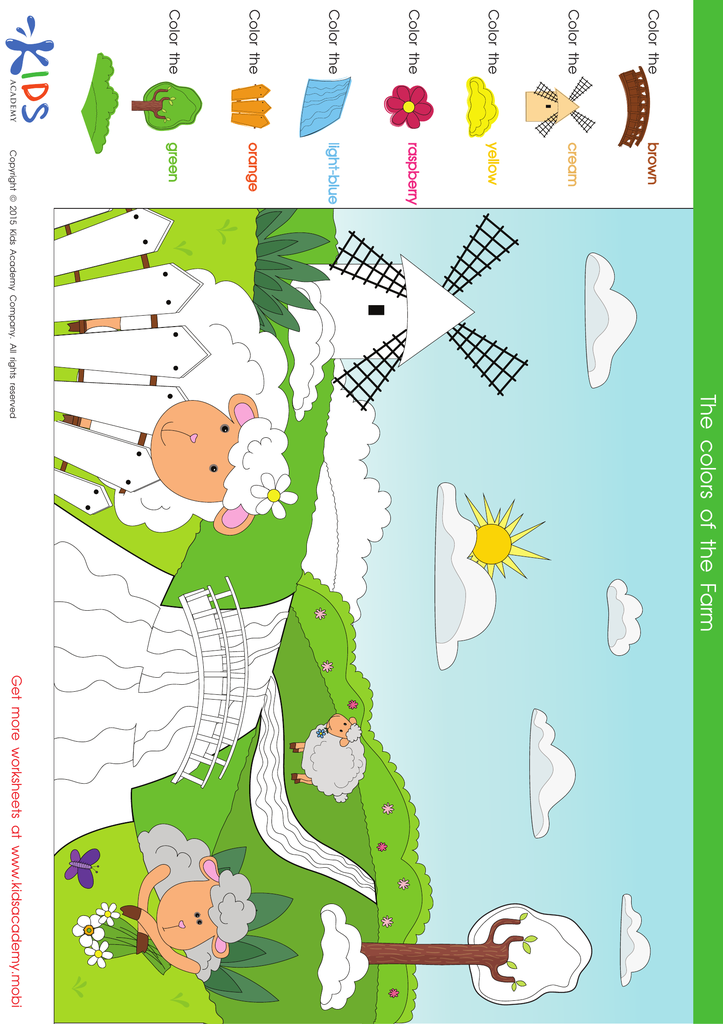
Color the Sheep in the Field Coloring Pages
Kids can have fun and study at the same time with Kids Academy's worksheets! Download and print the learning activities, such as coloring pages. Carefully color the sunny worksheet, take a look at the tips, and pick more free printable pages to enjoy. Let's have some fun together!
Color the Sheep in the Field Coloring Pages
Worksheet
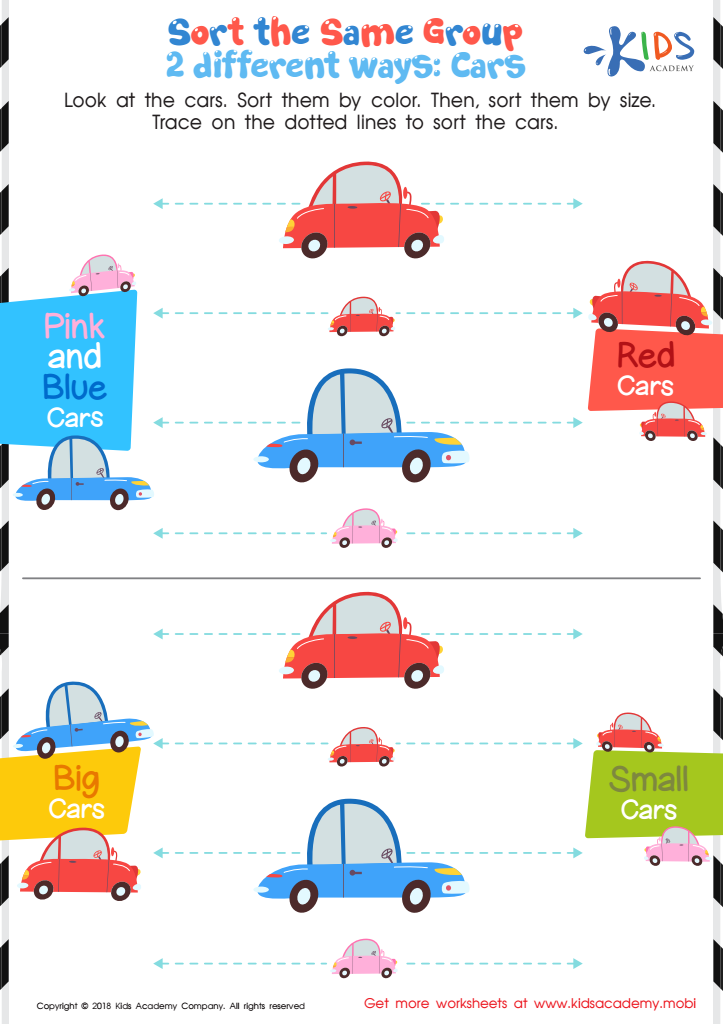
Sort the Same Group 2 Different Ways: Cars Worksheet
Look at the pictures with your child. Can they identify the objects? Ask them to sort the cars first by color and then size. Assist them to trace the dotted lines to sort the cars by color and size. This worksheet lets you easily assess your child's color and size organization skills.
Sort the Same Group 2 Different Ways: Cars Worksheet
Worksheet
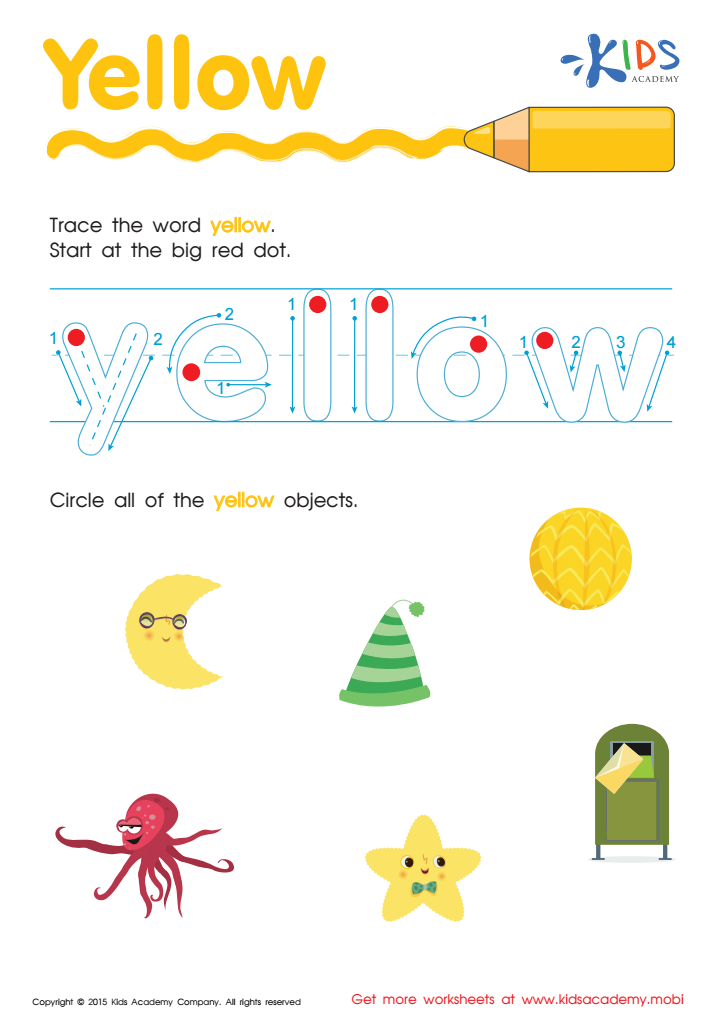
Yellow Tracing Color Words Worksheet
Tracing is a great way to start learning handwriting! Our printable worksheet helps your kindergartener practice and master the basics. They'll trace lines and fill in the word "yellow" with bright colors, sure to captivate and inspire them for more practice. Check out here for more tracing of color words.
Yellow Tracing Color Words Worksheet
Worksheet
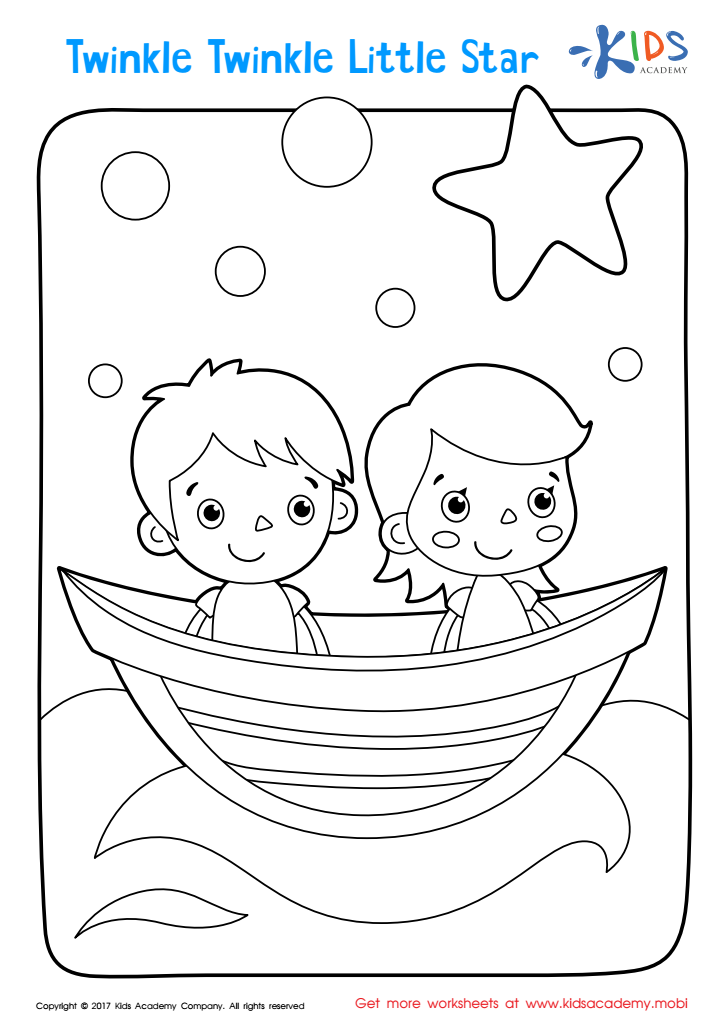
Twinkle Twinkle Little Star Coloring Page
Let your child wish upon a star as they color this scene of boy and girl stargazing. Sing Twinkle Twinkle Little Star while they choose colors to show the star twinkling in the night sky.
Download (PDF)
Assign to My Students
Assign to My Students
Twinkle Twinkle Little Star Coloring Page
Worksheet
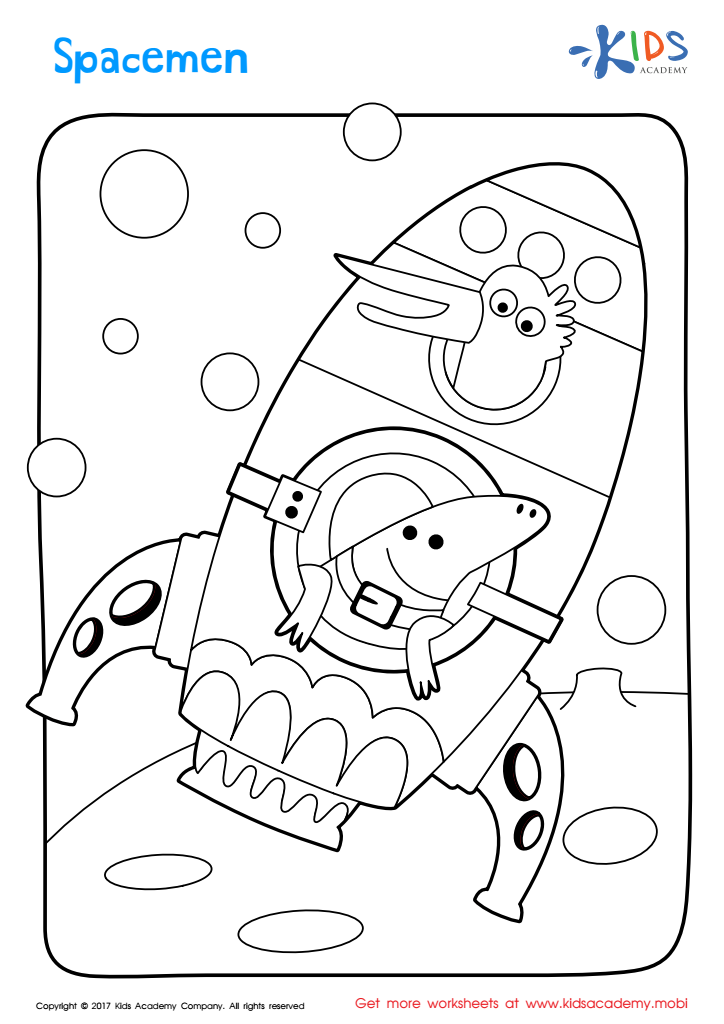
Spacemen Coloring Page
Let your child explore outer space with this fun coloring page featuring different spacemen shapes and sizes! From cute and funny creatures to distant planets and moons, this page is sure to spark your child’s imagination and interest!
Download (PDF)
Assign to My Students
Assign to My Students
Spacemen Coloring Page
Worksheet
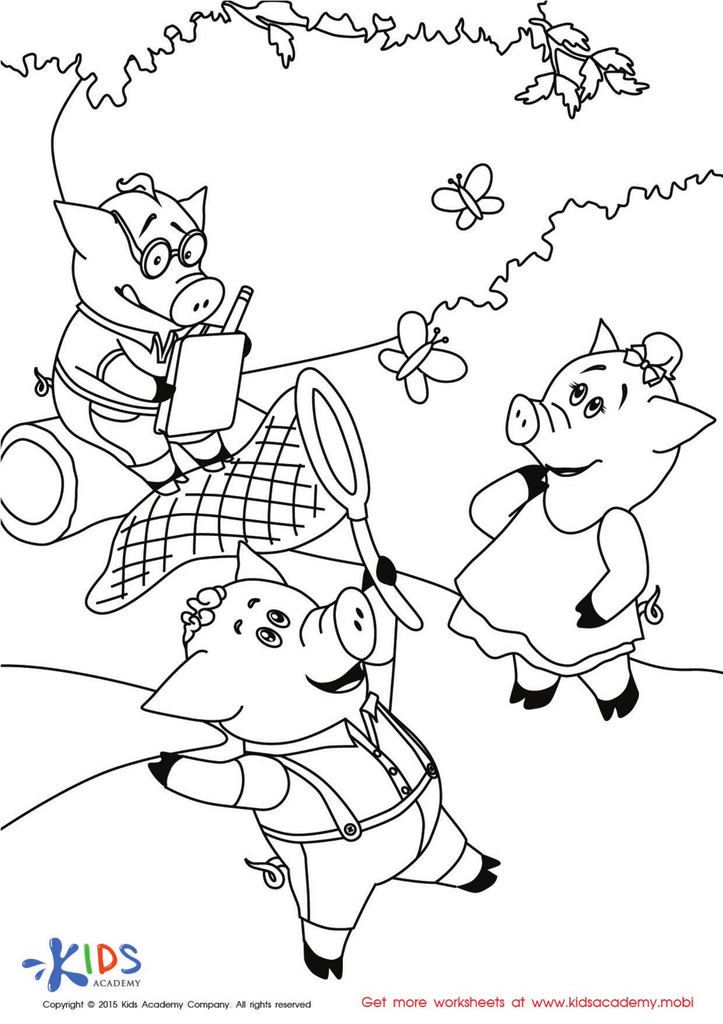
The Three Little Pigs Coloring Worksheet
Let your kid bring this simple scene to life with some color! Have them make the grass green, the sky blue and the butterflies joyful. After they finish, why not ask them what will happen next to the two idling pigs and the hardworking one? Check our website for more coloring book pages to collect the full story of the Three Little Pigs.
The Three Little Pigs Coloring Worksheet
Worksheet
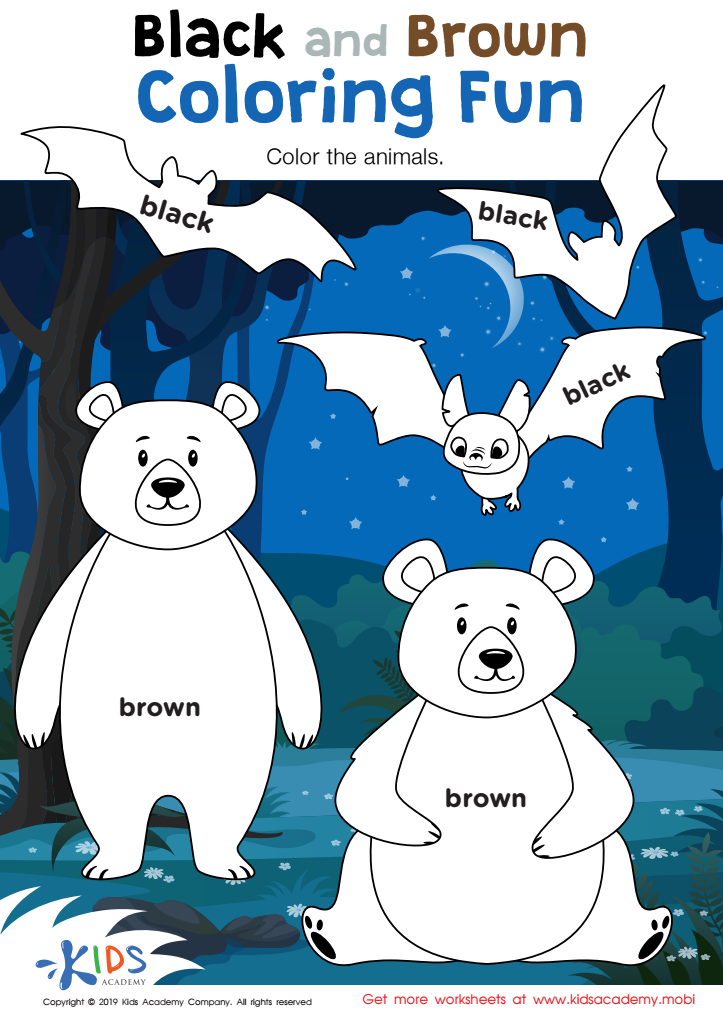
Black and Brown Coloring Fun Worksheet
Young readers can learn the difference between black and brown with this free, downloadable worksheet. The page features coloring activities: students color bears brown and bats black. This helps children learn to read color words by sight, as they are among the first reading experiences for young ones. But black and brown can be tricky as they start with the same consonant sound. This worksheet will help clear up any confusion.
Download (PDF)
Assign to My Students
Assign to My Students
Black and Brown Coloring Fun Worksheet
Worksheet
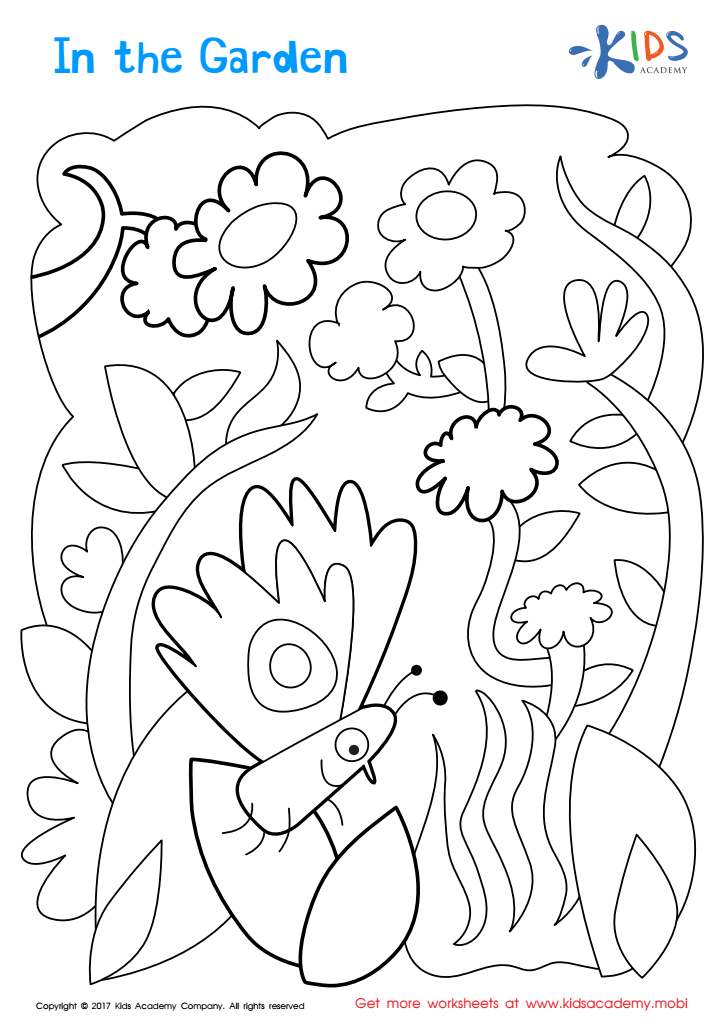
In The Garden Coloring Page
Explore nature with this fun coloring page! Take a walk out to the garden and observe the plants and animals. Help your kids learn and grow – connect the page to the natural wonders outside their window. In the Garden coloring page – make your kids smile!
Download (PDF)
Assign to My Students
Assign to My Students
In The Garden Coloring Page
Worksheet
Join Kids Academy for Free
Who is primarily going to use this learning content?






Color recognition is crucial for 3-year-olds as it lays the foundation for various essential skills. Firstly, learning to identify and differentiate colors enhances cognitive development. Colors are one of the first attributes of objects that children observe, and recognizing them aids in classifying and categorizing items in their environment, fostering critical thinking and problem-solving skills.
Secondly, color recognition is strongly tied to language development. When children learn the names of colors, it expands their vocabulary and helps them articulate their thoughts and observations more effectively. Asking a child to designate red, blue, or green items, for instance, enriches their descriptive language abilities.
Additionally, understanding colors stimulates creativity and self-expression. Children use colors in drawing and other artistic activities to portray their emotions and ideas, improving both their imaginative and fine motor skills.
Furthermore, social and emotional development benefits from color recognition since colors are often used to convey feelings and moods. Recognizing these can facilitate a child's ability to understand and communicate their emotions, as well as interpret those of others.
For these reasons, both parents and teachers should prioritize teaching color recognition to 3-year-olds. It’s a fun and engaging way to support a child’s all-around development, preparing them for later academic success and interpersonal competence.








