Basic arithmetic skills Addition & Subtraction Worksheets for 3-Year-Olds
5 filtered results
-
From - To
Nurture your child's early math skills with our Basic Arithmetic Skills Addition & Subtraction Worksheets! Specially designed for 3-year-olds, these fun and engaging printable worksheets help little learners grasp fundamental concepts of addition and subtraction. Each worksheet features colorful illustrations and simple exercises, making math enjoyable and approachable for young minds. Perfect for preschoolers, our materials foster a positive learning experience and build a strong foundation for future math success. Start your child's arithmetic journey today with Kids Academy and watch their confidence grow! Explore now and unlock endless learning adventures.
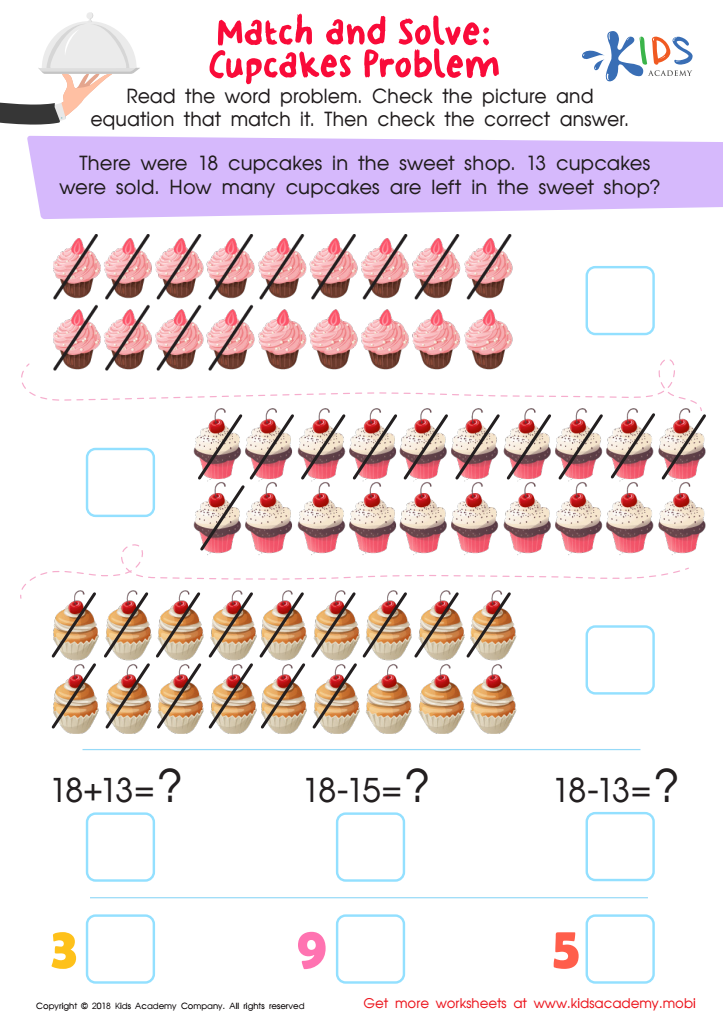
Match and Solve: Cupcakes Problem Worksheet
 Assign to My Students
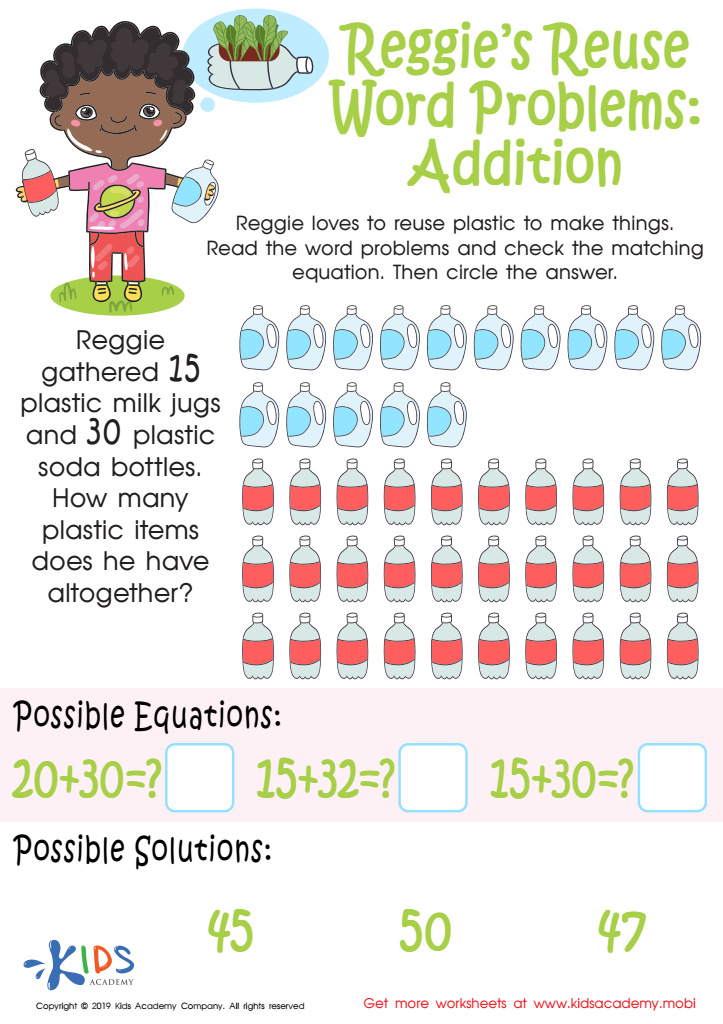
Reggie's Reuse Word Problems: Addition Worksheet
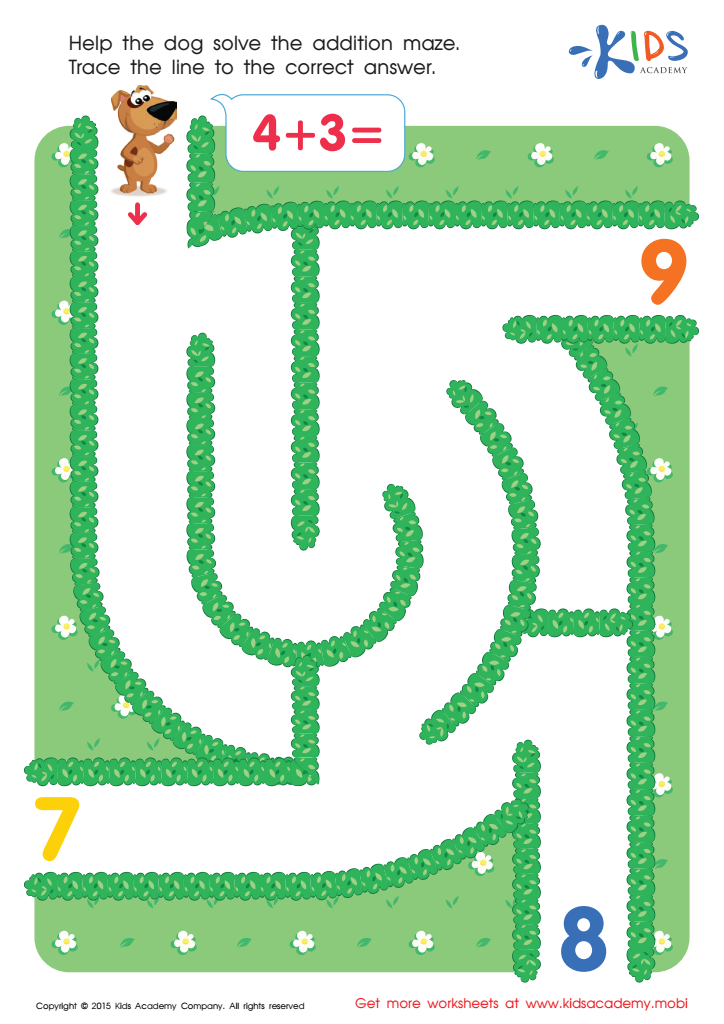
Addition Four And Three Worksheet








Basic arithmetic skills, such as addition and subtraction, play a foundational role in a child's cognitive development, even at the tender age of three. Introducing these concepts early fuels a child's curiosity about numbers and patterns, promoting analytical and logical thinking. At this nascent stage, engaging with simple arithmetic sets the groundwork for future academic success and assists in developing critical problem-solving skills.
Learning addition and subtraction reinforces fine motor skills and hand-eye coordination when using physical objects for counting. These interactions enhance spatial awareness and introduce a hands-on approach to abstract concepts, which is crucial for early developmental milestones.
Furthermore, parents and teachers who prioritize these fundamental skills foster a sense of achievement and confidence in children. Each small victory in solving math problems instills a love for learning and boosts self-esteem. Early competence in arithmetic also prepares children for more advanced mathematical concepts they will encounter in school, setting them up for long-term educational success.
Providing a supportive and stimulating environment allows for meaningful early learning experiences—framing arithmetic not as a chore but as an exciting challenge. Delving into basic arithmetic with three-year-olds thus ensures that they develop into creative and competent individuals ready for the complexities of a structured education.








