Comparing quantities Numbers Worksheets for 3-Year-Olds
3 filtered results
-
From - To
Introduce your little learner to the basics of math with our engaging "Comparing Quantities Numbers Worksheets for 3-Year-Olds." These printable activities are tailored to build foundational skills in comparing numbers and quantities, helping young minds develop early mathematical reasoning. Our fun and visually stimulating worksheets capture their attention and turn learning into an enjoyable adventure. Perfect for home or classroom use, these resources support cognitive development and lay the groundwork for future math success. Give your child a head start in their education journey with Kids Academy's expertly designed worksheets, ideal for sparking curiosity and fostering a love for numbers!
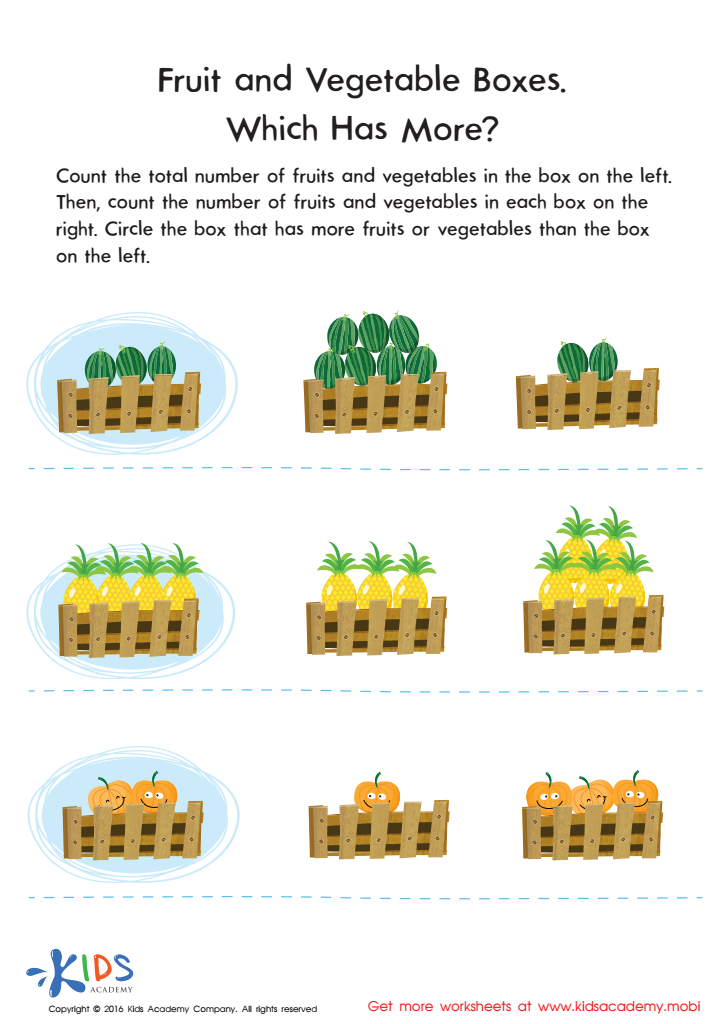
Which Has More? Size Worksheet
 Assign to My Students
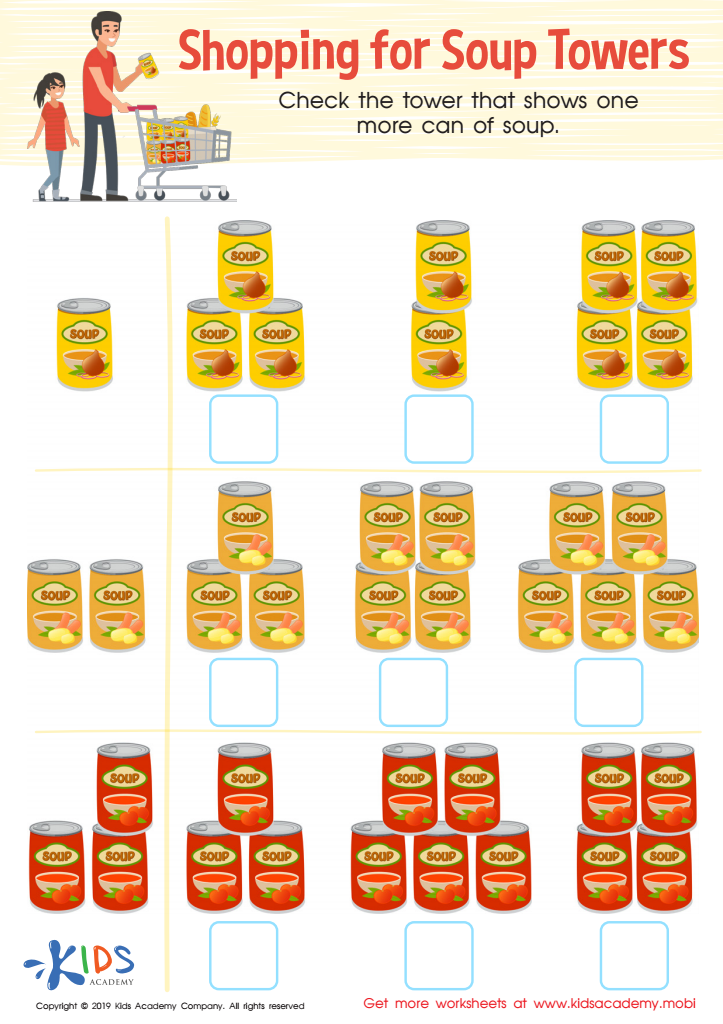
Soup Towers Worksheet
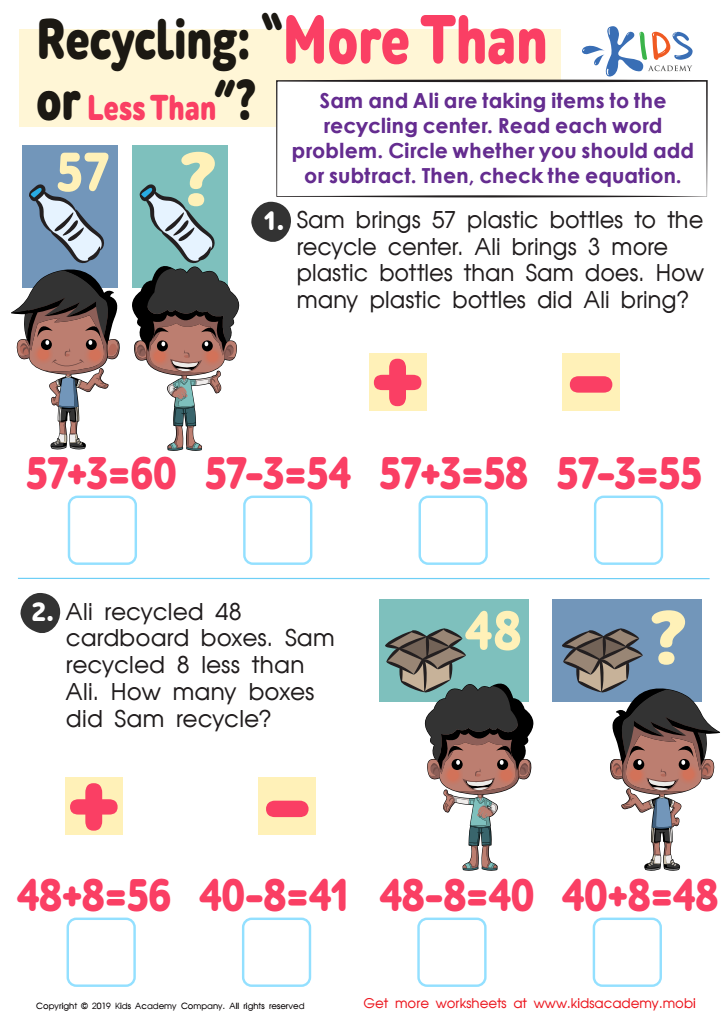
Recycling - More or Less Worksheet








Introducing the concept of comparing quantities to 3-year-olds is crucial because it lays the foundation for essential math skills. At this age, children's brains are developing rapidly, and they are highly receptive to learning basic concepts that will facilitate more complex understanding later on. Teaching them to compare quantities helps sharpen their cognitive skills, including observation, analysis, and the ability to make decisions based on differences and similarities.
For parents and teachers, engaging children in activities that involve comparing quantities also enhances language development. Phrases like "more than," "less than," and "equal to" not only expand their vocabulary but also integrate mathematical and verbal skills. These interactions foster better communication skills along with numeracy skills.
Moreover, activities that involve comparing quantities, such as sorting blocks by size or counting objects, improve fine motor skills and hand-eye coordination. They can make these learning experiences fun and engaging, turning everyday activities into educational opportunities.
Caring about this aspect of early education ensures that children build a strong foundation in math. This early competence can boost their confidence and enthusiasm for learning, making them better prepared for the structured learning environments they will encounter in school.








