Coloring skills Reading Worksheets for 3-Year-Olds
3 filtered results
-
From - To
Unlock your child's creativity and literacy with our "Coloring Skills Reading Worksheets for 3-Year-Olds." These fun and engaging resources combine the joy of coloring with early reading skills, fostering a love for learning. Perfectly designed for young learners, each worksheet features simple text and adorable illustrations that help children improve fine motor skills, color recognition, and early word recognition. As kids color within the lines, they also enhance their focus and attention to detail. Ideal for parents and educators, these worksheets offer a brilliant, playful approach to early education. Explore and download today to support your child's developmental journey!
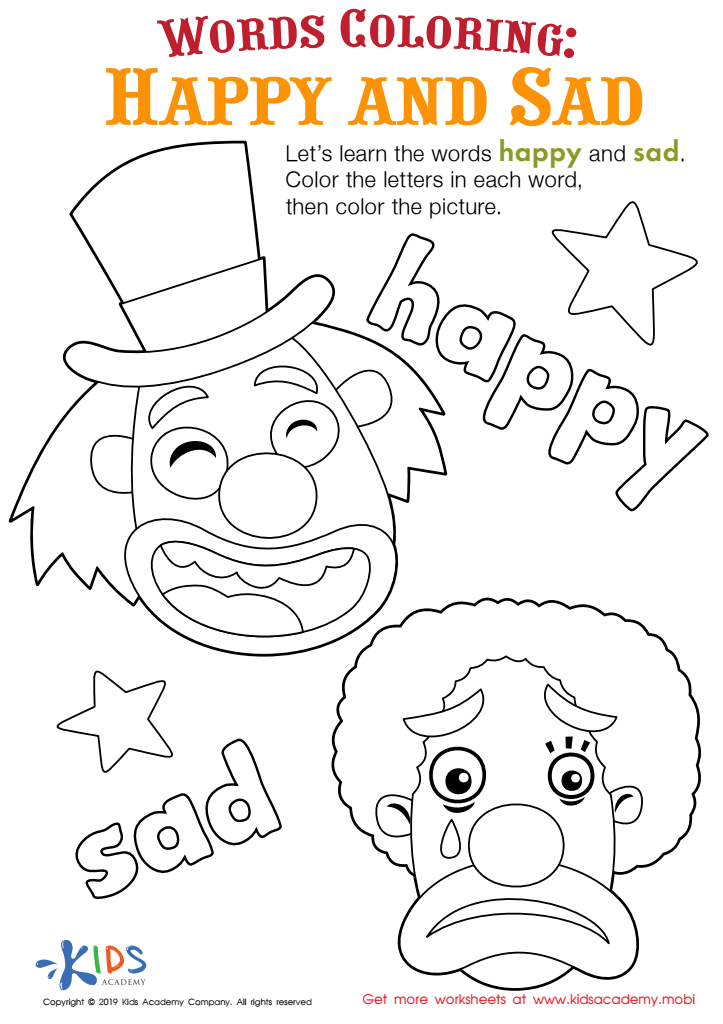
Happy and Sad Words Coloring Worksheet
 Assign to My Students
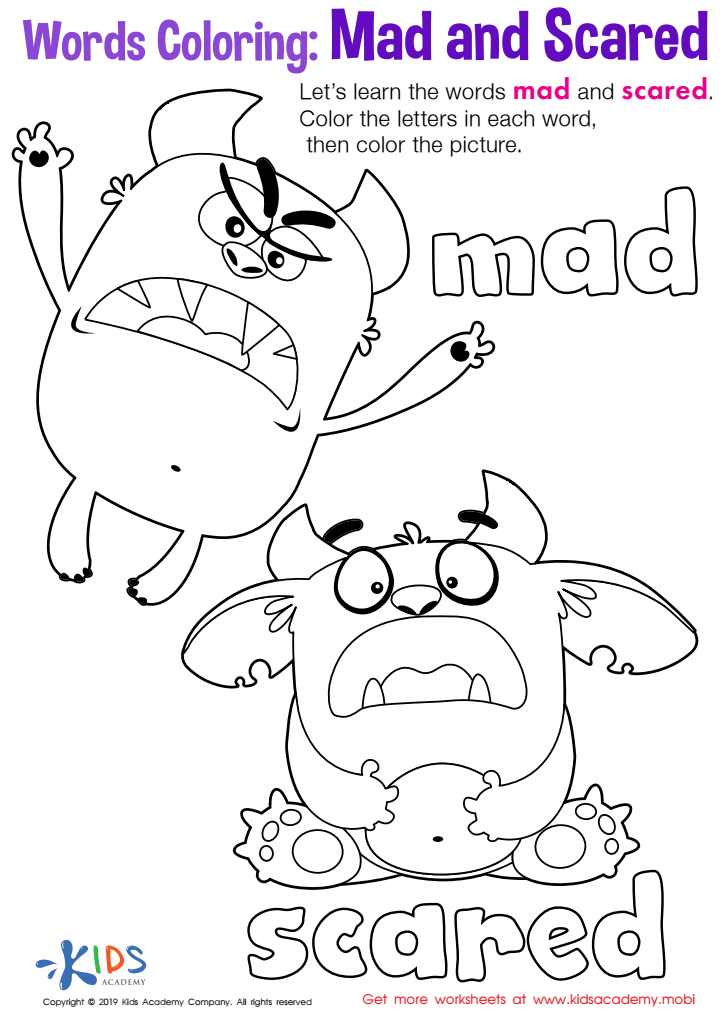
Mad and Scared Words Coloring Worksheet
Assign to My Students
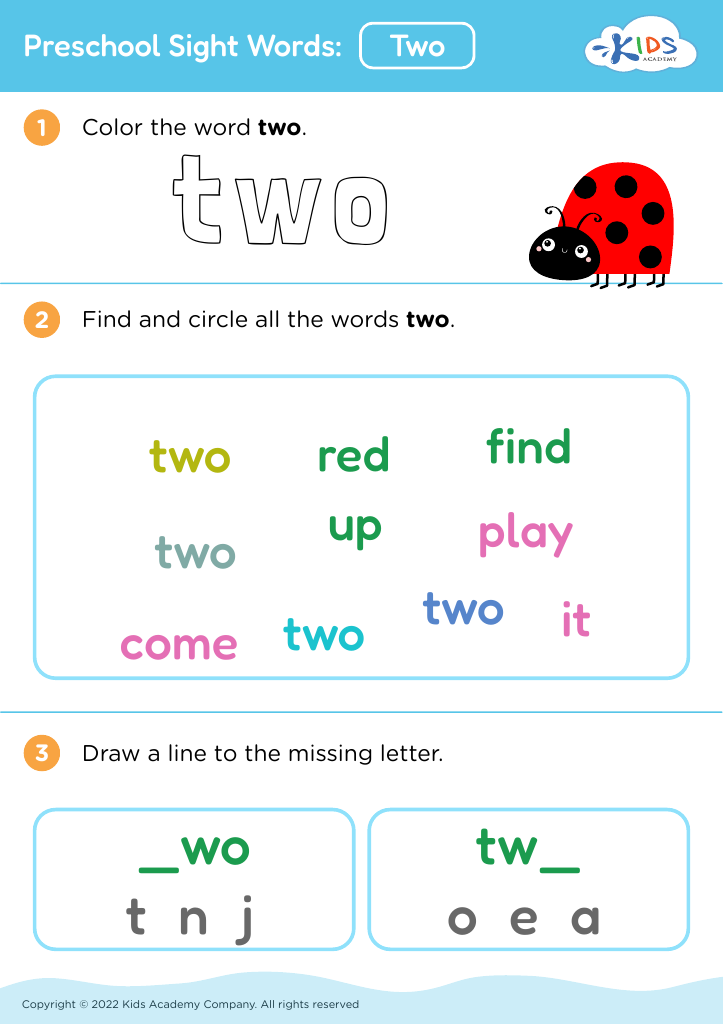








Coloring skills in 3-year-olds are foundational for their overall development and should be of notable concern for parents and teachers. Coloring activities are not just about entertainment; they contribute significantly to a child's fine motor skills, hand-eye coordination, and concentration. When a child practices holding a crayon, they strengthen the muscles in their fingers and hands, which is essential for learning to write later on.
Additionally, coloring can boost a child’s ability to identify and understand colors and patterns. It nurtures creativity and stimulates the brain areas related to vision and analytical skills. The shared activity of coloring also often provides opportunities for verbal exchanges, which enhance vocabulary and communication skills.
Besides these developmental perks, coloring also encourages children to express themselves. Through the choice of colors and how they approach a blank page, they communicate their emotions and thoughts in a manner that they might not yet be able to verbalize.
Balanced with reading, which develops language and comprehension skills, coloring enriches a child's cognitive abilities. Storybooks paired with related coloring activities can make early reading sessions dynamic and more engaging, paving the way for a lifelong love of reading. By recognizing the importance of coloring, parents and teachers set the stage for holistic development, laying down strong foundational skills in both physical coordination and cognitive capabilities.








