Weather identification Science Worksheets for 3-Year-Olds
4 filtered results
-
From - To
Introduce your little scientist to the fascinating world of weather with our Weather Identification Science Worksheets for 3-Year-Olds. Designed to capture young minds, these engaging worksheets are perfect for sparking curiosity and building foundational science skills. Through vibrant illustrations and simple activities, children will learn to recognize different weather conditions, from sunny days to rainy forecasts. Our expertly crafted worksheets foster observational skills, promote critical thinking, and make learning about weather patterns a fun adventure. Ideal for parents and educators, these resources are the first step towards a lifelong love of science and exploration. Get started today!
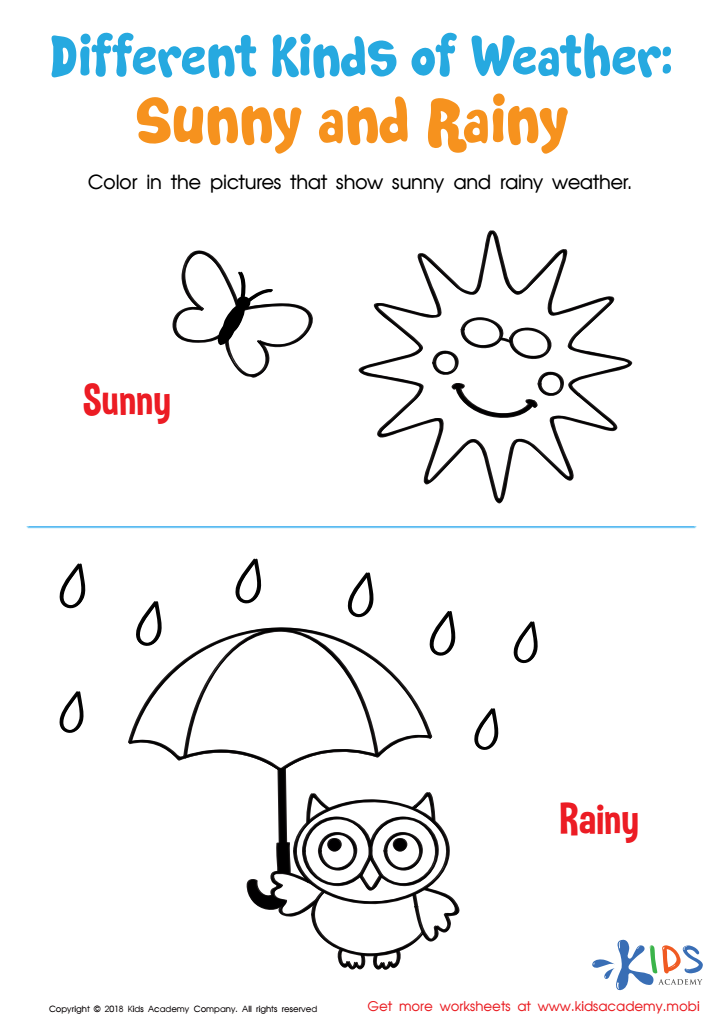
Different Kinds of Weather: Sunny and Rainy Worksheet
 Assign to My Students
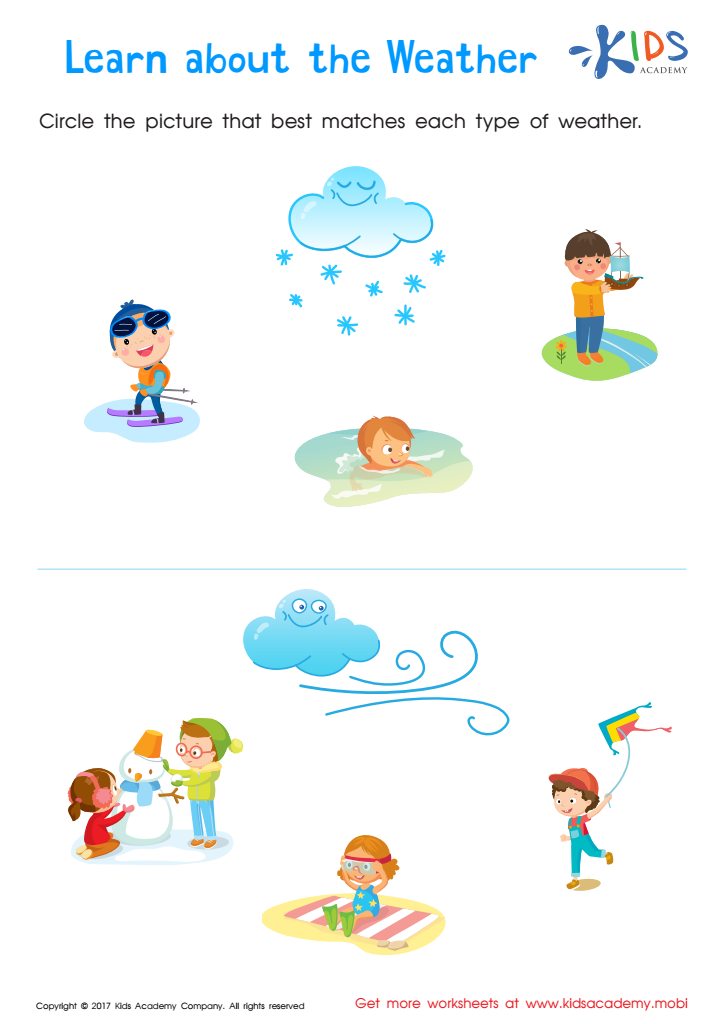
About the Weather Printable
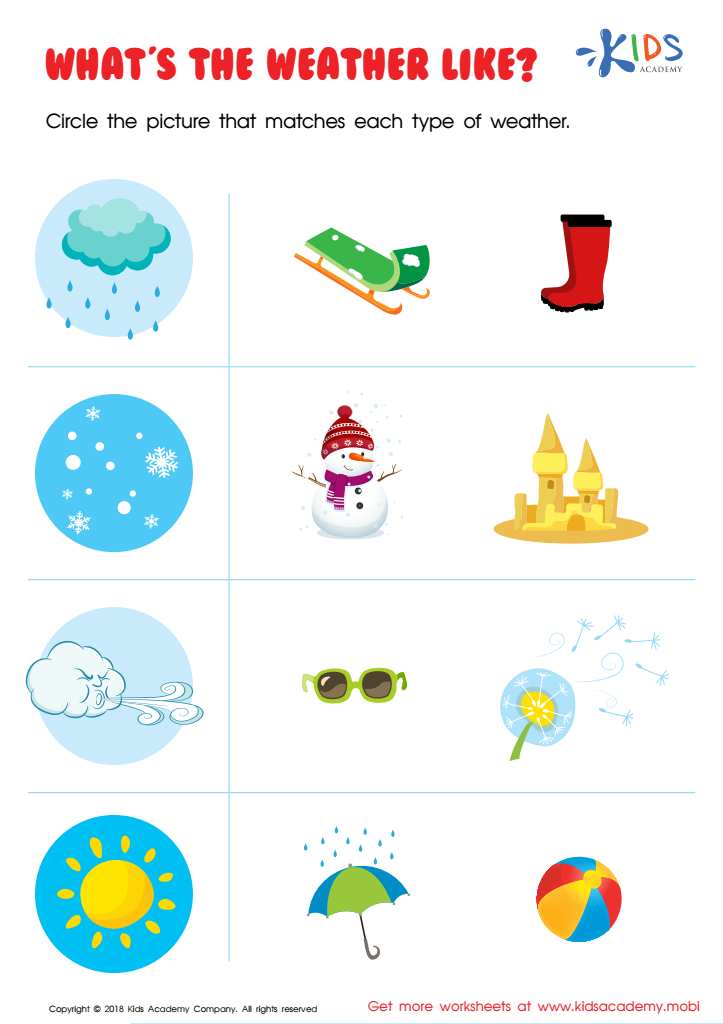
What's the Weather Like? Worksheet







Understanding weather identification is important for 3-year-olds because it lays the foundation for early science learning and helps build important cognitive skills. First, it enhances observational abilities. When children look at the sky and notice different weather conditions—whether it’s sunny, rainy, or snowy—they are practicing paying attention to their surroundings, which is a key skill in early childhood development.
Second, weather identification fosters curiosity and interest in the natural world. Asking questions like, "Why does it rain?" or "What makes the wind blow?" encourages young children to seek answers and engage in a mode of thinking that's important for scientific inquiry.
Third, weather discussions can expand vocabulary. Words like "cloudy," "breezy," and "stormy" introduce children to descriptive language, improving their communication skills. Parents and teachers can integrate these weather terms into daily conversations, songs, and interactive activities to make learning fun.
Furthermore, understanding weather can help children make sense of their daily routines. Knowing that it’s rainy means they need raincoats and boots, while sunny weather means they can go outside to play. Practical knowledge like this empowers children to make simple decisions, contributing to their independence.
Overall, incorporating weather identification into early learning enriches cognitive development, language skills, and practical understanding, making it a valuable area for parents and teachers to emphasize.







