
Alphabet understanding Alphabet Worksheets for Ages 4-5
11 filtered results
Difficulty Level
Grade
Age
-
From - To
Subject
Activity
Standards
Discover our engaging Alphabet Understanding Worksheets tailored for children aged 4 to 5! Designed to build foundational literacy skills, these worksheets incorporate fun activities that encourage recognition of letters, both uppercase and lowercase. Your little learners will enjoy tracing, coloring, and identifying letters within exciting visuals to enhance their understanding of the alphabet. Our interactive resources promote early reading and writing skills, making learning enjoyable and effective. These worksheets are perfect for parents and educators seeking to nurture children's literacy in a playful way. Start your child's journey to reading success today with our thoughtfully crafted Alphabet Understanding Worksheets!
Favorites
With answer key
Interactive
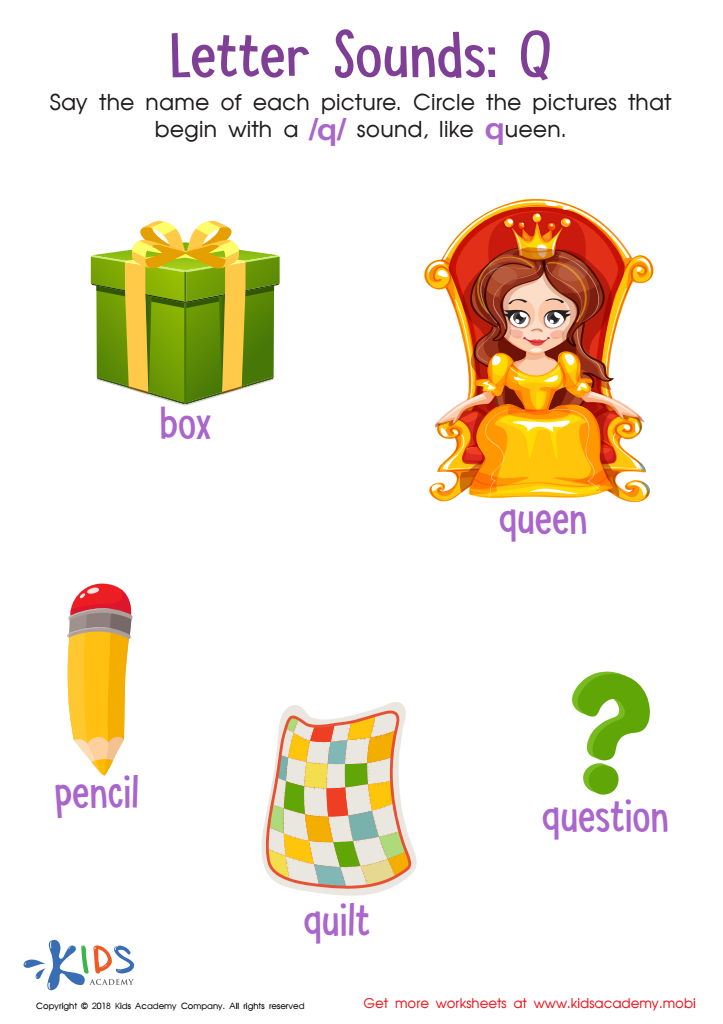
Letter Q Sounds Worksheet
Kids can get confused between "K" and "Q" sounds. Help them learn with this phonics worksheet. They'll name each image and read the word underneath. Point out that words with "Q" also have a "U" which affects how it sounds. Have them circle the matching pictures and watch as they learn this unique letter sound.
Letter Q Sounds Worksheet
Worksheet
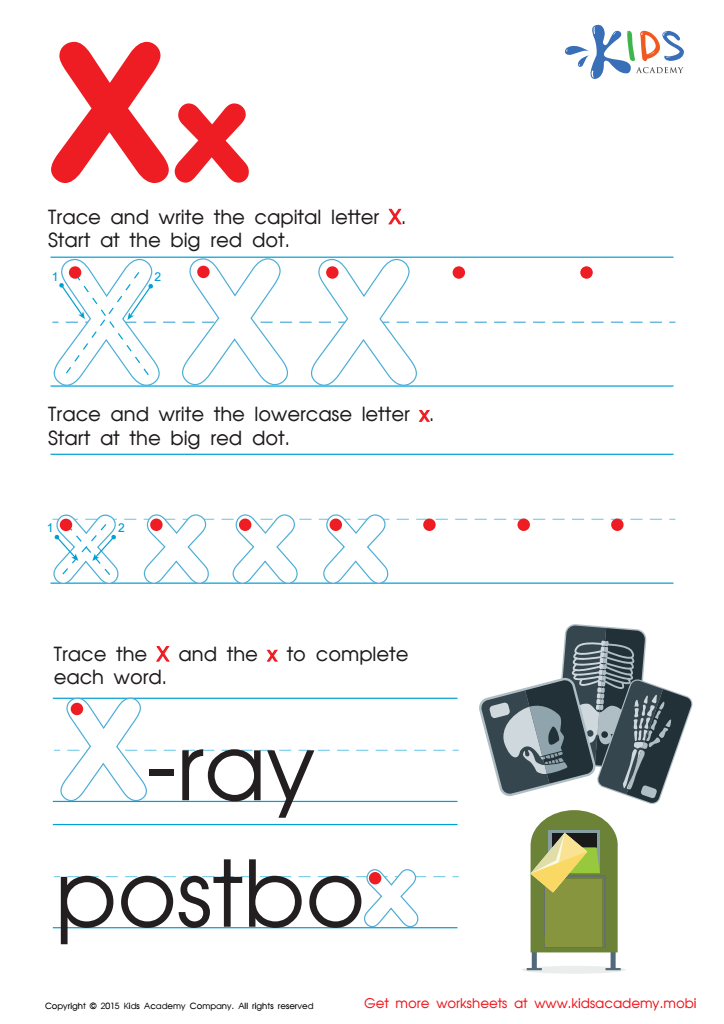
Letter X Tracing Page
Trace the uppercase letter "X" to learn, then write it yourself and practice. Then do the same with the lowercase "x" before completing the words "X-ray" and "postbox". Enjoy our alphabet printables!
Letter X Tracing Page
Worksheet
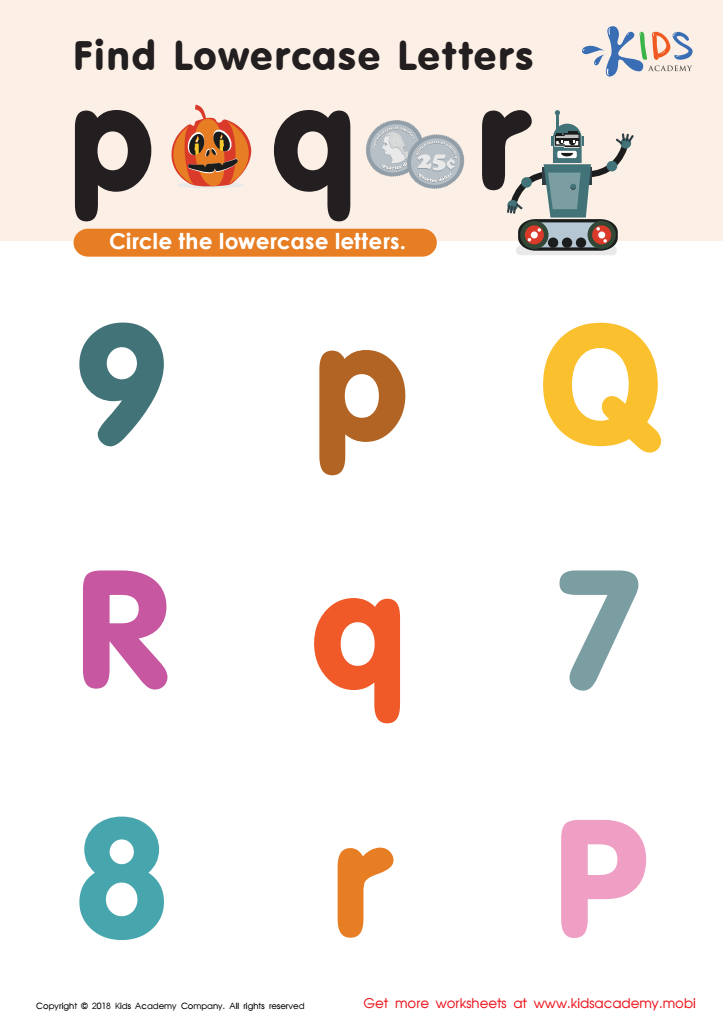
Find lowercase Letters p q r Worksheet
Help your child spot the lowercase letters among the numbers and uppercase letters in this worksheet. It's a great way to teach them to identify and write the lowercase and uppercase letters. Assist them in completing the exercise to give them a better understanding of the alphabets.
Find lowercase Letters p q r Worksheet
Worksheet
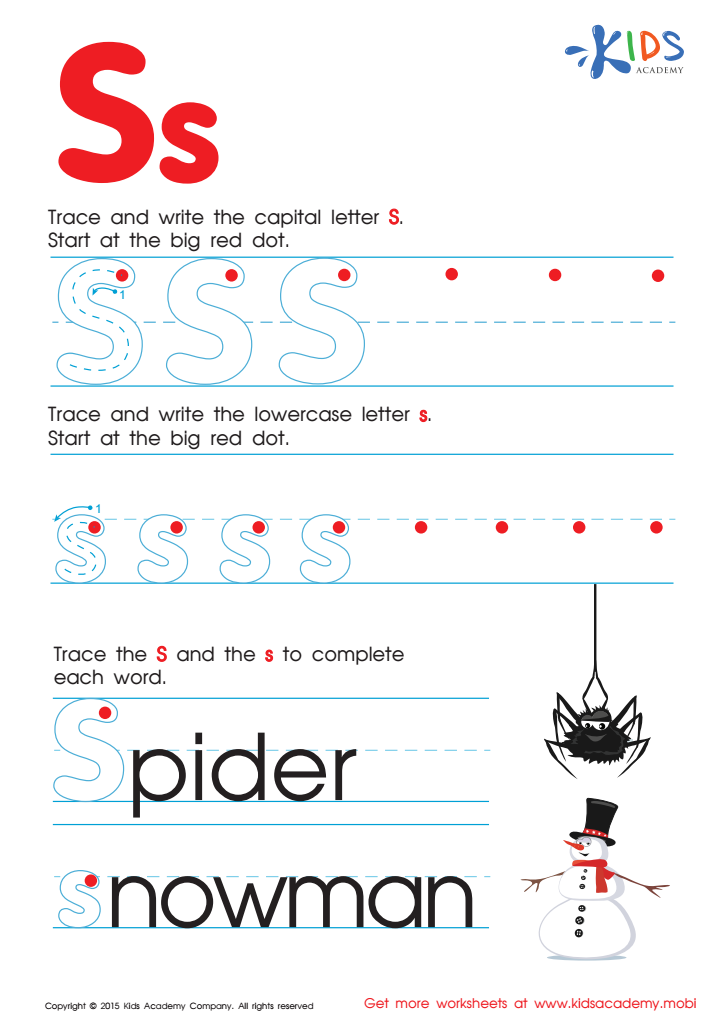
Letter S Tracing Page
Trace and write the capital and lowercase "S" on this ABC worksheet for kindergarten. Start with the big red dot and be careful. When you finish, help the spider and snowman in the pictures restore their words with the capital and lowercase letters. Continue learning the alphabet with Kids Academy.
Letter S Tracing Page
Worksheet
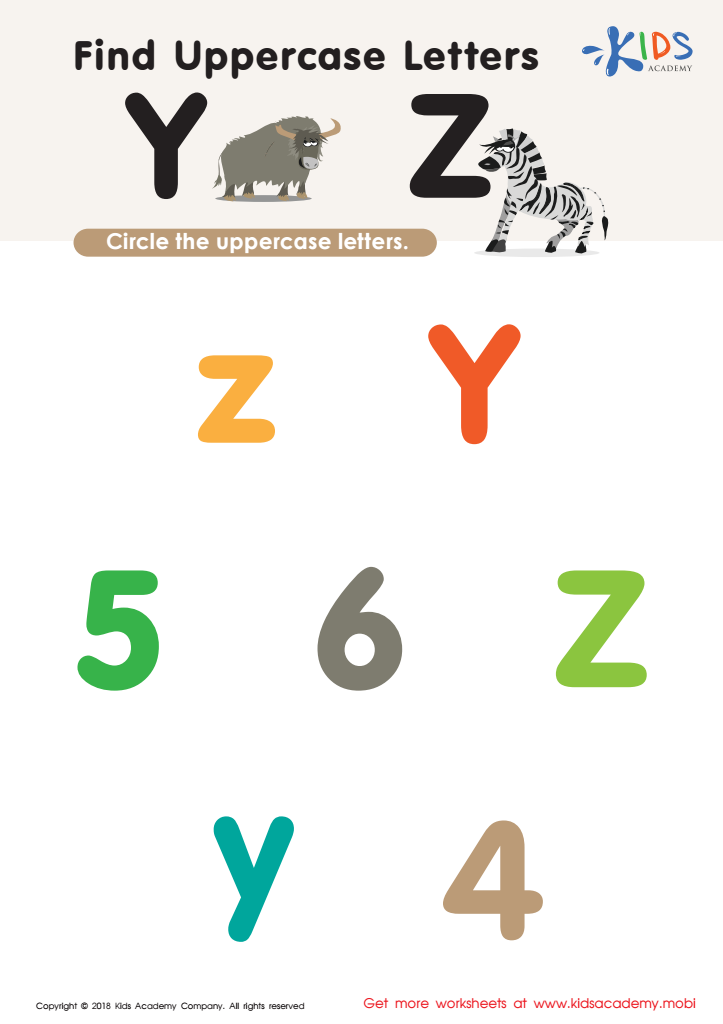
Find Uppercase Letters Y Z Worksheet
Download the worksheet! Help your youngster to learn the alphabet and distinguish uppercase from lowercase letters by having them circle the uppercase ones. It's an important first step towards reading and writing success!
Find Uppercase Letters Y Z Worksheet
Worksheet
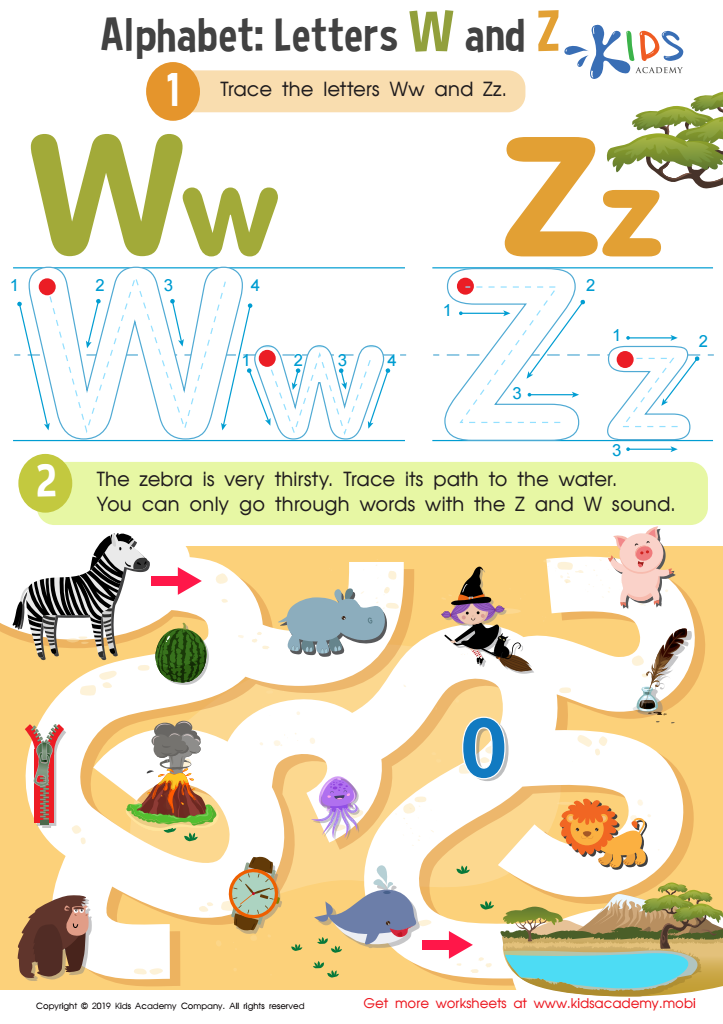
Letters W and Z Tracing Worksheet
Kids will go on a safari exploration of letters W and Z with this worksheet. Students will trace «W» and «Z» and then help the zebra find their watering hole, only following the path of the «W» and «Z» words among many others. It'll be a fun learning activity!
Letters W and Z Tracing Worksheet
Worksheet
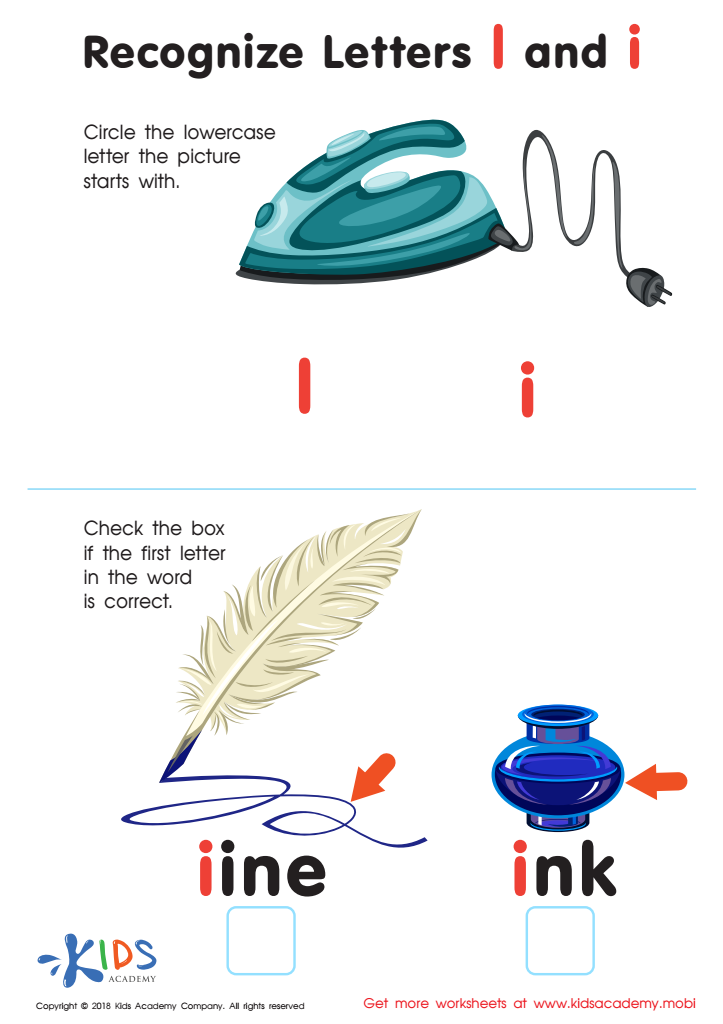
Recognize Letters l and i Worksheet
Help your child become familiar with uppercase and lowercase letters. Have them look at the pictures in the worksheet and circle the lowercase letter the picture starts with. For example: which one is the lowercase "i", the capital "I" or the small "i"?
Recognize Letters l and i Worksheet
Worksheet
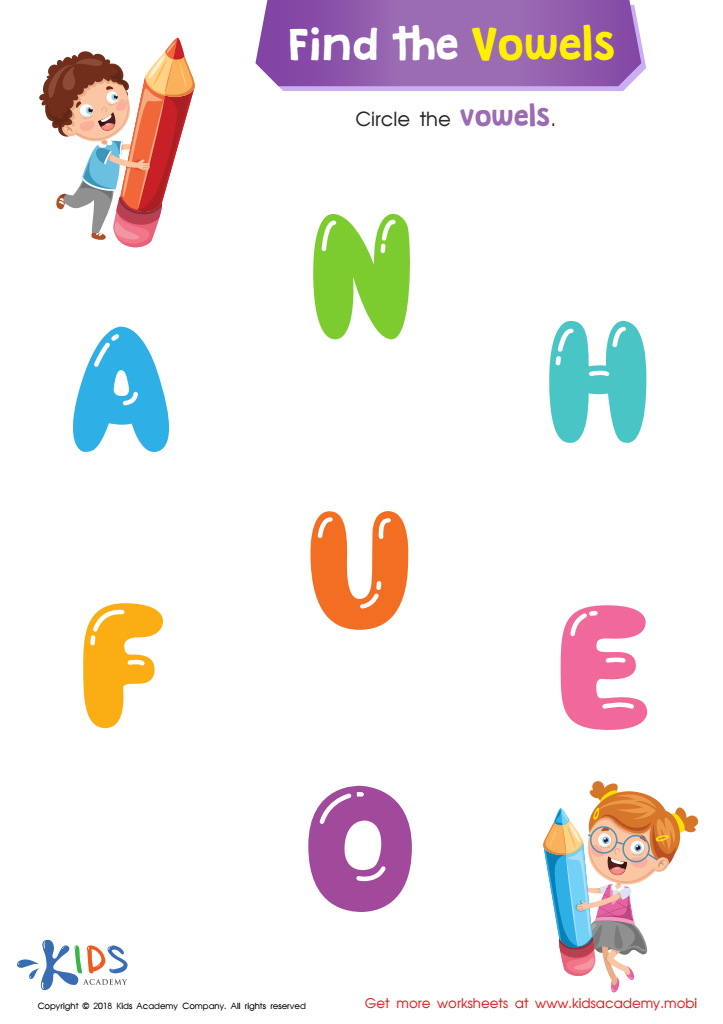
Find the Vowels Reading Worksheet
This worksheet helps kids identify vowels with bright colors and engaging activities to strengthen their visual discrimination and fine motor skills. Young learners will find it easy to succeed and be excited to keep reading!
Find the Vowels Reading Worksheet
Worksheet
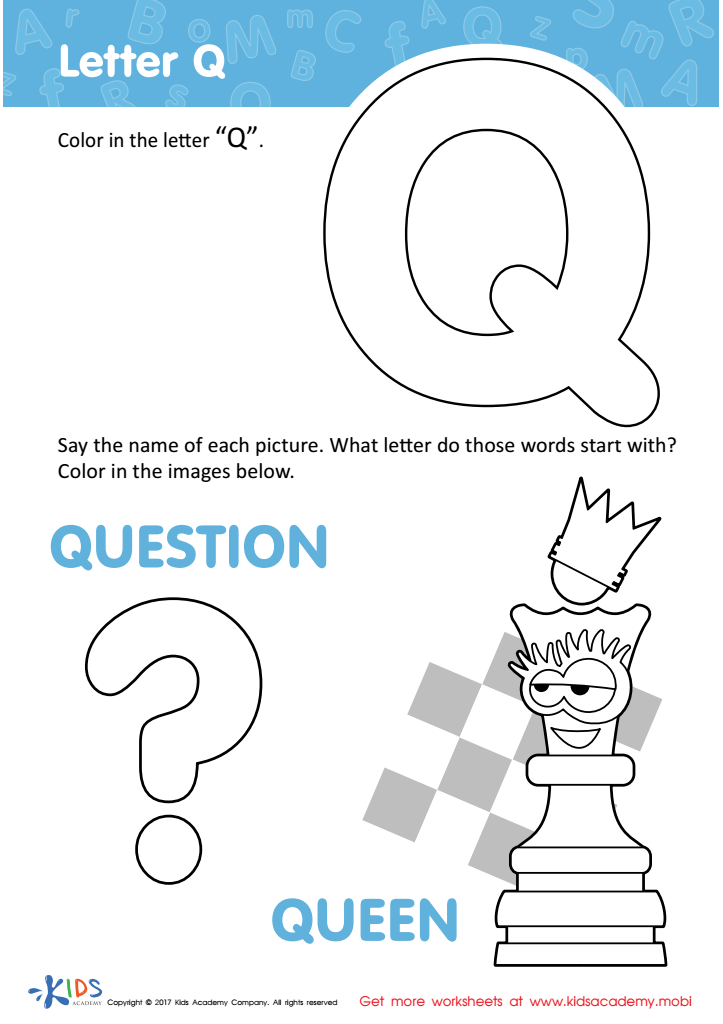
Letter Q Coloring Sheet
Kids need practice with letters not seen often. Give your child a boost with this letter "Q" coloring page! Have them color in the queen and question mark, while learning the sound "Q" makes. Fun and educational!
Download (PDF)
 Assign to My Students
Assign to My Students
Letter Q Coloring Sheet
Worksheet

Find lowercase letters a b c Worksheet
Help your child identify lowercase letters with this worksheet. Carefully look at each letter and have your child circle the lowercase ones. This exercise is vital in helping them understand the alphabet and the difference between lower and uppercase letters.
Find lowercase letters a b c Worksheet
Worksheet
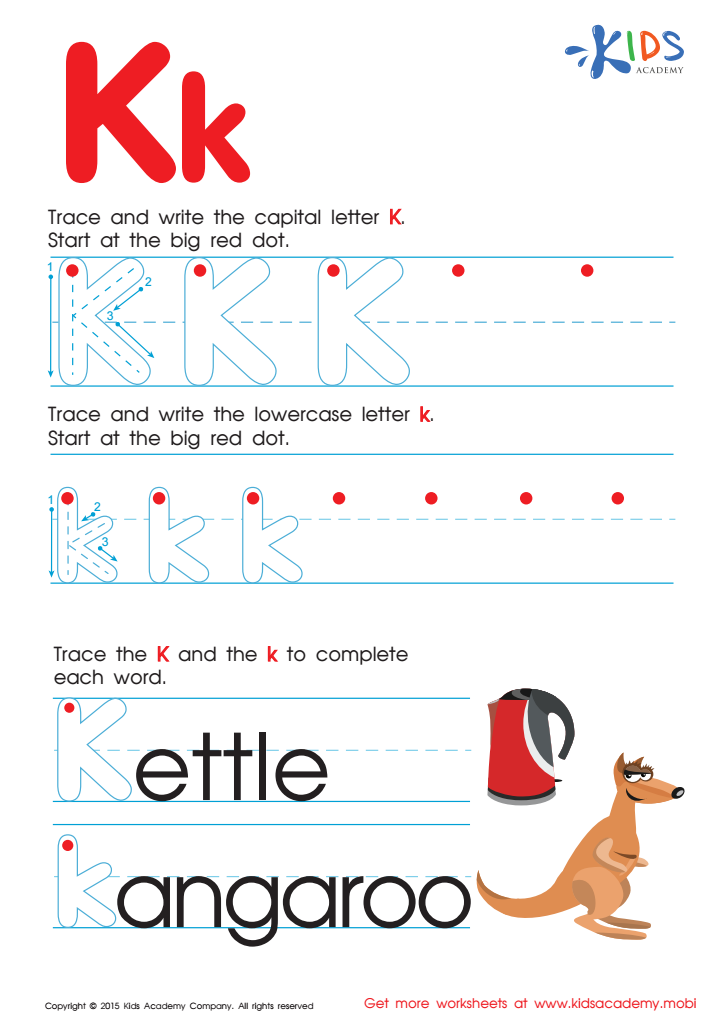
Letter K Tracing Page
Trace and write the letter K; start at the big red dot. Use it to complete words like "Kettle" and "Kangaroo". Visit Kids Academy for more free alphabet worksheets for kindergarten.
Letter K Tracing Page
Worksheet
Join Kids Academy for Free
Who is primarily going to use this learning content?





.jpg)

Understanding the alphabet is fundamental for children aged 4-5, laying the groundwork for reading and writing skills they will develop throughout their educational journey. Parents and teachers should care about alphabet mastery because it supports early literacy, which is crucial for academic success. Recognizing letters helps children decode words, enabling them to read simple texts by the time they start kindergarten.
Moreover, alphabet knowledge boosts phonemic awareness, which is the ability to hear and manipulate sounds in spoken words. This is vital for developing spelling and pronunciation skills as they progress. Engaging children in fun, interactive activities—like singing the alphabet song, playing letter-matching games, or using alphabet books—encourages a positive attitude towards learning.
Additionally, understanding the alphabet fosters cognitive development. It helps children make connections between letters, sounds, and meanings, enhancing critical thinking skills. When parents and teachers actively support alphabet learning, they promote literacy-rich environments that encourage exploration and communication.
Ultimately, alphabet understanding sets the stage for lifelong learning, empowering children to communicate effectively, explore new ideas, and thrive academically. By prioritizing this foundational skill, adults help cultivate confident and capable learners ready for future challenges.







