Alphabetical order Alphabet Worksheets for Ages 4-5
3 filtered results
-
From - To
Welcome to our engaging Alphabetical Order Worksheets designed for children ages 4-5! These vibrant and interactive activities will help young learners master the basics of alphabetizing in a fun way. With a variety of worksheets that focus on sorting and organizing letters and words, kids will improve their reading and writing skills while developing essential cognitive abilities. Our worksheets encourage creativity and critical thinking through various exercises, making learning enjoyable. Perfect for classroom settings or at-home study, our resources are easy to use and align with early learning standards. Start your child's alphabetical journey today!
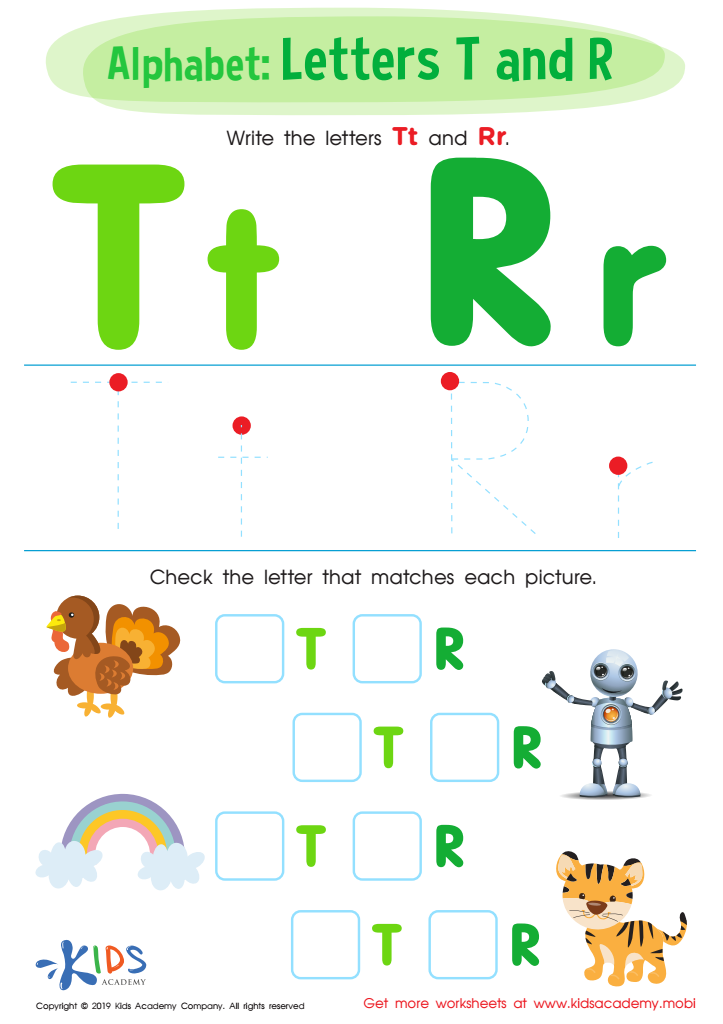
Letters T and R Worksheet
 Assign to My Students
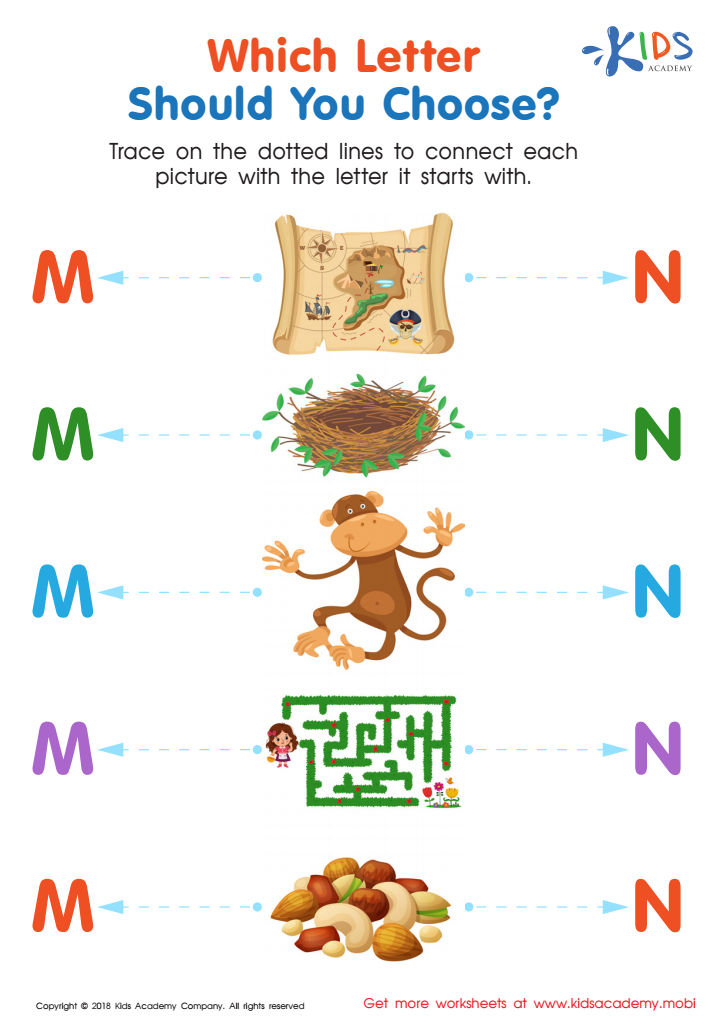
Which Letter Should you Choose? Worksheet
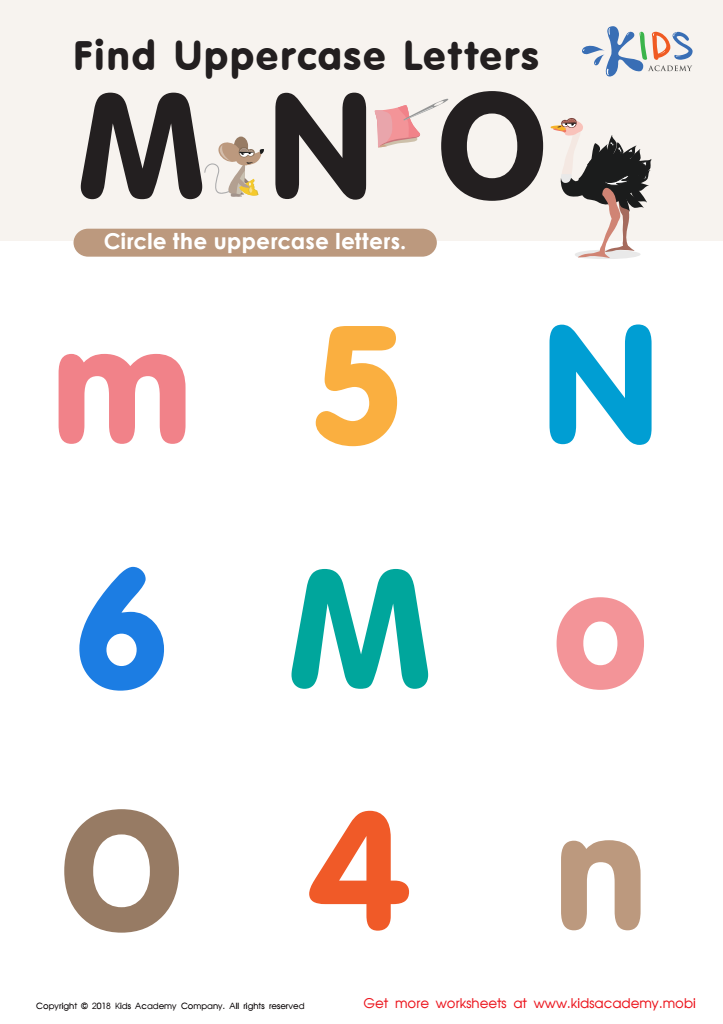
Find Uppercase Letters M, N, and O Worksheet








Understanding alphabetical order is a foundational literacy skill that plays a crucial role in early education for children aged 4-5. At this age, children are beginning to recognize letters and sounds, making it essential to instill order and structure to their learning. Familiarity with the alphabet helps young learners develop literacy skills, improve phonemic awareness, and enhance vocabulary.
Teaching children about alphabetical order introduces them to an organized way of thinking. When children learn to arrange words or items alphabetically, they practice sorting and categorizing, which are vital cognitive skills. This knowledge also fosters independence when children encounter unfamiliar words in books. They will learn how to locate the desired word quickly, boosting their confidence and encouraging a passion for reading.
Additionally, knowing the alphabet's order lays the groundwork for more advanced language concepts, such as dictionary usage, spelling strategies, and writing skills, as they grow older. By focusing on alphabetical order in their early years, parents and teachers are not only supporting immediate literacy development but also equipping children with essential skills for future academic success and lifelong learning. Overall, nurturing a strong foundation in these fundamental skills enhances children’s overall cognitive development and prepares them for future educational challenges.







