Sound identification Phonics Worksheets for Ages 4-5
4 filtered results
-
From - To
Discover our engaging Sound Identification Phonics Worksheets designed specifically for children ages 4-5! These interactive worksheets aim to enhance early literacy skills by helping young learners recognize and produce sounds associated with letters. Each activity is crafted to make phonics fun through colorful visuals and age-appropriate exercises. Our resources support critical listening skills and sound discrimination, laying a strong foundation for reading and writing success. Parents and educators can easily download and print these worksheets, allowing children to practice at home or in the classroom. Foster a love for learning and boost phonemic awareness with our thoughtfully designed phonics materials!
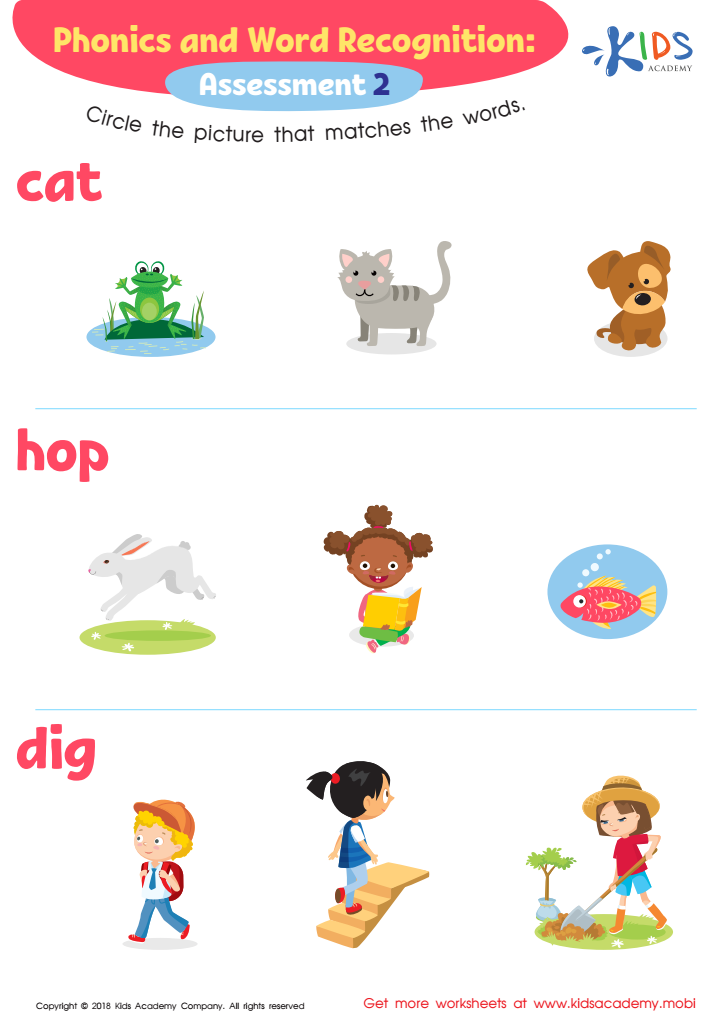
Phonological Awareness: Assessment 2 ELA Worksheet
 Assign to My Students
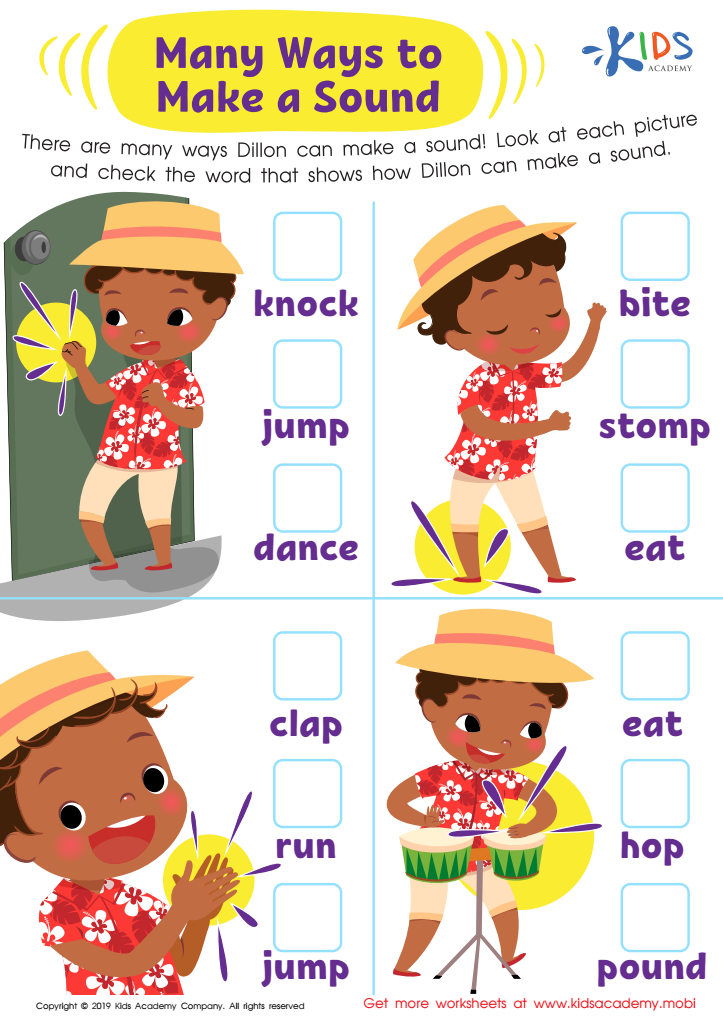
Many Ways to Make a Sound Worksheet
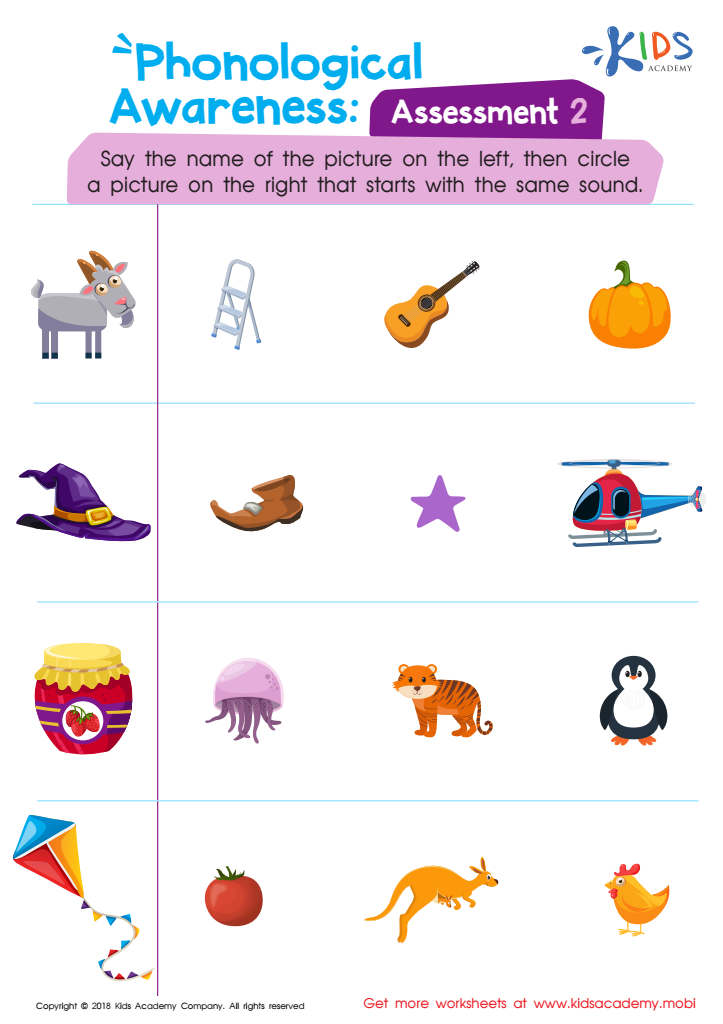
Phonological Awareness: Assessment 2 Worksheet
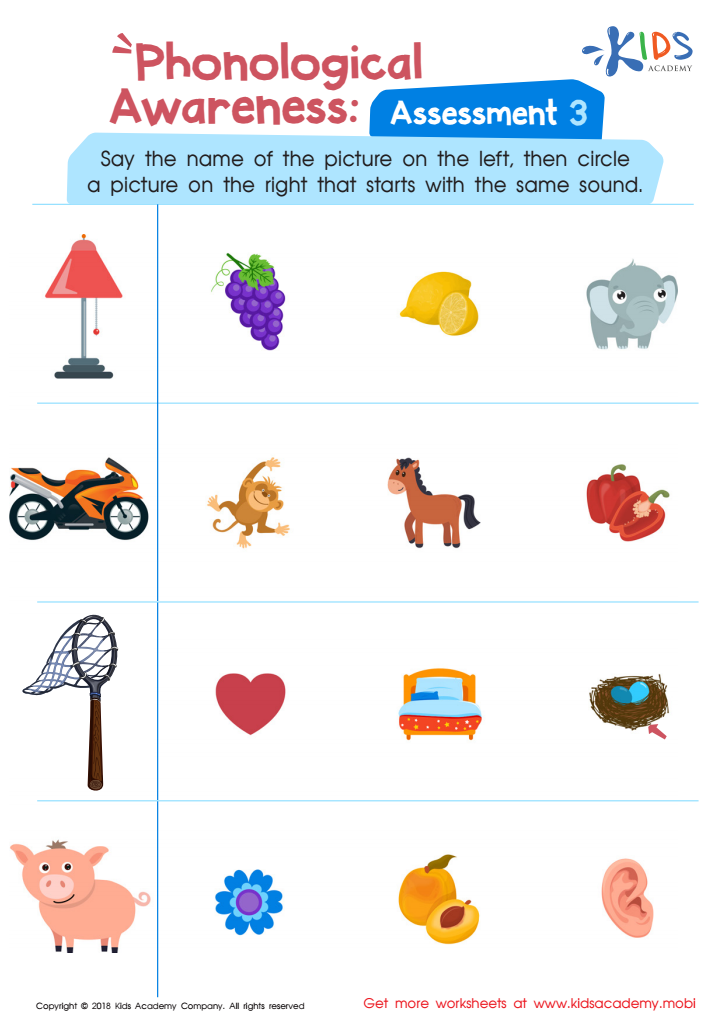
Phonological Awareness: Assessment 3 Worksheet








Sound identification phonics is crucial for early literacy development in children aged 4-5. At this stage, children are typically developing the foundational skills needed to read and write. Understanding that letters represent sounds is key to unlocking the reading process. By focusing on sound identification, practitioners can help children blend sounds together, a skill necessary for decoding words.
When children can identify sounds, they become more confident readers and writers. This skill serves as a building block for larger literacy concepts such as vocabulary development and comprehension. Additionally, engaging in phonics activities enhances auditory discrimination skills, which can benefit children in other areas of learning as they progress in their education.
Moreover, fostering a love for reading begins early. By integrating fun phonics activities—such as songs, games, and interactive storytelling—teachers and parents can create a joyful learning atmosphere. This not only promotes better retention but also encourages children to participate actively in literacy experiences.
In summary, sound identification phonics is fundamental for developing reading skills, confidence, and a lifelong love for literature, making it essential for parents and educators to prioritize in early childhood education.







