Animal Classification Worksheets for Ages 4-5
5 filtered results
-
From - To
Welcome to our Animal Classification Worksheets for Ages 4-5! Designed to nurture young minds, these engaging worksheets introduce preschoolers to the fascinating world of animals. Through various fun activities, children will learn how to group animals by their characteristics such as habitat, diet, and behavior. Our carefully crafted worksheets encourage critical thinking and creativity while promoting early scientific skills. With colorful illustrations and easy-to-follow instructions, these resources are perfect for classrooms or home learning. Unlock a child's curiosity about nature and enhance their understanding of the animal kingdom with our exciting and educational animal classification activities!
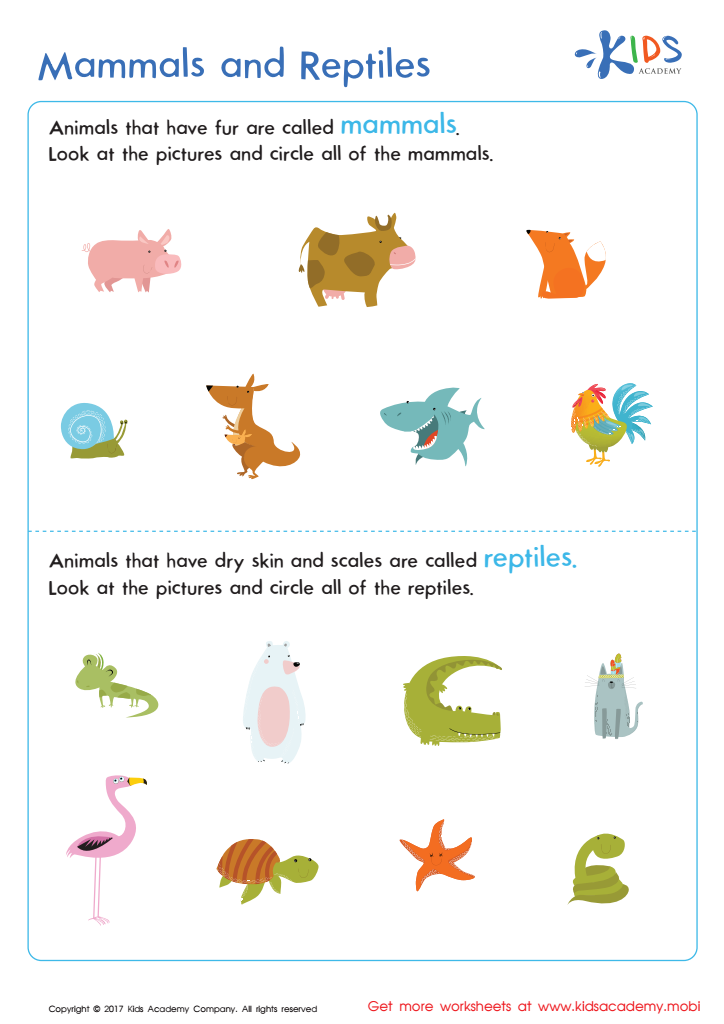
Mammals and Reptiles Worksheet
 Assign to My Students
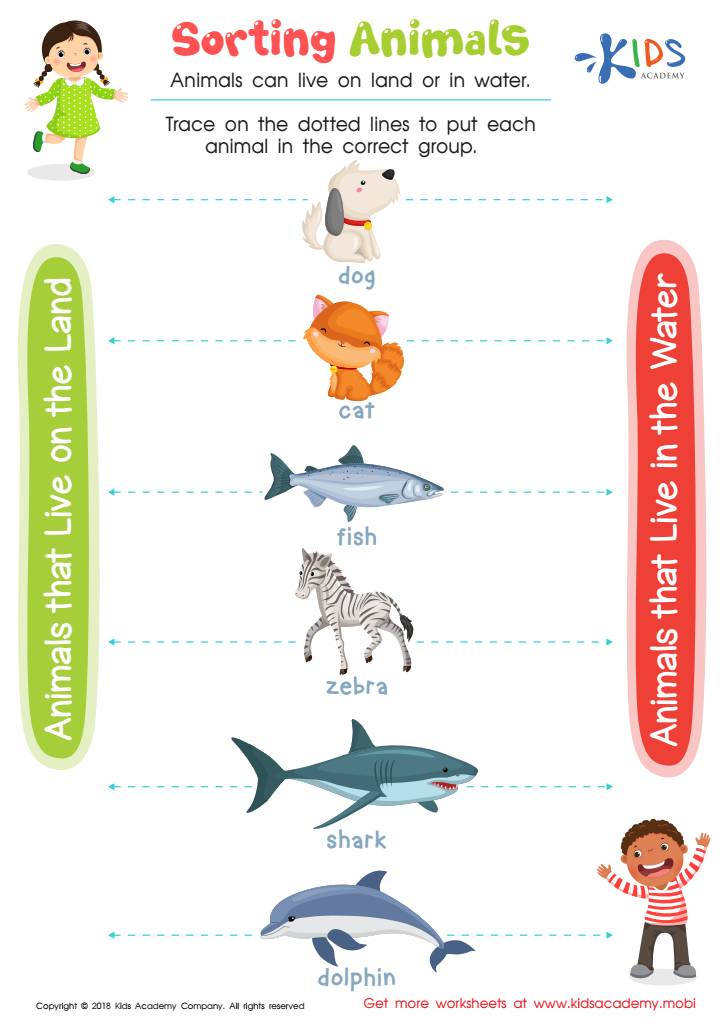
Sorting Animals Worksheet
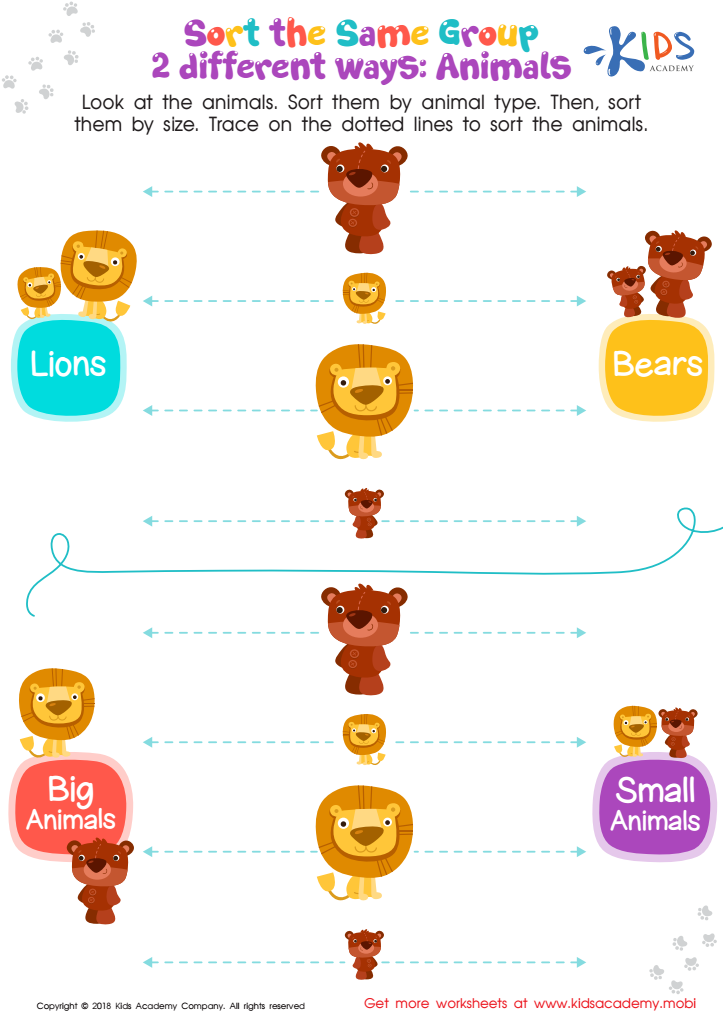
Sort the Same Group 2 Different Ways: Animals Worksheet
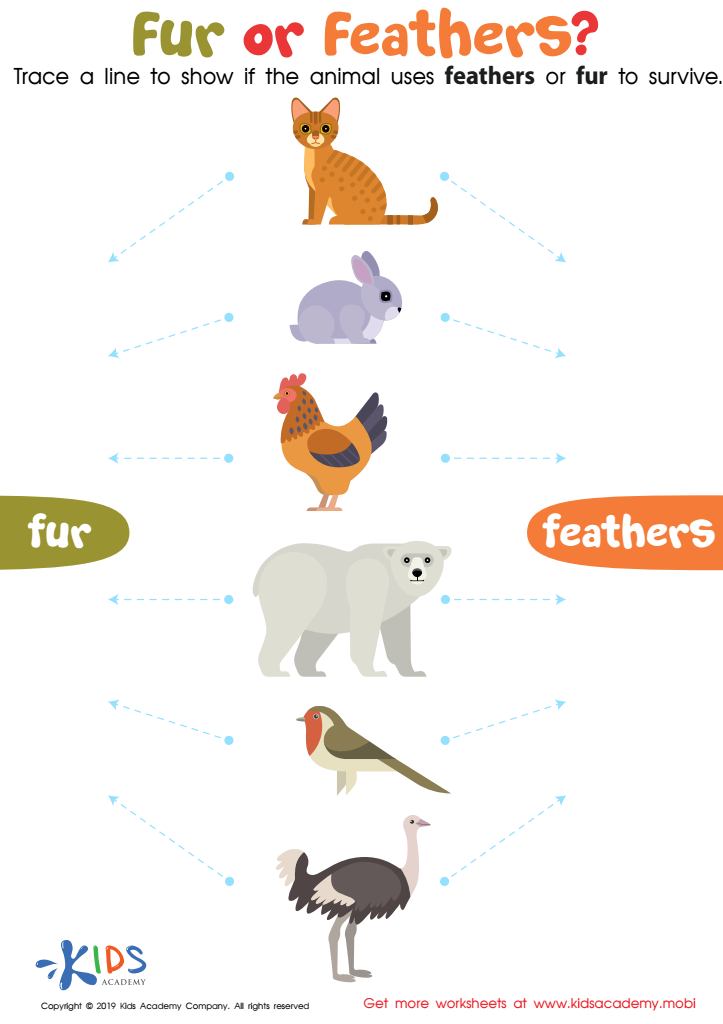
Fur or Feathers? Worksheet
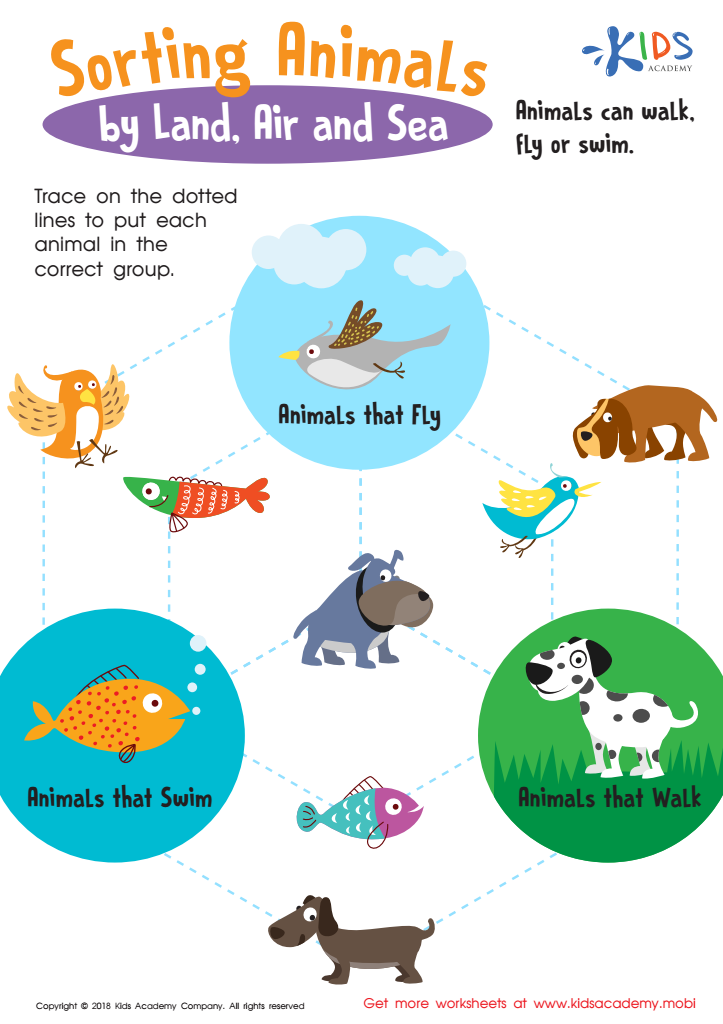
Sorting Animals by Land, Air and Sea Worksheet







Animal classification is a fundamental concept that fosters a sense of wonder and curiosity in young children aged 4-5. Parents and teachers should care about this subject because it lays the groundwork for scientific understanding and critical thinking skills. By introducing children to different categories of animals—such as mammals, birds, reptiles, amphibians, and fish—they begin to understand the diversity of life in the world around them.
Learning about animal classification enhances vocabulary. Kids encounter terms like "habitat," "traits," and "creatures," enriching their language skills. It also promotes connection with nature, encouraging children to observe and appreciate wildlife in their environment. This creates a foundation for empathy and respect for animals.
Moreover, animal classification fits seamlessly into play-based learning. Hands-on activities, like sorting or matching animals, can be engaging and entertaining, making education fun. These interactive experiences help develop fine motor skills and strengthen cognitive abilities.
In summary, teaching young children about animal classification not only provides foundational scientific knowledge but also supports their overall social, emotional, and cognitive development. It inspires a lifelong interest in biology and the natural world, making it an invaluable component of early childhood education.








